Transforming solutions
Plastic bottle manufacturing equipment evolves with the times
Sustainability, SKU proliferation leads to flexible, efficient solutions
Need to Know
- Key trends shaping plastic bottle manufacturing include lightweighting, sustainability, operational flexibility and digitalization.
- Manufacturers are prioritizing equipment that delivers efficiency, flexibility and reliability without unnecessary complexity.
- AI expected to play increasing role in plastic bottle manufacturing by making equipment smarter, more efficient and more predictive.
Plastic bottle manufacturing is evolving as producers look to increase recycled PET use, reduce resource consumption and improve efficiency.
Amy Ning, product manager for Plasmax coating technology at Waukesha, Wis.-based KHS USA Inc., notes that the key trends shaping the industry today include lightweighting, sustainability, increased use of recycled PET (rPET), differentiated bottle designs, operational flexibility and digitalization.
“Beverage producers are under increasing pressure to reduce material consumption and carbon emissions while continuing to deliver the product quality and consumer experience their brands promise,” she says. “At the same time, they need manufacturing solutions that are more flexible, efficient and data-driven than ever before.
“These market demands are driving investment in advanced production equipment and packaging technologies that enable lightweighting, support higher recycled content, improve shelf life and enhance operational performance,” Ning continues.
Bryan Lee, plastics technology sales at Krones Inc., Franklin, Wis., echoes similar sentiments, noting that the industry’s focus on reducing carbon footprint has accelerated trends such as minimizing air and energy consumption.
“At Krones, we are committed to leading this transformation by developing solutions that not only meet but exceed environmental standards,” he says. “Our holistic approach ensures that every new technology or process we introduce is designed to reduce the ecological impact of plastic bottle production — reflecting our core value of responsibility for people and the environment.”
A representative for Sidel, Norcross, Ga., points out that today’s manufacturers increasingly require equipment that offers the flexibility and automation needed to adapt to changing market demands.
“One example is EvoBLOW Laser, which uses laser-based heating to provide more precise control over preform heating and material distribution” the representative says. “This improves energy efficiency and bottle consistency while creating opportunities for lightweighting, greater design freedom and increased recycled PET content.”
Sidel’s representative adds that manufacturers also face the challenge of balancing productivity targets with sustainability objectives while controlling operating costs.
“As a result, [manufacturers] are prioritizing equipment that delivers efficiency, flexibility and reliability without unnecessary complexity,” the representative says. “Arpanon Beverage Company Limited recently worked with Sidel to develop one of the lightest PET bottles in its 600-ml water portfolio, weighing just 9 grams. Produced on a 36,000 BPH Combi line, the solution doubled output while significantly reducing labor requirements, energy consumption and production time.”
Alongside sustainability trends, Krones’ Lee points to regulatory changes and consumer expectations as shaping the future.
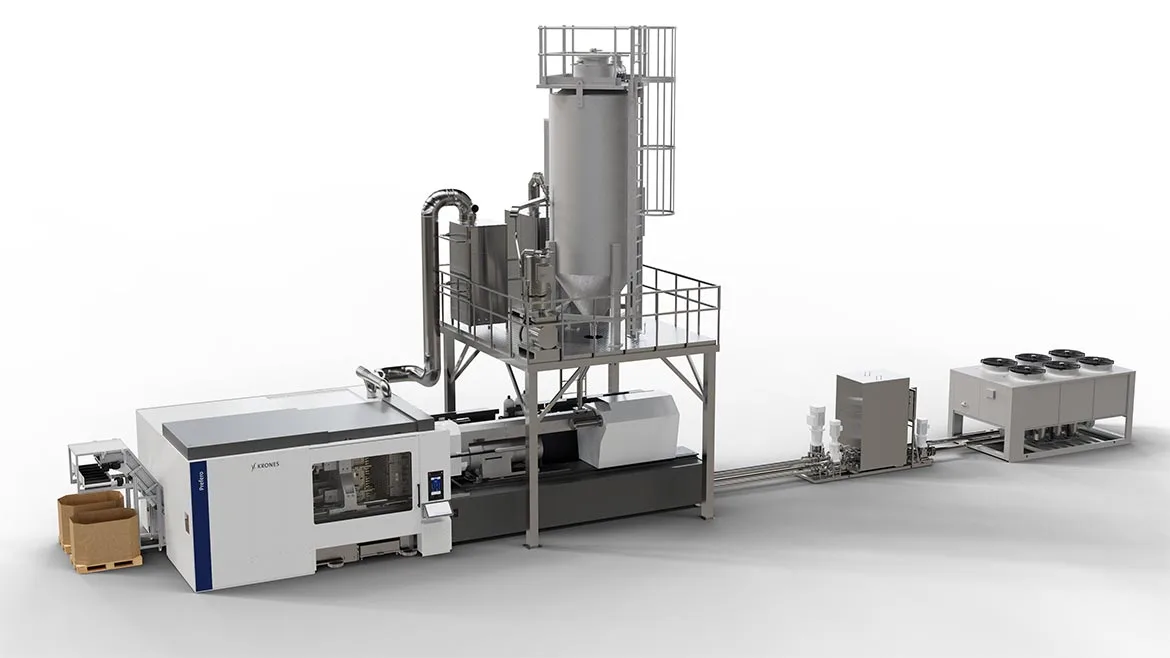
“Governments worldwide are introducing new regulations, such as Extended Producer Responsibility (EPR), to promote sustainable packaging,” Lee says. “For example, South Korea’s upcoming mandate for label-less water bottles is driving innovation in product identification, such as in-mold labeling and laser engraving. Krones partners closely with customers to develop comprehensive line solutions, including self-manufacturing of preforms with our Prefero technology with close link to a blow molder, that not only comply with evolving regulations but also enhance product differentiation and consumer trust.”
“We’re seeing major advancements in plastic bottle manufacturing equipment focused on automation, digitalization, sustainability and flexibility.”
– -Amy Ning, product manager for Plasmax coating technology at KHS USA Inc.
Addressing SKU proliferation
With the growing number of SKUs, manufacturers need equipment that provides greater flexibility and the ability to efficiently handle a wider variety of bottle designs and production runs, experts note.
“Reducing downtime while maintaining productivity and quality has become increasingly important,” KHS’ Ning says. “Longer shelf life and improved packaging performance can also help producers manage broader product portfolios more efficiently, reduce waste and support wider distribution networks.”
Krones’ Lee echoes similar sentiments, noting that the growing variety of SKUs means more frequent changeovers, which can lead to increased downtime.
“Krones addresses this challenge by integrating advanced robotics and automation into our packaging lines, enabling rapid, precise format changes, such as our MouldXpress rapid mold change technology,” he explains. “This not only maximizes overall equipment effectiveness (OEE) but also empowers operators to focus on value-added tasks, while our systems ensure consistent, repeatable results.”
Sidel’s representative notes that equipment is becoming more automated and modular, enabling faster changeovers and reducing downtime.
“These capabilities are essential for manufacturers running multiple products on the same line,” the representative says. “Faster format changes and cleaning operations help manufacturers respond more efficiently to changing production requirements.”
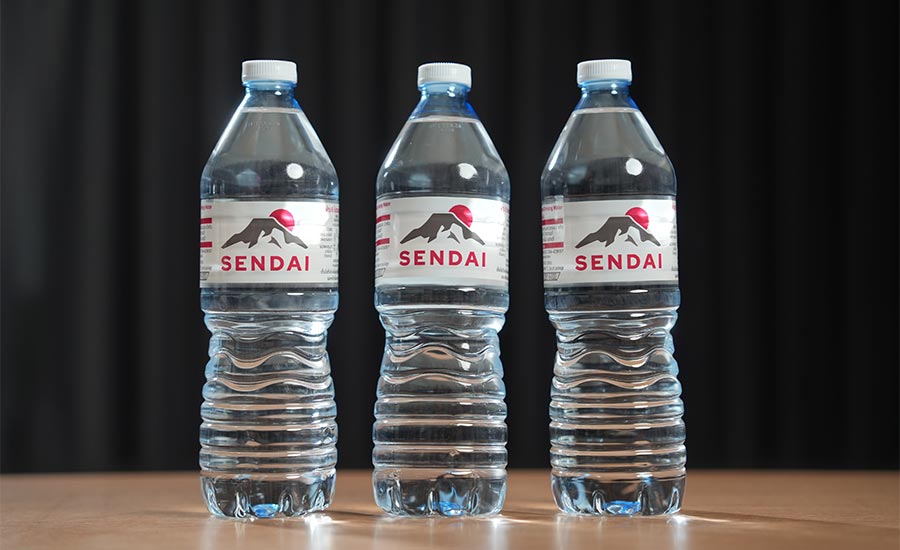 Image courtesy of Sidel
Modern systems for the time
As manufacturers increasingly look for technologies that reduce material use and energy consumption, experts highlight the advancements taking place with equipment.
“We’re seeing major advancements in plastic bottle manufacturing equipment focused on automation, digitalization, sustainability and flexibility,” KHS’ Ning says. “Modern systems can produce lighter bottles, process higher levels of recycled PET, provide faster and more automated format changeovers, and deliver real-time production insights through connected manufacturing technologies.”
Ning adds that innovations such as barrier coating technologies are expanding the range of products that can be packaged in PET while supporting sustainability, product protection and cost-reduction goals.
“Originating from coating technologies utilized in the pharmaceutical industry, where product safety and quality assurance are among the most demanding requirements, KHS Plasmax applies an ultra-thin glass layer to the inner surface of PET bottles,” Ning explains. “This enables producers to achieve glass-like barrier performance while maintaining all the operational and sustainability advantages of PET packaging.”
Krones’ Lee considers digitalization to be transforming the plastic bottle packaging industry.
“At Krones, we are pioneering the integration of digital technologies across the entire production process,” he says. “From real-time data analytics to predictive maintenance and smart line control, our digital solutions empower customers to achieve new levels of transparency, efficiency and reliability.”
Lee further notes that AI is unlocking new possibilities for quality and efficiency.
“Artificial intelligence enables smarter process adjustments, faster and more accurate inspection, and proactive defect detection in bottles, caps and labels,” he says. “By continuously monitoring environmental and material variables, AI-driven systems can autonomously optimize machine performance ensuring consistent product quality and reducing waste. For example, our cutting-edge Contiloop AI technology measures the most important container parameters and environmental parameters inline and readjusts the blow molding process if necessary.”
KHS’ Ning says that AI is expected to play an increasingly important role in plastic bottle manufacturing by making equipment smarter, more efficient and more predictive.
“As manufacturing environments become more connected, AI can help improve maintenance planning, optimize production processes, enhance quality inspection, and reduce energy and material consumption,” she explains. “By supporting more informed, real-time decision-making, AI has the potential to improve both operational performance and sustainability outcomes across the production process.”
Sidel’s representative notes that the company’s data intelligence tools such as IntelliADJUST and Evo-ON are helping manufacturers move from reactive monitoring to more proactive process management.
“IntelliADJUST automatically adjusts heating and blowing parameters in real time, helping improve bottle consistency, reduce waste and maintain uninterrupted production,” they explain. “When combined with Evo-ON's analytics capabilities, manufacturers gain greater visibility of line performance, supporting improvements in efficiency, quality and overall equipment effectiveness.”
They add that as digital technologies continue to advance, connected systems and data-driven insights will play an increasingly important role in smarter manufacturing operations.
“Operation size has a significant impact on equipment requirements,” Sidel’s representative says. “Smaller producers typically prioritize flexibility and lower capital investment, while larger producers focus on automation, efficiency and high-speed production. However, production volume is no longer the only consideration. SKU proliferation, sustainability goals, product requirements, and future growth plans also play an increasingly important role when selecting a manufacturing system. Ultimately, producers need solutions that align with both their current business needs and their long-term strategy.”
Krones’ Lee notes that since every customer is unique, so are their requirements when it comes to operation size impacting the type of system a manufacturer needs.
“Whether producing 10,000 or 100,000 bottles per hour, Krones offers scalable solutions tailored to each customer’s product mix and operational needs,” he says. “Our modular systems accommodate everything from standard beverages to complex, multi-product lines — delivering the same hallmark of Krones quality, reliability, and service, regardless of scale.”
Sidel’s representative says that the right manufacturing system depends on a producer's objectives rather than size alone.
“Production targets, space availability, workforce requirements and future growth plans are often just as important as output volumes when selecting equipment,” the representative explains. “For example, Coca-Cola FEMSA used Sidel’s Super Combi to overcome space constraints while increasing productivity. The integrated solution combines five production units into a single compact system, while the latest Super Combi Compact can reduce footprint requirements by up to 30% compared with previous models.”
Looking ahead
As for what the future holds for plastic bottle manufacturing equipment, experts weigh in on what to expect from advanced technologies and industry innovations.
“Innovation and partnership will define the next era with advancements in sustainability, digitalization and automation leading the way,” Krones’ Lee says. “At the recent drinktec in Munich, Krones unveiled a first-of-its-kind PET ‘line of the future’ called Ingeniq, which combines software, equipment and service into one seamless operation.”
KHS’ Lee anticipates that the future will be shaped by sustainability, circularity, automation and intelligent production systems.
“We expect continued progress in lightweighting, increased use of recycled PET, greater operational flexibility, improved energy efficiency, and technologies that help producers reduce material consumption while maintaining performance,” she says. “At the same time, the industry will continue to seek packaging solutions that balance sustainability, product protection and affordability. Technologies such as KHS Plasmax coating technology help producers achieve their sustainability and growth objectives by delivering glass-like product protection, extending shelf life, and preserving the lightweight, fully recyclable advantages of PET packaging.”
Sidel’s representative says that, over the coming years, the company expects continued investment in technologies that combine sustainability, automation and operational efficiency.
“Manufacturers will increasingly seek equipment that reduces resource consumption, supports recycled materials and responds quickly to changing production requirements,” the representative explains. “Technologies such as EvoFILL PET, SWING Evo and EvoBLOW Laser reflect this direction, combining production performance with sustainability benefits.
“Digital platforms and intelligent monitoring tools will also play a growing role in predictive maintenance, process optimization and data-driven decision-making,” the representative continues. “The future of packaging machinery lies in bringing together advanced equipment, digital intelligence and sustainability-focused innovation within a connected production environment.”
Looking for a reprint of this article?
From high-res PDFs to custom plaques, order your copy today!