Functionality, treat inspiration at the heart of flavor trends
Consumer demand for indulgent, healthy drinks prompts innovation
The idiom that “you can’t have your cake and eat it too” is a proverb meaning you cannot have two incompatible, desirable things at once, often suggesting one should make a choice rather than expect to have it both ways.
Yet, in the world of beverages, where consumers simultaneously expect both function and indulgence from the drinks they consume, experts note that this demand is a running theme that is influencing the flavors market.
Dan Machtemes, vice president of research and development at Allen Flavors, South Plainfield, N.J., taps this trend as “health-forward indulgence.”
“Consumers want beverages that feel indulgent while still supporting wellness goals — lower sugar, clean labels, and functional benefits,” he says. “This is driving demand for flavor systems that deliver richness, balance, and effective masking for sweetener reduction and functional actives like electrolytes, botanicals, and proteins.”
Machtemes adds that, alongside health-forward indulgence, consumers also are seeking adventurous, but familiar palates.
“Gen Z and millennials are eager to explore new flavors, but they prefer recognizable entry points,” he explains. “‘Newstalgia,’ globally inspired profiles with familiar cues, and sweet heat combinations are outperforming flavors that feel completely unfamiliar.”
Further, Machtemes notes that beverages increasingly are consumed as experiences, not just refreshment.
“Color, aroma, texture, and layered flavor journeys matter, with hybrid and expressive profiles gaining traction — accelerated by social media influence,” he says.
Anna Lada, senior marketing specialist at Valencia, Calif.-based Flavor Producers, a Glanbia company, echoes similar sentiments, noting that consumers are seeking drinks that deliver a complete sensory experience.
“[I]t’s what we’re calling a ‘A Wall of Taste: Full Sensorial Experiences,’” Lada says. “Great flavor is no longer enough on its own. It’s about how the product makes consumers feel as much as how it tastes.
“At the same time, there’s a stronger focus on better-for-you choices, but with a catch,” she continues. “People aren’t willing to compromise on enjoyment. Clean label, transparency, and sustainability matter, but if it doesn’t taste great, it doesn’t get a second purchase. That’s putting more pressure on flavor to do more of the work.”
Lada also says that global influence is everywhere, and flavors that once felt niche, like super bitter, extreme sour, or more savory umami profiles, are becoming more mainstream.
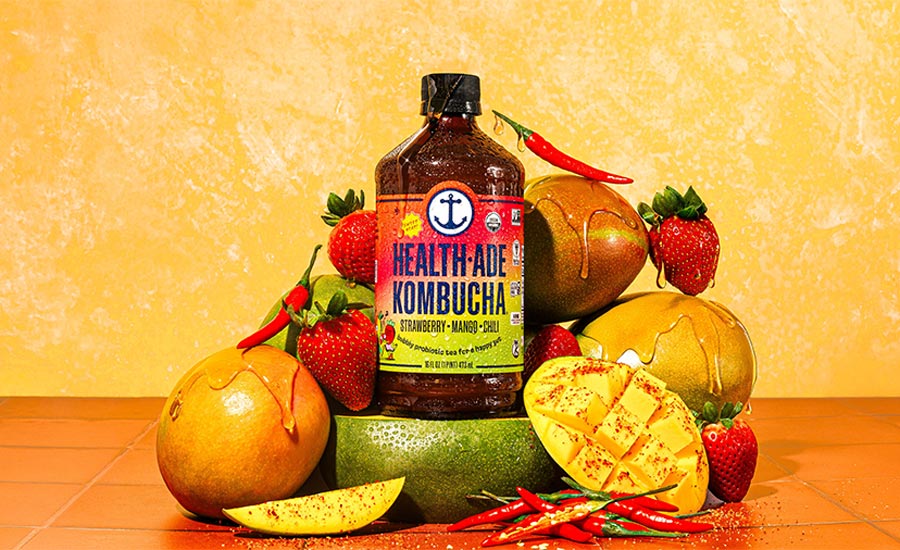 Health-Ade unveiled its newest kombucha flavor: Strawberry Mango Chili. Juicy strawberry meets sun-ripened mango and a dash of chili for a flavor that's both bold and balanced, the company says.
Image courtesy of Health-Ade
“And then there’s the emotional side,” she explains. “People are looking for small moments of escape, comfort, or even just something fun and different. Flavor plays a big role in that, whether it’s nostalgic, bold, or completely unexpected.”
Heather Young, account manager at Mother Murphys Flavors, Greensboro, N.C., notes that with functional wellness and indulgence trends, comes consumer interest in beverage customization.
“The coffee industry has long understood the interest and importance surrounding the idea of beverage customization,” she says. “We see this extending to other beverage segments such as the ‘dirty soda’ trend as well as customizable beverage options with new drive-through chain stores popping up across the country.
“Sophisticated and layered flavor profiles,” Young continues. “We are seeing more interest around greater complexity in flavor profiles specifically in beverage applications.”
Innovating for the times
With brands responding to consumer insights, experts highlight how beverage-makers are addressing these trends through formulations.
Stasha Johnston, senior vice president of marketing at Monin Americas, Clearwater, Fla., notes that beverage-makers are translating trend insights into formulations that feel exciting to consumers while remaining practical for operators.
“The goal is not innovation for innovation’s sake; it is creating beverages with clear consumer appeal without adding unnecessary complexity behind the bar or in production,” she says.
“Many of today’s trends bring new formulation demands,” Johnston continues. “A beverage may need to deliver vibrant color while maintaining a clean-label position. It may need to introduce savory or botanical notes without becoming too polarizing. It may also need to incorporate functional ingredients, such as electrolytes or protein, without compromising taste or texture. This is where formulation becomes critical: making sure a trend-forward beverage can also perform in real-world service.”
Kat Crozier, senior marketing manager for flavors at ADM, Chicago, notes that given ongoing consumer demand, beverage-makers are responding by seeking flavor profiles that balance familiarity with discovery across a range of applications.
“For example, hydrating, active nutrition beverages may leverage tropical flavors like passion fruit, mango and pineapple, as well as varietal citrus flavors, which signal light and refreshing attributes to consumers,” she says.
“There is also opportunity for mindful indulgence in dessert-like shakes with profiles like dulce de leche and soothing dairy, creamy or sweet brown notes,” Crozier continues. “Plus, beverage brands are playing with bold, multi-sensorial innovations, such as a combination of fizz with the distinct profile of sherbert, or bringing in sour, cooling and heating sensations.”
Moreover, Crozier notes that consumers’ interest in better-for-you formulations continues to shape the beverage landscape, which sits adjacent to traditional flavor trends.
“What’s becoming increasingly clear, especially amid the wave of reformulation work across sugar reduction, functional fortification and cleaner labels, is that taste parity is non-negotiable,” she says. “Consumers are willing to explore better-for-you options, but only if the flavor experience delivers the same level of satisfaction they expect from their traditional expectations.
“Concurrently, color is playing a more critical role than ever in shaping perception and purchase intent,” Crozier continues. “As brands navigate shifts toward more recognizable, label-friendly color solutions, ensuring visual appeal aligns with flavor expectations is essential. After all, consumers taste with their eyes first, so flavor and color must work in tandem to signal quality and deliver on their expectations.”
Melanie Bacon, applications technologist at Mother Murphys Flavors, suggests that beverage-makers should select flavor profiles that complement the nuances of the functional ingredients when creating functional drinks.
“For example, choosing a grapefruit flavor for a beverage with a bitter ingredient allows for a more pleasant consumer experience,” she explains. “So, beverage makers are optimizing their formulations according to the chosen functional ingredients to promote repeat purchases.”
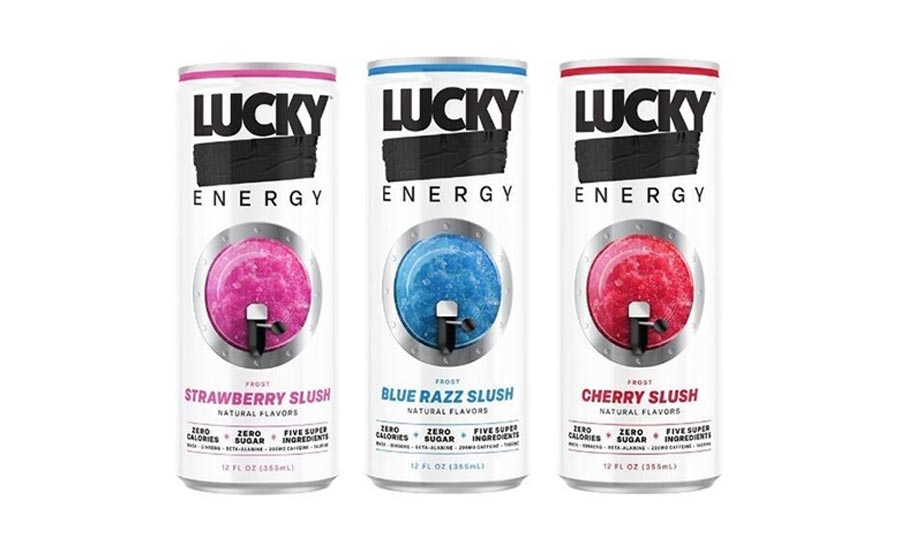 Lucky Energy announced the launch of SLUSH, a three-flavor lineup inspired by classic frozen favorites: Blue Razz, Cherry Slush, and Strawberry Slush, leaning into emotional familiarity that pairs with real performance, it says.
Image courtesy of Lucky Energy
Allen Flavors’ Machtemes echoes similar sentiments, noting that today’s flavors are formulated to work with botanicals, probiotics, caffeine, vitamins and minerals rather than sit on top of them.
“Citrus, tropical fruit, tea, ginger and floral notes continue to anchor functional beverages because they pair seamlessly with active ingredients,” he says.
Machtemes adds that brands increasingly are asking for core flavors that can be easily adapted across formats — still, sparkling, RTD, alcohol-adjacent or non‑alcohol — enabling faster line extensions and renovation without full reformulation.
Hybrid flavors meet the moment
Given consumers actively are seeking new and unexpected taste experiences, experts note that hybrid flavors give beverage-makers more opportunities to expand their portfolio and keep their brand exciting to consumers.
“Hybrid flavors are one of the most exciting areas in beverage innovation right now because they sit between familiarity and discovery,” Flavor Producers’ Lada says. “They allow brands to take something recognizable and layer in something new, like a nostalgic flavor with a global twist. That gives consumers a reason to try without pushing them too far out of their comfort zone.”
Lada adds that hybrid drinks also connect directly to the growing interest in cross-cultural flavor experiences, where consumers are looking to explore global influences in everyday products.
“In a crowded market, blending familiar and unexpected flavors has become a powerful way to stand out, drive trial and stay relevant,” she says.
Monin’s Johnston notes that hybrid flavors give beverage-makers a way to add more dimension to the drinking experience without overcomplicating the recipe.
“We are seeing consumers move beyond flavor profiles that are sweet-only,” she says. “Sweetness still has an important role, but it is no longer the only anchor for a successful beverage. Savory, salty, spicy, herbal and even briny notes are becoming part of the consideration set, especially as consumers look for drinks that feel more crafted and culinary.
“Pairings like miso caramel, spicy maple and blackberry basil are showing up in cocktails, mocktails and craft coffee, offering consumers something that feels both surprising and satisfying,” Johnston continues. “We are also seeing fermented and briny notes, such as pickle, cross over from the plate to the glass. At the same time, charred and roasted profiles like toasted coconut and grilled peach are adding unexpected depth to beverages ranging from Margaritas to mochas.”
Allen Flavors’ Machtemes adds that by blending familiar favorites with unexpected elements —such as strawberry basil, mango chili or lemonade tea — product developers can introduce excitement while remaining accessible to mainstream consumers.
“Hybrid flavors help brands bridge segments like hydration and refreshment, indulgence and function, or mocktails and wellness, opening the door to new usage occasions and premium positioning,” he explains.
Addressing supply challenges
As flavor is crucial to beverage formulation, experts highlight how supply chain concerns have impacted the market in recent years.
“Supply chain disruptions over the past several years have forced the industry to rethink how flavor systems are built and sourced,” Flavor Producers’ Lada says. “More importantly, they’ve made flavor more critical than ever.
“Flavor is no longer just about differentiation It’s about continuity,” she continues. “Brands are dealing with real challenges around ingredient availability, quality fluctuations and rising costs. The question becomes how to keep a product tasting the same, at a price consumers will still accept, when the raw materials behind that flavor aren’t consistent or aren’t available at all.”
To address such challenges, Lada notes that flavor systems are playing a much larger role.
“We’re seeing increased reliance on flavors to replace, reinforce or enhance key taste components,” she explains. “This helps products stay consistent even when the inputs don’t. It’s not just about making something taste good anymore. It’s also about making sure it tastes the same every time.”
Lada adds that there’s also growing pressure for transparency, especially around ingredients like vanilla, citrus and botanicals.
“Consumers want to know what’s in their products and where it comes from, which adds another layer of complexity when sourcing becomes unpredictable,” she says. “And the reality is, unfortunately, this isn’t a short-term issue.
“Consumers still want comfort, but with a twist. Familiar flavors are being reimagined in more modern or unexpected ways. Ingredients like hibiscus, turmeric, matcha and adaptogenic botanicals are gaining traction as consumers look for flavors that signal both wellness and experience.”
– Anna Lada, senior marketing specialist at Flavor Producers
“Between climate impact and global instability, supply chain challenges are something the industry has to build around, not wait out,” Lada continues. “What we’re seeing now is a shift toward more adaptable flavor development, where flexibility is built in from the start so brands can protect both product quality and cost.”
ADM’s Crozier also notes that supply chain shifts have put real pressure on the flavors market.
“Ingredients grown in nature depend on specific climates and conditions,” she explains. “To circumvent supply concerns, it’s important to diversify sourcing methods and work with a partner that has a global supply.
“Continued investment in agronomy, ingredient innovation, direct grower relationships and an integrated, flexible supply network is key to building long-term supply resilience while still delivering authentic, high-impact flavors,” Crozier continues.
Flavor-forward trends
As consumers continue to prioritize health and wellness while seeking to maximize joy and comfort from the beverages they consume, experts highlight what up-and-coming flavors are anticipated for the year to come.
Allen Flavors’ Machtemes expects to see fruits such as calamansi, guava, tamarind, mango, passion fruit, blood orange and pear to continue gaining momentum, “especially when layered with spice, citrus peel, or subtle floral accents that add complexity and sophistication to formulations,” he says.
Additionally, Machtemes anticipates the proliferation of botanical and floral beverages.
“Jasmine, hibiscus, chamomile, elderflower, rose and tea‑forward profiles are resonating strongly, particularly in beverages positioned around calm energy, balance and overall wellness,” he says.
Moreover, flavors with sweet‑heat and savory‑leaning notes, as well as those that offer nostalgia with a twist will continue to meet consumer trends, Machtemes notes.
“Combinations like chili‑lime, ginger‑citrus, pepper‑fruit, and salt‑accented flavors are emerging as ways to deliver intrigue and depth without relying on excessive sweetness,” he explains. “Familiar profiles such as orange cream, cherry cola, horchata and vanilla‑forward flavors are being reimagined with added texture, warming spice and reduced‑sugar flavor systems to meet today’s expectations.”
Flavor Producers’ Lada also anticipates growth across flavors that include botanical and functional profiles and elevated nostalgia.
“Consumers still want comfort, but with a twist. Familiar flavors are being reimagined in more modern or unexpected ways,” she says. “Ingredients like hibiscus, turmeric, matcha and adaptogenic botanicals are gaining traction as consumers look for flavors that signal both wellness and experience. I often think of this as ‘perceived function.’”
Further, Lada points to growth in global and cross-cultural flavors.
“Korean, Middle Eastern and Latin-inspired profiles continue to grow, often paired with familiar bases to make them more approachable,” she says.
Additionally, Lada notes that citrus, tropical and berry profiles remain strong, with momentum building around flavors like dragon fruit, black cherry and tangerine that offer a bit more distinction.
There’s also increasing interest in playful, imaginative flavor concepts, she says, especially in functional beverages, where the goal is to create an experience as much as a taste.
“Ultimately, the next wave of flavor isn’t about choosing between indulgence and function. It’s about delivering both in a way that feels seamless, exciting, and worth coming back to,” Lada concludes.
Looking for a reprint of this article?
From high-res PDFs to custom plaques, order your copy today!