Smart Conveyance Strategies for High-Performance Beverage Packaging Lines
Beyond Bottlenecks: Rethinking End-of-Line Performance
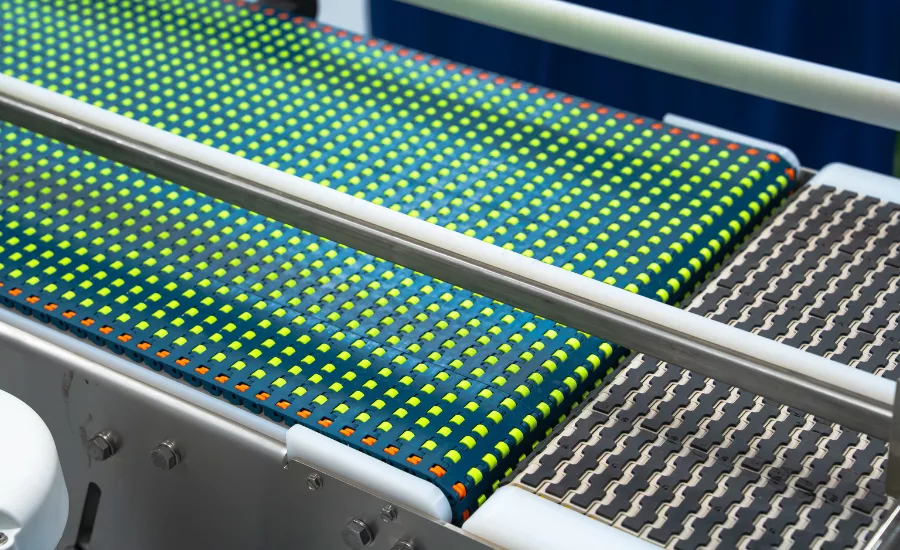
When beverage lines underperform, the root cause isn’t always what you expect it to be. End-of-line systems, including conveying, accumulation, and packaging, are often overlooked. But even minor inefficiencies in these areas can lead to massive operation challenges, impacting production and decreasing overall equipment effectiveness (OEE). As production speeds climb to keep up with market demands and packaging complexity increases, end-of-line performance has become a critical lever to stabilize and improve throughput, reliability, and cost control.
Small Issues. Big Impact.
At high speeds, conveying systems have very little margin for error. Inconsistent product flow, misalignment, or excess friction can quickly create backups that disrupt the entire line.
These issues typically stem from a few common factors:
- Mismatch between the conveying materials and the application
- System designs that introduce unnecessary transfer points
- Wear patterns that go unnoticed until failure occurs
Individually, they may seem like manageable issues, but together, they can significantly reduce production, increase product loss, and drive-up maintenance related expenses.
Where Performance Begins
To overcome these challenges, beverage producers must look at the foundation of conveying performance, which starts with conveyor belt material selection.
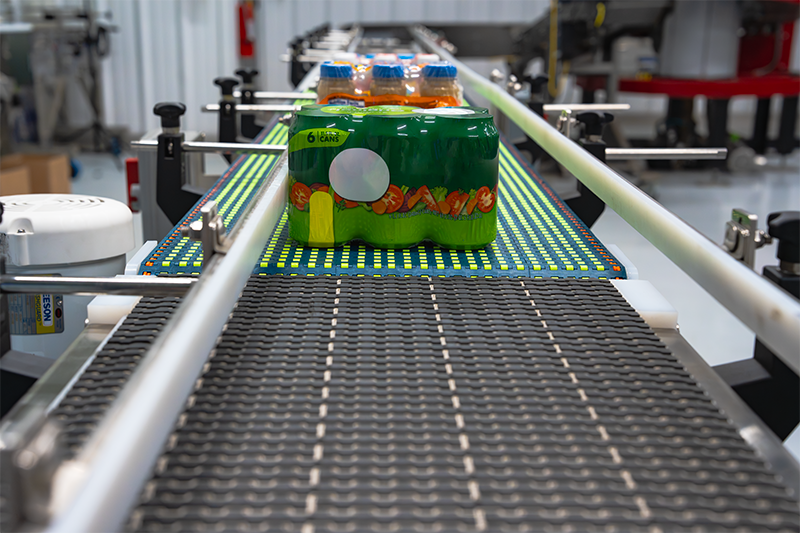 Image Credit: Regal Rexnord
In beverage environments, systems are exposed to moisture, cleaning cycles, and continuous operation. Belt materials must balance durability, low friction, and resistance to wear, all while maintaining stable product handling.
When materials are not properly aligned to perform with the application, operators often see:
- Increased drag and energy consumption
- Accelerated wear on components
- Unstable product handling, especially with lightweight containers, tipping
There are base materials that are commonly used and premium materials that have a host of new benefits to help reach your goals and solve challenges. Each material type has its own pros and cons. Modern beverage applications demand higher performance materials than standard chain materials can provide, especially in high-speed canning and bottling lines. These applications require materials that offer improvements such as a lower coefficient of friction, chemical resistance, better abrasion resistance, enhanced product stability, higher PV limits, and the ability to operate over a wide temperature range, including running dry. Premium chain materials combined with premium wear materials are essential for optimizing the performance of high-speed conveyor lines.
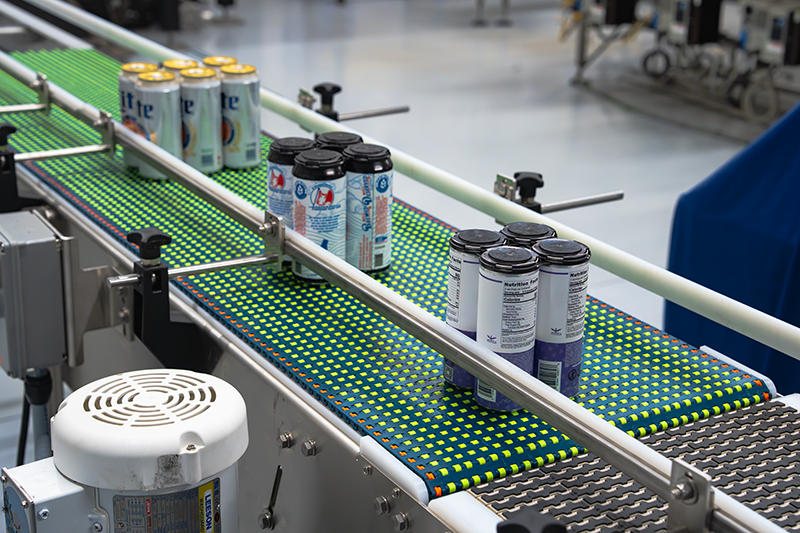 Image Credit: Regal Rexnord
When properly selected, the right belt will help to maintain consistent flow, reduce strain on critical applications, and extend service life without requiring major system overhauls.
Design for Flow, Not Just Movement
Moving products isn’t the same as optimizing flow.
High-performing conveying systems are designed to maintain smooth, controlled movement throughout the line. This means minimizing transition points, eliminating accumulation pressure, and ensuring consistent alignment.
Well-engineered systems reduce the likelihood of jams and product damage while supporting higher throughput. Small design improvements, like optimizing conveyor geometry or reducing transfer points, can deliver meaningful gains in system stability.
Wear Is Predictable, If You Know Where to Look
Wear is inevitable in beverage production. But unplanned downtime doesn’t have to be.
Most failures are preceded by gradual degradation such as elongation, surface wear, or misalignment that can be detected early with the right approach.
Operations that shift from reactive to proactive maintenance see measurable benefits. By monitoring system performance and inspecting key wear points, teams can address issues before they escalate into costly disruptions.
The result: fewer breakdowns, more consistent output, and lower total cost of ownership.
What Happens When Systems Are Aligned
When conveying systems are engineered to match the application, the results are tangible.
In a processing environment a facility was running conveyors at speeds up to 360 FPM and experienced repeated belt and roller failures, increasing downtime and maintenance costs. After evaluating the system, the Regal Rexnord team identified issues under the conveyor with chain wear and recommended the Rexnord™ 1533 Series LBP MatTop™ Chain to improve durability, handle high speeds, and extend service life in the demanding environment. By upgrading to a more application-specific conveying platform, the facility was able to reduce maintenance demands while also improving line stability, ultimately delivering significant annual cost savings.
The takeaway is clear: performance gains don’t always require new lines or major capital investments. Often, they come from optimizing the components already in place with a preventative retrofit.
This same principle applies across beverage packaging operations. Solutions such as advanced MatTop conveying platforms, including the Rexnord 1533 Series, are designed to improve wear resistance, maintain alignment, and support smoother product flow, helping reduce maintenance interventions while keeping lines running consistently.
Efficiency Drives Sustainability
The reality is that being dependent on maintenance labor is becoming harder and more costly, so beverage producers must use their time efficiently. Improving conveying performance doesn’t just impact uptime, it can also support you in achieving your business sustainability goals.
More efficient systems reduce energy consumption by minimizing friction and unnecessary load. Better product handling decreases waste, while optimized designs can simplify cleaning processes and reduce water use.
These incremental improvements add up quickly, helping operations meet both performance and environmental targets.
Take a System-Level View
The most effective improvements come from looking at the entire system, not just individual components. Partnering with a single, complete solutions provider can help pinpoint challenges and find holistic solutions to solve them.
A Gap Walk, also referred to as a line audit, done by an engineering application expert, can identify the best ways to optimize your lines, address pain points, and find areas for improvement in your systems. With decades of industry and application experience, they can walk with you through your lines and provide an outside perspective to find ways to maximize ROI, boost efficiency, and maximize productivity.
From Bottleneck to Advantage
End-of-line systems don’t have to be a constraint.
With the right combination of material selection, system design, and proactive maintenance, they can become a driver of performance. The difference lies in taking a more intentional, engineered approach to conveying.
For beverage manufacturers focused on maximizing uptime and throughput, the opportunity is clear: optimize the end of the line to unlock the full potential of the entire operation.
Resources:
- https://www.regalrexnord.com/products/conveyor-technologies/rexnord-1533-series-mattop-chain
- https://www.regalrexnord.com/regal-rexnord-insights/tissue-processing-facility-saves-165000-and-reduces-line-maintenance

Looking for a reprint of this article?
From high-res PDFs to custom plaques, order your copy today!