Interest in digestive health prompts beverage-makers to rise to the task
Fiber, biotic ingredients span across categories
Academy Award-winning actor Matthew McConaughey is quoted as saying: “There’s a gap between what I want to do, what I do on camera, and what gets edited. Right? So the goal is to try and close the gaps. What’s the biggest compliment is if I read a review and it’s exactly what I wrote down in my diary before ever filming it. That’s really cool. That’s the biggest signifier of closing the gaps.”
In the realm of health and wellness, with growing consumer awareness of the role digestive health plays in overall well-being, beverages are helping to “close the gap” by offering a convenient way for consumers to meet fiber and digestive health needs, experts note.
“Consumers are taking a more proactive approach to everyday health and wellness, therefore, it’s no surprise demand for functional food and beverages has resulted in growing expectations around digestive health beverages,” says Ian O’Neil, director of consumer intelligence at Rubix Foods, Jacksonville, Fla. “Gut health is one of the most tangible and widely understood benefits and it is increasingly shaping how people evaluate what they drink.”
O’Neil adds that consumer demand for digestive health drinks is being fueled by a broader shift in how consumers think about nutrition.
“Younger consumers are paying closer attention to micronutrients and how they support energy, immunity and cognitive function,” he says. “Digestive health fits naturally into that mindset, as consumers connect gut health to overall well-being.”

Early this year Karma Water debuted its new Karma Pineapple Coconut Probiotic Water, a refreshed take on one of Karma’s original flavors, featuring 2 billion CFU of BC30 Probiotics for digestive and immune support, and 100% daily value of six essential vitamins (A, B3, B5, B6, B12 and E), it notes.
Image courtesy of Karma WaterThom King, chief innovations officer at Icon Foods, Portland, Ore., notes that demand for these beverages is resulting in consumers asking deeper questions.
“Digestive health has moved from the fringe probiotic yogurt aisle into the center of the beverage world (see Pepsi prebiotic version),” King says. “Consumers are no longer asking, ‘Is this good for me?’ They’re asking, ‘What is this doing for my gut, my metabolism, my brain?’ Beverages have become the delivery system of choice because they’re convenient, habitual and scalable.
“If you can put function into a drink and make it taste like something people actually want to consume daily, you win,” he continues. “Digestive health is now table stakes in better-for-you beverages, not a differentiator.”
Emily Berg, marketing manager at Cargill, Minneapolis, notes that demand for digestive health drinks rapidly is expanding worldwide, with the segment outpacing most other functional beverage categories.
“Global launches with beverages with gut or digestive health claims rose 36% year-over-year,” she says, citing Innova Database, 2024-2025. “The rapid growth of ‘modern sodas’ with biotic benefits, supported by major advertising campaigns and strategic acquisitions, underscores the segment’s commercial momentum.”
Berg adds that with growing consumer demand, gut health is becoming a multi-benefit platform.
“Fiber, in particular, is gaining recognition not only for digestive support, but also for its role in satiety, weight management, and overall microbiome health — amplified in part by social media trends such as ‘fibermaxxing,’” she says. “At the same time, fiber remains one of the most under-consumed nutrients in the United States.”
Vaughn DuBow, senior director of marketing for North America health and wellness at ADM, Chicago, points to the fiber gap in modern diets as fueling the “fibermaxxing” trend.
“A key indicator of this shifting consumer interest is the recent success of carbonated soft drinks (CSDs) featuring prebiotic fiber, which, by offering a convenient and palatable way to boost fiber, are now paving the way for the broader acceptance and development of other food products with prebiotics,” he says.
Additionally, DuBow notes that with anti-obesity medications (AOMs), like GLP-1 receptor agonists continuing to surge in use, there is greater focus on multi-functional drinks that curb hunger and stabilize blood sugar while also supporting gut and digestive health.
“Products with ingredients that help minimize common side effects of AOMs, such as biotics for digestion, alternative hydration solutions, and alternative proteins that support muscle health, can benefit the growing AOM market,” he says. “Metabolic health and weight maintenance support, along with satiety, are areas where brands can provide solutions for those stopping medication.”
Icon’s King considers three “big” forces to be colliding when it comes to consumer demand for digestive health drinks — the first being metabolic health awareness.
“Between GLP-1 drugs and rising concern around blood sugar, consumers are finally connecting gut health to everything else, energy, weight, mood, inflammation,” he says. “Second, fiber is having its long-overdue comeback. For years, protein hogged the spotlight while fiber sat in the corner like an underappreciated workhorse. Now people are realizing most Americans are wildly deficient, and they’re actively looking to close that gap.
“Third, label scrutiny,” King continues. “Consumers want function, but they want it to feel natural. That means recognizable ingredients, low sugar, and no chemical baggage. If it sounds like it belongs in a lab experiment, it’s going back on the shelf.”
Fiber wins the day
Given the rising demand for digestive health drinks, beverage-makers are turning to a plethora of ingredients for formulation.
“Fiber is the backbone,” Icon’s King says. “You’re seeing a lot of soluble fibers like inulin, FOS, resistant dextrins, partially hydrolyzed guar gum (the belle of the ball), and tapioca-based fibers. They bring prebiotic benefits, digestive support, and in many cases, sugar reduction and mouthfeel.
“Then you’ve got the microbiome players: probiotics, obviously, but also postbiotics starting to creep in because they’re more stable and easier to work with,” he continues. “Rare sugars like allulose are pulling double duty, helping reduce sugar while contributing to osmotic balance and, in some cases, gut tolerance considerations. Albeit allulose is only 70% as sweet as sugar, so it needs a little lift from stevia, monk fruit, or both.”
Cargill’s Berg notes that soluble corn fiber is among the fastest growing fiber sources in beverage launches with a digestive or gut health claim.
“Its versatility and science-backed health benefits are central to its popularity,” she says. “Cargill’s offering provides a minimum 70% fiber material, enabling excellent source of fiber claims at 5.6 grams per serving, good source of fiber claims at 2.8 grams per serving, and it may also support prebiotic claims. It also offers improved digestive tolerance compared to fibers such as inulin.”
Berg also notes that soluble corn fiber is well-suited for reduced-sugar beverages. “With roughly half the calories of sugar, it helps replace the bulk and mouthfeel typically lost in sugar reduction,” she explains.
ADM’s DuBow notes that beverage-makers are leveraging a diverse range of functional ingredients to fortify new product offerings and address consumer preferences.
“For example, ADM/Matsutani LLC’s prebiotic soluble dietary fiber, Fibersol, is backed by over 30 years of research, with clinical studies showing that it promotes the growth of gut microbes positively associated with health,” he says. “Additionally, at 3.75 grams per serving (for a total of 15 grams per day over 3 weeks), Fibersol may help nourish the intestinal flora and support a healthy intestinal tract environment.”
DuBow adds that prebiotic fiber may delay hunger, stimulate appetite-regulating hormones, and may increase satiety perception, attributes that are top of mind for consumers taking AOMs, especially those that have recently transitioned off the medications.
“Results from a study demonstrate that when consumed at 10 grams with a meal, Fibersol may increase appetite regulating hormone GLP-1 as part of a normal physiological response in healthy individuals,” he says.
Further, DuBow notes that clinical research also is demonstrating how pro- and postbiotics can provide targeted digestive health support.
“Our Bifidobacterium longum CECT7347 (ES1) probiotic and postbiotic may support overall gut and digestive health, in addition to the potential of supporting reduced bloating,” he says. “Additionally, DE111 (Bacillus subtilis) spore-forming probiotic is backed by numerous studies showing that it may support digestive health, and it may also help support healthy immune function.”
All about function
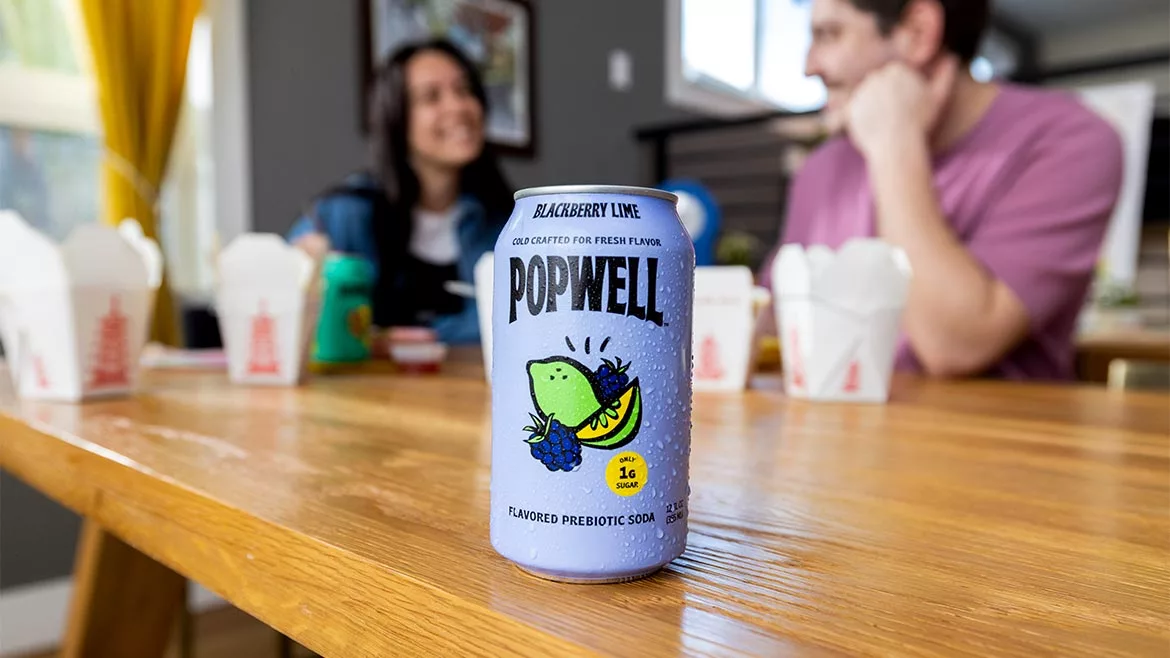
As far as which beverage categories are key adopters of digestive health ingredients, experts note that carbonated drinks are leading the way, especially with the rise of “modern sodas.”
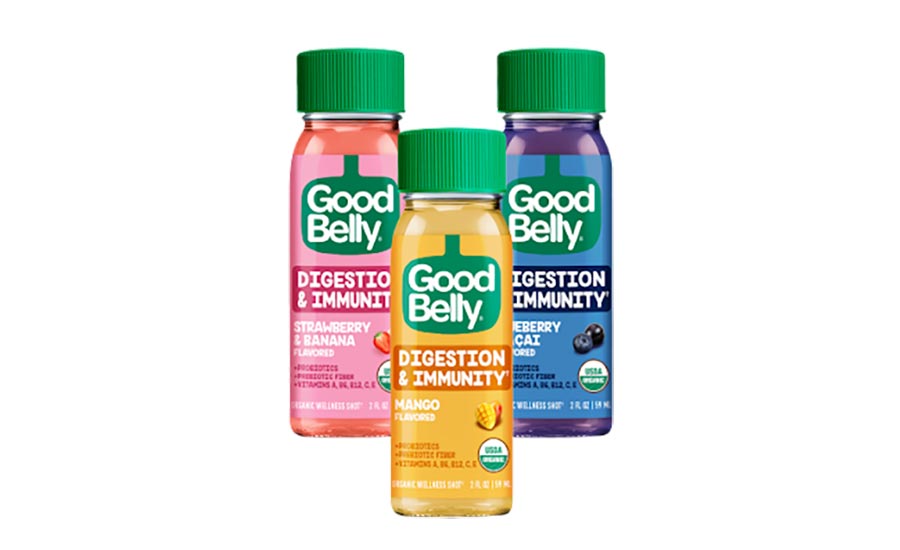
GoodBelly unveiled its newly reformulated Wellness Shots to deliver gut and immune health benefits. Each 2-ounce shot combines 3 grams of prebiotic fiber with the clinically studied DE111 probiotic strain and is formulated to be organic and non-GMO, the company says.
Image courtesy of NextFoods Inc.Cargill’s Berg points to “modern sodas” as one of the fastest-growing segments.
“Globally, carbonates launched with prebiotic claims grew 91% year-over-year, while those with probiotic claims increased 65%,” Berg notes, citing Innova Database, Global, 2024 vs. 2025.
Rubix Food’s O’Neil also points to the rise of functional sodas and sparkling beverages, especially with prebiotic sodas that position digestive health in a familiar and accessible format.
“These products are helping redefine soda as something that can deliver both enjoyment and benefit,” he says. “At the same time, iced coffee, tea, and refreshers are emerging as unexpected spaces for digestive health, as consumers look to enhance their daily routines with added functionality.”
Icon’s King considers functional beverages to be leading the charge as ingredient adopters.
“Think enhanced waters, gut-health sodas, teas (watch matcha), and fiber-forward RTDs,” he says. “But what’s more interesting is where it’s spreading. Ready-to-drink teas, cold brew coffees, protein shakes, and even sports hydration products are layering in digestive health claims.
“The line between categories is blurring,” King continues. “A hydration drink now has fiber. A protein shake is talking about gut health. Everything is becoming a hybrid, because consumers don’t think in categories anymore, they think in outcomes.”
ADM’s DuBow adds that beyond general wellness, the intersection of gut health and physical performance has sparked a surge in fortified sports nutrition.
“Athletes and fitness enthusiasts are gravitating toward protein shakes and meal replacements enhanced with fiber and biotics to improve digestion and increase satiety,” he says. “This shift aligns with a broader consumer interest in metabolic health and weight management. Consequently, the boundaries between beverage categories continue to blur, bringing gut-friendly formulations into unexpected segments like energy drinks to support a more holistic approach to well-being.”
A promising future
As more beverage categories jump on the digestive health bandwagon, experts weigh in on what to expect in the future.
Cargill’s Berg notes that the company anticipates continued growth for these beverages, especially as brands layer in adjacent benefits such as hydration and mental wellness.
“The rise of GLP-1 medications is another factor, bringing greater attention to satiety and gut health ― benefits prebiotic fibers are well positioned to address,” she says. “Backed by strong scientific research, formulation versatility, and relevance to widespread nutrient gaps, fiber is poised to be an important part of the next generation of functional beverages.”
Icon’s King predicts digestive health won’t remain a standalone claim, but rather embedded into everything.
“You’ll see more precision in fiber systems, blending different types to control fermentation rates, tolerance, and metabolic outcomes,” he says. “Fibermaxxing isn’t about cramming in grams, it’s about engineering the right profile.
“Postbiotics will gain ground because they solve stability issues,” King continues. “Sugar reduction will continue to ride shotgun with digestive health, especially with ingredients like allulose gaining traction, and notably, even progressive institutions like the New York City school system have carved out space for it, which tells you where this is heading. And ultimately, the winners will be the brands that understand this: Digestive health isn’t about adding an ingredient. It’s about designing a system that works in the body and in the bottle.”
ADM’s DuBow says the future of digestive health ingredients and beverages will be driven by flexible, stable ingredients that enable new product innovation.
“As demand for gut health solutions continues to expand across a wide range of beverage applications, ingredients — particularly postbiotics — that can adapt and maintain efficacy in different formulation conditions and product types will become increasingly valuable,” he concludes.
Looking for a reprint of this article?
From high-res PDFs to custom plaques, order your copy today!