Lotus is a lifestyle brand redefining better-for-you beverages with intentional, plant-based ingredients. We blend taste and function to support mind and body well-being, delivering clean enjoyment for modern-day life


The Rise of Modern Soda: How Functional, Better-for-You Soft Drinks Are Reinventing the Category

The Modern Soda Movement
Soda is back in the spotlight. But this is not the soda we grew up with.
A different kind of player has entered the soda aisle, a category called Modern Soda, shaped by consumer demand for something better.
It looks familiar at first glance, but it’s built with more intention. Ingredients are chosen thoughtfully. Formulations consider not just taste, but the impact of regular consumption. Modern soda reflects a shift toward beverages designed to support everyday life, not work against it.
It’s an evolved version of something we’ve always loved, shaped by how we live now.
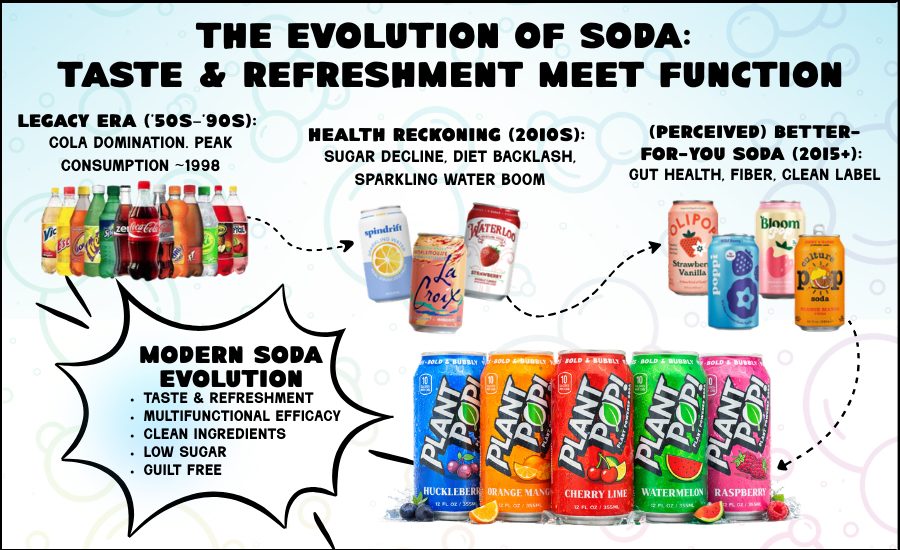
So, how did we get here?
At the start of the last century, soda was simple. Sweet. Fizzy. Fun.
It was never meant to be complicated. It was meant to taste good and be shared.
Then it became something else.
In the early 1980s, sugar became the enemy. Health conversations shifted, and the soda industry was forced to respond. Instead of rethinking soda itself, major brands reformulated. Sugar was swapped for artificial sweeteners. Colors and flavors became increasingly synthetic. These changes were marketed as “healthier”, but they created a new problem.
Soda slowly became synonymous with poor health. Just another junk food villain. Not only high in sugar, but now loaded with artificial ingredients most people could not pronounce.
Parents were left with two bad choices. Too much sugar and artificial coloring, or too many chemicals and lab-created substitutes. Neither felt right. But the products stayed on the shelves, and over time, trust eroded.
Soda earned its place on the junk food list. Many people kept drinking it, choosing what felt like the lesser of two evils. Others walked away entirely and gave up on beverage enjoyment altogether.
That moment matters.
Today, many shoppers still assume the label is hiding something. Ingredients are read with skepticism, not curiosity.
Nearly three-quarters of global consumers now intentionally limit sugar. Parents read labels closely. Younger generations rightly question artificial sweeteners and chemical-sounding additives. What once defined refreshment now feels out of step with modern life.
The First Reset: Fiber and Fizz
Once trust broke, the industry did try to respond.
The first real reset was simple subtraction. Less sugar. Fewer calories. The rise of prebiotic sodas proved something important, people still wanted soda, they just wanted it to align with how they were thinking about health.
Fiber-forward drinks brought function into a familiar format. They permitted health-conscious households to come back to the soda aisle in good conscience. Retailers followed, carving out space for functional soda that sat somewhere between wellness and indulgence.
For a moment, it worked.
Fiber and fizz showed the category was not obsolete. Soda still had a place in modern life. But it also revealed a limitation.
Subtraction was never going to be enough.
As more brands rushed in, the aisle filled with copycats. Same claims. Same ingredients. Same positioning. Many were chasing a trend rather than listening to what consumers were actually asking for; they want it all!
Why “Better” Still Did Not Feel Good Enough
Over time, people began thinking about wellness differently. Not as a single benefit, but as something more holistic. Gut health mattered, but so did immune balance, stress levels, mental clarity, and long-term health.
At the same time, trust was still fragile.
Many functional beverages relied on complex ingredient systems that technically met safety standards but did not feel like real food. Labels became longer. Claims became louder. Confidence did not follow.
For some, fiber-forward drinks began to feel less like everyday beverages and more like digestive supplements. Something you had to be mindful of. Something you could not enjoy freely or frequently.
And the flavor often suffered.
Too many functional drinks still asked people to trade enjoyment for benefit. That trade-off felt familiar, and it felt exhausting.
Modern soda does not need to ask people to choose. It needs to deliver both.
What Modern Soda Was Always Meant to Be
Soda itself was never the problem.
The formulation was.
At its core, soda was always meant to be simple. Refreshing. Enjoyable. Something you could reach for without overthinking. What broke trust wasn’t carbonation or flavor. It was the trade-offs baked into the ingredients.
Modern soda brings back what worked and removes what didn’t.
It starts with clean sweetener systems that don’t spike or crash. Plant-based ingredients that people recognize and understand. Functional inclusions that support the body without overstimulation, artificial aftertaste, or the feeling that you need to limit how often you drink it.
In other words, soda that fits into real life.
This matters most at home. Parents want beverages they feel confident buying regularly, not products reserved for occasional compromise. Trust is not built through novelty or claims. It’s built through repeat choice. The kind of drink you grab again because it tastes good and feels right.
And it matters in the aisle, too.
When soda earns back trust, people return. Not just traditional soda drinkers, but shoppers who walked away years ago. Functional carbonated beverages are pulling consumers back into the category, often from adjacent wellness spaces, when taste and transparency finally align.
That is what modern soda was always meant to be.
Not restrictive. Not performative. Just better.
The Next Phase: Soda Without Compromise
As the category continues to evolve, the difference between what works and what doesn’t becomes clear.
It’s no longer enough to remove sugar or add a single benefit. Consumers are looking for beverages that support the whole picture. Gut health matters. So does immune balance, stress support, mental clarity, and long-term well-being.
And none of it matters if the flavor doesn’t hold up.
The next phase of modern soda depends on two things. Broader functionality and real taste parity.
This is the space Plant Pop was designed to lead.
Plant Pop is built as a multi-functional beverage, not a single efficacy solution. Its proprietary blend of organic GRAS, plant-based, clinically supported ingredients is designed to support gut health, immune balance, cellular vitality, stress regulation, cognitive clarity, and hydration, all in a format people already love.
There’s no caffeine. No sugar spike. No artificial aftertaste. Just a familiar, full-flavor soda experience that doesn’t ask you to compromise.
And it tastes like soda should.
Balanced. Clean.
The kind of drink you finish and want again.
Because taste isn’t a bonus. It’s the foundation. Without repeat purchase, the function doesn’t matter.
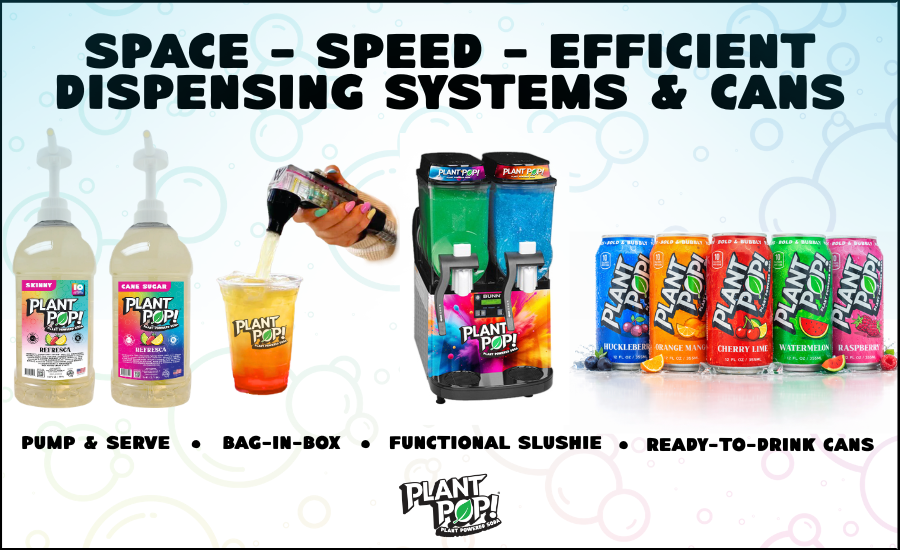
Plant Pop also expands where modern soda shows up. Beyond ready-to-drink cans, it’s available in concentrate formats and fountain service, bringing clean, functional soda into everyday environments where better options are often missing.
And access matters.
This is what the next phase of soda looks like.
Not less bad. More good.
Not niche. No longer complicated.
Just done right.
Better for You Should Also Mean Accessible
This conversation often gets framed as wellness or lifestyle. But at its core, this is about access.
Good food is not a luxury. It’s a basic need. People who rely on SNAP and EBT for their groceries deserve the same quality, transparency, and care as anyone else. Healthy choices should not depend on income level.
SNAP and EBT eligibility ensures that clean, thoughtfully made beverages are not limited to premium shelves or niche audiences. In a category that has long asked consumers to choose between affordability and quality, this matters. Clean soda should not be exclusive.
Federal dietary guidelines shape what qualifies for programs like SNAP, EBT, and school meals. As those guidelines continue to move away from sweetened beverages, major beverage companies are facing a real consequence. Products that once dominated coolers may no longer qualify.
That puts billions of dollars at stake.
So, we are watching something familiar happen.
Large legacy brands are scrambling to adjust. New labels. Cleaner language. Reformulated versions of the same products, positioned as “better-for-you.” It looks like progress on the surface, but the foundation hasn’t changed.
This is not the first time the industry has responded this way.
In the 1980s, sugar was called out, and soda companies reacted by swapping one problem for another. Sugar was replaced with artificial sweeteners. New branding followed. Trust eroded.
Today, we’re watching the same cycle repeat.
Major companies are not rethinking soda. They’re once again re-labeling and re-marketing it. Fiber gets added. Sweeteners get swapped. Claims get louder. But the core formulation remains largely the same.
Consumers can feel the difference.
Plant Pop takes a different approach. Instead of reformulating to meet eligibility requirements, it was built from the start to belong there. SNAP and EBT eligibility is not an afterthought or a retrofit. It’s part of the design.
Clean, functional soda should be available to everyone. Not just those shopping the premium aisle.
This Is Bigger Than a Trend
More than 60 percent of U.S. adults consume soda daily. That level of reach is rare in any category.
When a product appears in that many households, formulation decisions are not isolated. They scale.
The rise in chronic health concerns in the U.S. did not happen in a vacuum. It followed decades of normalized consumption of ultra-processed foods and beverages that were never designed for daily use. When products reach near-universal adoption, the consequences of formulation decisions become public health conversations.
Manufacturers have a responsibility to align formulation with how products are being consumed. When something is consumed this often, by this many people, small ingredient decisions matter. Transparency matters. Long-term design matters. Trust matters.
Reformulations often occur in response to regulation or consumer pressure. Surface-level adjustments may satisfy short-term demands, but they do not rebuild trust.
Modern soda represents a different approach. Instead of reacting to criticism, it begins with the assumption that daily beverages should be built for daily consumption.
Consumers Are Paying Attention Now
Today’s shoppers are informed. They read labels. They ask questions. They notice when companies pivot only because they have to.
Some soda brands try to entice younger consumers by imitating sodas after candy, popsicles, and sour sweets. But today’s household gatekeepers, especially moms, are scrutinizing ingredient labels more carefully than ever, pushing modern soda toward cleaner formulations and transparent benefits.
Regulatory compliance alone does not build trust. GRAS status still matters, but it is a baseline standard, not a differentiator. Consumers are asking a more practical question: Does this product make sense for how I actually live?
They are no longer satisfied with “less bad.” They expect products that align with daily consumption, not occasional indulgence.
And they expect them to taste good.
Removing one ingredient or adding another does not restore confidence if the experience still feels like a compromise. Transparency without performance is not enough. Function without flavor does not scale.
Modern soda must do more than reduce risk. It must deliver value in both directions supporting well-being while preserving the enjoyment that made soda culturally relevant in the first place.
The Bigger Shift
This is the real shift taking place.
Modern soda is moving away from reactionary reformulation and toward intentional design. Away from gimmicks and toward transparency. Away from short-term compliance and toward long-term trust.
Consumers are asking for products that make sense in everyday life. They want beverages built for daily consumption, not defended as occasional indulgences. Ingredients they recognize. Function that feels intentional. Flavor that holds up.
The brands that will shape modern soda will not rely on louder claims or minor tweaks to legacy formulas. They will build differently from the start.
Clean ingredients should not be radical. They should be expected.
That expectation is not a trend. It’s the new standard.
Plant Pop was built for it.
Looking for a reprint of this article?
From high-res PDFs to custom plaques, order your copy today!