Zero, diet extensions keep carbonated soft drink market fresh
Prebiotic options see prominence proliferate within CSD market
There are times that one wants to avoid getting a zero, whether it be for test or homework scores, or judges scoring during a competition. In an evolving beverage market, zero calories or zero added sugars is a driving force for innovation, and the carbonated soft drink (CSD) is no different.
“Carbonated soft drinks have been performing steadily for the most part, but the real growth is happening in zero-sugar and diet extensions,” says Mitch Madoff, head of retail partnerships at Keychain, New York. “Traditional full-sugar colas remain relatively flat, while lower- and no-sugar options are driving momentum. Legacy brands like Coca-Cola, PepsiCo, and Dr. Pepper are still the go-to favorites, but the momentum is clearly moving toward lower- or no-sugar innovations and new variants.”
Jack Doggett, food and drink analyst at Mintel, Chicago, explains that although regular or full-sugar CSDs dominate the market, the diet category is shrinking that gap.
“The U.S. carbonated soft drink market continued to grow in 2025, reaching an estimated valuation of $55.8 billion, a 6.2% increase from 2024,” he says. “Regular carbonated soft drinks retain a much larger share of the overall market than diet, with estimated values of $36.5 and $19.3 billion, respectively. However, diet is closing the gap, achieving double digital percentage growth in sales [year-over-year] (YoY) since 2021, including an estimated 11.8% growth in 2025.”
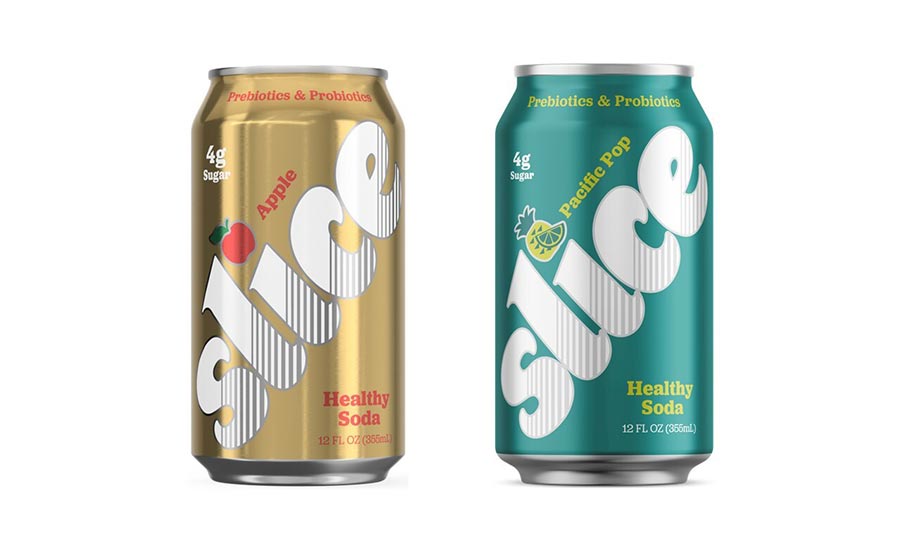 Slice Soda added Pacific Pop and Apple to its lineup of prebiotic and probiotic sodas. Both offerings contain 5 grams of fiber in each 12-ounce can.
Image courtesy of Suja Life
Within full-sugar offerings, Doggett highlights the challenges that cola and fruit-flavored CSDs experienced in 2025.
“Full-calorie cola fell by 8%, while fruit flavored soda declined by 7%,” he says. “These options are expected to remain popular, but momentum currently lies with diet and functional soda options on the back of a health push from consumers.”
Keychain’s Madoff notes the mixed year that full-sugar soda experienced in the past year, but points out some brands that weathered the challenges.
“Some traditional citrus and fruit options are declining, but certain varieties, like Mountain Dew’s tropical lime extensions, are showing strong growth,” he says. “From what we’re seeing, full-sugar sodas still play an important role in the market, even if they aren’t leading the category.”
However, Madoff adds that zero-sugar CSDs have benefited from the health and wellness movement.
“Today, more people are reaching for zero-sugar or ‘better-for-you’ drinks that align with their health and wellness goals,” he says. “On the Keychain platform, we’re seeing solid growth in diet and zero-sugar colas, along with flavored sparkling drinks that feel lighter and more refreshing.
“Even within major brands, zero-sugar options, natural flavors, or products with premium-feeling ingredients are outperforming their classic sugary counterparts, like Sprite Zero and 7Up Zero Sugar,” Madoff continues. “At the same time, sparkling water options like Bubly are gaining traction as consumers continue to gravitate toward simpler, cleaner choices.”
Gary Hemphill, managing director of research at Beverage Marketing Corporation (BMC), Wintersville, Ohio, also calls attention to the performance of no-sugar CSDs, pointing to consumers interest and potential of natural zero-calorie sweeteners.
“Consumers prefer natural zero-calorie sweeteners that closely emulate the taste of sugar,” he says. “The expansion of the number of sweeteners on the market today has helped the diet segment and the overall category [and] product developers.”
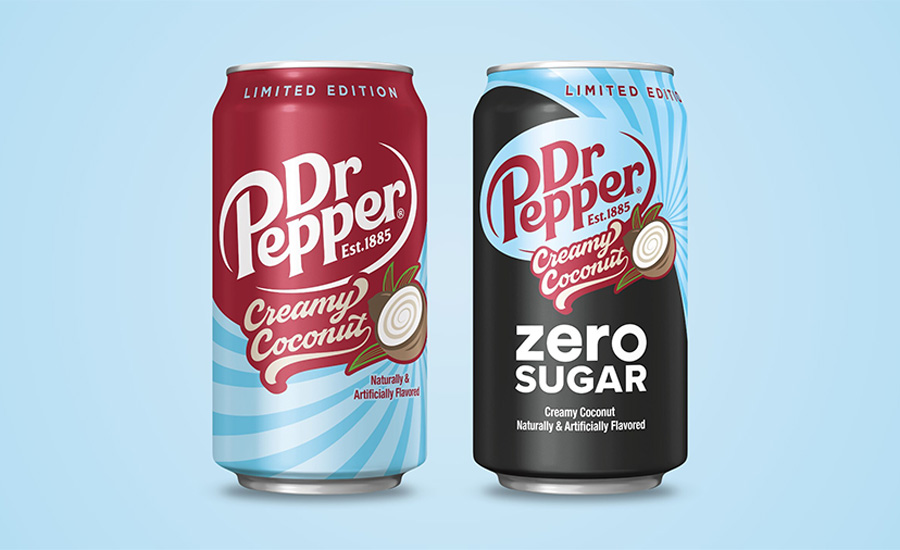 Dr Pepper announced the limited-time offering of Creamy Coconut and Creamy Coconut Zero Sugar.
Image courtesy of Keurig Dr Pepper
Mintel’s Doggett further notes that Generation Z consumers could play a role in the growing interest in natural sweeteners.
“Sweeteners remain top of mind for U.S. consumers and continue to drive interest both away from and towards natural and diet soda,” he says. “Younger consumers are particularly supportive of natural sweeteners: 41% of Gen Z say they would pay a premium for naturally sweetened soda. Although this category has historically relied on artificial sweeteners and flavors, there is strong demand for brands to naturalize their formulations.”
“Consumers prefer natural zero-calorie sweeteners that closely emulate the taste of sugar. The expansion of the number of sweeteners on the market today has helped the diet segment and the overall category [and] product developers.”
– Gary Hemphill, managing director of research at Beverage Marketing Corporation
Meanwhile, Keychain’s Madoff notes the considerable way that consumers’ relationship with sweeteners is shaping the CSD market.
“More shoppers are cutting back on traditional sugar, while zero-sugar and naturally sweetened options keep gaining traction,” he says. “As a result, alternative sweeteners like monk fruit are showing up more frequently in formulations, delivering sweetness without calories and offering a more plant-based, approachable feel for today’s consumers.
“The brands that are leaning into cleaner sweeteners are the ones capturing attention,” Madoff continues. “Just look at Zevia, which uses stevia to deliver zero-calorie sodas that still taste bold and familiar. It’s a good reminder that people don’t necessarily want to give up soda, they just want it to fit better with their health goals. The brands winning right now are the ones that can keep the flavor people love while swapping in ingredients that feel like a smarter choice.”
Better-for-you shines
Although zero and diet CSDs have shown growth potential, another subset of the functional beverage market has found its footing in the category.
“Today’s consumers are increasingly seeking out products that are better-for-you and offer functional benefits as well,” BMC’s Hemphill says. “CSDs have been somewhat slow to adapt until recently. So-called modern sodas have been a bright spot in a category that has generally otherwise struggled to grow in recent years.”
Among those modern sodas, prebiotic CSDs have shown the most potential.
“Prebiotic sodas have sprung onto the beverage landscape in recent years, and proven to be a successful alternative to traditional mainstream sodas,” Hemphill says. “We’re seeing double-digit growth of this segment.”
Mintel’s Doggett highlights that functional soft drinks is not just found from entrepreneurs, but also large corporations entering the fold.
“Functional trends have significantly reshaped the CSD market,” he says. “The success of Olipop and Poppi’s prebiotic sodas has positioned them as modern, indulgent, and health-focused alternatives. Larger players have followed suit: Coca Cola released Simply Pop, and PepsiCo acquired Poppi while launching its own prebiotic soda to capitalize on rising demand for health-oriented options.
“Prebiotics helped build functional momentum in the category,” Doggett continues. “Consumers report they would pay a premium for hydration support and immunity benefits in their carbonated soft drinks, but natural ingredients are still the most sought after in this category.”
Keychain’s Madoff describes the prebiotic soda as operating in a sweet spot as consumers balance function with taste.
“Take Pepsi’s recent prebiotic line launch, for example,” he says. “By mixing nostalgic flavors with digestive health perks, they’re appealing to shoppers who want wellness perks but still crave a fun, soda-like experience. Beyond the legacy players, newer brands are helping define what success looks like in this category. With flavors like its popular Vintage Cola, Olipop has shown that you can build real momentum by leaning into classic soda profiles while clearly communicating functional benefits like gut health support and lower sugar.
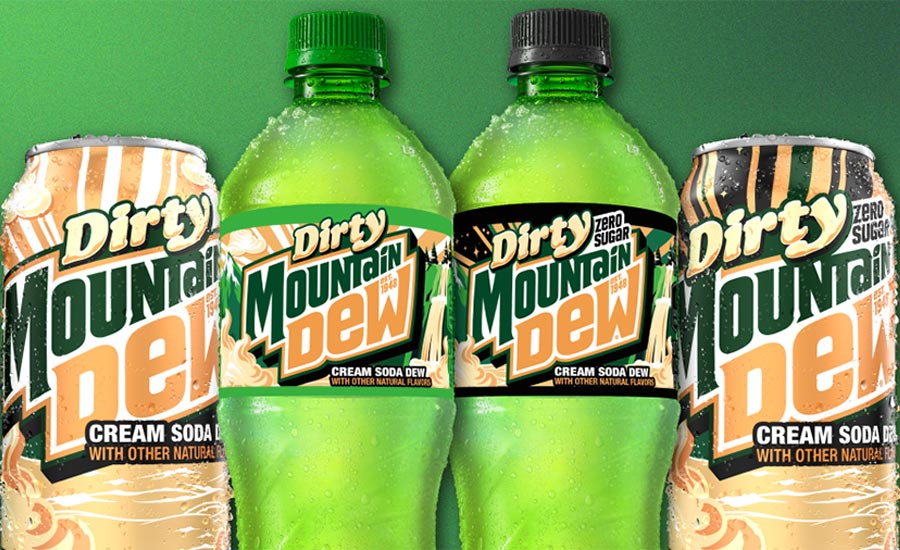 Available later this year, Dirty Mountain Dew Cream Soda Dew mixes the citrus kick of Mountain Dew with a smooth cream flavor twist, delivering a distinctive and indulgent taste, the company notes.
Image courtesy of PepsiCo
“The broader soda category trend shows that zero-sugar and functional options are growing faster than classic full-sugar sodas,” Madoff continues. “That means prebiotic offerings have a real opportunity to stand out if they strike the right balance between taste, functionality, and soda familiarity.”
However, not all analysts think prebiotic soft drinks will continue this growth trajectory.
“Prebiotic CSDs have already experienced substantial success, though growth may be nearing its peak,” Mintel’s Doggett says. “Full calorie soda still dominates, and most consumers primarily reach for soda to satisfy a familiar, indulgent taste. While health trends continue to influence behavior, some consumers are simply reducing soda consumption rather than seeking better for you options like prebiotics. Potential remains positive, but the ceiling for prebiotic sodas is approaching.”
Nostalgia and flavor influences
Zero-calorie and functional attributes are not the only way that CSD manufacturers are delivering on consumers wants. Flavor innovation in a range of forms and influences continues to ignite category buzz, experts note.
“Flavor innovation continues to be a key driver of category growth,” BMC’s Hemphill says. “That said, it’s been challenging in many cases to sustain the growth. Often one hot new flavor is replaced by another a year later.”
Despite the cyclical nature of vanguard flavors in soft drinks, analysts note that beverage manufacturers are pulling from a host of influences.
“Brands are building on familiar favorites rather than completely reinventing the wheel,” Keychain’s Madoff says. “Fever-Tree, for example, often rolls out unique mixers and flavored sodas that pair premium ingredients with unexpected flavor combinations, proving soda can feel both indulgent and a little elevated. The goal is simple: spark curiosity, drive trial, and keep people coming back, all while delivering on taste, quality and that occasional treat factor people are looking for.”
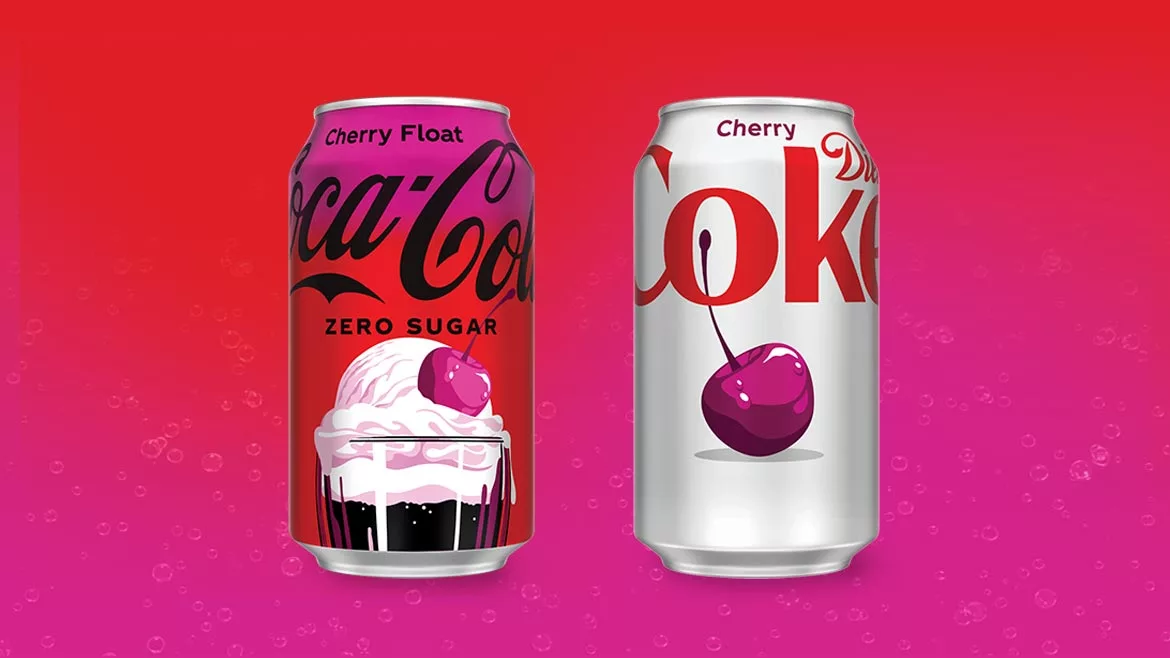
Another example of an amalgamation of familiar and treat is Atlanta-based The Coca-Cola Co.’s Coca‑Cola brand celebrating four decades of cherry-flavored innovation with an expansion of its Cherry portfolio, unveiling Coca‑Cola Cherry Float, Coca‑Cola Zero Sugar Cherry Float, and the nationwide release of Diet Coke Cherry.
Crafted to deliver the taste of a Cherry Coke float — without ice cream or dairy — the beverage blends Coca‑Cola Cherry with smooth, creamy vanilla notes for a familiar yet new profile, the company says.
This month, Keurig Dr Pepper, Burlington, Mass., and Frisco, Texas, also is embracing this trend with the limited-time offering of Dr Pepper Creamy Coconut and Dr Pepper Creamy Coconut Zero Sugar. The “dirty” fan favorite returns featuring Dr Pepper’s 23 flavor blend combined with summery coconut flavor for a smooth, creamy indulgence, the company says.
PepsiCo, Purchase, N.Y., also found a way to blend current consumer trends with the treat factor. At the NACS Show in October 2025, it announced that it will release in 2026 Dirty Mountain Dew Cream Soda Dew, which mixes the citrus kick of Mountain Dew with a smooth cream flavor twist, delivering a distinctive and indulgent taste, the company noted at the time of the show.
Leading up to the tradeshow, Mark Kirkham, chief marketing officer at Pepsi Beverages U.S., stated: “Mountain Dew has always pushed boundaries with flavors that become cultural phenomena. Dirty Mountain Dew Cream Soda, with its creamy indulgent taste, is just another example of how we leverage innovation to engage our fans. As a brand that has always embraced culture, Dirty Mountain Dew takes the dirty soda trend to a whole new level ― as only Dew can do.”
Mintel’s Doggett points out that various new flavor releases can deliver high-growth opportunities and commonly are rolled out as part of a limited-time offering timeline.
“Brands are introducing a range of new and emerging flavors with high growth momentum, such as pineapple, cream, black cherry, and guava,” he says. “Novel flavors like winter spice, margarita, caramel, chili pepper, and even cocktail-inspired profiles are gaining traction. These flavors are often positioned as limited-time or seasonal offerings to generate excitement and social media buzz.”
These innovative paths are among the many reasons Doggett is optimistic about the future of soft drinks.
“The CSD market outlook remains strong, with projections estimating it will reach $70 billion by 2030,” he says. “Future growth will stem from expanding BFY offerings and continued experimentation in flavors and textures. Prebiotics will remain a major driver, supported by new hydration‑focused innovations. Meanwhile, the rise of the ‘dirty soda’ trend will continue encouraging customization and playful flavor exploration.”
Keychain’s Madoff expects the trends that drove 2025 innovations are likely to continue.
“The future of CSDs is centered on better-for-you innovation, flavor creativity, and premium experiences,” he says. “Growth will continue to come from zero-sugar, naturally sweetened, and functional offerings that meet consumers’ health and wellness expectations.
“At the same time, limited-edition flavors, seasonal drops, and premium ingredients will keep shoppers engaged and willing to trade up,” Madoff continues. “Brands that can combine taste, innovation, and health benefits are the ones shoppers are going to reach for, making CSDs not just a nostalgic staple, but a category that evolves with modern consumer lifestyles.”
BMC’s Hemphill, meanwhile, notes that although softs drinks play a large role with American shoppers, growth will be harder to achieve.
“CSDs are indelibly woven into the fabric of American life,” he concludes. “They will remain a mainstay in consumers beverage repertoire. Growth will continue to be challenging as new competitive categories and brands continue to emerge.”
Looking for a reprint of this article?
From high-res PDFs to custom plaques, order your copy today!