Beverage brands seek filler technology that support flexibility, adaptability
Adaptive designs provide solutions for beverage packagers
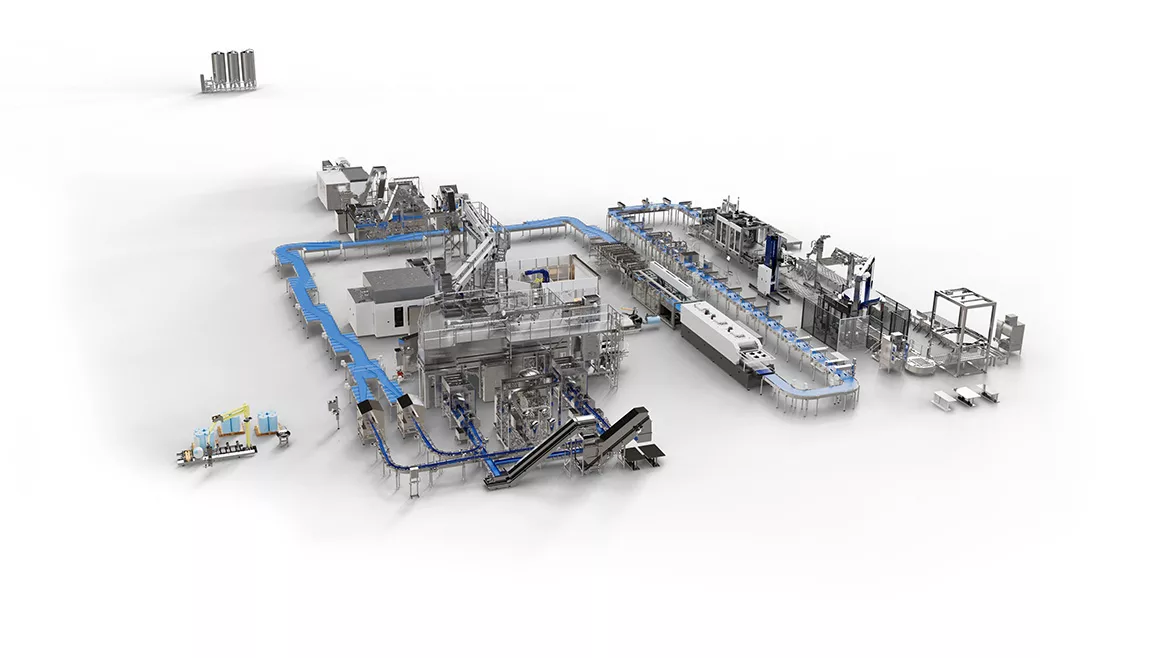
As consumer preferences shift, beverage brands must stay on top of these changes. Part of this includes rapid SKU proliferation and how it impacts operations.
Chris Kosmicki, senior process specialist at KHS, Waukesha, Wis., shares how SKU proliferation has affected filling technology.
“The increased number of small-run SKUs dictated by consumer preference has changed the filler design philosophy,” he says. “The old days of running the same product for a complete shift or more are over. Very few products have the volume to monopolize a line … The consumer has so many choices today that SKUs can be as short as twenty minutes.”
Efficiency and reduced downtime are now critical to making money, he adds.
“The volume of lost product and containers scrapped on the conveyer infeed during a short run will lead to lost product, and containers scrapped on the conveyer infeed during a short run will lead to lost profits,” Kosmicki explains. “Blenders and fillers now have flavor changes as short as six minutes with little wasted product. Old technology could have changeovers well over 30 minutes with multiple skilled operators dedicated to a flavor or container change.”
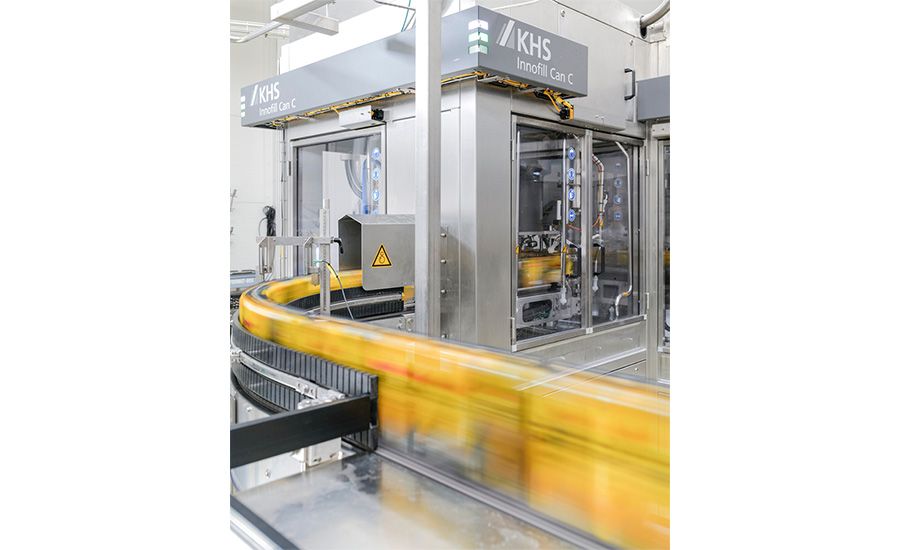 KHS’ Chris Kosmicki shares that filler technology is now available in more flexible formats.
Image courtesy of KHS
This is 24 minutes of downtime for the entire line, he notes, emphasizing the expense of multiple SKUs in a day.
“SKU proliferation has led the latest technology fillers to fill containers to exact volumes with few rejected, allowing little margin for error and waste,” Kosmicki says. “Process/fillers are manufactured to flush out non-fillable residual products quickly during changeovers while decreasing cleaning (CIP) times.”
All this technology developed for the shorter SKUs leads to enhanced products, he states.
Barry Fenske, product manager for filling technology at Krones Inc., Franklin, Wis., shares that SKU proliferation is extremely evident in the co-packing industry, where flexibility is considered a key requirement.
“Therefore, designing flexibility into the filler is critical, allowing multiple products to run on the same machine,” Fenske says. “We offer machines that can handle carbonated or non-carbonated beverages, as well as hot or cold filling, all on one system. Our machines can process containers ranging from 250-ml slim cans to 24-ounce king cans.”
Additionally, he notes that the block must accommodate multiple end sizes.
“With multiple changeovers sometimes required each day, quick-change parts and programming are essential,” Fenske adds.
Tommaso Tegoni, product manager for filling at Sidel, Norcross, Ga., states that SKU proliferation has driven the evolution of filling equipment to become far more flexible, precise and automated.
“This equipment needs to support rapid changeovers — from quick to fully automatic — wider variations in pressure, temperature and product behavior and reduce waste through efficient designs,” Tegoni shares. “Modular designs and advanced automation have therefore become essential to accommodate the growing diversity of SKUs. These systems enable changeovers in under five minutes, in case of [a] fully automatic setup.”
Filler technology also is affected by primary packaging trends.
“Fillers now have more flexible formats (container types that can be packaged) than in the past,” KHS’ Kosmicki says. “The tooling to swap out formats to a different container is toolless and fast to exchange. All format parts are numbered and color-coded to avoid mistakes. The height to fill a container is adjusted per recipe.”
Lid seamer components for various lid sizes now are exchanged in a couple of hours, Kosmicki adds. These operations used to take a day when paired with quality checks.
“The filler and seamer are manufactured from all stainless steel with a hygienic design to extend run times between cleanings,” he says. “All these improvements allow the beverage suppliers to meet the packaging trends related to recipes, container sizes and types. It may seem like all packages can be predicted, but there are always suppliers trying to package something new.”
KHS has an entire conversion department to meet those needs, Kosmicki notes.
Sidel’s Tegoni shares that primary packaging trends, particularly surrounding sustainability, lightweighting, recyclability and container diversity, are significantly influencing filler technology.
“Manufacturers are reducing PET contents, energy, water and chemical use, improving filling accuracy, and designing more compact, resource-efficient machines to align with regulatory demands and sustainability imperatives,” he explains. “Sidel’s EvoFILL PET platform shows how primary packaging sustainability drives filler development. Features include reduced transfer components, a compact footprint and a reduced enclosure that allows 25% less water and chemical consumption.”
These design choices help beverage-makers improve operational efficiency while also supporting packaging formats with a lower environmental impact, Tegoni says.
Krones’ Fenske echoes similar thoughts, noting that one major packaging trend is lightweighting, especially for PET bottles and aluminum cans.
“This requires us to modify designs to accommodate lighter containers,” he says. “For plastic bottle capping, we are developing a design that does not hold the bottle in the capper using traditional methods (such as spikes that prevent the bottle from turning). This technology will be applied to bottles that do not have a support ledge.”
For cans, Fenske says the company is further developing the filling valve to better respond to evolving market requirements.
Shaped by trends
Beyond SKU proliferation in general, new age beverage trends also are impacting filling equipment, experts note.
KHS’ Kosmicki says the company primarily supplies fillers for glass bottles, aluminum cans and PET plastic bottles.
“Recent beverage trends have morphed into those traditional product containers,” he shares. “Consumers are now offered unique geometry glass, plastic cans and aluminum bottles. There will surely be more ideas in the future.”
In addition, Kosmicki says the recipes of beverages are becoming more unique.
“Current fillers handle much of these and future requests,” he adds.
Gone are the days of filling only beer and soda, Kosmicki states.
“Now, ready-to-drink (RTD) cocktails, seltzers, flavored water, extended shelf life, hot-fill juices, aseptic products without preservatives all need packaging,” he says. “These containers and processes create their own unique packaging requirements.”
Sidel’s Tegoni notes that new-age beverages — including fusion drinks, healthier and functional beverages, nitro products, craft formats and hot-fill categories — require fillers to handle a wider range of liquid properties while maintaining hygiene and accuracy.
“Modern fillers like EvoFILL Can Compact support CSD, still and hot-fill applications, manage varying CO2 levels and ensure rapid changeovers for diverse formulations,” he says. “Sidel’s food and drink filling technologies show that flexible solutions, capable of handling cold, hot and aseptic processing, have become essential.”
With Predis and Capdis dry sterilization technologies and aseptic magnetic flowmeter filling, Tegoni explains that manufacturers can handle everything from high acid to low acid drinks without compromising hygiene or precision, which enables them to respond effectively to evolving beverage trends while also meeting the highest food safety requirements.
“The primary focus is again on designing flexibility — mechanical, electronic and programming flexibility — and using AI [artificial intelligence] technology to adjust to changing parameters without operator intervention,” Krones’ Fenske says. “For example, fluctuations in the temperature of carbonated products in the filler bowl due to line stoppages can be automatically managed through CO2 bowl pressure adjustments.”
Other consumer trends are influencing filler technology as well.
“Demand for healthier and more sensitive products is driving the need for more hygienic filling processes,” Fenkse shares. “To address this, we have implemented elements of our existing aseptic technology in our can fillers.”
A major trend is the rise of variety packs, especially in North America, Sidel’s Tegoni shares.
“This demands greater flexibility in format handling, flavor switching and automation due to the operational complexity of combining multiple finished products into one pack,” he says. “Beyond variety packs, shifting consumption patterns such as the rapid rise of functional, low sugar and health-oriented beverages are also shaping filler design.”
Sidel’s insights show that water and still beverage segments demand hygienic, repeatable filling performance with fast changeovers and reduced contamination risk, Tegoni says, which pushes fillers toward greater adaptability and cleaner production environments.
Aside from beverage trends, filler technology is shaped by new equipment innovations.
“Filler innovation is focused on compact, integrated systems, like EvoFILL Can Compact, which combines filler, seamer and process unit to cut footprint and boost efficiency,” Tegoni shares. “ … Hygiene advances include HEPA-filtered enclosures, cleaning with automatic dummy cap and no-base designs, while EvoFILL PET introduces lower water and chemical use and faster format changes for PET applications.”
He notes that Sidel’s latest innovations also include electropneumatic technology and magnetic flowmeters that ensure stable liquid control and high filling accuracy, even across diverse beverage types.
“Systems like EvoFILL PET further enhance productivity with simplified architectures, reduced star wheels and faster manual and automatic format changes, supporting high speed operations without compromising hygiene, sustainability and most of all, total efficiency,” Tegoni says.
Krones’ latest technology, Ingeniq, is embracing advancements within AI and robotics.
“Ingeniq is a data-driven, modular production line that integrates AI and robotics and is designed primarily for filling non-carbonated water into PET containers,” Fenske says. “It focuses on high efficiency, low total operating costs, maximum automation and a simplified line layout.”
Meanwhile, KHS’ Kosmicki notes that innovations related to equipment and communication are being introduced.
“On the equipment side, the latest technology is to provide exceedingly small filling enclosures with the filler,” he states. “This configuration keeps the enclosure that the product is filled in small. A smaller enclosure means less filtration.”
HEPA quality filters are expensive, Kosmicki explains, and fewer filters reduce the overall cost of packaging.
“Another huge innovation is Flex control and cloud-based production,” he says. “The production manager wants all the details and statistical data about a line at his/her disposal. This data leads to decisions to maximize the capability and minimize the cost of the line.”
Future filler technology
Like new equipment innovation, AI also is affecting the future of filler technology.
Sidel’s Tegoni anticipates AI will enhance filling through predictive analytics, self-adjusting parameters and guided operator assistance, helping lines correct deviations automatically, reduce downtime and maintain consistent quality.
“These digital capabilities are already highlighted as key future enablers in Sidel’s technology roadmap,” he says. “Sidel has already integrated digital intelligence into its platforms through Evo-ON, which monitors filling performance in real time and supports continuous improvements by analyzing waste, efficiency and maintenance patterns.”
This foundation suggests that future fillers will evolve toward fully data-guided operation, where AI supports decision-making and stabilizes production conditions, Tegoni shares.
KHS’ Kosmicki states that current lines are run with very few operators, but AI comes into play with its predictive downtime and maximizes the efficiency of the line.
“Beverage lines cost millions of dollars,” he says. “They cannot afford to be down for any length of time. People make mistakes in all aspects of the performance of the line. AI will replace all those choke points where unskilled operators can cause real heartburn for the beverage packager.”
Looking ahead, Kosmicki notes that, as baby boomers like himself retire, they are leaving a gap in the workforce.
“Packaging companies do not have the luxury of having a large group of senior, highly paid and trained employees just in case to keep the line running,” he says. “Engineers must build into the design, the ability to keep the line running and become even more flexible with unskilled labor.”
Combine that with ever-changing beverage recipes and packaging combinations with high speeds, and Kosmicki says the equipment must continue to evolve.
“I am excited to see what these future changes are,” he states. “I am also concerned whether we are ready.”
Sidel’s Tegoni says that future fillers are predicted to be smarter, more compact and more sustainable, with plug-and-play systems reducing space and cost, with continued reductions in water, CO2 and chemical use.
“Digital optimization and greater flexibility across CSD, hot-fill and emerging drink categories will make lines faster, cleaner and more versatile,” he notes.
The company’s long-term filling evolution points toward greater integration across blowing, labelling and filling through systems, like the Super Combi and advanced aseptic PET platforms, Tegoni shares.
“With capabilities reaching up to 130,000 containers per hour and filler enclosures designed for hygienic, controlled environments, future technologies will provide high speed output with strong food safety performance and reduced total cost of ownership,” he concludes.
Looking for a reprint of this article?
From high-res PDFs to custom plaques, order your copy today!