Function rated No. 1 for botanicals usage in beverages
Botanicals offer natural, healthful alternatives to artificial ingredients
Although artificial intelligence could be a wave of the future for retailers and plant operators, artificial ingredients might be a trend of the past for consumers. Today’s consumers are seeking “clean” labels with natural alternatives to chemical-sounding additives, which is positively impacting the use of botanicals in beverage applications, notes Sam Wright IV, chief executive officer of The Wright Group, Crowley, La.
This includes “free from” claims, such as free from artificial flavors, colors and sugars, adds Rikka Cornelia, product manager at BI Nutraceuticals, Long Beach, Calif.
“Consumers are increasingly seeking few, free-from and minimally processed ingredients as well as natural alternatives to artificial colors, flavors and much more,” she says. “Finished product manufacturers must acclimate themselves to this concept in order to succeed in the beverage marketplace. They must reconsider the use of copious amounts of ingredients and chemical-sounding ingredients in order to appeal to the growing wave of consumers looking for healthier alternatives and transparency in their beverages.”
An increasingly popular way to do so in the beverage industry is with botanicals, Cornelia notes.
Healthful benefits
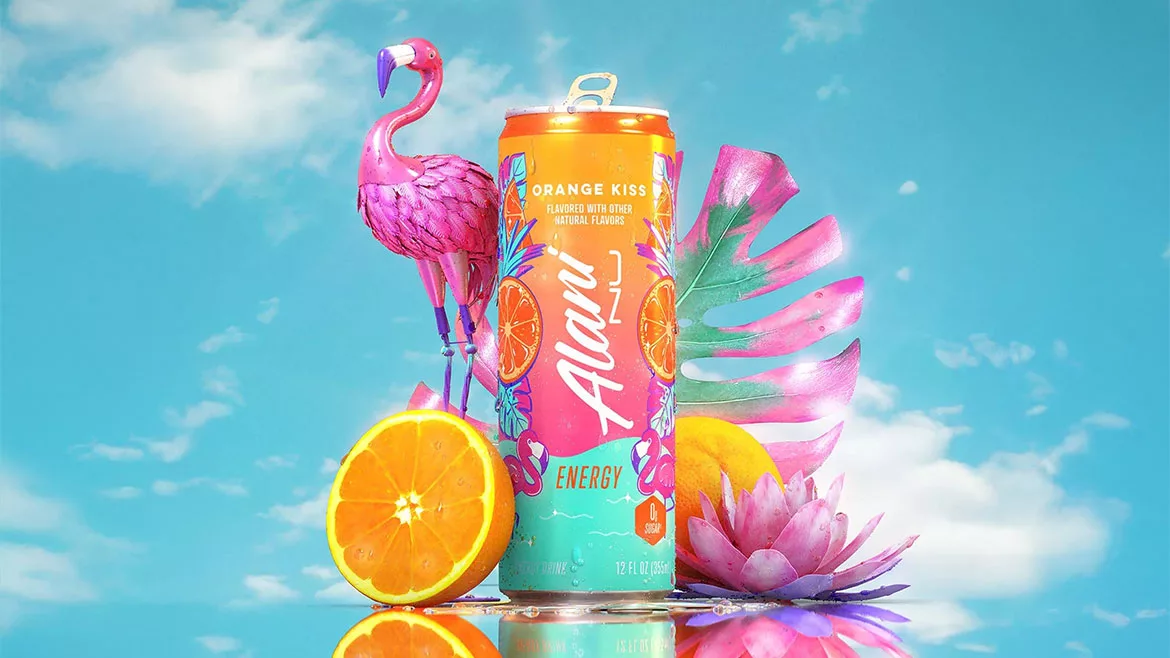
Moreover, she expects botanicals to grow because of their functionality and convenience. These benefits typically are seen most often in the energy drinks and shots category, she notes. Use of botanicals in energy drinks and shots is increasing, particularly as a result of the negative media attention coming from some of these products’ synthetic ingredients, she explains. Despite the category’s stigma, consumers still are demanding an energy function but in a more natural way, she adds.
For instance, ginseng, guarana, green coffee bean and mate all can offer a natural energy function for ready-to-drink (RTD) beverages, points out Anne Wedel-Klein, sales manager of extracts for Martin Bauer Inc., Secaucus, N.J. In general, botanicals that act as stimulants are the most popular varietals in the beverage industry, adds The Wright Group’s Wright.
However, botanicals with a relaxing function, such as kava and chamomile, as well as botanicals with natural antioxidants, such as mixed tocopherols, carotenoids and hibiscus, also are popular in beverage applications, Wright notes.
Outside of the energy drink category, functional botanicals are increasingly being incorporated into juices and RTD teas, BI Nutraceuticals’ Cornelia notes.
“Consumers typically associate these two beverages as being healthy to begin with, so incorporating botanicals only enhances the healthy image they already established, making it easier for consumer acceptance,” she explains.
This also includes cold-brewed teas, adds Martin Bauer’s Wedel-Klein.
Regardless of the associated beverage category, botanicals’ functional benefits align with the trend toward healthy drinking, she says.
“Due to the growing awareness of the positive effects of botanicals in beverages, they fit right into the healthy drinking trend,” Wedel-Klein says. “People are more and more interested in consuming foods and beverages that provide a value to their body rather than just drinking empty calories.”
However, consumers aren’t simply looking for fortified foods or beverages, BI Nutraceuticals’ Cornelia notes. They’re also seeking foods and beverages that incorporate ingredients with inherent health benefits, she says. For instance, a beverage formulated with baobab fruit powder, which is high in vitamin C, could be more appealing to consumers than a beverage fortified only with vitamin C, she says.
As a result of these trends, Martin Bauer’s Wedel-Klein expects to see significant growth in the number of new cold and hot beverage introductions with herbs, spices and botanicals.
Preserve and protect
Like most other functional ingredients, however, botanicals face formulation challenges that should be addressed. In particular, such challenges often include solubility, flavor profile and delivery format,
BI Nutraceuticals’ Cornelia says.
To help preserve botanicals and other nutrients, some beverage-makers are turning to high-pressure processing (HPP), she notes. This innovation has been garnering high accolades for its ability to extend shelf life and preserve the desired nutrients in a product, she says.
Additionally, encapsulation and microencapsulation processing innovations have been refined recently, Cornelia notes. “They sustain the viability of active ingredients throughout processing and during shelf life,” she explains.
For instance, The Wright Group’s SuperCoat microencapsulation system works to protect nutrients in a variety of extreme processing environments; prevent reactivity with other ingredients; and mask unwanted taste and odor from the potent nutrients, according to the company’s website.
If botanicals react negatively with other ingredients, a beverage could develop sedimentation in low-pH environments, adds Gary Vorsheim, vice president of extract sales for Martin Bauer. This can be avoided through encapsulation or by using stabilized extracts.
Extracting a solution
Stabilized extracts, including both liquid and powder extracts, are the most common way to utilize botanicals in beverages nowadays, Vorsheim says.
“Most botanical extracts are soluble in cold water and can be easily utilized by product developers on the bench as well as by plant employees when making batches for beverage production,” Vorsheim notes. “Technologies used today for the manufacture of extracts allow producers to supply clarified and standardized extracts, which provide users with uniformity of attributes — [such as] color, clarity, taste, aromatics, active components, etc. — in a super-convenient ingredient format.”
Extracts also can ensure the solubility of the ing-redients, which BI Nutraceuticals’ Cornelia says is the No. 1 attribute to consider when creating a beverage.
“For most beverages, extracts or very small amounts of powders are recommended; water-soluble extracts are best to utilize,” she suggests. “However, for thicker and cloudier beverages, powders can occasionally be properly incorporated, since thickening agents can suspend the powder, and cloudy beverages can conceal that the powder is not completely soluble.”
However, many companies still brew botanicals themselves in order to incorporate them into a beverage application, Martin Bauer’s Vorsheim notes. This is a logical strategy, but the expertise necessary for handling and sourcing the botanicals can be overwhelming for a product developer, he says. Thus, extracts offer a solution to this challenge.
“With extracts, there is no need for the product developer to become an expert in the field of botanical sourcing or a certified brewmaster,” Vorsheim explains. “They can focus on building the best-tasting beverages using ingredients produced by experts.”
Function over flavor
Although solubility can be a challenge, The Wright Group’s Wright says that the main challenge that ingredient experts face with botanicals is an unfavorable taste profile. However, consumers also are showing that functionality is more important to them than taste, like within the energy drinks and shots category, BI Nutraceuticals' Cornelia says.
Although bitter-tasting botanicals have become acceptable in some cases, other botanicals offer favorable flavor profiles, which can bring a unique taste experience to a beverage, notes Martin Bauer’s Wedel-Klein. For instance, chamomile possesses a floral aroma and a smooth, honey-like taste; peppermint and lemongrass offer fresh taste profiles; and hibiscus offers a fruity taste profile, she points out. Some botanicals also can deliver a strong natural color, she adds. Beet root delivers a pink color; hibiscus gives off a red color; and safflower offers a yellow color, she says.
However, in the U.S. market, the functional properties of botanicals drive their use far more than taste and color, Wedel-Klein says.
Looking for a reprint of this article?
From high-res PDFs to custom plaques, order your copy today!