Masking solutions ensure quality taste in functional beverages
Beverage-makers turn to various masking solutions to balance flavor, functionality

Consumers’ desire for functional beverages has impacted many sectors within the beverage industry. The ingredient area is no exception, especially in terms of masking ingredients.
Shivangi Patel, beverage application scientist at Sensient Flavors & Extracts, Hoffman Estates, Ill., states that many functional ingredients come with taste challenges, which prompts beverage-makers to use masking solutions.
“It’s important to point out that masking solutions should only mask the off-notes while letting the desirable flavors continue to shine through,” Patel says. “If a masking solution dulls everything — even the good — then it may be doing its job, but it’s also creating additional challenges.”
Great nutrition shouldn’t have to taste bad, she notes.
“It would be one thing if consumers were planning to plug their noses and just chug a functional beverage to get it down, but that’s not where we are in this category anymore,” Patel shares. “Instead, people prefer to hydrate throughout the day. Consumers want to enjoy their drink rather than just endure it.
“You see this on social media where people experiment with combining a variety of beverages — often referred to as stacking — to get all the different functional characteristics they want assembled into one drink to savor all day,” she continues.
Anna Lada, senior marketing specialist at Valencia, Calif.-based Flavor Producers, a Glanbia company, says that today’s consumer expects functional beverages to work hard and taste effortless. Functional beverage growth has changed the role of flavor modification, she notes.
“Many of these ingredients naturally introduce bitterness, earthy notes, astringency or lingering off-notes,” Lada explains. “Instead of simply masking those characteristics, formulators are increasingly looking to optimize the entire sensory experience. Flavor modification has become less about hiding problems and more about helping functional ingredients fit naturally within the finished beverage.”
Philip Caputo, marketing and consumer insights manager at Virginia Dare, Carteret, N.J. notes that even though functional beverages are no longer niche, consumers have not lowered their expectations for taste.
“This means masking and modulation can no longer be an afterthought or a supporting role, but have to be a central part of product formulation,” he says. “Clean label and expectations and shifting regulations have made traditional synthetic masking ingredients obsolete, making the challenge of managing off-notes with natural solutions more complex. It’s less about throwing a masking agent into a formulation and more about building a sensory profile around a functional ingredient from the start.”
Sugar reduction also is on the rise, which Caputo shares can prompt challenges such as lingering bitterness, a metallic edge or a lingering aftertaste.
“Masking ingredients become essential to balancing product formulations when using alternative sweeteners,” he says. “Done well, masking and modulation work together so that a reduced sugar product doesn’t have to taste like a compromise.”
Sensient’s Patel notes that consumers now are more educated and informed about healthy options, sometimes avoiding anything artificial. As sugar is reduced and natural sugar added in, formulators must use masking agents and flavor enhancers to rebuild the body and mouthfeel consumers expect, as well as provide balanced sweetness throughout the taste experience, she explains.
“Natural sugar alternatives like stevia, monk fruit, agave and erythritol each have their own sweetness curve that maps out how consumers perceive that sweetener, including the timeline for taste sensations like when the sweetness is strongest and whether it is accompanied by an aftertaste or lingering off-notes,” Patel says. “To combat these challenges, it is good practice to combine multiple different sugar substitutes to get the right mix of sweetness perception.”
High-intensity artificial sweeteners can be extremely sweet, more so than sugar, she adds.
“Artificial sweetness does help provide strong sweetness delivery, but will leave a beverage with a thin or watery mouthfeel,” Patel notes. “In situations like this, adding mouthfeel enhancers can build up the body in the beverage.”
Flavor Producers’ Lada says that consumers don’t compare reduced-sugar beverages to one another — they compare the beverage to full-sugar products that they already know and love.
“That’s why flavor modification has become an important part of many sugar reduction strategies,” she shares. “Rather than simply reducing off-notes, today’s solutions can help optimize sweetness perception and create a more rounded, satisfying flavor profile that keeps the focus on the beverage, not what’s missing.”
Other trends are impacting the use of masking ingredients, experts note.
Kathryn Murano, senior flavorist for taste at IFF, New York, says the continued “proteinification” trend has driven growth in demand for beverages fortified with protein, a challenging functional space.
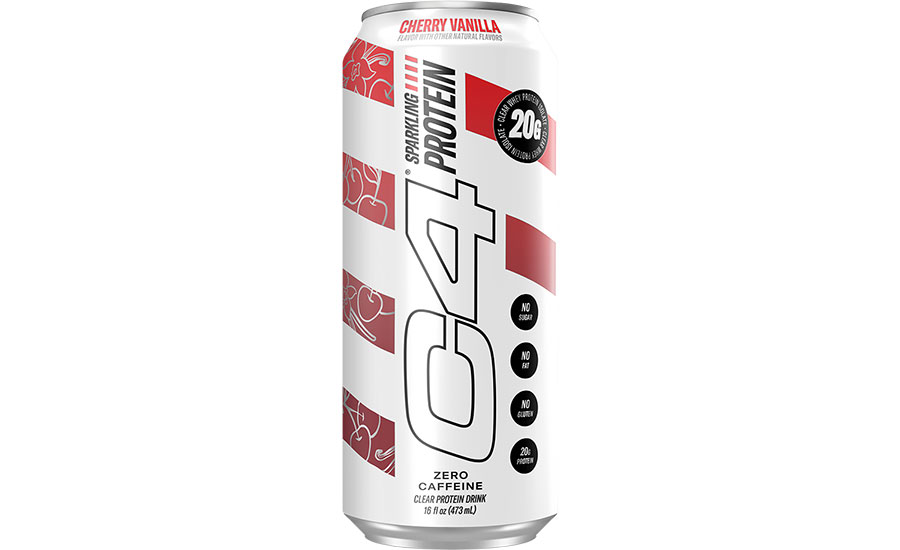
“Masking ingredients are essential for maintaining the light, refreshing taste that consumers expect from carbonated drinks, while delivering all the functional benefits of protein,” she explains. “Protein ingredients can introduce cheesy or vegetative off-notes, bitterness, astringency, chalkiness and texture challenges, making taste modulation increasingly important.”
Flavor Producers’ Lada says that alternative proteins, botanical ingredients, nootropics and functional wellness beverages have introduced more complex flavor challenges.
“At the same time, consumers are embracing adventurous flavors inspired by global fruits, herbs, spices, tea varieties as well as indulgent bakery flavor profiles,” she shares. “Layer in clean-label expectations, and beverage developers have less room to rely on traditional formulation approaches.”
Complex formulations have caused flavor modification to be an important part of bringing new beverage concepts to market without compromising on the overall drinking experience, Lada adds.
Sensient’s Patel also considers protein ingredients to be challenging when it comes to masking.
“Other trends impacting the use of masking ingredients include the widespread conversion to natural colors, the demand for high-protein, nutrient-dense beverages and the shift towards premiumization,” she says.
Incorporating masking ingredients
Beverage-makers must take certain factors into account when working with masking solutions.
Virginia Dare’s Caputo says the most important thing to note is there is no one-size-fits-all, magic masking solution.
“The right strategy depends on the format, the functional ingredient or combination of ingredients involved, and the specific off-notes you’re trying to manage,” he shares. “Partnering with flavor scientists who have hands-on experience with masking and modulation is the best way to know you’re going to arrive at the right individual solution. It takes a deft touch to correct an off-note without introducing a new distracting taste or texture.”
Don’t expect an overnight fix, either, Caputo adds — it often requires a thorough process of testing, refining and sometimes layering multiple approaches to land on something that tastes both balanced and intentional.
Flavor Producers’ Lada explains that the best flavor modification is one that consumers never notice.
“Consumers don’t think about masking ingredients or flavor modification; they simply know whether they enjoyed the beverage,” she says. “That’s why brands should evaluate flavor solutions based on the overall drinking experience, not just their ability to reduce off-notes.
“A successful beverage delivers on the promise made by the package, whether that’s indulgence, refreshment, wellness or functionality,” Lada continues. “Flavor modification should help create an experience that feels balanced and authentic, so consumers remember the beverage for how good it tasted, not for the challenges behind the formulation.”
“Clean label and expectations and shifting regulations have made traditional synthetic masking ingredients obsolete, making the challenge of managing off-notes with natural solutions more complex.”
– Philip Caputo, marketing and consumer insights manager at Virginia Dare
Sensient’s Patel urges beverage-makers to collaborate with flavor experts early in the process for best results and the simplest solutions. She also suggests building formulations one ingredient at a time to accurately identify where any off-notes might occur.
“Another important factor to consider is labeling goals,” she says. “There are distinct rules regarding regulatory compliance requirements for claims like non-GMO, vegan, allergen free, gluten free, all natural and organic … formulators should consider the entire product matrix, including things like shelf life, processing conditions and ingredient interactions.”
Experts also share the R&D efforts being conducted to improve upon future masking solutions.
IFF’s Murano notes that the company’s FLAVORFIT MASKING solutions are designed to reduce off-notes and other unwanted taste distractions, restoring a clean, balanced profile in complicated beverage formulations.
“Built on decades of taste modulation expertise, our R&D teams combine sensory science, advanced ingredient discovery and artificial intelligence (AI)-enabled design to develop masking solutions that are effective across a wide range of ingredients, formats and formulation challenges,” she explains. “Our focus is to help customers deliver enjoyable taste experiences without compromising their product goals.”
Looking ahead, Murano anticipates modulation to become increasingly data-driven, integrating sensory insights, molecular understanding and AI-assisted formulation to accelerate innovation.
Sensient’s Patel says there’s been a lot of research done by experienced flavor houses to understand how taste receptors interact with flavors, both positive and negative.
“We have seen exciting innovation around blocking the receptors for specific off-notes so that the consumer doesn’t perceive an undesirable flavor,” she explains. “It’s also important to be mindful when choosing base flavors that cooperate with ingredients known for taste challenges … we have found success in pairing masking solutions with flavor enhancers to create some innate masking using the existing ingredients in a formulation.”
Meanwhile, Virginia Dare’s Caputo shares that many of the company’s current efforts are focused on multi-function formulations, because that is where the next wave of complexity is coming from.
“When you combine benefits, you’re not just masking one off-note, but managing how several functional ingredients interact with each other,” he says. “We’re investing in understanding those combinations at a deeper level so we can anticipate problems before they show up in a finished product, rather than reacting to them.”
Virginia Dare’s new facility has given the company dedicated pilot facilities where masking and modulation strategies can be tested at a scale that closely mirrors real production, Caputo notes.
“Pairing that with our expanded sensory tasting capabilities means we can get faster, more reliable feedback on how a masking solution actually performs — not just whether it neutralizes an off-note on paper, but how it holds up across a full sensory profile: taste, aroma, mouthfeel and how it evolves over the shelf life of the product,” he explains.
Looking for a reprint of this article?
From high-res PDFs to custom plaques, order your copy today!