Consumers turn to energy drinks for more than a pick-me-up
Functional attributes prompt performance category growth
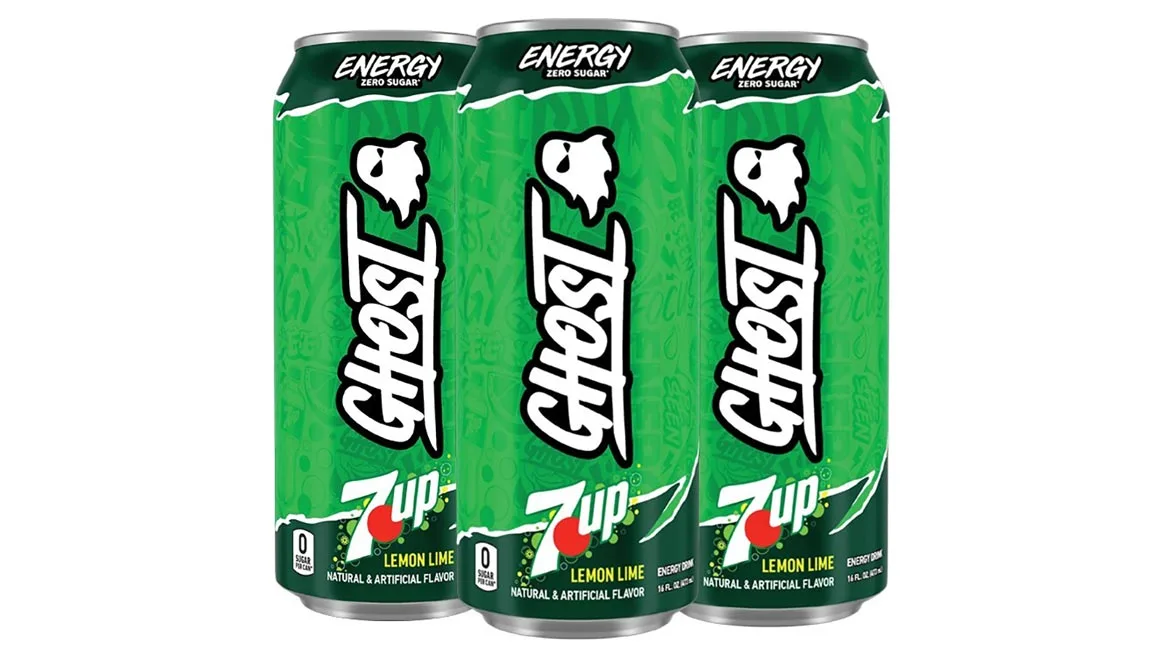
As the energy drink market continues on its upward trajectory, today’s consumers are turning to the category for more than just a quick pick-me-up, prompting innovations that meet consumers’ broader health and wellness needs.
“Shoppers are no longer just looking for a quick caffeine boost — they’re choosing beverages that deliver better taste alongside added benefits like focus, hydration and cleaner ingredients,” says Mitch Madoff, head of retail partnerships at Keychain, New York. “And we’re seeing this trend reflected on the platform.
“Energy drinks have continued to grow year-over-year, supported by strong demand and strong performance across channels like TikTok Shop, where both revenue and unit sales have been notable,” Madoff continues. “Energy shots, meanwhile, have not kept pace, reinforcing the broader move toward full-size beverages that offer a more complete drinking experience.”
Sally Lyons Wyatt, global executive vice president and chief advisor for consumer goods and foodservice insights at Chicago-based Circana, considers energy drinks to be one of the strongest growth engines in beverages.
“Within the broader energy drinks and mixes portfolio, shelf stable non-aseptic energy drinks are the clear growth driver, reaching approximately $27.8 billion in sales in the latest 52 weeks, with dollar sales up 15% and units up 12%,” she notes.
“The category has also sustained strong longer-term momentum, with non-aseptic energy drinks growing at a double-digit compound annual rate over both three- and five-year periods,” she continues. “Drink mixes and powders are also gaining, while energy shots have softened and are becoming a less-preferred form compared with ready-to-drink cans and other formats.”
Julia Mills, food and drink analyst at Mintel, Chicago, also notes that the market showed strong growth in the past year.
“The energy drinks and shots market continued to grow strongly, reaching an estimated $29.4 billion in 2026, up 9.2% from 2025,” Mills says. “However, growth is largely driven by energy drinks rather than shots. Energy drink sales rose 13.9% in 2025 and are forecast to grow another 9.7% in 2026, while energy shot sales declined 5.6% in 2025 and are expected to fall another 5.1% in 2026.”
Howard Telford, senior global insight manager for soft drinks at Chicago-based-Euromonitor International, says that the category has proven to be resilient despite affordability pressures, helped by rapid innovation and a strong perceived value proposition as consumer sentiment remains cautious.
“Celsius has been a standout performer, expanding its portfolio through the $1.8 billion acquisition of Alani Nu and an enlarged partnership with PepsiCo under which Celsius took control of Rockstar in the U.S. and Canada while PepsiCo retained distribution responsibilities,” Telford notes.
Variety, flavor innovation bring gains
Aside from health and wellness shaping consumer buying decisions, experts highlight other trends contributing to the market’s performance.
Keychain’s Madoff points out that shoppers are looking for more variety, whether through new flavors, unique formulations, or options tailored to specific preferences.
“On Keychain, we’re seeing established brands like Celsius expand with a wide range of flavors, zero-sugar options and variety packs,” he shares. “Newer players like Bloom are also gaining traction with green tea-based energy drinks, unique flavors like lychee, and added functional ingredients like prebiotics. So, with that in mind, innovation across both taste and formulation continues to be a key driver of growth.”
Gary Hemphill, managing director of research at Beverage Marketing Corporation (BMC), Wintersville, Ohio, pinpoints flavor innovation as a way to spur category growth.
“But often the growth gain brought about from a singular new flavor can be short-lived with the need to be replaced by another new flavor idea to sustain the growth,” he says.
“Shoppers are no longer just looking for a quick caffeine boost — they’re choosing beverages that deliver better taste alongside added benefits like focus, hydration and cleaner ingredients.”
– Mitch Madoff, head of retail partnerships at Keychain
Euromonitor’s Telford points to three overlapping need states that are propelling market growth: productivity, pre-workout performance and nootropic focus.
“Consumers are turning to energy drinks for self-optimization, sustaining focus in a demanding job market and through return-to-office routines,” Telford says. “Pre-workout demand is pulling ingredients like BCAAs, beta-alanine and electrolytes from sports nutrition into mainstream energy drinks.
“Nootropic positioning is the third engine, with Euromonitor’s Product Claims and Positioning database showing a notable rise in brain, cognitive and memory claims in beverages, and TruBrain exemplifies the more specialized nootropic end of the shots market, using ingredients including Noopept, l-theanine, lion’s mane and acetyl-l-carnitine,” he continues.
Telford adds that function has moved away from being the differentiator to entry requirement and now is enabling rather than replacing indulgence, giving consumers permission to buy energy drinks as an everyday reward.
Mintel’s Mills says that energy drinks are evolving into routine productivity beverages, especially among Gen Z and millennials.
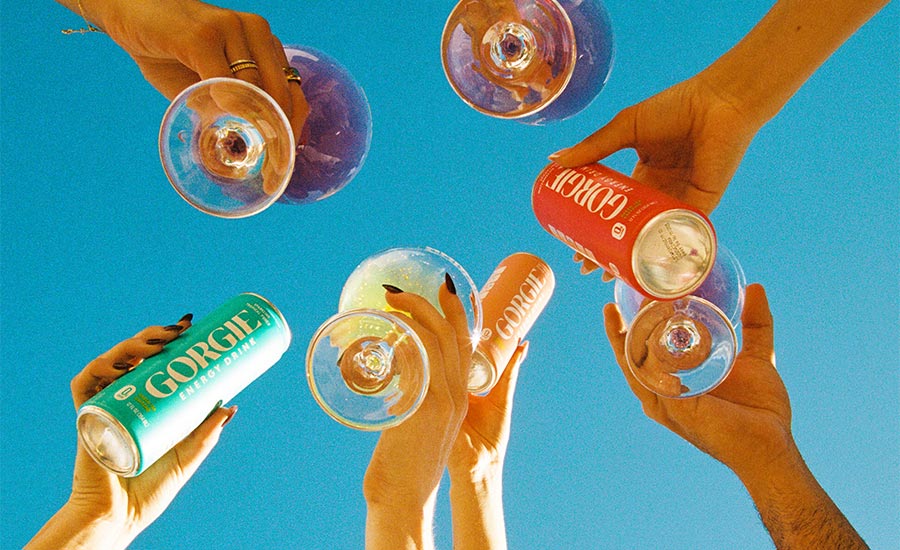 Image courtesy of GORGIE
 “Seventy-two percent of energy drink consumers drink them at least weekly, and usage is increasingly tied to work, mornings, afternoons and workouts, rather than extreme or episodic occasions,” she explains. “Growth is also fueled by the category’s ability to attract new audiences, particularly women, through wellness-oriented brands and products that emphasize natural caffeine, added functional benefits and more approachable lifestyle positioning.
Mills adds that these shifts are helping energy drinks reach new consumption occasions and consumer groups, supporting continued growth even as the category matures.
Circana’s Lyon’s Wyatt also points to consumer shifts that are contributing to market performance.
“First, consumers are increasingly choosing beverages based on the outcome they want — energy, focus, performance, hydration, mood support or digestive health — rather than thinking only in traditional beverage categories,” Lyons Wyatt says. “Second, energy drinks are benefiting from constant innovation in flavor, packaging and limited-time launches, which keeps the category culturally relevant and highly discoverable.
“Third, younger consumers and caffeine-seeking Gen X, millennial and Gen Z shoppers are using energy drinks as a mainstream caffeine occasion alongside, or in place of, coffee and tea,” she continues. “Finally, the category is expanding beyond its historic core, with some better-for-you energy options appealing to broader households and new usage occasions.”
As health and fitness are reshaping the category from “energy only” to “energy plus,” Lyons Wyatt also notes that consumers still want caffeine and a performance boost, but they increasingly expect energy drinks to fit into broader wellness routines.
“That is why no-sugar, low-calorie, vegetarian, prebiotic and other ‘better-for-you’ claims are growing across non-aseptic energy drinks,” she explains. “Brands are also leaning into ingredients and benefits tied to focus, metabolism support, hydration, gut health and active lifestyles.”
Keychain’s Madoff echoes similar sentiments, noting that today’s consumers are incorporating energy drinks into a wider range of daily routines, from powering through workouts to staying productive during the workday.
“Rather than being viewed purely as a source of caffeine, they’re increasingly seen as part of active, on-the-go lifestyles,” he says.
Madoff adds that fitness creators and wellness influencers have helped make energy drinks more visible in everyday routines.
“Content ranging from workout videos to ‘day in the life’ posts have introduced audiences to new brands and usage occasions, expanding the category well beyond traditional gym-focused consumers,” he says. “And public figures like Dwayne Johnson with his brand Zoa have also reinforced the connection between energy drinks and performance-driven lifestyles, helping normalize them as part of modern fitness culture.”
Moving beyond traditional
As brands engage a broader consumer demographic, particularly women consumers, experts highlight how these products are standing out from the traditional energy drink.
“Brands targeting a broader audience have moved away from the traditional ‘extreme energy’ positioning seen in earlier products like 5-hour Energy and high-sugar options such as Rockstar,” Keychains Madoff explains. “Instead, newer offerings are designed to feel more like everyday beverages, with zero-sugar formulations, lighter energy levels, approachable flavors and stronger alignment with wellness trends.
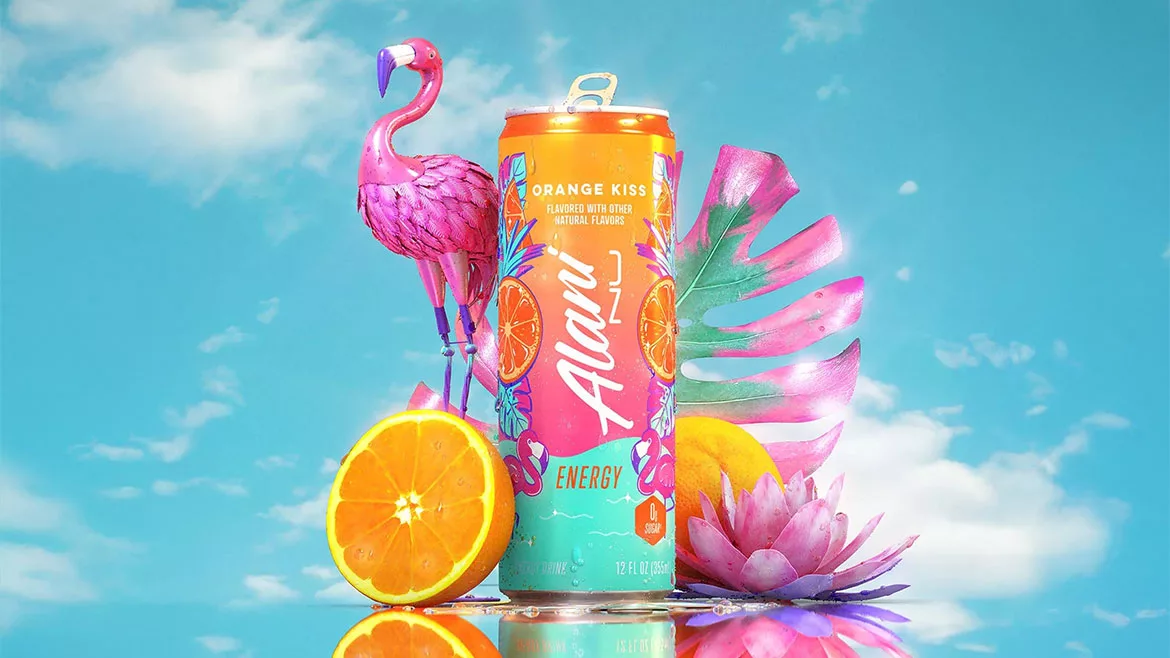
“Rather than focusing on intensity and high-caffeine content, newer brands are leaning into how energy drinks fit into daily life,” he continues. “Gorgie emphasizes a lighter, wellness-first approach with lower caffeine levels and green tea-based energy, while Alani Nu uses bright, playful branding and fruit-forward flavors to make the category feel more accessible and fun.”
Euromonitor’s Telford points to Alani Nu as the definitive case study, growing share rapidly and triggering the $1.8 billion Celsius Holdings acquisition.
“These products differentiate on multiple levels,” he says. “Visually, they replace aggressive ‘extreme sports’ codes with pastel palettes and social media-ready packaging engineered for visibility. Compositionally, they are exclusively sugar-free and layer benefits such as collagen, biotin, B vitamins, skin and immune support that speak to women’s wellness priorities rather than pure stimulation.
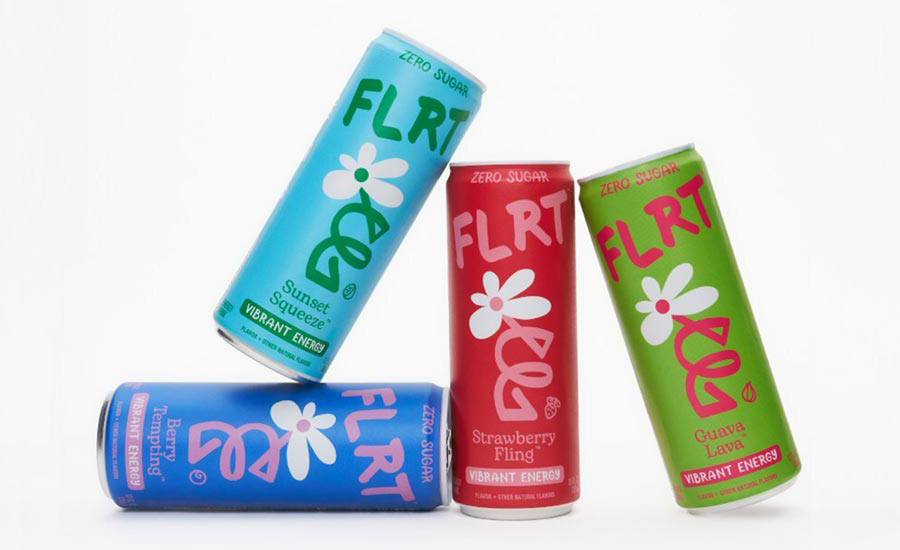 Image courtesy of FLRT
“Competitive responses are accelerating. Monster launched FLRT with immune support and collagen, and Nutrabolt increased its stake in Bloom Nutrition (a standout in 2026). However, cues alone are not enough,” Telford continues. “FLRT’s highly gendered positioning also generated some social-media criticism for relying on stereotypically feminine cues.”
As for predictions on how energy drinks and shots will perform in the year to come, Telford says he’s “extremely optimistic.”
“Gas prices are weighing on convenience traffic, but Euromonitor forecasts U.S. off-trade energy drinks volume to grow by high single digits in 2026. Reduced sugar will remain the primary growth engine, and the need states of focus, self-optimization and everyday energy are unlikely to recede,” he explains. “Competitive intensity will accelerate as Celsius Holdings integrates Alani Nu and Rockstar, Monster rolls out FLRT, and Red Bull expands its sugar-free line. Shots and adjacent formats have real headroom, particularly cleaner-label options, nootropic-focused offerings and juice-energy crossovers.”’
However, Telford calls attention to three risks that warrant mentioning: flavor fatigue and SKU proliferation straining retailer shelves; tightening regulation, with the FDA making caffeine-labeling guidance and industry best practices a 2026 priority; and macro pressure if inflation re-intensifies.
“Higher fuel prices represent a potential headwind for convenience-store traffic, although the evidence so far has been mixed,” he says. “Overall, energy drinks will continue to outperform the wider soft drinks industry through 2026, with winners streamlining flavor ranges, securing wider distribution and delivering science-backed functionality.”
Circana’s Lyons Wyatt notes that the market is expected to remain a strong performer over the next year, supported by innovation, expanded distribution and consumers’ continued interest in functional beverages.
“The strongest growth should come from ready-to-drink energy products that combine great taste, lower sugar or calories and clear functional benefits such as focus, hydration, gut health or performance,” she says. “Convenience will remain important for immediate consumption, while mass, club and eCommerce will support stock-up and multipack purchases. Energy shots, however, will likely continue to face pressure as consumers migrate toward cans, powders and other formats that feel more experiential and more aligned with today’s wellness and flavor expectations.”
Keychain’s Madoff anticipates that energy drinks will likely keep moving beyond the traditional “energy” positioning, with more emphasis on experimentation across flavor, branding and formats.
The category has become highly competitive, which is pushing brands to move faster on innovation and find new ways to stand out,” he says. “Energy shots are expected to remain a smaller but steady segment, serving a more specific need around portability and quick energy. While they may not see the same level of development as larger-format drinks, they continue to play a role for consumers looking for convenient, on-the-go options.
“From what we’re seeing, the brands that continue to lean into innovation and meet consumers where they’re at are best positioned to capture growth as the category evolves,” Madoff concludes.
Looking for a reprint of this article?
From high-res PDFs to custom plaques, order your copy today!