DTC assists beverage brands in connecting with consumers
Brands utilize the channel to promote personalized, easy purchases
One of the many features of the social media platform Facebook is the users’ ability to share their relationship status. A user can opt to publicly set and share their relationship status, choosing from options such as “single” to “it’s complicated.” When set to public, the user’s relationship status is clearly communicated to other accounts on the platform.
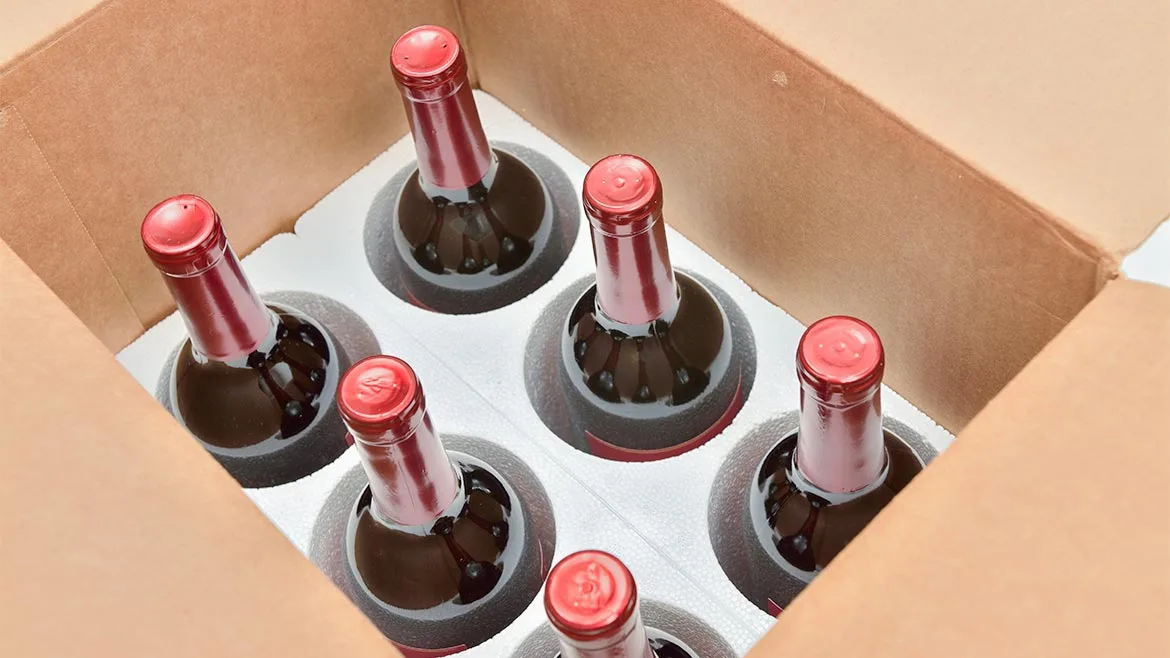
Although not in a social or romantic manner, experts note that direct-to-consumer (DTC) shipping can help beverage brands establish a relationship with consumers.
Jack O’Leary, director of eCommerce strategic insights, NielsenIQ (NIQ), Chicago, shares the factors driving the use of digital technology with consumers for food and beverage shopping needs. He notes that digital is now the primary growth engine for the food and beverage industries.
“Online channels drove more than 74% of total U.S. CPG (consumer packaged goods) dollar growth in 2025, as consumers lean into digital speeds, price transparency, reviews and personalized recommendations,” O’Leary says. “Digital also helps these shoppers quickly find the products with the attributes they want, creating a more seamless shopping experience.”
Bruce Fougere, CEO of Evansville, Ind.-based Mash Networks, notes that consumers now discover food and beverage brands everywhere: on shelves, in restaurants, at events, while traveling, through social media and through recommendations.
“But discovery is often disconnected from the next purchase,” he says. “Digital technology gives consumers a direct path to learn more, buy, reorder, gift or stay connected after the first interaction. For brands, that is the larger shift.”
The transaction no longer is the end of the journey, Fougere states, but it is where the customer relationship can begin.
“Digital channels help brands recognize the customer, communicate after purchase, support replenishment and understand what brings people back,” he adds.
Barry Collier, co-founder, chief product officer and chief technology officer of DRINKS, Los Angeles, describes that the same forces driving digital adoption everywhere else are now hitting food and beverage: convenience, personalization and the expectation that one can get anything delivered to their door.
“But for alcohol specifically there’s an added layer: discovery,” he says. “Walk into a wine shop and you’re staring at hundreds of labels with very little context to guide your decision. Upwards of 85% of the purchase decision for wine is made based on the label alone.”
Digital technology gives brands and retailers the ability to inject intelligence into that moment, using artificial intelligence (AI) to match the right bottle to the right person based on their tastes, preferences and even the visual cues that resonate with them emotionally, Collier explains.
“The shift to conversational commerce is accelerating this further,” he says. “Chat[GPT] is the new UI (user interface). Consumers are increasingly comfortable describing what they want in natural language, ‘I need something bold for a dinner party,’ or ‘what pairs well with salmon?’ and expecting a smart, immediate response.”
That kind of interaction was impossible at scale even five years ago, Collier notes.
He shares how much of a presence DTC eCommerce has within overall consumer shopping habits.
“DTC is still a relatively small slice of the overall $285 billion U.S. alcohol market, but the trajectory is significant,” Collier says. “Our own consumer research points to a $40 billion gap between what consumers want to buy online and what’s actually available to them. That’s not a demand problem; that’s an infrastructure and access problem.”
What has changed is that consumer expectations have shifted permanently, he adds.
“People who bought wine online during COVID-19 didn’t stop when stores reopened,” Collier notes. “They just kept going. The habit formed. And once you’ve experienced the convenience of a curated selection delivered to your door, going back to circling the parking lot and staring at a wall of labels feels like a step backward.”
Similarly, NIQ’s O’Leary states that DTC still is a relatively small slice of total food and beverage eCommerce, but it plays an outsized role in shaping shopper expectations.
“Many of the most innovative and interesting new products launch via DTC, making it a key business model for fostering category innovation,” he says.
DTC is not replacing retail, Mash’s Fougere notes. Instead, it is becoming the direct path back to a brand after discovery happens somewhere else.
“That matters in food and beverage because many purchases still begin offline: on a shelf, in a restaurant, at an event, while traveling or through a recommendation,” he says. “A checkout page can capture that first order, but it does not automatically create a channel. The channel is what helps the brand continue the relationship through replenishment, gifting, limited releases, education, support and re-engagement.”
In spirits specifically, Fougere says that the data suggests DTC behaves more like a loyalty channel than a pure acquisition channel.
“In our 12-month sample, roughly 88% of orders arrived without campaign attribution,” he shares. “That points to direct, branded, returning or referral traffic rather than paid acquisition.”
A digital shift
Experts note that DTC has the potential to grab more market share within the eCommerce network.
NIQ’s O’Leary shares that, as AI-driven search and agentic commerce compress the digital shelf from dozens of options to just one or two recommended SKUs, owning the direct brand relationship becomes a strategic advantage in winning consideration and repeat.
“Digital channels help brands recognize the customer, communicate after purchase, support replenishment and understand what brings people back.”
– Bruce Fougere, CEO at Mash Networks
“The ceiling is high, but capturing it requires solving two things that have historically made alcohol eCommerce hard: compliance and personalization,” DRINKS’ Collier says.
Compliance is non-trivial, he states, because alcohol is regulated at the state level and the patchwork of laws across the U.S. is “genuinely complex.”
“What’s legal to ship in California may be completely illegal in another state,” Collier notes. “Most brands don’t have the infrastructure to navigate that in real time, which is why so many have stayed on the shelf or handed the relationship off to a third party and lost it entirely.”
The personalization piece is where the real opportunity lives, he adds.
“Amazon didn’t win eCommerce by having the biggest warehouse,” Collier says. “They won by making discovery effortless. The brands and platforms that figure out how to recreate that in alcohol will capture an outsized share of this market.
“DRINKS’ patented PAIR (predictive AI retailing) technology drives a 50%-plus lift in click-though rates over traditional ‘you may also like’ recommendations by understanding how consumers actually make decisions: visually, emotionally and contextually,” he continues.
Mash’s Fougere feels that DTC has “real potential to grow,” but its value is larger than shifting purchases from retail to eCommerce.
“A strong DTC program gives brands direct consumer intelligence they usually cannot get from traditional channels,” Fougere says. “That intelligence can make the whole business smarter. Brands can see who is buying, what they are buying, where demand is coming from, which messages are working and whether customers come back.”
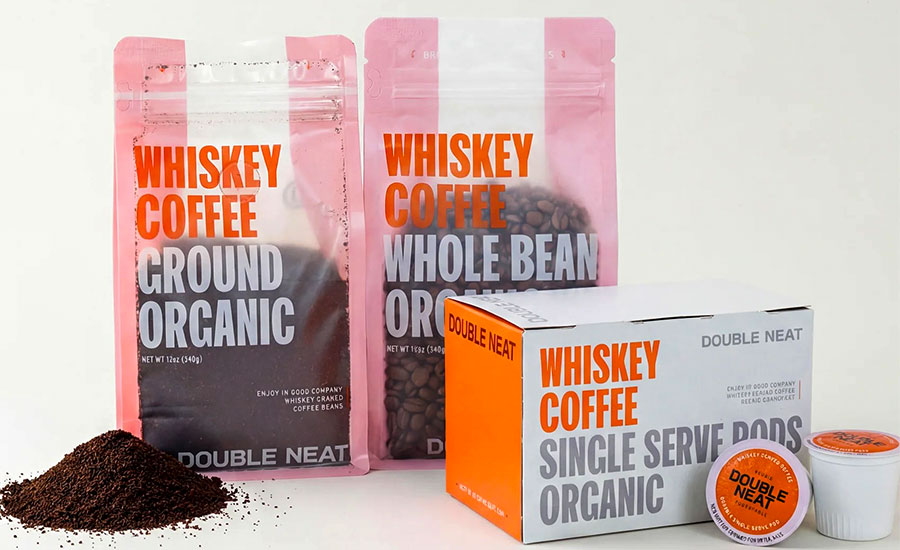
Double Neat recently entered the DTC space with a whiskey-inspired brand that includes coffee and snacks.
Image courtesy of Double Neat
Those signals can support better retail planning, sharper product launches, stronger replenishment decisions, more effective gifting programs and better customer retention, he shares.
“In our 12-month spirits DTC sample, returning purchasers had a 17% higher average order value and generated 53% more revenue per purchaser than first-time purchasers,” Fougere explains. “The channel is not only about capturing the first order. It is about understanding what creates the next one.”
The experts note certain demographics are more comfortable utilizing DTC platforms for shopping.
“The reflex answer is to point to younger consumers, but spirits DTC tells a more useful story,” Fougere says. “In our 12-month sample of roughly 13,000 direct purchasers across more than 100 spirits storefronts, the 55-plus buyer came back directly at about 1.6 times the rate of the 21-34 [years old] buyer, with a slightly higher average order value.”
That does not mean younger consumers are unimportant, he adds.
“It means age alone is not the best explanation,” Fougere says. “The stronger signal is intent: whether the consumer follows the brand, responds to a release, buys a gift, returns after a prior purchase or wants a direct path to buy again.”
According to Mash data, email-attributed buyers repeated at more than three times the rate of paid-social buyers, which reinforces the point.
“Spirits DTC behaves more like a relationship channel than a purely demographic behavior,” Fougere states.
NIQ’s O’Leary has observed that comfort with DTC skews toward digitally fluent, higher-income shoppers.
“Omnichannel buyers are disproportionately millennials and higher-income households, and higher-income consumers are significantly more open to AI-enabled and digitally assisted shopping experiences — key enablers of DTC adoption,” he says.
Meanwhile, DRINKS’ Collier suggests that early DTC adopters skew younger and more digitally native.
“Millennials have been the backbone of DTC growth across categories, and wine is no different,” he says. “They’re comfortable buying online, they value discovery and curation and they’re more open to exploring new things rather than defaulting to a familiar label. What’s interesting in alcohol, though, is that older demographics, Gen X and boomers, represent a huge and underserved community.”
Older generations have significant purchasing power, deep brand loyalty and an established wine habit, Collier states — they just haven’t had a great online experience designed for them yet.
“When the experience is intuitive enough, when a virtual sommelier meets them where they are rather than overwhelming them with choices, that demographic converts extremely well,” he notes. “Gen Z is the wildcard. They’re drinking less overall, but when they do drink, they gravitate toward craft, premium or niche products that are hard to find in a traditional retail setting.”
DTC is a natural fit for that behavior, Collier says.
As an increasing number of brands invest in DTC platforms, experts describe the benefits of DTC for brands.
Collier shares that the most underrated benefit is data.
“When you sell through a distributor or retailer, you’re essentially flying blind,” he says. “You know cases moved, but you don’t know who bought them, why they bought them or whether they’ll end up buying again. DTC flips that entirely.”
Every transaction is a signal, and every interaction teaches brands something about their customers that they can use to build a better relationship, Collier explains. The second benefit he notes is margin.
“Traditional three-tier distribution takes a significant cut at every layer,” Collier says. “DTC lets brands recapture some of that. Not all of it, because compliance and fulfillment aren’t free, but enough to reinvest meaningfully in the customer relationship.”
Collier shares that the third benefit is loyalty.
“A customer who buys directly from you is a customer you can reach, reward and retain,” he expresses. “Wine clubs, subscription models, early access to new releases: none of that is possible if you’re entirely dependent on retail placement. The brands that started building this capability early are now sitting on first-party data assets that their competitors simply don’t have.”
That advantage compounds over time, Collier adds.
“DTC gives brands control over data, storytelling, pricing and innovation,” NIQ’s O’Leary notes. “In an environment were 80% of products that end up in baskets originate from Top 10 digital search results, DTC allows brands to test, learn, personalize and future-proof for AI-driven discovery.”
Mash’s Fougere shares similar thoughts.
“The biggest benefit of DTC is that it gives brands a direct view of the customer relationship,” he says. “Traditional channels are essential for reach, but they often leave the brand with limited visibility into who bought, why they bought, what happened after checkout and whether that customer returned. DTC closes part of that gap.”
The visibility has real economic value, Fougere notes. In Mash’s 12-month DTC sample, returning purchasers had a 17% higher average order value than first-time purchasers and generated 53% more revenue per purchaser.
“The value of the channel is not only the first transaction,” Fougere says. “It is what the brand learns and does after that transaction.”
A serious DTC program must manage more than checkout, he urges.
“It has to connect commerce, fulfillment, inventory, post-purchase support, reengagement, reconciliation and measurement,” Fougere states. “That is how brands move from taking the first order to earning the next one.”
A promising future
Looking ahead, experts note which beverage categories hold the most promise within the DTC channel.
DRINKS’ Collier feels that wine is the clearest near-term opportunity, partly because it has the most established DTC infrastructure and partly because the product itself rewards discovery and curation.
“There’s a reason wine clubs have existed for decades,” he states. “The category naturally lends itself to a relationship-based model.”
Spirits are gaining ground quickly within the DTC space, particularly premium and craft spirits. This is due to the consumer already seeking something specific they can’t always find locally, Collier notes.
“A small-batch bourbon or an artisanal mezcal isn’t going to be on every shelf in every market,” he says. “DTC solves that distribution gap. The longer-term play is any category where personalization creates meaningful lift: non-alcoholic alternatives, premium ready-to-drink (RTD) products, curated cross-category gift sets.”
Wherever the purchase decision is complex and the consumer benefits from guidance, Collier says AI-powered personalization has a significant role to play.
“That’s the model that scales,” he adds.
NIQ’s O’Leary suggests that beverages with differential branding and use-cases show the strongest DTC potential.
“Additionally, categories that over-index online, grow faster than total CPG (like coffee and hydration beverages), are most likely to benefit from subscriptions, personalization and education-led shopping that defines DTC,” he shares.
Mash’s Fougere says that the beverage categories with the strongest DTC futures are the ones where the relationship continues after the first purchase.
“Premium spirits, wine, RTD cocktails, non-alcoholic adult beverages, specialty coffee, functional beverages, premium mixers and limited-release products all have that potential when the brand gives consumers a reason to return,” he notes.
The key is not simply whether a product can be sold online, but is whether the consumer has a reason to buy direct: replenishment, gifting, education, access to a release, loyalty to a producer or connection to a community, Fougere explains.
“Spirits are a useful example because the purchase is often tied to a story, occasion, discovery, gifting and limited availability,” he states. “But the same principle applies across beverage. DTC works best when it extends the relationship, not when it only processes a transaction.”
Looking for a reprint of this article?
From high-res PDFs to custom plaques, order your copy today!