Secondary packaging helps beverage brands increase engagement with consumers
Sustainability, digital enhancements appeal to consumers’ needs, wants
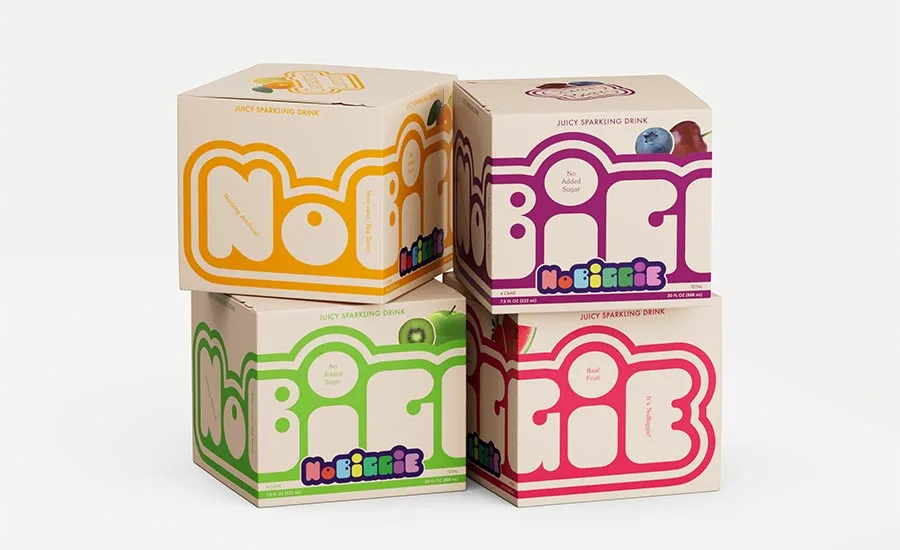
NoBiggie designed its secondary packaging to feel like an interactive experience, featuring jack-in-the-box-style insert with bold colors and oversized fruit illustrations.
People sometimes need that extra push to start a new project or begin a new routine. As sustainability is becoming a bigger part of consumers’ lives, their interests are pushing brand owners to rethink their secondary packaging options.
“Consumers and retail partners are much more aware of the environmental impact of secondary packaging than they were even a few years ago,” says Aytunc Atabek, co-founder and chief operating officer at NoBiggie. “That is pushing brands toward packaging that is more recyclable, uses less plastic, and is easier to justify from a sustainability standpoint. At the same time, it still must work commercially.
“Secondary packaging needs to protect the product, merchandise well, and support the brand on shelf. The best solutions are the ones that reduce unnecessary material without making the pack feel cheap or less effective.”
– Aytunc Atabek, co-founder and chief operating officer at NoBiggie
Bret Arnone, vice president of sales at Graphic Packaging International, explains that sustainability is resetting expectations for secondary packaging, as brands shift away from plastic shrink film and rings toward more circular, fiber-based alternatives. However, that transition is happening at different speeds, he notes.
“Where there is less regulatory pressure, many brands are taking a more incremental approach by optimizing packaging rather than fully replacing materials,” Arnone says. “Brands are reducing overall footprint through lightweighting, increasing recycled content where appropriate and refining designs to use less material — delivering both environmental benefits and, in many cases, cost savings.”
This approach has led to a more nuanced meaning of sustainable packaging, he adds.
“Beyond recyclability or compostability, it includes factors such as material efficiency, use of renewable or recycled inputs, and carbon impact,” Arnone says. “At Graphic Packaging, we evaluate these factors through multiple lenses, including drawing on metrics like lifecycle analysis, the Material Circularity Indicator (EMF) and recyclability as the innovation requires.
“These shifts are driving a broader range of formats, from wrap and clip-style multipacks to basket carriers and fully enclosed cartons,” he continues. “This expanded toolkit gives beverage producers greater flexibility to balance sustainability goals with cost, performance and operational needs.”
Yet, sustainability isn’t the only factor impacting secondary packaging material selection.
“Convenience continues to be a major driver in secondary packaging design,” Arnone explains. “Time-constrained consumers are looking for multipacks that are easy to grab and go, often with integrated handles or intuitive opening features. There is also growing demand for formats that transition easily from store to home, such as packs designed to be placed directly in the fridge or used for easy at-home dispensing.”
NoBiggie’s Atabek also notes the impact of multipacks on secondary packaging.
“One trend we are seeing is a move toward smaller individual serving sizes, but larger overall purchase occasions,” he says. “Consumers may want smaller cans or bottles for portion control, trial, or convenience, but they are often buying those products in multipacks. So, while the primary package may be getting smaller, the transaction size can actually get larger.”
Graphic Packaging’s Arnone further notes how portion control trends are influencing the packaging world.
“Health, wellness and changing consumption habits are also influencing pack formats,” he says. “The rapid growth of smaller can sizes — particularly minis in soft drinks — and smaller multipacks reflects demand for moderation, portion control and lifestyle flexibility.”
Economic impacts also are prompting consumers to turn to multipacks at an increasing rate.
“Many consumers are turning to bulk formats and variety packs to manage spend while still accessing choice, allowing them to try multiple flavors or products without committing to larger single-SKU packs,” Arnone says.
Visually appealing
Beyond the impacts of consumer interests and concerns, secondary packaging must also act as the first interaction they have with shoppers.
“[B]rands continue to use secondary packaging as a platform for engagement through limited-edition graphics, collaborations and promotional campaigns,” Arnone says. “High-impact print and structural design help brands capture attention and create a point of differentiation in an increasingly crowded category.”
NoBiggie’s Atabek explains that brands are using secondary packaging to be part of the consumer experience.
“We are seeing more interactive elements, stronger brand storytelling, co-branding opportunities, and packaging that communicates the brand’s values more clearly,” he says. “There has also been good progress in reducing plastic through smarter use of paperboard sleeves, trays, wraps, and other bundling formats. The most successful examples are the ones that balance function, sustainability, and brand impact.”
Atabek further notes that secondary packaging offers brands a larger canvas to engage with consumers.
“That space can be used for storytelling, education, promotions, QR codes, partnerships, or seasonal and localized messaging,” he says. “It also gives brands a way to test different communication strategies without changing the primary package. For smaller beverage products especially, that extra real estate can be very valuable because the primary label only has so much room to do the work.
NoBiggie, specifically, has taken this approach with its secondary packaging.
“NoBiggie’s secondary packaging was designed to feel like an interactive experience, not just a beverage box,” says Ali Weiss, NoBiggie co-founder and CEO. “The moment you rip open the top, you’re greeted by a bright, playful jack-in-the-box-style insert with bold colors and oversized fruit illustrations. Flip it over, and it transforms into a game board or activity that extends the NoBiggie experience beyond the last sip.
“From word searches and ‘Would You Rather?’ games to paper airplanes and fortune tellers, each pack creates a small moment of surprise, connection, and play for kids (and anyone else who joins in on the fun),” she continues. “We wanted the packaging to extend the joy of the product itself and turn an everyday treat into something memorable and shareable.”
Weiss explains that this approach was motivated by designing packaging that focused on the kids compared with designs that feature nutrition callouts, which are more parent oriented.
“We drew inspiration from the kinds of experiences kids used to obsess over: cereal box prizes, Cracker Jack surprises, little discoveries that made opening the package part of the fun,” she says. “We wanted the box to spark imagination, conversation, and play long after the drink was gone.”
This allowed the brand to really highlight its true spirit, she adds.
“The packaging captures the spirit of NoBiggie: joyful, playful, colorful, and made unapologetically for kids first,” Weiss says. “From the tiny cans to the bold graphics and interactive surprises, every detail is designed to bring a little more fun, connection, and sparkle to everyday moments.
Enhancing branding
When it comes to secondary packaging, experts also highlight how it can be used not just for start-ups but to enhance legacy companies.
“One of the biggest shifts in recent years is how brands are approaching differentiation: finding smarter ways to stand out on shelf without significant new investment,” Graphic Packaging’s Arnone. “Rather than relying on entirely new formats, many are prioritizing renovation: evolving existing packaging systems to deliver a more premium, distinctive look while maintaining operational efficiency.
“We’re seeing this in practice with brands that have successfully refreshed legacy products by rethinking structural design and materials, enhancing shelf presence and elevating brand identity while continuing to run on existing equipment,” he continues. “By leveraging paperboard multipacks and refining pack structure, these brands can achieve a more premium look and improved sustainability profile without adding complexity or capital investment.”
Structural enhancements brands are employing include rounded corners, cleaner silhouettes and simplified pack designs, he adds.
“These updates not only improve visual appeal but also enhance the consumer experience, all while working within current production footprints,” Arnone says. “Ultimately, this reflects a broader shift toward working smarter — using design, materials and existing systems more strategically to balance differentiation, cost and performance in a highly competitive market.”
As the first branded touchpoint for consumers, Arnone emphasizes what a critical role secondary packaging plays.
“Inclusive packaging features, such as embossed braille, improve accessibility and ensure a broader range of consumers can interact with the product,” he says. “Immersive or experiential packaging, including augmented reality (AR), allows brands to layer digital storytelling and interactive content onto the physical package.
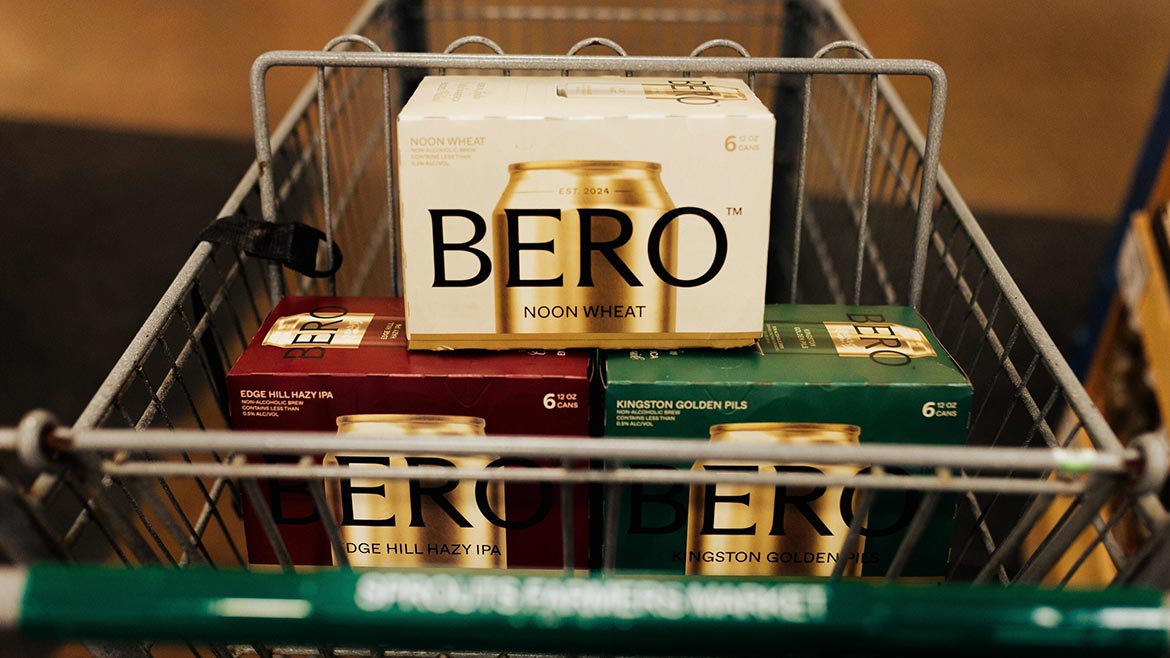
“Intelligent or connected packaging uses technologies like NFC tags and QR codes to extend engagement beyond the pack,” Arnone continues. “For example, Graphic Packaging partnered with BERO on the launch of its non-alcoholic brew, providing paperboard multipacks with unique QR codes printed on the inside using high-speed print technology. This enabled enhanced traceability while also connecting consumers to BERO’s loyalty program, Club BERO, offering exclusive content and experiences.”
Arnone explains that taking these approaches can help brands create packaging that deliver visually while also are accessible, connected and engaging.
“While brands ultimately own the digital user experience behind these interactions, partnering early with packaging experts can help ensure the physical and digital elements are seamlessly aligned,” he concludes.
Looking for a reprint of this article?
From high-res PDFs to custom plaques, order your copy today!