Health and wellness remain central to tea, RTD tea market growth
Functional attributes prompt growth for RTD tea
Award-winning actress and producer Jessica Chastain is quoted as saying, “Green tea throughout the day is the healthiest thing I’ve discovered for me.”
Similarly, when it comes to consumer consumption of tea and RTD tea, experts note that category growth is fueled by the desire for healthy beverage options.
“Health and wellness trends are one of the biggest forces reshaping the tea category,” says Mitch Madoff, head of retail partnerships at Keychain, New York. “Consumers are increasingly turning to tea for benefits like hydration, relaxation, antioxidant support and sustained energy. Green teas and herbal blends are especially appealing as shoppers seek beverage options that align with their broader wellness goals.”
Gary Hemphill, managing director of research at Beverage Marketing Corporation (BMC), Wintersville, Ohio, notes that the overall tea category is well positioned from a health and wellness perspective.
“That said, it hasn’t had a significant positive impact on performance in recent years,” he explains, noting that the “overall tea category performance was soft in 2025.”
“Both RTD and the dry variety experienced volume declines,” Hemphill says. “RTD tea declined but still outperformed the overall market. RTD volume dipped 1.6% with the overall market declining 3%.”
Keychain’s Madoff deems that the overall tea market performance experienced steady growth in the past year, fueled by rising consumer demand for beverages that deliver on health, functionality and convenience.
“RTD tea in particular has continued to gain momentum, since it resonates with shoppers who want refreshing, better-for-you options that still fit seamlessly into their busy lifestyles,” he says.
Based on data from Chicago-based Circana, the overall bag and loose-leaf tea market saw a dollar sales increase of 1.9%, above $1.7 billion, for the 52 weeks ending March 22 in total U.S. multi-outlets.
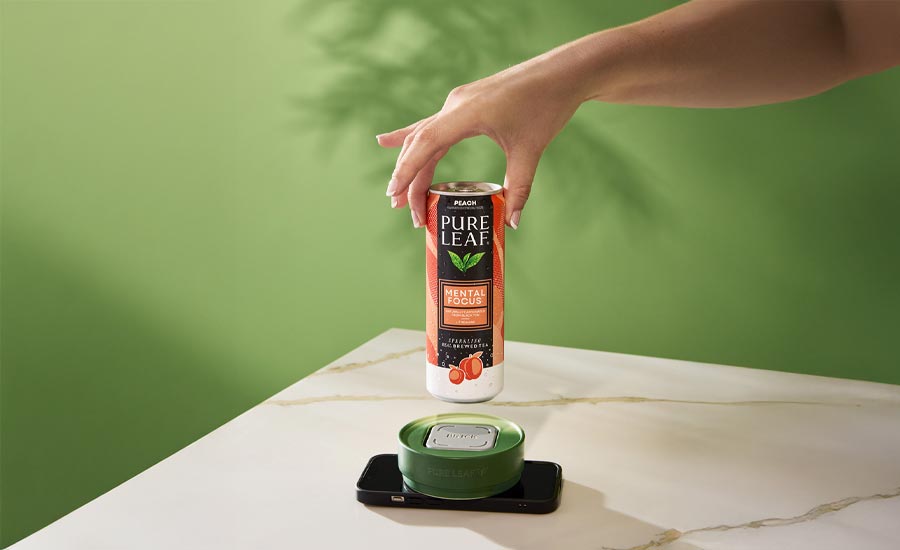
Image courtesy of Pure Leaf & AI for generative fill
In terms of segments, bags and loose-leaf tea saw a dollar sales increase of 2.2%, totaling $1.6 billion in sales, compared with single-cup tea sales down 5.7%, totaling $59 million for the same time period.
Meanwhile, the instant tea mixes category witnessed growth with dollar sales up 1.2%, totaling $525 million for the 52 weeks ending March 22.
For canned and bottled tea, dollar sales reached $4.8 billion, down 1.6%. However, refrigerated teas saw sales up 4.9%, totaling $1.8 billion, according to Circana data for the 52 weeks ending March 22.
Keychain’s Madoff points to RTD tea as the clear standout, with both shelf-stable and refrigerated options continuing to gain traction, “especially as younger consumers gravitate toward beverages that are healthier alternatives to traditional soft drinks,” he notes.
Madoff adds that the company is seeing that play out across both iconic brands and everyday staples.
“Products like Arizona Tea’s Ginseng & Honey Green Tea continue to perform well, combining strong sales with sustained growth,” he says. “At the same time, consumers are increasingly reaching for multi-packs of Pure Leaf Unsweetened Real Brew Tea, which are easy to grab on the way out the door.”
Recently Pure Leaf, a brand of Purchase N.Y.-based PepsiCo, introduced Pure Leaf Mental Focus, its first line of sparkling, real brewed iced teas. Made with naturally occurring caffeine from black tea and added l-theanine, to help support attention and focus, Mental Focus comes in two flavors: Peach and Raspberry, featuring 69 mg grams of caffeine, zero grams of sugar and zero calories, the company notes.
“Functional drinks are no longer niche. People want products that keep up with their lives,” said Zach Harris, vice president and general manager at Pepsi Lipton Tea Partnership North America, in a statement. “Pure Leaf Mental Focus delivers great flavor, plus added benefits. It’s a real brewed iced tea with naturally occurring caffeine from black tea and added l-theanine, making it a smart option for busy days, especially as packed schedules and constant distractions have become the norm.”
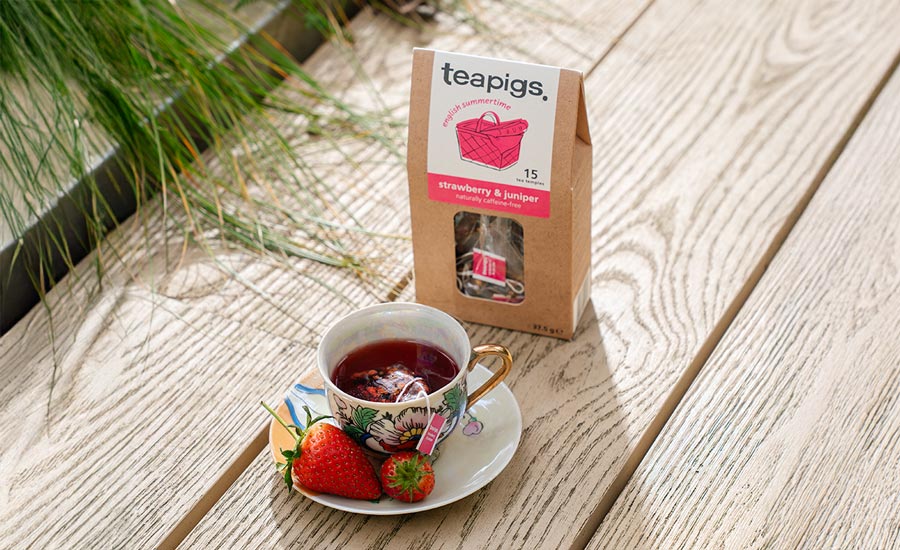
Image courtesy of teapigs
As for bagged and loose-leaf teas, Keychain’s Madoff notes that traditional segments are holding their own as well.
“Tea bags remain a pantry staple, with products like Lipton Yellow Label Black Tea seeing strong revenue,” he says. “The wellness wave has also given herbal teas a meaningful lift. Consumers prioritizing relaxation and self-care are reaching for options like Tazo Chamomile Herbal Tea bags, which Keychain's platform shows posting notable growth. Matcha has also surged in this space, fueled by social media buzz and growing consumer interest in functional, wellness-forward drinks.”
BMC’s Hemphill notes that of the tea market’s segments, on a volume basis, only loose tea grew in 2025; all other segments experienced modest declines.
Keeping with wellness trends, New York-based teapigs, a premium tea brand known for its unique combination of natural, whole ingredients, recently announced the launch of four new herbal tea blends — Ginger & Manuka Honey, Strawberry & Juniper, Chamomile Lullaby, and Pumpkin Spice Chai. As the brand’s first innovation in more than five years, the new lineup revives teapigs’ signature quirky energy that redefined classic tea culture and shaped how consumers enjoy their daily cup, it says.
“We’re excited to unveil our newest flavors — thoughtfully crafted for every mood and moment and designed to inspire discovery with every sip, from comforting calm to bold and vibrant flavor,” said Mark Donovan, botanical flavors and innovation director at teapigs, in a statement. “Our new collection is inspired by today’s tastes and expectations, with each blend telling its own distinctive story and designed to weave seamlessly into everyday rituals. We aim to delight devoted fans while inviting a new generation of tea drinkers to slow down, savor the moment and reconnect with a sense of calm and gratitude.”
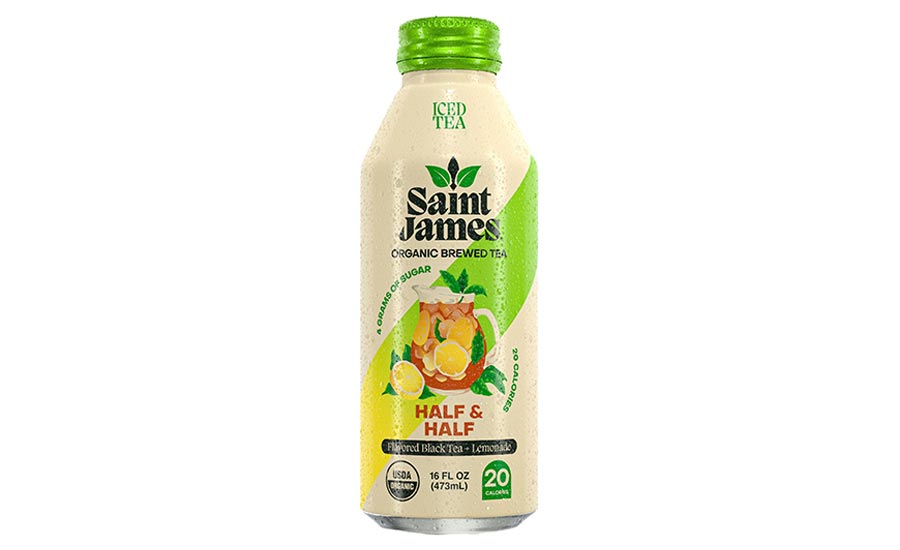
Image courtesy of Saint James Iced Tea
Functional attributes reign supreme
Alongside wellness trends, sugar reduction trends are impacting the tea market, particularly when it comes to the RTD tea markets, experts note.
“Tea has a well-developed diet segment along with significant sales of unsweetened products,” BMC’s Hemphill says. “RTD tea is well positioned as a category for consumers seeking a refreshment beverage with less sugar.”
Keychain’ Madoff points to sugar reduction as a defining trend in RTD tea.
“Shoppers are paying closer attention to labels and opting for beverages with less sugar, fewer ingredients, and a more natural positioning, pushing many brands to rethink their formulations,” he says. “This has led to increased demand for unsweetened and lightly sweetened teas, particularly in formats that can be easily consumed throughout the day.
“At the same time, there’s still plenty of room for indulgence alongside better-for-you options: Sweetened classics like Arizona’s Half Iced Tea Half Lemonade will likely always resonate with a broad consumer base due to its nostalgic and familiar flavor profile,” Madoff continues. “We’re also seeing a clear shift toward cleaner labels and lower sugar varieties.”
Saint James Iced Tea, New York, announced it is kicking off summer with the launch of Half & Half, a new flavor that blends brewed organic black tea with classic lemonade. The release marks the brand’s first expansion beyond traditional tea-only offerings. Remaining true to Saint James’ Certified Organic, low-calorie, and low-sugar ethos, Half & Half combines brewed organic black tea from Assam, India, with natural fruit flavors, organic lemonade, and a touch of plant-based sweetener, the company says.
“With Half & Half, we wanted to capture the best of summer — playful, carefree, and perfectly balanced for everyday enjoyment,” said Brad Neumann, co-founder and co-CEO of Saint James Iced Tea, in a statement. “It’s about bringing together the ease of childhood and the pace of adult life in a single sip: a crisp, refreshing taste that can fit into any summer moment.”
Brenden Cohen, co-founder and co-CEO of Saint James Iced Tea, added: “Half & Half is more than just a new flavor; it’s summer in a bottle. It’s the centerpiece of our summer campaign, and we’re taking it on the road to bring that feeling to people across the country. It marks the next step in our mission to make high-quality, organic iced tea more accessible ― and more memorable ― than ever.”
Keychain’s Madoff notes that functional beverage trends in general have reinforced tea’s position as a naturally beneficial drink.
“Many consumers already associate tea with inherent health benefits, like supporting digestion and immune function, making it an easy fit for wellness-driven routines centered on energy, focus or relaxation,” he explains. “Beverages like kombucha and matcha, both of which are associated with health benefits, have made a splash in the beverage industry over recent years.
“Herbal teas are greatly benefiting from this shift, as shoppers increasingly seek out products tied to specific benefits like stress relief and sleep improvement,” Madoff continues. “Traditional Medicinals Organic Peppermint Supplement Herbal Tea Bags is a strong example of this trend in action. What really seems to set tea apart is that it delivers these functional benefits in a format [that] consumers already know, trust, and enjoy.”
As for other consumer trends impacting the U.S. tea market in the years to come, Madoff anticipates that social media will play a growing role in shaping how consumers connect with tea, “especially through daily vlogs and ‘day in the life’ content,” he says.
“Tea is often featured in these videos as a go-to option for winding down, reinforcing its ties to relaxation and self-care,” he explains. “This is turning tea into more than just a drink. It’s becoming part of a daily ritual, especially for younger consumers looking to build moments of calm into their day.
“As a result, herbal and caffeine-free teas are gaining more visibility,” Madoff continues. “More broadly, this trend is positioning tea as both functional and lifestyle-driven, making it an everyday staple rather than just an occasional choice.”
Looking ahead, BMC’s Hemphill says that in theory consumer demand for healthier refreshment should boost the tea category but so far, any impact seems minimal.
“We’re projecting a continuation of soft performance for the category this year,” Hemphill explains. “Specifically, we’re projecting total category volume will decline about 1% while dollars will increase ever so slightly.”
Keychain’s Madoff anticipates that the outlook for the U.S. tea market will remain positive.
“RTD tea should continue to lead the category, supported by strong demand for convenient, lower-sugar, functional beverages,” he says.
“We also expect to see continued momentum across both innovative formats and legacy products, as consumers embrace new products while still revisiting their familiar favorites,” Madoff continues. “Brands that can deliver great taste, clear wellness benefits, and consistency will be best positioned to succeed as the category continues to evolve.”
Looking for a reprint of this article?
From high-res PDFs to custom plaques, order your copy today!