Reworking formulation with ADM
Supplier highlights key trends, pillars supporting reformulation
With an ever-increasing focus on health and wellness, consumer demand for functional ingredients in food and beverage is on the rise.
In fact, consumer demand for functional products is so much so that, according to ADM Outside Voice, more than 80% of U.S. consumers favor reformulation, with 63% preferring that brands reformulate existing products to align with better-for-you positioning.
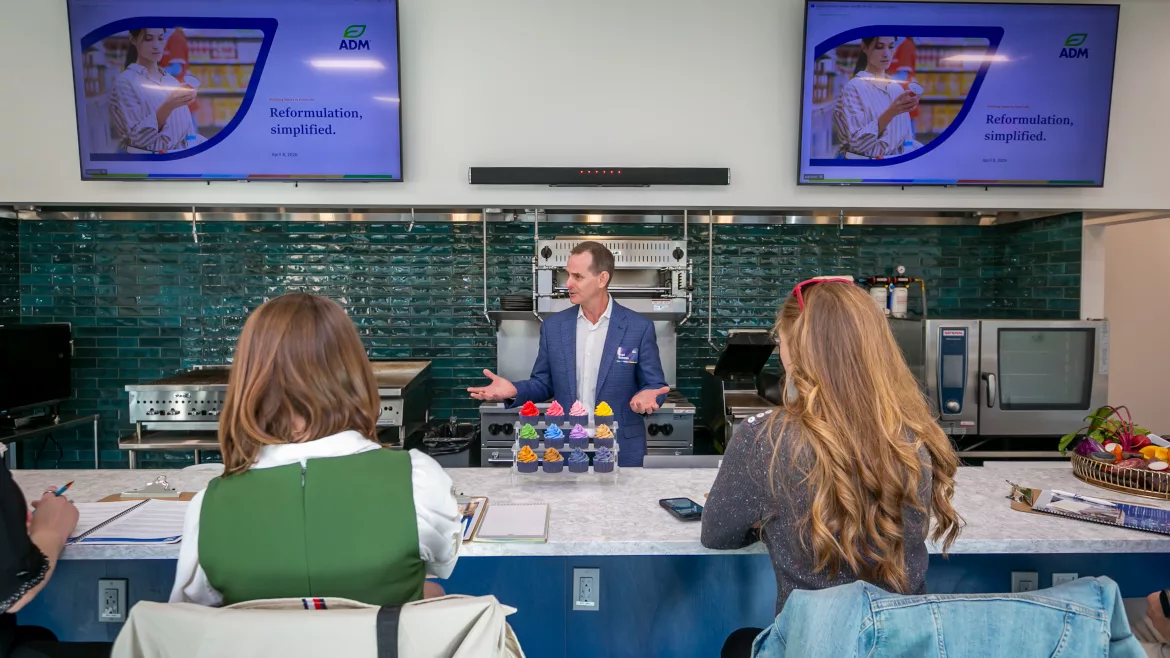
Given this demand, ADM recently hosted a small group of media professionals at its flagship flavor facility in Erlanger, Ky., for a tour, taste testing and glimpse into the culinary world.
At the start of the tour, ADM experts identified the following five key pillars, rooted in proprietary consumer research, market analysis and regulatory expertise, that is driving product reformulation:
Cleaner Label — Globally, consumers gravitate toward products that contain ingredients they recognize and look for products with the shortest ingredient lists. By removing and replacing artificial ingredients with sweetening solutions, and incorporating flavors and colors derived from natural sources, and wholesome ingredients like beans, pulses and ancient grains, brands can help reach consumer-friendly labeling targets.
Less Sugars — Across regions, consumers intentionally avoid or reduce sugar in their diets. Utilizing a comprehensive sugar reduction toolbox of quality sweetening and flavor modulation solutions can help brands provide options for consumers focused on sugar and calorie reduction, while also maintaining mouthfeel and structural properties in formulations.
More Protein — Many global consumers seek to increase their protein intake. Tapping into diverse protein content from plant proteins, beans, pulses, ancient grains and seeds can support nutritional, functional and sensorial performance in formulation.
Less Sodium — Consumer preferences and regulatory guidelines are putting a spotlight on products with less sodium content that do not sacrifice flavor. Globally, more than half of consumers look to minimize their intake of salt or sodium. Adapting to proposed levels of sodium content, while retaining consumer-preferred tastes, takes leveraging savory flavors and flavor modulation tools.
Optimized Fat — There is demand for reformulating different types of fats or oils in consumers’ favorite products. In the United States, consumers are interested in products with reduced saturated fats. Optimized fat and oil systems that also support indulgent sensory attributes can help bridge this gap.
Further, experts outlined the Top 3 trends driving food and beverage reformulation: consumer demand, government and regulatory changes, and GLP-1 use leading to demand for products with more protein, fiber and smaller portions.
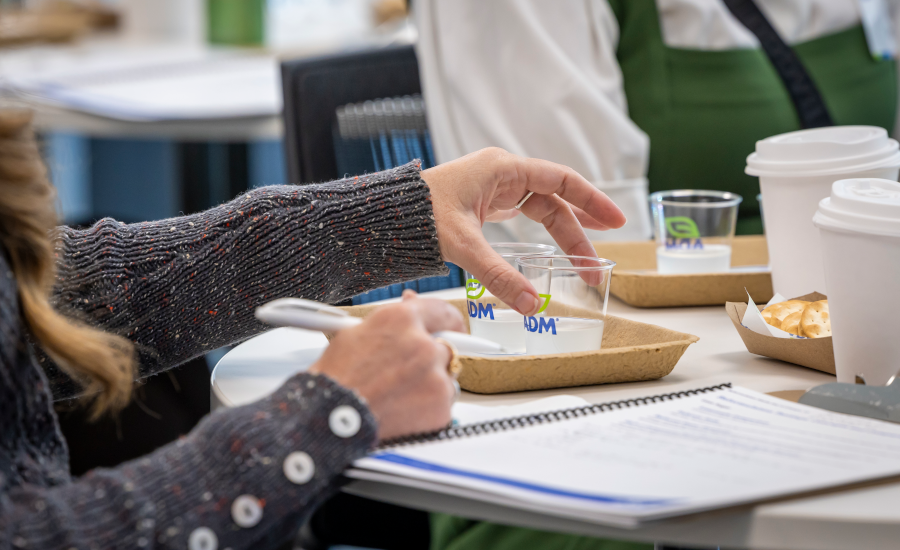 Image courtesy of ADM
Yet, ADM experts note that reformulation that meets these trends doesn’t come without its challenges.
For instance, when it comes to consumer demand for sodium reduction, formulators must explore alternatives, as sodium supports flavor, taste, functionality, moisture control, shelf life and activation of other ingredients.
Regulatory changes also pose challenges when it comes to embracing natural colors. For example, ADM experts highlighted obstacles such as shade match, stability, cost-in-use, product development and compatibility, and supply consistency and raw materials as a “big” challenge.
To illustrate overcoming such challenges, during the test tastings experts guided the guests through comparisons of reformulated products, showcasing how reformulation can change sensory perception of food and beverage compared with traditional counterparts.
The tastings aimed at showing how ingredient customization can meet formulation challenges in taste, texture, aroma and mouthfeel.
Based on the five key pillars, ADM’s product innovations captured some of the latest beverage trends including: a Lemonade Comparison, using ADM’s Replace, Rebalance, Rebuild method; a Tribiotic Soda formulated with zero added sugars, featuring pre-, pro- and postbiotics all working in tandem; an Evolved Dirty Soda with a cleaner label formulation; and an Asian Pear Starfruit Cognitive Drink, blending juicy pear and tropical starfruit flavors with botanical extracts like guarana, which provides a natural source of caffeine.
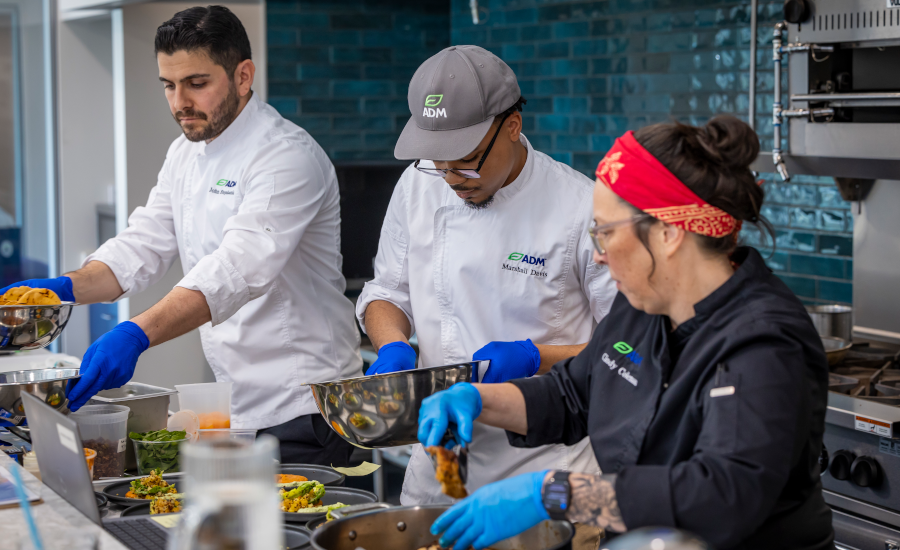 Image courtesy of ADM
After the test tastings, guests were able to explore ADM’s “2026 Global Culinary Trend Outlook” firsthand, as ADM’s global culinary team prepared lunch using inventive techniques, bold flavor expressions and vibrant visual cues, spanning across cultures.
As ADM intentionally invests in local capabilities, with Customer Creation and Innovation Centers across regions working as part of an integrated global network, long term relationships with farmers and growers, and maintaining quality and safety standards remain critical, experts note.
To further the company’s work in flavor and ingredient customization, ADM recently invested more than $40 million to its Erlanger facility to strengthen its ability to address reformulation demands in the United States and beyond.
ADM experts note that successful reformulation depends on both nutritional and sensorial optimization, which the company helps food and beverage manufacturers achieve through quality ingredients, systems and sophisticated technology, and expanded capabilities.
These ongoing investments are important for turning complex reformulation challenges into delicious realities, the company says.
Looking for a reprint of this article?
From high-res PDFs to custom plaques, order your copy today!