Functional beverage market seeing growing interest in relaxation, stress-relief ingredients
Market moving beyond single function interest with relaxation beverages
For many Americans, coping with stress is a regular part of their lives. Last spring, a national survey commissioned by the Ohio State University Wexner Medical Center found that 45% of U.S. adults are stressed at least once a week because of the news or what’s happening on social media. The survey also found that 16% of respondents reported daily feelings of stress.
Although stress is not a new element in consumers’ lives, it has taken on greater importance as more look to manage its impact.
“Mental well-being and day-to-day stress management have become top priorities for today’s consumers,” says Dena Strehlow, senior business development at AIDP, City of Industry, Calif. “This is driven not only by ongoing work-life balance challenges, but also by economic uncertainty and ‘always-on’ digital lifestyles.
“Consumers increasingly recognize how stress impacts overall quality of life — including mood, cognitive performance, sleep quality and general wellness,” she continues. “According to a recent food/beverage consumer survey by ITC, the top conditions for females of all ages are stress, mood, sleep. This demographic is seeking fortified drinks to address these conditions.”
James Roza, vice president of technology at BioVivo Science, Jeffersonville, Ind., also details the impact that stress and anxiety are having on Americans mentally and physically.
“The negative effects that stress has on health constitute the greatest risk to consumers and society in general,” he says. “If not managed properly, its impact on mental and physical health poses significant risks resulting in sleep disorders, substance abuse, cognitive impairment, and social isolation, to name a few. Chronic stress can lead to inflammation, high blood pressure, cognitive impairment and other metabolic disorders.”
This is seeing consumers turn to food, beverage and supplement sources to cope with the effects.
“As a result, many are taking a more proactive approach, turning to functional beverages with nutritional actives that help them feel calm yet focused,” AIDP’s Strehlow says. “Beverages are often preferred over pharmaceuticals or traditional supplements because they integrate seamlessly into daily routines with minimal perceived side effects.”
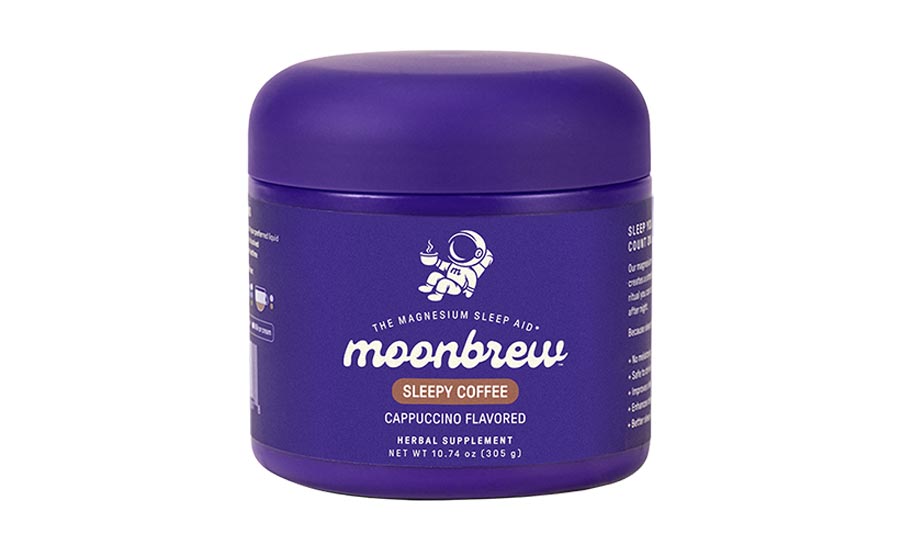 Last fall, MoonBrew released Sleepy Coffee Cappuccino, which delivers rich espresso notes, velvety finish, while replacing the caffeine buzz with botanical calm, the company says.
Image courtesy of Moon Brew
BioVivo Science’s Roza also notes the growth in relaxation or stress-relief beverages.
“Many include rhodiola, magnesium, theanine, and American ginseng,” he says. “Theanine, for example, has been studied for its inhibitory effect on excitatory neurotransmitters like glutamate, which modulates mood and promotes relaxation. Rhodiola increases the body’s resistance to physical and mental stress by supporting hemostasis. It does this by supporting healthy cortisol levels and stimulating dopamine and serotonin synthesis.”
As demand for products positioned around supporting mood, calmness and mental well-being proliferate, AIDP’s Strehlow explains that this is prompting consumers to seek out products that are non-drowsy, clean label and contain clinically supported ingredients.
“As a result, ingredients like magnesium and adaptogens have transitioned from niche supplement formats into mainstream beverage innovation,” she says.
BioVivo Science’s Roza further notes that this demand for relaxation and stress relief beverages is evidenced by the shift in consumer purchase patterns.
“The trend in beverages today favors non-alcoholic functional drinks that aid in relaxation without health drawbacks,” he says. “Evidence for this trend is the decline in sales of beer, wine, and distilled alcohol. Consumers are gravitating towards beverages that prioritize wellness and promote mental health.”
Although demand for these products has grown, AIDP’s Strehlow notes that it also has evolved to support multi-use functions and lifestyle occasions.
“It now spans RTD sparkling ‘calm’ beverages, functional waters and teas, mocktail-inspired alcohol alternatives, and both daytime stress-support and evening wind-down products,” she says. “Formulators are moving beyond single ingredients toward multi-functional blends that support calm, mood, and cognitive resilience simultaneously. Beverages offer several advantages, including faster perceived onset versus pills, repeatable daily use occasions, and a more enjoyable, social format.”
“As a result, many are taking a more proactive approach, turning to functional beverages with nutritional actives that help them feel calm yet focused. Beverages are often preferred over pharmaceuticals or traditional supplements because they integrate seamlessly into daily routines with minimal perceived side effects.”
– Dena Strehlow, senior business development at AIDP
Relaxing effects
Whether it’s focused solely on relaxation or an amalgamation of functions, beverage-makers are turning to a range of ingredient solutions.
“There is a variety of natural ingredients that have an untapped potential for reducing stress and anxiety,” BioVivo Science’s Roza says. “Magnolia bark and jujube berries are two that have been studied for their anti-anxiolytic effects. Commonly used in traditional Chinese medicine, extracts made from these ingredients have been demonstrated to reduce stress and promote relaxation.
“Compounds in magnolia bark has an affinity to the same cellular receptors as CBD,” he continues. “Similarly, jujube berries (Ziziphus spinosa) have bioactives that affect nervous system receptors associated with sleep and relaxation.”
AIDP’s Strehlow explains that beverage-makers can employ various ingredients that support relaxation through different physiological mechanisms. Within the AIDP portfolio, Strehlow notes the company offers a range of solutions including Magtein, a magnesium L-threonate, a FDA GRAS form of magnesium shown to cross the blood-brain barrier and support brain magnesium levels.
“It is highly suitable for beverages due to its solubility, stability across a wide pH range, and neutral taste,” she says. “Unlike other magnesium sources, Magtein has been clinically associated with cognitive performance, calm mood and healthy sleep.”
Also within the portfolio are Holixer, a self-GRAS hops extract that supports relaxation and stress management; Saffr’Activ, a self-GRAS saffron extract that is clinically shown to support mood balance and help reduce stress-related symptoms; BacoMind, a self-GRAS Bacopa monnieri extract that supports cognitive function; and l-theanine, a GRAS ingredient that is known for promoting alpha brain wave activity and a state of relaxed alertness, Strehlow shares.
“Together, these ingredients enable stackable, synergistic formulations that address both immediate stress and long-term resilience,” she says.
Although magnesium and l-theanine might be well known to many formulators, BioVivo Science’s Roza says there are ones that are overlooked that can deliver on relaxation attributes.
“One that is often overlooked and somewhat misunderstood is ginseng, specifically American ginseng (Panax quinquefolius),” he says. “Native to the heartland of the U.S., it is often overlooked due to the popularity of another species, Korean ginseng (Panax ginseng), which is indigenous to Asia. Both plants are part of the same genus, but each species has decidedly different properties. Panax ginseng is revered for its ‘yang’ or warming effects that stimulate and energize the body. American ginseng, on the other hand, possesses a ‘yin’ or cooling property that reduces stress and supports immunity.
“This fact is not widely understood in Western culture but is well known in Asia,” Roza continues. “That is why most American ginseng is exported to the East. Like theanine, American ginseng inhibits excitatory neuronal activity and modulates cortisol levels through the hypothalamic-pituitary-adrenal axis. In addition, through immunomodulation, American ginseng supports homeostasis by balancing both pro-inflammatory and anti-inflammatory actions when the body’s innate immune system is challenged. These qualities make American ginseng an important ingredient to consider when developing a functional beverage for stress and immunity.”
As relaxation beverages and these ingredients become more mainstream, experts note that some education still is needed.
“Knowledge of the proper use of ingredients, such as American ginseng, is necessary to deliver the efficacy consumers seek,” Roza says. “Too often products can be poorly formulated around a ‘hero’ ingredient that is present merely as window dressing to entice a sale. This can lead to consumer dissatisfaction when the product does not live up to its claims. Additionally, the form of an ingredient used is as important as evidenced by the differences between American and Korean ginseng.”
AIDP’s Strehlow further notes that clear communication can support the growth of the category.
“While awareness of ‘magnesium’ and ‘adaptogens’ is growing, there is still a need to educate consumers, particularly explaining the value of clinically studied ingredients; comparing magnesium forms and their ability to be absorbed; and clarifying ‘calm’ versus ‘sedation’ — many consumers want relaxation without feeling sleepy,” she says. “Brands that invest in clear, benefit-driven communication — rather than overly technical language — are seeing stronger consumer trust and repeat purchase.”
Given growing interest in managing stress, the beverage market looks primed to support this need state.
“As stress management becomes a daily priority, the beverage aisle is emerging as a powerful platform for mental wellness solutions,” Strehlow says.
Looking for a reprint of this article?
From high-res PDFs to custom plaques, order your copy today!