Health and wellness gains accessibility, affordability
Segment gains distribution as retailers expand offerings

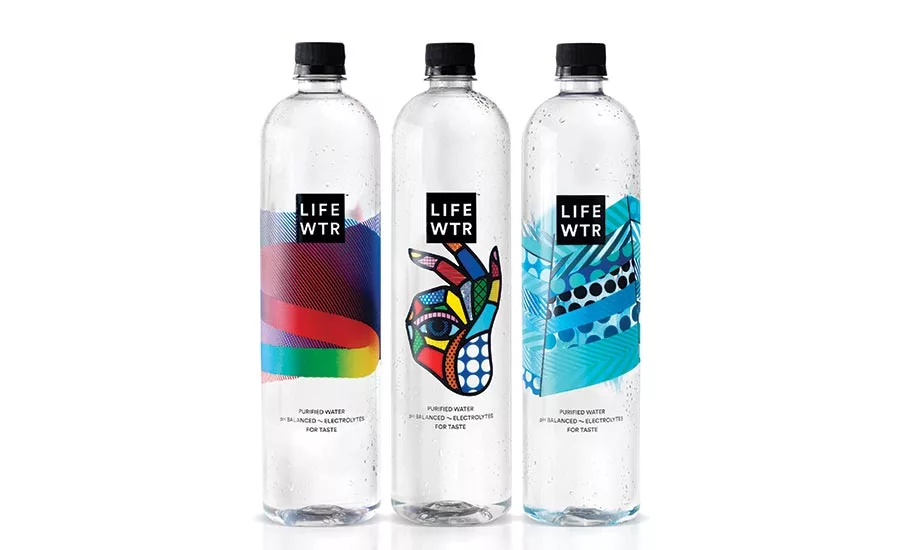
Bottled water has experienced immense growth as consumers look for more better-for-you products, according to BMC’s Gary Hemphill. (Image courtesy of PepsiCo Inc.)
Once a niche category within the beverage market, better-for-you products have found a home in the mainstream market during the past several years as more consumers focus on their overall health and wellness.
“We are seeing a clear mainstream movement of health and wellness as a priority and not as a luxury,” says Andrew Mandzy, director of strategic insights for health and wellness at New York-based Nielsen.
Gary Hemphill, managing director of research at New York-based Beverage Marketing Corporation (BMC), highlights the increased availability of healthful products in retail. “[The] movement toward health and wellness has impacted retailers,” he says. “More retailers are offering organic selections. The shelf space allotted [to] products with health-and-wellness attributes has increased.”
Chicago-based Euromonitor also notes this trend in its April 2016 report, “Health and Wellness in the US.” “Mainstream retailers’ adoption of health-and-wellness products continued in 2015, increasing both the competition and consumer accessibility of health-and-wellness products,” it states. “Responding to mainstream adoption, health-and-wellness retailer brand Whole Foods announced a new store concept called 365, and supermarket powerhouse Kroger announced a similar concept called Main & Vine, both with the intention of increasing the affordability and accessibility of healthy and organic foods and beverages.”
It adds that several big-box retailers have begun to invest in organic offerings, including Wal-Mart, Target and Aldi, among others.
Driving demand
Behind the growth of health and wellness is consumer demand, experts note. “Americans are being more proactive with their health,” Nielsen’s Mandzy says. “We can see that more broadly in the fact that people are exercising more, reading nutritional labels and making decisions off of them, looking for health information online, and in general being active participants in their health management. There has been a movement toward back-to-basics eating, with simpler and less processed ingredients being the focus.”
However, behind this demand lie several factors that have prompted consumers to desire a more healthful lifestyle. “Consumers have been taking a more proactive approach to health and wellness for years now,” explains Susan Viamari, vice president of Thought Leadership at Chicago-based Information Resources Inc. (IRI). “During the economic downturn, this was one way of managing healthcare costs, but it is also motivated by the fact that people are living longer and they want to protect a better quality of life for themselves and their families.”
In its August 2016 report titled “What’s in our Food and on our Mind,” Nielsen notes that the aging population, a rise in chronic diseases, consumers with an active role in healthcare, and more educated and connected consumers all are factors that have converged to impact health and wellness.
Yet, it’s important to note that consumers of different demographics might have different wants and needs when it comes to their health and wellness, Viamari says.
“[C]onsumers, even those within the same demographic group, are not homogeneous. It’s critical to take a very targeted approach to needs and wants, including health and wellness goals,” she says.
Mandzy echoes similar sentiments. “We see from the data we capture at Nielsen that health and wellness is not one-size-fits-all,” he says. “For instance, we see that older consumers are more actively seeking the functional benefits of food.
“Sixty-two percent of boomers say they want more fiber in their diets, compared to 35 percent of millennials,” he continues. “We see similar disparities in things like antioxidants, heart health and vitamins. But millennials over-index on health-and-wellness claims like organic, no high-fructose corn syrup and hormone/antibiotic free.”
Making it desirable
When it comes to better-for-you products, consumers have specific opinions about which ingredients they don’t want to consume and those for which they’re actively seeking, experts note.
“Consumers are seeking healthier products with natural and simple ingredients,” BMC’s Hemphill says. “Functional products with corresponding ingredients have gained popularity as well.”
However, according to the Nielsen report, consumers have placed a stronger emphasis on avoiding certain ingredients. “Many consumers define healthful foods primarily by what they don’t contain, rather than the benefits they provide,” the report states. “Sixty-two percent of global respondents agree that the absence of undesirable ingredients is more important than the inclusion of beneficial ones.”
Artificial ingredients are among the ingredients that consumers are actively avoiding as a result of their interest in health and wellness, according to Chicago-based Mintel in its September 2016 report “Better-for-You Eating Trends Spotlight on Real.”
“Consumers may not have ever exactly sought out foods and ingredients described as artificial, but today’s health-conscious consumer is actively avoiding products with elements described as ‘artificial’ altogether,” the report states.
It highlights high-fructose corn syrup, genetically modified organisms and artificial sweeteners as ingredients that consumers are actively avoiding.
However, consumers have an extensive list of attributes that they find desirable. According to the Mintel report, protein, fiber, antioxidants, omega-3 fatty acids, vitamins and minerals, organic ingredients, natural sweeteners, probiotics, and prebiotics are all attributes for which consumers are actively looking.
“Well ahead of other features, consumers are interested in protein, fiber and whole grains, with well more than half of consumers seeking at least one of the attributes when purchasing foods they consider healthy,” it states.
Delivering on healthy
As beverage-makers are delivering more better-for-you beverage options, consumers have responded positively, Nielsen’s report states.
According to the report, health and wellness has proven to be a positive market opportunity for food and beverage manufacturers. “Two-thirds of global respondents (68 percent) strongly or somewhat agree [that] they’re willing to pay more for foods and drinks that don’t contain undesirable ingredients,” it states. “An analysis of U.S. retail sales data supports this notion: While total fast-moving consumer goods (FMCG) sales volume has been flat over the past four years, sales of products with health-and-wellness claims are outpacing total category growth by a significant margin in many categories.”
Additionally, the report notes that these products are gaining in the marketplace. “In the U.S., volume sales of products with an organic claim on the package grew 13.1 percent over the 52 weeks ended July 30, 2016,” it states. “In addition, products with claims that they are hormone- or antibiotic-free, GMO-free or natural grew 21.7 percent, 12 percent and 7.5 percent, respectively, over the same period. Claims that the product was made without artificial colors or flavors, high-fructose corn syrup or MSG also grew compared to the previous year, with volume sales of such products growing 5.4 percent, 3.2 percent and 2.3 percent, respectively, year over year.”
Additionally, BMC’s Hemphill notes that bottled water has benefited from the increased interest in health and wellness.
Transparency also has been a key to success for many manufacturers, experts note. “Over the past five years, smaller brands that are transparent build equity with consumers and build share,” Nielsen’s Mandzy says. “Seventy-three percent of consumers in our study agree that they feel more positively about companies that are transparent about where and how their products were made, raised or grown.”
Moving forward, transparency and simplicity will continue to be important, he adds. “The food and beverage landscape is changing,” Mandzy says. “The focus on simpler, less processed ingredients, the fact that consumers are looking for healthier options, even in indulgent categories, cannot be overstated. While these types of products do not resonate with all consumers, due to various reasons, this shift toward transparency and better-for-you foods and beverages will continue to rise as consumers take a more proactive position in their health and wellness.”
Looking for a reprint of this article?
From high-res PDFs to custom plaques, order your copy today!