Beverages becoming growth drivers for restaurants
2026 Restaurant Beverage Trends highlights growing role beverages play
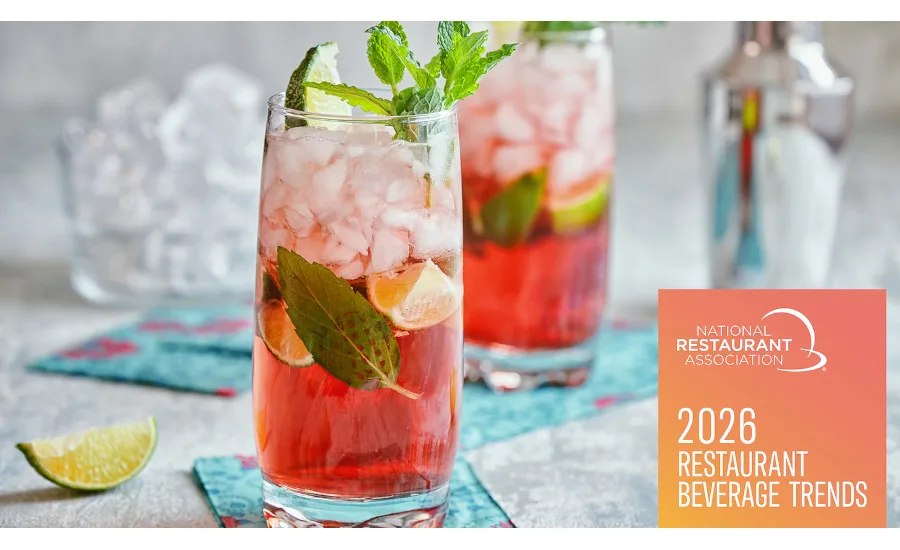
Beverages are becoming one of the most dynamic and innovative growth drivers in the restaurant industry, according to the National Restaurant Association 2026 Restaurant Beverage Trends report.
The research reveals that restaurants are increasingly serving as destinations for beverage discovery, while consumers — especially Gen Z and millennials — are fueling demand for new flavors, expanded menus and beverage-centric experiences.
The report, powered by presenting sponsor The Coca-Cola Co., highlights the growing role beverages play in driving consumer engagement and restaurant traffic. An overwhelming majority (87%) of full-service operators and 80% of limited-service operators say beverages can be an important driver of restaurant traffic, while majorities in both segments say offering a larger variety of beverages is more important than it used to be.
“Beverages are more than just a drink for today’s consumers — they’re looking for something that feels personal, memorable, and worth going out for,” said Michelle Korsmo, president and CEO of the National Restaurant Association, in a statement. “Our Restaurant Beverage Trends report shows a real opportunity for restaurant operators. Beverages can help restaurants stand out, deliver more value to guests, and drive growth through an elevated experience, unique flavors, and customizable options.”
Restaurants have long been a place where consumers go to discover new foods, and the Restaurant Beverage Trends report indicates beverages are following a similar path. Seventy-two percent of surveyed consumers say restaurants are a good place to learn about beverages they have never tried before, while 54% say they enjoy being adventurous when selecting a beverage. More than half of consumers also say they wish there were more beverage choices on restaurant menus.
Younger consumers are leading the trend as 71% of both Gen Z and millennial consumers say their favorite restaurant beverages provide flavor experiences that cannot easily be replicated at home, and roughly seven in 10 younger adults want more beverage options on menus.
“It’s no secret beverages are one of the most powerful ways restaurants can create memorable experiences, build guest loyalty and drive profitable growth,” said Dagmar Boggs, president of foodservice and on-premise at The Coca-Cola Company North America. “Today’s consumers are looking for more choice, personalization and discovery in what they drink, and restaurants are uniquely positioned to meet those expectations. We’re proud to support the Restaurant Beverage Trends report and help our restaurant partners unlock the opportunities in the evolving beverage space.”
Beverage-only purchases are emerging as a major growth opportunity for restaurants in today's value-driven consumer landscape, particularly among younger consumers. Thirty-seven percent of consumers make beverage-only purchases at least weekly, including 50% of Gen Z adults and 47% of millennials.
As consumers become more selective with discretionary spending – and as broader wellness trends, including GLP-1 use, continue to reshape dining habits — beverages are increasingly serving as an affordable indulgence and a standalone occasion. The afternoon is the most popular time of day for beverage-only purchases, creating new opportunities for restaurants to drive traffic beyond traditional meal occasions.
Although consumers frequently order beverages when dining on premises, beverage attachment rates remain lower for delivery and takeout occasions. The report identifies packaging innovation as a major growth opportunity.
Eighty-three percent of delivery customers say they would include beverages in delivery orders more often if improved packaging allowed restaurants to offer more beverage options. Among Gen Z and millennial consumers, that figure rises to 89%. Additionally, two-thirds of restaurant operators say they would increase beverage promotion for delivery if packaging improvements made transportation easier.
The data also suggests today’s consumers aren’t just ordering beverages; they're seeking novelty, customization and memorable experiences. Interest in tastings, food pairings, locally sourced beverages and special events points to a broader shift in how guests interact with beverage programs. That shift aligns with the National Restaurant Association’s 2026 What's Hot Culinary Forecast, which highlights growing consumer demand for functional beverages, wellness-focused options, personalization and authentic experiences.
Rather than adding more beverages, restaurant operators are looking to add the right beverages to their mix. As consumers seek more variety, functionality and beverage-led experiences, operators are refreshing menus to capture evolving demand.
Limited-service operators are focused on growth categories such as coffees (46%), teas (31%), smoothies (29%), lemonades (27%), energy drinks (26%) and wellness beverages (24%), while full-service operators are expanding both traditional and emerging alcohol offerings, including mixed cocktails (55%), alcohol-free cocktails (49%), beer (45%), wine (42%) and alcohol-free beer (39%).
Together, these investments reflect the growing role beverages play in driving traffic, differentiation and guest engagement.
Looking for a reprint of this article?
From high-res PDFs to custom plaques, order your copy today!