Preventative health puts spotlight on immune support
Beverage-makers expand beyond traditional ingredients for immune health
Some beverages trend with the seasons. At one point, immune supporting ingredients and beverages operated this way, but that has changed in recent years.
“Traditionally, interest in immune health was only given priority during the fall and winter months,” says James Roza, vice president of technical service at BioVivo Science, Jeffersonville, Ind. “Since the pandemic, many consumers have incorporated it into their daily health regimen.”
Steve Fink, vice president of marketing at PLT Health Solutions, Morristown, N.J., also notes the year-round shift.
“Immune health is no longer a seasonal category,” he says. “It’s become part of the broader ‘daily wellness’ routine. For busy, health-conscious consumers, beverages offer a convenient, on-the-go solution to incorporating these nutrients into their daily routines. According to Innova, immune health accounted for 30% of functional beverage launches in North America and immunity claims rose by a CAGR of 5% from 2018 to 2022.”
Citing data from HealthFocus International, Max Hintz, product line director of the Nutritionals Portfolio at Cargill, Minneapolis, says that since 2020, there has been a 12-point increase in consumers who choose foods and drinks with preventive health benefits, being led by consumers in their 30s. He adds that consumers in their 40s are driving a six-point increase in selecting products specifically to support immune health.
“This suggests immune health has moved mainstream,” Hintz says. “Consumers across age groups are taking a more proactive approach to wellness and increasingly recognize the connection between nutrition and overall well-being. As interest in preventive health grows, demand for foods and beverages that support immune health is expected to remain strong.”
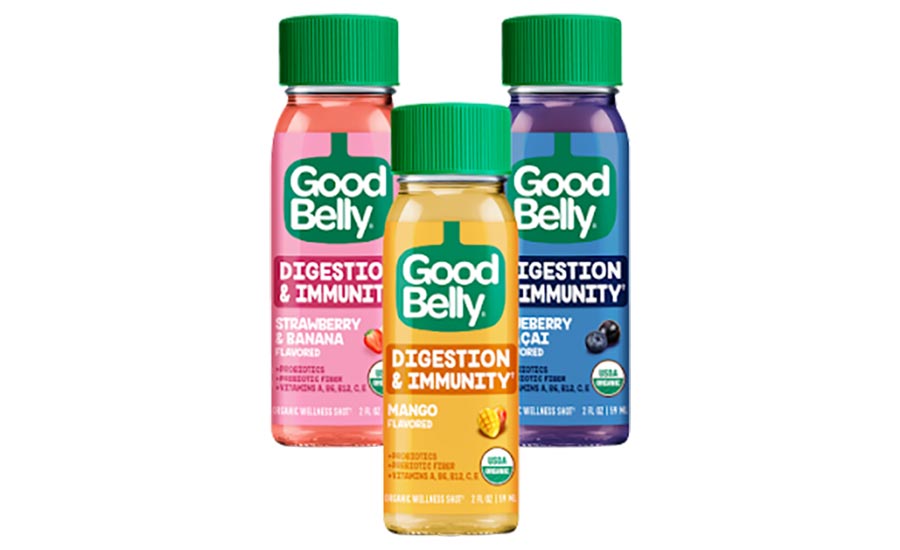 Image courtesy of NextFoods
This mainstream move is having a noticeable impact on beverage development.
“It has fueled the expansion of the functional beverage category in the form of immune-enhanced juices and drinks, wellness shots, and ready-to-mix powders that can be added to a consumer's beverage of choice,” BioVivo Science’s Roza says.
Cargill’s Hintz notes that the impact is so pronounced, it is spanning beverage categories.
“Consumers increasingly seek beverages that fit into their everyday routines while helping them achieve broader health goals,” he says. “As a result, functional benefits such as immune support are becoming a key driver of beverage innovation across categories.”
Exploring solutions
To support this increasing demand, ingredient suppliers are dedicating efforts to develop and improve ingredients that support a healthy immune system.
“As interest in preventive health grows, demand for foods and beverages that support immune health is expected to remain strong.”
– Max Hintz, product line director of the Nutritionals Portfolio at Cargill
“Long-standing standards like vitamin C and vitamin D continue to be a mainstay of many beverage formulations promoting immune health benefits,” Hintz says. “At the same time, formulators are exploring emerging ingredients, including postbiotics, that support immune health and overall wellness. One example is EpiCor postbiotic, which builds on Cargill’s 75 years of fermentation expertise. It is produced through the fermentation of baker’s yeast (Saccharomyces cerevisiae), creating a unique profile of beneficial metabolites and compounds.
“More than a dozen published studies, including multiple human clinical trials, have shown that EpiCor postbiotic may help support immune health,” he continues. “Because it is inanimate, EpiCor is highly compatible with a broad range of beverage applications and processing conditions.”
Meanwhile, PLT Health’s Fink spotlights the company’s Earthlight Whole Food Vitamin D, which can be suspended or dispersed without major organoleptic impact at very low use levels typically required for vitamin D fortification.
“Earthlight Whole Food Vitamin D is produced through a patented process using organic mushrooms exposed to ultraviolet light, creating a form of vitamin D2 derived entirely from food,” Fink says. “The ingredient is valued for its sustainability profile, traceability and compatibility with clean-label product development.
“Mushroom cultivation requires relatively low land and water usage and avoids the animal-derived inputs associated with some conventional vitamin D sources,” he continues. “PLT specifically positions it for use in beverages, juices, smoothies, meal replacements, and other liquid applications.”
BioVivo Science’s Roza also points to benefits of American ginseng when it comes to immune health support.
“A staple of Traditional Chinese Medicine, American ginseng is used to reinforce the body’s natural healing process as well as to combat fatigue and improve stamina,” he says. “It is not as well-known as Korean Panax ginseng, but its popularity is growing as more consumers learn of its value.
“Formulating it into a beverage, however, could be challenging due to its poor solubility,” Roza continues. “Recognizing that this may be problematic when formatting it into a beverage, BioVivo Science has developed an American ginseng powder with improved solubility so that it can be readily incorporated into drinks, shakes and hydration products.”
As beverage manufacturers prioritize immune health, experts highlight the importance of thoughtful formulations.
“While consumers are looking for benefit-stacked formulations, they want those combinations to be meaningful,” Cargill’s Hintz says. “Rather than taking an everything-but-the-kitchen-sink approach, brands need to understand which health-supportive benefits naturally fit together and help simplify consumers’ daily wellness routines.”
Additionally, BioVivo Science’s Roza expects the category to embark on a path that instills confidence in its products.
“I see this category growing toward a FOSHU (Foods for Specific Health) system used in Japan, in response to consumer demand for product validation and safety,” he says. “I think it will add another level of trust and confidence regarding their utility and efficacy.”
PLT Health’s Fink further views immune health as part of the broader health and wellness shift in the beverage market.
“As immune health folds into the conversation on healthy aging and longevity that is sweeping the industry now, we see opportunities for beverage producers to meet these needs,” he says. “Clean label is no longer viewed as a premium differentiator — it has become expected baseline behavior.”
Looking for a reprint of this article?
From high-res PDFs to custom plaques, order your copy today!