2026 State of the Beverage Industry: Coffee remains consumers’ staple beverage
Variety, convenience prompt coffee market growth
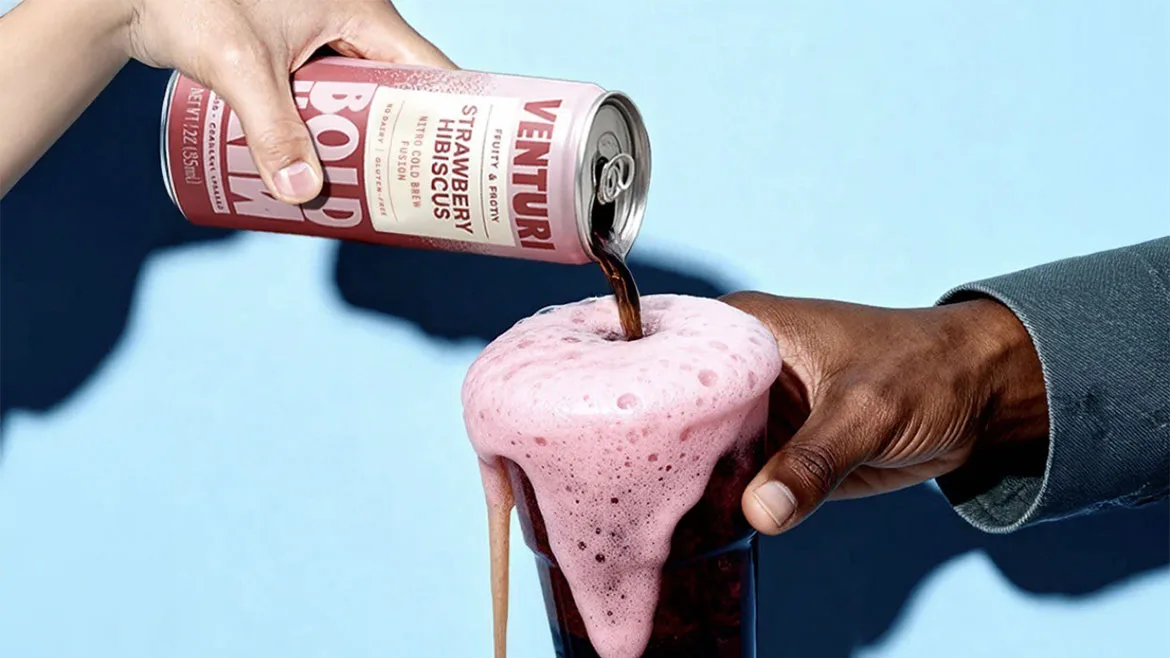
Although the U.S. coffee market faced volatility in supply chains and pricing while consumers grappled with overarching levels of economic uncertainty, coffee remains a staple beverage for consumers, experts noted.
According to data from Chicago-based Circana, the overall coffee category saw a sales increase of 14.7%, totaling $19.2 billion in total U.S. multi-outlets with convenience stores for the 52 weeks ending April 19.
Meanwhile, the majority of that performance came from the single-cup coffee segment, which saw a sales increase of 7%, totaling $8.3 billion, and ground coffee, which saw sales reach $6.8 billion, a 20.1% increase, for that time period.
Among other segments, Circana data show instant coffee sales reach $1.5 billion, an increase of 27.7%. Refrigerated coffee also saw a dollar sales increase of 4.6%, totaling $1.3 billion.
However, “the beverage is becoming more about variety and ritual rather than a monotonous beverage that remains the same each day,” said Kelsey Girard, senior food and drink analyst at Mintel, Chicago, in Beverage Industry’s September 2025 issue.
Mitch Madoff, head of retail partnerships at New York-based Keychain, explained that the coffee market is growing, but also is getting increasingly fragmented.
“Cold brew, espresso drinks and specialty formats are pushing the category in new directions, especially among younger consumers who value variety and convenience,” he said, in Beverage Industry’s September 2025 issue. “At the same time, brands are feeling pressure from rising costs and supply challenges forcing a rethink on everything from sourcing to product mix.”
Despite inflation, Madoff noted that demand for coffee remains strong and continues to be one of the most resilient categories in the store.
Sally Lyons Wyatt, global executive vice president and chief advisor of CPG and foodservice at Circana, noted in Beverage Industry’s September 2025 issue, that coffee additives, flavorings and whole bean segments saw growth in 2025.
“These trends show changes in choice, but not the fact that coffee is still within the consideration set for consumers as they seek beverages,” she explained. “This is further seen via coffee consumption occasions. Consumers who buy RTD coffee still consume traditional coffee.”
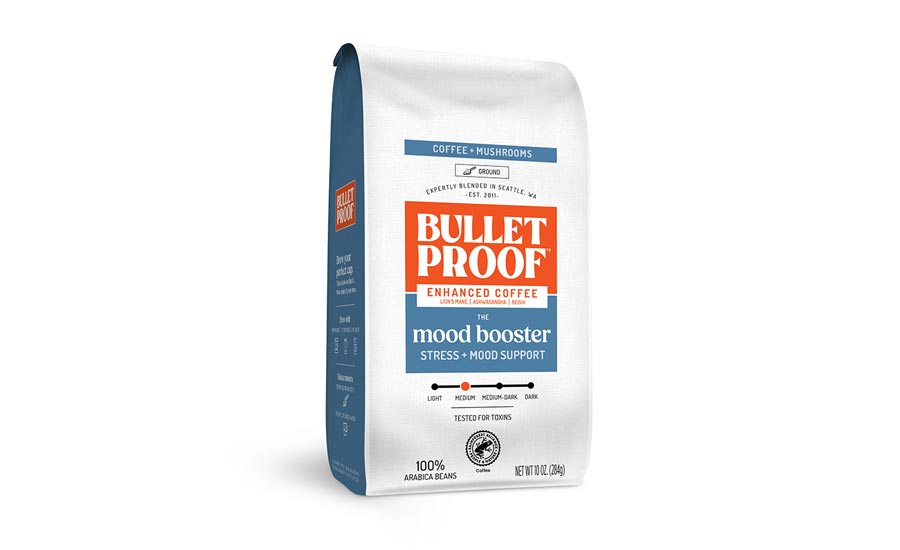 Image courtesy of Bulletproof
Moreover, Lyons Wyatt said that 86% of coffee consumed among RTD consumers is traditional brewed coffee, according to Circana Path to Consumption.
In Beverage Industry’s September 2025 issue, Lyons Wyatt further explained that consumer trends are influencing the coffee category, as the variety of coffee types provide options throughout the day.
“Traditional coffee is much more likely to be included in morning meal occasions than specialty coffee, and specialty coffee is more likely to be included in all other daypart occasions than traditional coffee, according to Circana Path to Consumption,” she said.
“Social media is having a big impact on coffee by providing education and fun ideas that are resonating with consumers,” she continued. “Some ideas and/or experiences can range from recipes or potential options at coffee shops to ideas for in-home consumption.”
Lyons Wyatt pointed to examples such as Cloud Coffee and functional coffees with ingredients like collagen, adaptogens (ashwagandha), mushrooms (lion’s mane, chaga), and nootropics.
“There are functional coffees that boost immunity, mental clarity and skin health,” she said, in Beverage Industry’s September 2025 issue. “There are also coffee influences like Alex Moe with 1.2 million Instagram followers [and] Dina Kalanta with 1.3 million Instagram followers [and] 6.1 million followers on TikTok. Lastly, brand collaborations are a hit with consumers.”
Mintel’s Girard explained in Beverage Industry’s September 2025 issue, that consumer preferences are changing the coffee landscape.
“Overall, diversifying preferences for coffee beverages continue to play a strong role in the market,” she noted. “Younger generations are shifting the landscape in terms of coffee beverage choices, leaning into cold and hot varieties and taking customization (e.g., use of cream, creamer) even further.”
Keychain’s Madoff said that consumers aren’t just reaching for caffeine, they’re reaching for coffee that aligns with their lifestyle.
“That means cleaner ingredients, ethical sourcing and functional benefits like focus and immunity,” he noted, in Beverage Industry’s September 2025 issue. “RTD is leading the way with cold brews and canned lattes becoming everyday staples, delivering café-level quality in formats that fit into consumers’ busy routines. At-home coffee culture is also booming.”
Madoff also noted that social media has turned morning routines into rituals — and that shift is driving demand for plant-based milks and clean-label creamers.
“We’re seeing brands like MALK and Califia Farms ride that wave, offering products that feel both premium and personal,” he stated.
Madoff added in Beverage Industry’s September 2025 issue, that premium and super-premium trends also are affecting the U.S. coffee market.
“Premiumization is no longer a niche trend, it’s shaping the entire category,” he said. “Consumers want more than just a caffeine fix: they’re looking for elevated taste, clean ingredients, and a product that feels worth paying for.”
Mintel’s Girard said in Beverage Industry’s September 2025 issue, that younger generations are crafting their own definitions of premium and super-premium coffee experiences using coffee accessories, appliances and customizations.
“These consumers are less likely than their older counterparts to own regular drip coffee brewers, and more likely to own specialty appliances and accessories like handheld milk frothers, coffee flavoring syrups, while noting strong interest in premium appliances like espresso machines and cold coffee machines,” she explained.
In other words, Girard noted that the premium and super-premium trends might lean more into preparation than strictly the coffee itself.
Circana’s Lyons Wyatt noted in Beverage Industry’s September 2025 issue that consumers have slowed their spending across all sectors, including food and beverages.
“However, we are seeing consumers bifurcating purchases by trading up to premium and super-premium options and, in some instances, trading down to private brand options,” she explained. “We are seeing ‘going without’ based on the slowed spending, but consumers allow themselves to make ‘affordable splurges’ for more premium and super-premium coffee.”
Further, Lyons Wyatt noted that Circana has seen an acceleration in coffee/tea pricing in 2025 because of ongoing supply volatility.
“This is impacting some consumers in regard to what type of coffee they buy, how often and where,” she said.
Keychain’s Madoff noted that inflation is shifting buying behavior but said it hasn’t slowed coffee down.
“For most people, it’s a daily ritual they’re unwilling to cut. Instead, they’re making trade-offs: smaller sizes, fewer café visits or investing in products that upgrade their at-home cup,” he said, in Beverage Industry’s September 2025 issue. “Keychain data shows consumers are prioritizing value in a new way. They’re not just looking at price, they’re looking at what a product delivers.”
Mintel’s Girard, meanwhile, stated that the coffee market has experienced volatile conditions in recent years, from pandemic spurred inflationary impacts to supply chain imbalances due to climate change and unfavorable coffee growing conditions.
Among the various coffee segments, Mintel’s Girard said in Beverage Industry’s September 2025 issue, that instant coffee sticks out thanks to its recent growth.
“Instant coffee has seen a level of premiumization, like the launch under premium brands or the launch of innovative products (e.g., instant iced coffee, Starbucks’ Crema Collection Instant Espresso) in recent years that has expanded perceptions of this segment,” she stated. “This segment is also especially accessible, as it requires no special equipment, which can be particularly relevant for consumers who don’t currently have resources to invest in expensive coffee-making equipment.”
Circana’s Lyons Wyatt noted additional pockets of growth throughout the coffee category.
“Notable mentions include energy drink brands getting into iced coffee, big and small brands making a mark in cold brew, and purpose-driven brands resonating,” she said, in Beverage Industry’s September 2025 issue.
Meanwhile, Keychain’s Madoff viewed RTD coffee as the clear standout within the category.
“Keychain data shows strong growth in cold brew, canned lattes and functional blends with ingredients like protein or adaptogens,” he shared. “These products meet consumers where they are, on the go, and offer the premium experience they want without the café price tag. Pods are also experiencing steady growth, evolving from basic convenience to personalized experiences.”
Madoff added in Beverage Industry’s September 2025 issue, that emerging segments such as cold brew also are affecting the coffee arena.
“Cold brew has opened the door to new consumers,” he said. “Its smooth profile and lower acidity have made it more accessible, especially for younger crowds. It’s not just a trend; it’s a format that’s expanding the category.”
Circana’s Wyatt noted in Beverage Industry’s September 2025 issue, that emerging segments are adding exploration, excitement, and more occasions for consumers who love coffee, but also says new varieties hitting the market might appeal to those who have not been coffee consumers in the past.
Gary Hemphill, managing director of research at Beverage Marketing Corporation (BMC), Wintersville, Ohio, said that RTD coffee had been the star of the coffee category up until 2021, when it faced slowed growth due to inflation.
“Innovations like cold brew coffee and nitro coffee have helped to boost RTD coffee sales,” he shared, in Beverage Industry’s September 2025 issue. “That said, most of the benefits of this innovation has cycled through and is having less impact on the category today.”
As for what is brewing in the future, Mintel’s Girard noted that at-home coffee consumption will regain popularity.
“Reminiscent of the at-home coffee making trend that boomed during the pandemic, consumers may, once again, increasingly turn to at-home coffee preparation, but this time, likely due to budgetary reasons,” she said, in Beverage Industry’s September 2025 issue. “With coffee prices elevated due to supply chain challenges and tariff implications, at-home coffee will be more shielded than away-from-home options. Still, categories like instant coffee, which blend accessibility, customization, and, in some cases, premiumization, will see paths to growth as consumers look for ways to enjoy coffee within budgets.”
Segments like roasted coffee and single-cup coffee might see consumers’ preferences shift within those segments, Girard noted, as consumers seek out promotions and value brands in some cases.
“RTD coffee will be challenged to maintain its value equation and offer a sharp price per serving, perhaps creating more opportunity for things like coffee concentrates,” she said.
Keychain’s Madoff shared in Beverage Industry’s September 2025 issue, that premium offerings will thrive going forward.
“In traditional coffee, premiumization will continue to drive growth,” he said. “Shoppers are looking for brands that are transparent about sourcing and ingredients, and that translate quality into real value.”
In the RTD coffee segment, Madoff noted that the runway is even longer.
“It’s becoming a testing ground for bolder flavors, added functionality, and new use occasions, from morning commutes to post-workout boosts,” he said. “Keychain data shows high consumer interest in products like La Colombe’s Draft Lattes and variety packs that deliver both convenience and novelty.”
Looking for a reprint of this article?
From high-res PDFs to custom plaques, order your copy today!