Consumers’ interest in clean label on the rise
Beverage-makers turn to system-based solutions for clean label formulation
American paralegal, consumer advocate and environmental activist Erin Brockovich is quoted for saying: “Awareness is key. In the absence of information, none of us know what is happening and what could be jeopardizing our health, our water supply and our planet.”
Similarly, with rising interest in clean label products, experts note that consumers are paying closer attention to beverage labels, favoring products that provide more transparency and offer simpler ingredients.
Alice Lee, technical marketing manager at GNT USA, Dallas, notes that many consumers are paying closer attention to what’s in their food and drinks and are looking for ingredients they recognize and trust.
“Transparency around sourcing and processing is becoming increasingly important, as is confidence that products align with personal values,” Lee explains. “For many shoppers, non-GMO fits naturally into that mindset, as it reinforces the idea of products being closer to nature.”
Micah Greenhill, senior marketing director for beverages at ADM, Chicago, echoes similar sentiments, noting that consumer demand for clean label products is driven by a desire for greater transparency and trust in food and beverage choices.
“This interest is also tied to shoppers often viewing clean label claims as indicators of higher quality and more responsible practices,” he says.
Kushal Chandak, vice president of research and development at PURIS, Minneapolis, explains that clean label has moved from a trend to a baseline expectation in beverages.
“Consumers today are far more label-aware, and they’re not just scanning for calories anymore, they’re evaluating ingredient lists as a proxy for health, quality and trust,” he says.
“At the same time, ‘clean’ has expanded,” Chandak continues. “It’s no longer just about removing artificial ingredients, it now includes transparency, sourcing and sustainability. We see this firsthand, customers aren’t just asking for protein, they’re asking for protein systems that let them simplify labels without sacrificing taste or performance.”
Thom King, chief innovations officer at Icon Foods, Portland, Ore., also notes that consumer interest in clean label and non-GMO products has moved well beyond niche health markets and into the mainstream.
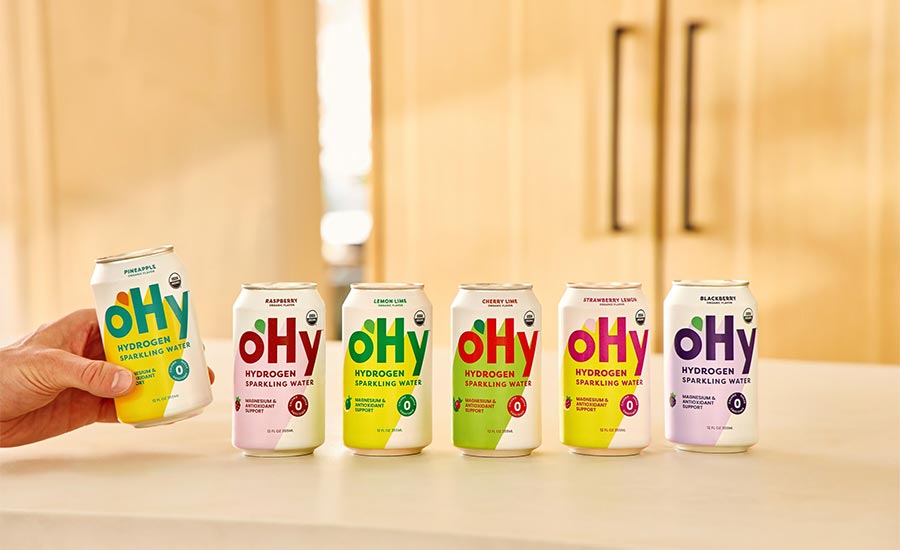
Image courtesy of oHy
“Today’s consumers are reading ingredient statements more carefully and looking for products made with recognizable ingredients, lower sugar levels and greater transparency around sourcing and processing,” King says. “Clean label has evolved from simply removing artificial colors and preservatives to a broader expectation around wellness, digestive tolerance, sustainability and authenticity. Non-GMO claims continue to serve as an important trust marker, especially in beverages, dairy, nutrition products and better-for-you snacks.”
Emily Berg, marketing manager at Cargill, Minneapolis, points to label considerations as a driving force in purchase decisions.
“Our proprietary consumer research shows ingredient scrutiny remains high, with two in three shoppers saying they are extremely or very likely to check ingredient lists before purchasing a new product,” she says. “However, this number varies by category.
“For example, 59% of consumers report checking ingredient lists when shopping for sports and energy drinks, while only 42% of consumers report checking ingredients when shopping for carbonated soft drinks,” Berg continues. “Ingredient list checking is more pronounced among younger consumers, up seven percentage points among millennials and 16 percentage points among Gen Z consumers since 2022.”
Being proactive
Given consumers’ increased interest in clean label, experts highlight how beverage-makers are responding to this demand.
Chloe Morris, senior product manager for beverage at McCormick Flavor Solutions, Hunt Valley, Md., notes that on the marketing side of things, brands are being more intentional about how they communicate clean label benefits.
“Rather than overloading packaging with technical claims, many are leaning into transparency and simplicity, highlighting short ingredient lists, using front-of-pack callouts like ‘no artificial ingredients’ and telling sourcing stories,” she says. “The shift is from compliance-driven labeling to consumer-driven storytelling.”
Michael Petrone, principal scientist of beverage for McCormick Flavor Solutions, adds that beverage-makers also are launching more products that are organic and non-GMO, using natural ingredients instead of synthetic.
“Some are also choosing more transparency in ingredient statements by volunteering names of flavors used (opposed to generic ‘natural flavor’), shortening ingredient lists, and avoiding artificial colors/flavors/sweeteners,” he says.
“Brands are also making a lot of ‘no’ claims, like ‘no preservatives,’ ‘no artificial colors,’ etc.,” Petrone continues. “At times, they are sacrificing cost, color and taste for a cleaner label.”
GNT’s Lee notes that many manufacturers are taking a closer look at their formulations and reassessing whether certain ingredients still make sense for today’s market.
“That’s driving a significant amount of reformulation activity, with a focus on simplifying ingredient lists and removing the parts that may no longer meet consumer expectations,” she says.
PURIS’ Chandak, meanwhile, notes that beverage-makers “are fundamentally re-architecting formulations, not just tweaking them.”
“We’re seeing a shift from layering in functionality with multiple additives to designing systems that can deliver taste, texture and stability with fewer ingredients,” he explains. “This is exactly where ingredient innovation matters.”
Icon Food’s King echoes similar sentiments regarding reformulation.
“Beverage manufacturers are responding by reformulating products with simpler ingredient legends, lower sugar levels, and more recognizable ingredient systems while still protecting taste and functionality,” he explains. “We are seeing significant movement toward natural sweetener systems such as stevia, monk fruit, allulose and rare sugars, often supported by soluble fibers and natural modulators to improve mouthfeel, balance sweetness and reduce off notes.
“Brands are also placing greater emphasis on non-GMO sourcing, transparency and functional wellness benefits tied to gut health, protein, hydration and metabolic support,” King continues. “What is changing now is the sophistication of formulation strategy. Beverage developers have realized that consumers will not tolerate a healthy compromise anymore. If a reduced-sugar RTD coffee tastes thin, if a protein shake has lingering bitterness, or if a functional beverage causes digestive discomfort, consumers move on quickly.”
As for which beverage categories have benefited the most from clean label interest, King says some of the biggest beneficiaries have been functional beverages, protein drinks, enhanced waters, RTD teas and coffees, and better-for-you carbonated beverages.
“Consumers are actively looking for products that deliver more than simple refreshment,” he says. “They want hydration, protein, energy, gut health support, cognitive benefits or reduced sugar without sacrificing taste or ingredient transparency. That has created strong momentum behind beverages formulated with natural sweeteners, soluble fibers, and recognizable ingredient systems.”
Cargill’s Berg points out that no beverage category is exempt from label considerations.
“Every segment is being re-imagined through the lens of more label-friendly solutions, lower sugar content, no artificial ingredients and added functional benefits,” she says. “At the same time, it’s also about optionality.
“Plenty of consumers still want full-sugar options, which makes it important for brands to offer a spectrum of choices,” Berg continues. “Case in point: a significant portion of soft drink offerings still fall within the full-calorie segment.”
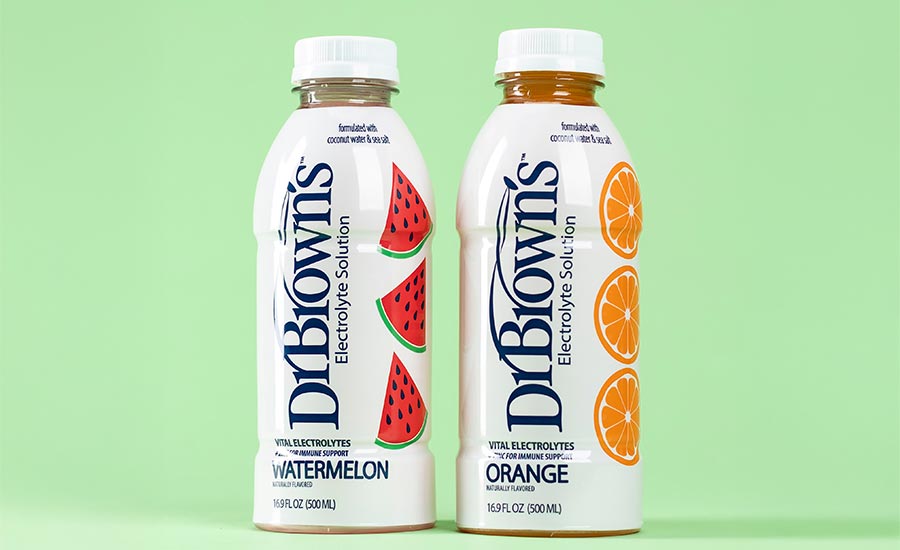
Image courtesy of Dr. Brown’s
Meeting expectations
Although “clean label” isn’t a regulated term, experts highlight that beverage-makers are turning to ingredients that support consumer demand for non-GMO, organic, or the absence of artificial additives in formulations.
Icon Foods’ King notes that beverage formulators increasingly are turning to natural high-intensity sweeteners such as stevia and monk fruit, along with rare sugars like allulose and tagatose, to reduce sugar while maintaining sweetness and label appeal.
“At the same time, soluble fibers including soluble tapioca fiber, chicory root inulin, gum acacia, and partially hydrolyzed guar gum (PHGG) are being used to help rebuild mouthfeel, improve texture, add functional nutrition and support digestive wellness claims,” King says. “These ingredients help replace some of the functional roles sugar traditionally played in beverages beyond sweetness alone.
“We are also seeing growing use of natural flavor modulators and protein-based sweetness modulators such as thaumatin to smooth temporal profiles, reduce bitterness, and improve overall sensory performance, particularly in protein beverages, energy drinks and botanical formulations,” he continues. “Beverage developers are becoming far more strategic in how they stack ingredients together.”
King adds that the focus is no longer on just reducing sugar but rather building complete systems that deliver clean label positioning, great taste, digestive tolerance and full sensory performance all at the same time.
GNT’s Lee says that one notable shift across the U.S. beverage industry is the growing use of plant-based colors.
“Many brands are reassessing their use of petroleum-based synthetic dyes and exploring alternatives derived from fruits, vegetables and plants,” she explains. “At the same time, there is increased attention on how colors are sourced, processed and declared on ingredient lists.
“It’s important to note that there is no formal definition of a ‘natural color,’ and not every color of natural origin necessarily aligns with clean-label expectations,” Lee continues. “For example, some natural colors involve chemical processing, and ingredients like carmine may not be suitable for all brands or consumers.”
Ravi Arora, director of sales and marketing at Global Organics, Cambridge, Mass., points out that beverage-makers increasingly are turning to organic agave inulin as a functional prebiotic fiber for healthy, gut-friendly sodas.
“Due to its highly branched chemical structure, agave inulin offers superior solubility in liquids compared to chicory inulin,” he says. “Moreover, to replace artificial flavors and concentrates, manufacturers are also adopting single-strength fruit and vegetable juices as clean, consumer-recognized alternatives.
“Beverage developers have realized that consumers will not tolerate a healthy compromise anymore. If a reduced-sugar RTD coffee tastes thin, if a protein shake has lingering bitterness, or if a functional beverage causes digestive discomfort, consumers move on quickly.”
– Thom King, chief innovations officer at Icon Foods
“There has been a massive shift toward these in HPP beverages and shots,” Arora continues. “NFC juices are also being used extensively in prebiotic and probiotic sodas, kombucha, and sophisticated cocktails and refreshers.”
PURIS’ Chandak explains that beverage-makers increasingly are building formulations around protein as the anchor, rather than layering it in as an add-on.
“That’s especially true in clean label, where protein has to contribute not just nutrition, but also texture, mouthfeel and overall drinkability,” he says. “We’re seeing a shift toward plant-based proteins that can perform without heavy modification, because traditional systems often require extensive masking and additional ingredients to make them work. The bar has moved beyond ‘can you add protein?’ to ‘can you do it cleanly’ with a short ingredient list and a great sensory experience?”
As for what beverage-makers should consider when working with clean label ingredients, Chandak notes that when working with protein in a clean label system, the biggest consideration is that the protein itself defines the success or failure of the beverage.
“If the protein brings off-notes, poor solubility or texture challenges, you’re forced to solve those issues with additional ingredients, which quickly works against clean label goals,” he says. “That’s why formulation has shifted upstream. Instead of asking how to fix a protein system, formulators are asking how to choose proteins that don’t need fixing.”
GNT’s Lee points out that plant-based colors rely on naturally occurring pigments, which means their performance can be influenced by factors such as pH, heat processing and shelf life.
“Compared with petroleum-based synthetic dyes, they may require a more considered formulation approach and, in some cases, the final shade may differ slightly,” she explains. “That said, a wide spectrum of vibrant shades is achievable in most beverage applications.
“Experience and close collaboration are important,” Lee continues. “By working closely with suppliers who understand plant-based color performance, brands can create visually appealing beverages that meet both technical requirements and consumer expectations.”
Icon Foods’ King says that beverage-makers need to understand that clean label ingredients rarely function as direct one-for-one replacements.
“Reducing sugar or removing artificial ingredients impacts sweetness, mouthfeel, acidity balance, flavor delivery, shelf stability and overall sensory perception,” he says. “One of the biggest formulation battles is rebuilding mouthfeel while simultaneously managing bitterness, lingering sweetness, astringency and other off notes that can emerge from natural sweetener systems.
“Successful clean label formulation requires a systems-based approach where sweeteners, fibers, acids, flavors and modulators are designed to work together rather than independently,” King continues. “Consumers may buy a product because of the label, but they return because the beverage actually tastes good.”
Further, King explains that beverage-makers also need to carefully evaluate ingredient performance under real-world processing conditions.
“Many clean label systems behave differently in low pH beverages, high-protein applications, hot-fill environments, tunnel pasteurization or UHT thermal processing,” he says. “Certain fibers can impact viscosity or clarity, while some natural sweeteners and flavors may shift over shelf life or under heat stress. Stability, digestive tolerance, sourcing consistency and regulatory considerations all become part of the formulation equation.
“The most successful clean label beverages are typically the result of careful ingredient architecture and extensive bench-top and pilot validation, not simple ingredient substitution,” King concludes.
Looking for a reprint of this article?
From high-res PDFs to custom plaques, order your copy today!