Beverage brands utilize natural energy ingredients to appeal to consumers
As consumers crave clean-label and functional ingredients, natural energy solutions fit the bill
In her new song “Loneliest Girl,” Kacey Musgraves describes the joys of embracing the single life. “I’m not sure I could stand my heart getting broken again / No more anything that’s taking my energy,” she sings.
As Musgraves protects her energy in her single era, beverage-makers are embracing another kind of energy: natural energy.
Carrie Gillespie, senior manager, field sales marketing at Monin Americas, Clearwater, Fla., shares the trends driving consumer interest in natural energy ingredients.
“On grocery shelves and menus, a functional beverage revolution is underway,” she says. “From a protein dessert latte in the morning to an adaptogen mocktail at night, better-for-you (BFY) beverages are becoming staples of self-care and self-expression. More specifically, 76% of Generation Z and 81% of millennials are interested in functional beverages, and through posting about their own wellness creations online, these groups are driving brands to not only meet their expectations but inspire new beverages altogether.”
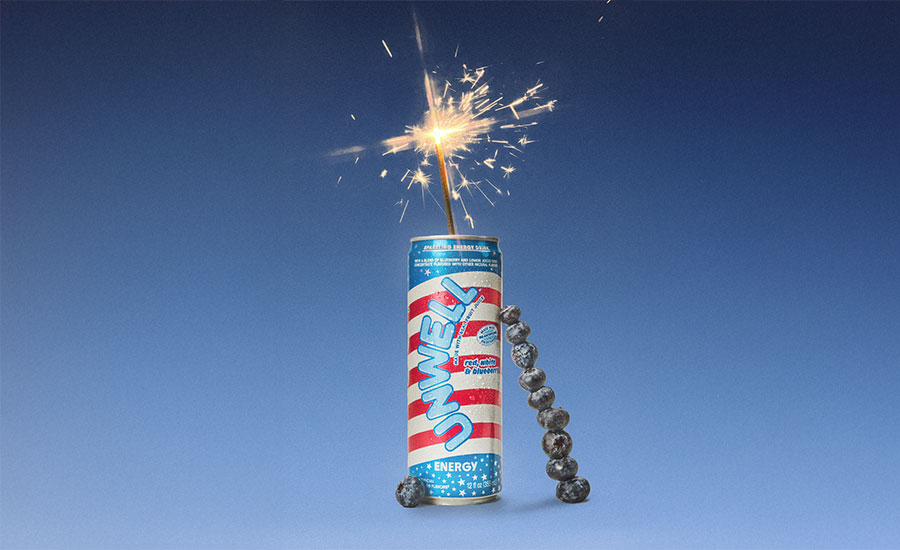 Alex Cooper’s Unwell Beverages recently launched Unwell Energy Red, White and Blueberry, featuring electrolytes, B vitamins and natural caffeine from green coffee extract.
Image courtesy of Unwell Beverages
Consumers are seeking the crossover of health benefits, indulgence and customization across beverage sectors, thus leading to natural energy ingredients becoming key players in the current energy drink space, Gillespie adds.
Rhianna Smith, senior global manager, functional optimized nutrients at Chicago-based Glanbia, states that there is growing consumer interest in bioavailability.
“Social media has given users a tool to rapidly report on both flavored products and individual ingredients,” she says. “Methylated forms of vitamins and natural caffeine sources are current focus areas that we see occurring in new product launches.”
James Roza, vice president of technical services at BioVivo Science, Jefferson, Ind., notes that consumer interest is being driven by clean label ingredients that offer sustained energy without a crash that can provide functional benefits to improve cognitive, cellular and cardiovascular health.
“This includes ingredients that are adaptogenic, such as American ginseng and rhodiola that enhance the body’s ability to handle stress and maintain balance,” he states. “Synthetic caffeine and sugar typically found in traditional energy drinks simply inhibit adenosine receptors in the brain and flood the blood stream with sugar, causing insulin to rise and glucose to enter the cells.”
Low energy levels and fatigue are commonly caused by lifestyle factors such as a sedentary lifestyle, poor nutrition, poor sleep quality and stress, Roza adds.
“Caffeine and sugar do little to improve those conditions and only provide short-term relief,” he notes.
Monin’s Gillespie describes the benefits natural energy solutions can offer, saying the ingredients used in such formulations deliver a caffeine boost that many consumers crave without a jolt or crash.
“Many products rely on the power of Coffeeberry Energy, green coffee extract and guarana to derive caffeine, while combining with ingredients like l-theanine and vitamin B12 to balance energy with calming effects that can even promote focus and reduce stress,” she notes.
Glanbia’s Smith says that any single ingredient can have a range of benefits that are experienced by an individual.
“Similar to synthetic ingredients, each person’s chemistry may respond better or worse compared to someone else and it’s important for consumers to find what works best for them,” she shares.
Natural caffeine from green tea or green coffee bean can sustain energy levels longer than synthetic anhydrous caffeine because its absorption is slower and is balanced by other naturally occurring compounds such as chlorogenic acid and theanine, BioVivo’s Roza explains.
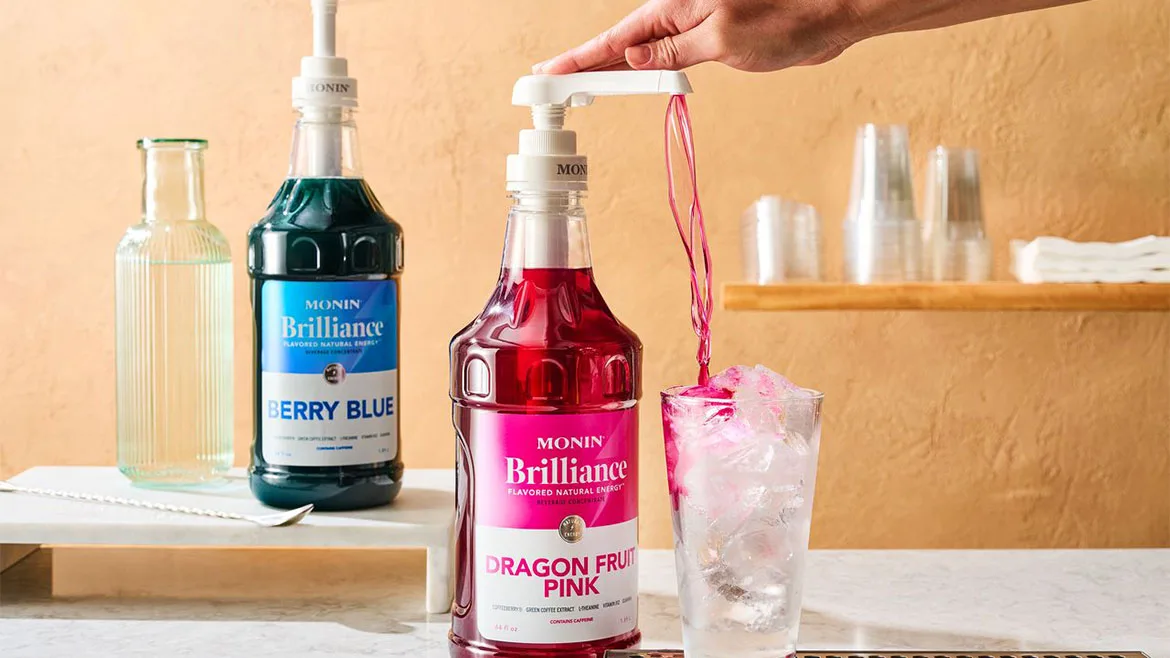
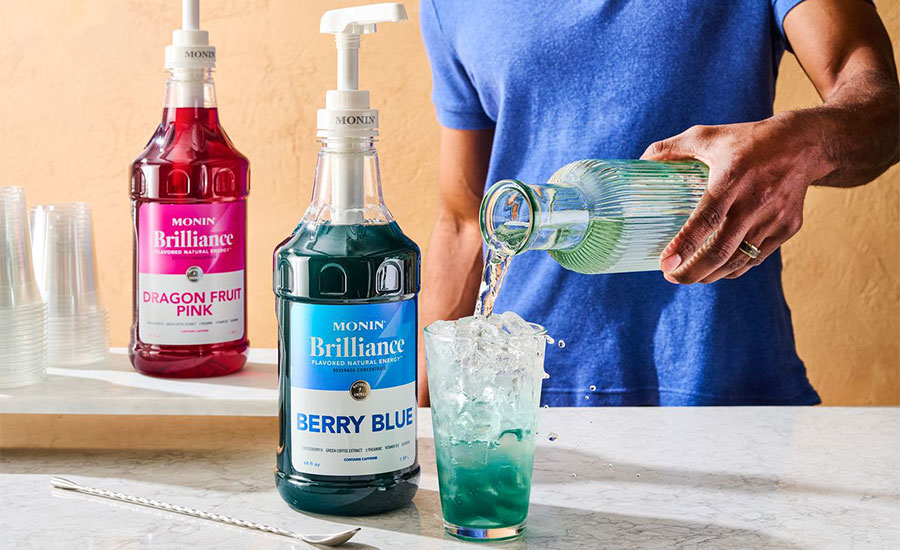 Monin’s Brilliance Energy line provides 80 mg of natural caffeine with just two half-ounce pumps of a bottle.
Image courtesy of Monin Americas
“This triumvirate delivers the mental energy and alertness of caffeine in a sustained, smooth manner without withdrawal jitters or a crash,” he says.
Steve Fink, vice president of marketing at Morristown, N.J.-based PLT Health Solutions, highlights how perception can impact natural energy solutions.
“First off, it is worth saying that caffeine or coffee is natural energy, even though it often isn’t considered that way,” he states. “Often, when we say ‘natural,’ we are talking about botanical or food-based sources. Caffeine will always be king in the energy market, but today’s consumers are becoming more sophisticated in the type of energy experience they want and the types of ingredients they are willing to select.”
Fink notes that “non-stim energy” increasingly is becoming a choice for consumers.
“When we reach for an energy beverage, we’re all coming from a different place, depending on time of day, what we’re going through and how we want to perform,” he says. “All of these can factor into being the right energy product at the right time.”
Setting the standard for solutions
As natural energy solutions gain traction, certain beverage categories are experiencing the pay off.
“Natural energy ingredients are driving awareness and sales for solutions like mushroom coffee (up 26% YoY [year-over-year]) and matcha (up 34% YoY), as well as creating a boom in the RTD [ready-to-drink] energy market, with energy drinks recently being announced as the second-largest seller in the pre-packaged beverage category,” Monin’s Gillespie says. “Beyond store shelves, 54% of consumers are interested in ordering energy offerings on-premise — this is where large-format products like Monin Brilliance come in handy for operators looking to create vibrant energy beverages with just two pumps of a bottle.”
Monin’s Brilliance energy line delivers 80 mg of natural caffeine in two half-ounce pumps, she explains, allowing operators to quickly transform any still or sparkling water in a radiant way to recharge, with 10 flavor options available.
Glanbia’s Smith states that natural caffeine sources are on the rise.
“Green tea and green coffee bean are popular options for a natural caffeine source and the relatively unknown herbal ingredient guayusa is making its way onto product labels in the same way that green coffee bean and green tea have over the last few years,” she says. “Individual adaptogens are also gaining widespread attention in the energy category as natural alternatives to caffeine.”
BioVivo’s Roza states that combining adaptogenic herbs with theanine from green tea and using them in combination with B vitamins and electrolytes can provide the basis for a holistic approach to restoring depleted energy levels.
“Adding NMN or natural caffeine would broaden the spectrum to address onset energy needs as well,” he notes.
Beverage-makers must take certain factors into consideration when working with natural energy solutions.
Monin’s Gillespie urges brands to consider consumers’ desire to indulge and customize their beverages, while also delivering on health benefits.
“Today’s consumer is multi-faceted — they want a beverage with BFY ingredients, but they also want it to function as a post-workout or mid-afternoon treat,” she says. “They crave a boost of energy, and that boost should be presented in a delicious, photo-worthy beverage. Operators should experiment with protein cold foams, bright colors, seasonal ingredients and, most importantly, products that offer these qualities without compromise.”
Glanbia’s Smith shares that, for any product that has a nutrition facts label, the company emphasizes making sure that all ingredients have Generally Recognized As Safe (GRAS) status.
“GRAS listings often do not keep up with the market, so the extra diligence on the front end can save a lot of grief on the back end,” she notes.
BioVivo’s Roza says that factors such as taste, stability, synergy and functionality should be top-of-mind for beverage brands working with natural energy solutions.
“Taste is king, and many energy ingredients have bitter notes that must be masked to create an acceptable flavor system,” he states. “Stability is also critical, so knowing an ingredient’s limitations in processing temperature, pH and light/oxygen exposure is also important. Knowing an ingredient’s physical properties such as its solubility and possible chemical interactions with other compounds will determine its functionality in a formulation.”
Lastly, Roza notes the importance of establishing synergy by leveraging the bioactive properties of the ingredients being used to produce its desired outcome.
“Today’s consumer is multi-faceted — they want a beverage with better-for-you ingredients, but they also want it to function as a post-workout or mid-afternoon treat.”
– Carrie Gillespie, senior manager of field sales marketing at Monin Americas
PLT’s Fink says that the company’s energy portfolio features different ingredients that are all “energy,” but offer different benefit sets, some of which are great alone but also work in stackable beverage formulations.
As for the beverage categories turning to natural energy solutions, Monin’s Gillespie points to refreshers.
“Refreshers were originally introduced as lightly caffeinated, fruit-forward beverages made with green tea and fruit juice,” she notes. “Today, they’ve evolved into signature, customizable, non-alcoholic drinks, enhanced with energizing ingredients like green coffee extract, B12 and guarana to naturally boost consumers throughout the day.”
Glanbia’s Smith says that energy drinks are the largest sub-category within natural energy solutions, and has noticed more interest among brands and consumers for natural energy ingredients.
“Energy is now a foundational need among consumers, and we are seeing energy combined with adjacent benefits,” she shares. “We call this ‘Energy +’ (energy plus). For Energy +, natural energy combines well with functional waters, coffees, teas and hydration products (in both liquid and powder formats).”
BioVivo’s Roza describes a recent shift away from traditional categories of sports, coffee and tea beverages that now encompasses water, juices, hydration, electrolytes and soft drinks to address the increasing demand for energy.
“This is driven by the addition of caffeine from natural sources such as green tea, coffee berry and guarana combined with adaptogens and other bioactives,” he says. “This has created whole new subcategories that can provide relief from fatigue through a more integrated approach.”
PLT’s Fink says the company urges beverage-makers to focus on sophisticated formulations that address what people need at any point of the day or night.
“It’s hard to imagine a functional beverage product that doesn’t have an energy component in it these days,” he states. “We’re talking about sports nutrition and everyday pick-me-ups. But we’re also talking about weight management, cognitive formulas and even cardio health products. What makes an energy component so attractive is that it is experiential.”
Consumers can feel something within minutes of drinking the beverage, Fink shares. Because consumers experience it immediately, one can imagine energy being used in standard products like multivitamins. Fink states that the question one might ask is, “Why wouldn’t you include an energy component in any supplement product?”
An energized future
As for what’s to come for natural energy solutions, Monin’s Gillespie says the growth of the natural energy and functional beverages markets have promoted a “wellness wonderland.” This transformation offers a golden opportunity for operators, she adds.
“No longer defined by traditional soda fountains, beverage menus are a platform for creativity, wellbeing and cultural relevance,” Gillespie states. “Brands that deliver functional benefits in craveable, on-trend formats can tap into a powerful, emotional and cultural shift: wellness as a treat, not a chore.”
To meet this moment, she suggests that beverage-makers pair trending beverage formats, such as natural energy, with ingredients that support hydration, gut health and other popular benefits to “function-maxx.”
“Double up on BFY benefits by adding electrolytes, fiber or protein for a functional beverage that delivers on all fronts,” Gillespie says.
Energy is a lasting need state, Glanbia’s Smith shares.
“Consumers are well educated and often willing to do the work to find a product that is exactly what they want,” she says. “While using more natural ingredients can help meet the desire for cleaner labels, consumers will not accept products that taste bad or are not efficacious. Balancing these three things (taste, efficacy, desired ingredients) will likely be the winning target for the natural energy space and the beverage market as a whole.”
BioVivo’s Roza closes with the thought that the development of clean label, plant-based, multi-dimensional products that offer more than just energy and address other consumer needs by supporting immune, brain and cardiovascular health.
Looking for a reprint of this article?
From high-res PDFs to custom plaques, order your copy today!