Beverage innovations bring texture to tipping point
Hydrocolloids support mouthfeel goals in functional, reduced-sugar beverages
Whether the goal is mouthfeel, uniformity, suspension, or clarity, in beverages all texture roads end at mouthfeel. A juice-based drink with particulates that settle, a protein-enhanced dairy-based beverage that’s chalky, or a milk alternative that breaks in hot coffee can all meet their flavor and nutrition marks with pinpoint precision, but if the texture isn’t perfect, the beverage will fail.
“Texture is emerging as a new frontier in beverages,” says Shiva Elayedath, MS, principal product specialist for texturizers at Cargill Inc., Minneapolis. “For example, bubble teas and other globally influenced drinks have introduced North American consumers to inclusions and layered viscosities. Hydrocolloids are central to making those experiences scalable and shelf stable.”
Hitting those texture marks is where one of the hardest-working ingredient classes comes in: hydrocolloids. These are the fibers, gums (and sometimes proteins) that, in beverage making, combine with liquids to stabilize them, prevent sedimentation, and optimize their appearance. Although these functions might have been somewhat more routine, with the explosion in functional beverages during the past few years, texture scientists have seen challenges increase ten-fold.
“Functional beverages — protein drinks, plant-based milks, immunity shots, fiber-enriched waters—are an important growth driver for the beverage industry,” avers Erhan Yildiz, PhD, a fibers and gums scientist and adjunct professor of hydrocolloids at Rutger’s University, N.J. “Developing such beverages and meeting associated functional claims are opportunities for hydrocolloids to be applied to enable success.”
Yildiz also points out the need for careful labeling of functional drinks. “Some manufacturers using hydrocolloids like resistant dextrins have been known to call out ‘no gums’ on the label,” he says. “This is likely to backfire, as such products are technically gums — a term used synonymously with hydrocolloids. Acacia in particular is surging, especially after attaining a prebiotic fiber claim. It is an exceptional emulsifier, nearly flavorless, and carries a clean label perception. Most of the soluble fibers listed above are great options to consider for such beverages, and have several legal options for nomenclature, but it is critical for them to be labeled correctly.”
As an example, Yildiz points to protein beverages and how without the right fibers or gums can suffer settling and an undesirable mouthfeel.
“Hydrocolloids such as gellan gum can suspend protein particles even at very low use levels of 0.01–0.05%,” he says. “Emulsifying-grade acacia, which naturally has more surface-active components, can be used to compatibilize fat and water, as well.”
Cargill’s Elayedath further details the benefits of hydrocolloids when working with protein drinks.
“In high-protein beverages, stabilization is key,” he says. “High-protein beverages continue to test the limits of stability over shelf life. Over shelf life, proteins — animal or plant-based — can thicken or gel, leading to undesirable textures. Hydrocolloids such as carrageenan or gellan gum will remain essential in maintaining consistency and drinkability in these applications.”
Yildiz does recognize that consumer familiarity with specific hydrocolloids can present another set of challenges. “While gellan stands out as a suspension agent of choice, lack of consumer awareness (and therefore possibly acceptance) has pushed manufacturers to alternative suspension agents. Suppliers are working to functionalize vegetable fibers into suspension aids, with soluble oat fiber emerging as a positive option for certain formulations.”
A decline in sugar
Numerous surveys have demonstrated that consumers continue to see reducing sugar intake as among the most important considerations when it comes to a healthy diet.
“Sugar reduction trends have had a significant effect on usage of hydrocolloids,” Yildiz admits. “Full-calorie sugars such as the disaccharides sucrose and high-fructose corn syrup, and the monosaccharides glucose, dextrose, and fructose, impart more than sweetness; they also contribute body, mouthfeel, and viscosity in beverages. Reducing or completely removing these sugars diminishes or removes all these capacities.”
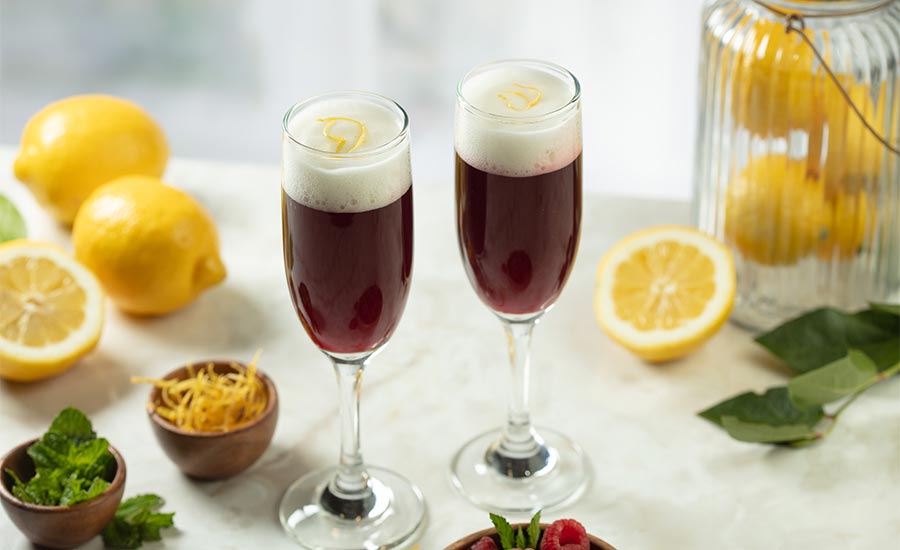 Functional beverages layering in added benefits are turning to hydrocolloids.
 Image courtesy of Ingredion Inc.
Jason Wang, Ph.D., manager of global beverage applications at Ingredion Inc., Westchester, Ill., echoes similar sentiments.
“As functional beverages layer protein, fiber, botanicals, and sugar reduction into a single product, hydrocolloids help maintain stability, texture, and a consistent drinking experience from first sip to last,” he says. “Reduced-sugar beverages often require additional formulation support to maintain the texture consumers expect, so reinforcing that sugar reduction is as much a structural challenge as it is a sweetness challenge.”
Wang explains that when sugar is reduced or removed, beverages lose bulk and viscosity, which can change how the product feels to drink and place more stress on the overall formulation.
“Reduced sugar beverages increasingly rely on high intensity sweeteners to deliver sweetness without added sugar, making it important to design sweetness systems that deliver great tasting, clean sweetness tailored to beverage applications, while maintaining balance, body, and drinkability across shelf life,” he remarks.
“In this context, hydrocolloids are important formulation tools in reduced-sugar beverage design,” Wang continues. “Their use is increasing as they help rebuild body and mouthfeel, mimic full sugar-like rheology, and enhance suspension and overall physical stability. Sugar reduction trends are elevating hydrocolloids from secondary texture modifiers to key enabling ingredients across a wide range of beverage applications. Ingredients such as gum acacia are increasingly valued when replacing sugar, not only for functional build back, but also for supporting fiber content and metabolic response, helping brands balance nutrition objectives with sensory quality.”
Building texture
Given the impacts these functional and reduced sugar formulations have on texture, beverage manufacturers can turn to solutions like hydrocolloids to address that challenge.
“Hydrocolloids are the primary tool to build back body, mouthfeel, and viscosity in reduced-sugar beverages,” Yildiz explains. “With cost-in-use and dual functionality important criteria to consider, hydrocolloids such as acacia, locust bean gum, inulin, pectin, low viscosity carboxymethylcellulose fiber, and resistant dextrins are all good options. Other options include xanthan and guar gum.”
“In acidic dairy and plant-protein drinks, pectin acts as a protein stabilizer via electrostatic interaction — essentially wrapping around the protein particle and preventing aggregation,” Yildiz continues.
Ingredion’s Wang agrees, adding that pectin “remains one of the most widely used hydrocolloids in new beverage launches, driven by its label-friendly, plant-based perception and strong performance at very low use levels. It is particularly effective in acidic systems, making it a preferred choice for juices, functional beverages, and clean label formulations where suspension, mouthfeel, and stability are required without adding heaviness or complexity to the ingredient list.”
For more viscous beverages, such as dairy- and dairy analog-based milk drinks and smoothies, certain fiber and gum choices are available that can meet the latest beverage market trends of clean label, organic, and plant-based. Citrus fiber ingredients are one favorable option.
“Citrus fiber can aid in improving viscosity, natural mouthfeel, and stability,” relates Jennifer Stephens, vice president at Fiberstar Inc., River Falls, Wis. “The high native pectin content provides the emulsification, thickening, and mouthfeel enhancement while cleaning up labels with statements that include ‘citrus fiber,’ ‘dried citrus pulp,’ ‘or citrus flour.’”
Both Yildiz and Wang notes that gum acacia continues to be a popular choice in certain types of beverages.
“Carbonated and flavored waters is where [gum acacia’s] natural origin, clean label appeal, and emulsification support flavor, lipid stability, and foam management,” Wang says.
“Functional beverages—protein drinks, plant-based milks, immunity shots, fiber-enriched waters—are an important growth driver for the beverage industry. Developing such beverages and meeting associated functional claims are opportunities for hydrocolloids to be applied to enable success.”
– Erhan Yildiz, PhD, a fibers and gums scientist and adjunct professor of hydrocolloids at Rutger’s University
Yildiz favors acacia gum as “a great mouthfeel enhancer.” He also stresses that acacia is now classified as a prebiotic fiber, as are most other hydrocolloids, such as resistant dextrins. They can be labeled as soluble fibers and serve the dual purpose of enhancing both mouthfeel and fiber content.
Keep it clean
What’s also having great deal of influence on beverage formulations is the growing demand for clean label products.
“The clean label movement is putting pressure on beverage formulators to create products with more natural ingredients,” Fiberstar’s Stephens says. “Some hydrocolloids like food gums are suspect while others are deemed acceptable. Each beverage-maker has their own list of acceptable food ingredients. Some of this ingredient discrimination is also fueled by new consumer mobile apps that track not only foods caloric contribution but also their health impact. For instance, most of these scoring systems focus on ingredients, nutrition, and additives.”
Brock Lundberg, Ph.D., chief science officer for Fiberstar Inc., further notes the impacts of sustainability on the market.
“Sustainability, supply chain issues, and economic disruptions will present challenges for the next year at least,” Lundberg says. “Cost-in-use, ethical sourcing, and sustainability are key components to consider for long-term success of a new beverage.”
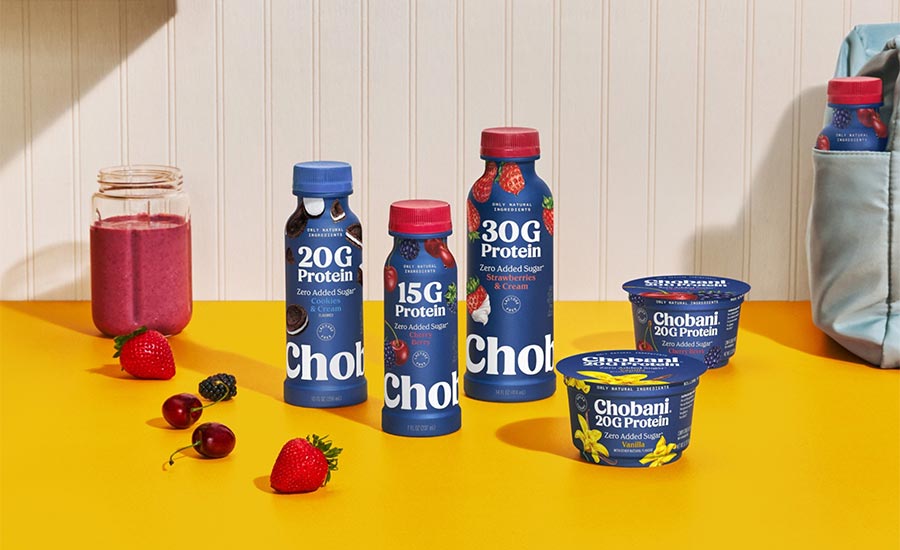 Beverage makers are fine-tuning their use of natural hydrocolloids through synergistic combinations of multiple fibers and gums, such as chicory fiber, pectin, and locust bean gums.
 Image courtesy Chobani
He notes that historically, hydrocolloids such as pectin, xanthan gum, gellan gum, acacia gum, and carrageenan have been used in beverage formulations.”
“Recently, citrus fibers have also been increasingly used in new beverages,” Lundberg says. “The benefits of citrus fibers is their natural and clean label ingredient declaration in addition to providing a range of properties and benefits that can help improve flavor, texture, stability, and shelf life.
“But the cost of ingredients will widely swing if there is not a diverse source of supply,” he continues. “Not only will the price change, but unstable sourcing also leads to large swings in properties and overall quality of the hydrocolloid. While these are some of the considerations, there are also many ingredients, such as citrus fiber, that are available for beverage formulations that are sustainable with consistent quality and cost-in-use.”
Cargill’s Elayedath further notes that clean-label considerations continue to influence formulation decisions, highlightings pectin as an ideal choice, especially in acidic applications.
“With strong consumer familiarity and positive perceptions, pectin offers a way to deliver functionality while supporting label requirements,” he says. “In neutral pH systems, customized functional systems can help meet a brand’s performance and label expectations.”
Ingredion’s Wang points to additional forces shaping formulation priorities. “These include a growing emphasis on sustainability and supply reliability, along with more intentional texture design to meet different consumer preferences, ranging from light and refreshing to creamy and indulgent,” he says.
“Emerging nutritional trends, including formulations aligned with GLP-1 usage, are also expected to influence hydrocolloid use due to placing greater emphasis on drinkability, satiety, digestive tolerance, and balanced sensory performance,” Wang concludes. “Together, these dynamics underscore the role of hydrocolloids as enablers that help beverage makers navigate evolving consumer expectations and innovation goals.”
Looking for a reprint of this article?
From high-res PDFs to custom plaques, order your copy today!