2026 Beer Market Report: Moderate outlook for US beer market
March 5, 2026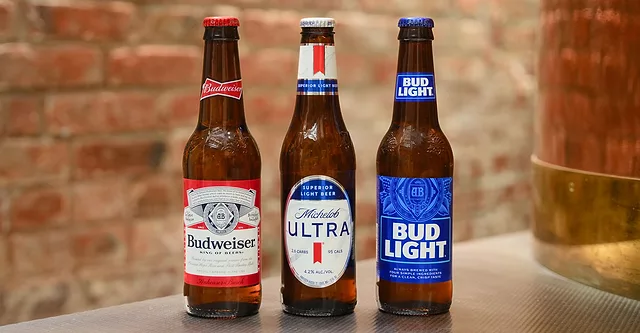
2026 Beer Market Report: Moderate outlook for US beer market
March 5, 2026
Consumers’ bevy of beverage choices is not just affecting legacy brand performance but entire markets. According to Chicago-based NielsenIQ (NIQ) the U.S. beverage alcohol market saw total off-premise dollar sales decline 3.4%, totaling $110 billion, for the 52 weeks ending Jan. 3, 2026. Declines were felt by all major beverage alcohol categories with total wine dollar declines at 4.7%, total spirit dollar declines at 1.8% and total beer/flavored malt beverages (FMBs)/hard cider/hard seltzer down 3.7%.
When it comes to the U.S. beer market, Kaleigh Theriault, beverage alcohol thought leader at NIQ, explains that these are the comparison of “death by a 1,000 cuts” due to numerous challenges and trends contributing to declines: moderation, blurring lines with ready-to-drink (RTD) products, GLP-1 usage, cannabis, changing generations, pack sizes, consumer confidence, health and wellness as well as economic factors.
Ryan Toenies, senior director of client insights at Circana, Chicago, also highlights that beer’s performance can be traced to multiple factors.
“Overall, the biggest challenge has been the decreased consumption as consumers shift outside of beer to RTDs and as they are moderating beer consumption more,” he says. “We also saw macroeconomic headwinds and Hispanic consumers being impacted more, slowing the imported beer segment.”
Despite these challenges to the U.S. beer market, Toenies shares there have been bright spots within the category.
“We continue to see strong growth with the non-alcohol beer segment plus 22.1% in dollars this year and it has been increasing by over $100 million for the past few years,” he says. “While it is still relatively small it continues to grow.”
Toenies expects this trend to continue to impact the overall beer market.
“Beer market performance trends show that consumers continue to moderate their alcohol consumption, whether it be by shifting their consumption to ‘lighter’ or non-alcoholic beer or decreasing their alcoholic intake altogether, as we’re seeing with younger Gen Z consumers,” Toenies says.
Looking for a reprint of this article?
From high-res PDFs to custom plaques, order your copy today!
Brian Sudano, CEO at S&D Insights LLC, Norwalk, Conn., also highlights the positive impact from non-alcohol (NA) beer.
“The moderation message is reasoning as RTDs across spirits and wine drive volume in each beverage alcohol category and NA beer gains in market penetration,” he says. “Beer is leaning into a moderation message as the original product for consumers looking to moderate their consumption.”
NIQ’s Theriault acknowledges the beer market’s embracement of non-alcohol as a bright spot to the category, but also points to the premiumization of the beer category overall.
“The way that they've approached both the premium mindset of the consumer, and I would say the flavor piece that goes with it,” she says. “RTDs or those like flavored malt beverages and hard seltzer products definitely came into the repertoire of the shopper and the consumer, and those come with a premium price. So beer found this opportunity that value goes beyond price point a little bit, and super-premium beer specifically is finding some success with the consumer just offering a better tasting product with the right claims on the package that somebody might be seeking, whether that’s calorie or carb call outs, things like that.
“Then we see flavor come through in the craft beer space, and that’s a space that's definitely facing declines at the total level,” Theriault continues. “But when we think about flavors within it, some brands have really found success there, combining it with like a high ABV format.”
Adapting to these changes is crucial for beer manufacturers to maintain long-term performance. In Chicago-based Mintel’s 2025 report “Beer – US,” authored by Juila Mills, food and drink analyst, the report highlights beer’s reach with beverage alcohol consumers.
“Despite cost concerns and evolving consumer preferences toward alcohol, the U.S. beer market will reach $181 billion by 2030,” the report states. “Growth is driven by demand for imported and non-alcoholic options, even as traditional domestic and craft segments face declines. Brands must adapt to economic pressures and changing tastes to remain competitive.”
Among those trends noted in the report are younger legal drinking age consumers’ interest in variety, flavor innovation and options that fit more occasions as well as the sober-curious movement. To aid the beer market’s performance, Mills writes of the need to evolve beyond conventional approaches.
“To stay relevant, beer brands should move beyond traditional stereotypes and occasions, embracing inclusive marketing, new flavors, and experiential packaging,” the report says. “Success will depend on meeting emotional needs for belonging and connection, as well as offering products that appeal to diverse demographics and emerging social trends.”
On the homefront
As the U.S. beer market looks to stave off declines, the domestic beer segment, which is comprised of sub-segments of premium, super-premium, sub-premium, and craft, is facing its own headwinds.
For the 52 weeks ending Dec. 28, 2025, total domestic beer sales totaled $24.5 billion, a decrease of 3.3%, in total U.S. multi-outlets, grocery, drug, mass merchandisers, convenience, military, and select club and dollar retailers, according to Circana data. Case sales were down 4.6% during that time as well. Of the sub-segments, only domestic super-premium saw increases with dollar sales up 3%, just shy of $4.5 billion, and case sales up 2.9%.
The largest sub-segment, domestic premium, was down 6%, totaling $10.4 billion, with case sales down 7.3%. Sub-premium sales were down 2%, nearing 5.2 billion, with case sales down 3.6%. Finally, craft sales were down 4.3%, totaling $4.4 billion, with case sales down 5.8%.
Despite challenges to the segment and its sub-segments, analysts highlight the brands that have benefited the category.
“Ironically, the market has been more driven by brands than by segments,” S&D Insights’ Sudano says. “Within super-premium, Michelob Ultra has been the stand out. Separately, not many brands have performed well in the segment. Within premium, you can point to Coors Banquet but again no brands of scale outside Banquet have grown; within sub-premium it is Busch Light, within imports brands beginning to hit scale like Pacifico and Victoria, within craft it is a selection of strong regional brands not expanding too far from home with a point of difference like Tree House and Maine Brewing and a few national brands that have experienced modest growth like Voodoo Ranger and Sierra Nevada. Finally, within FMBs, the improving trends leading to growth for White Claw and brands like Cayman Jack as RTD spirits continue to dominate alternative space.”
Circana’s Toenies also highlights how brewers are leaning on their key brands to reduce contraction in the beer market overall, not just domestic sales.
“What we’re seeing in the marketplace is American brewers are leveraging their key brands to diversify into different segments that are showing strong growth trajectory, such as ready-to-drink (RTDs) and non-alcoholic beer,” he says.
NIQ’s Theriault, however, calls attention to the importance of pricing strategies for domestic brewers in 2026.
“Overall, the biggest challenge has been the decreased consumption as consumer shift outside of beer to RTDs and as they are moderating beer consumption more.”
“I think there's some things that are happening on the promotional side,” she says. “What they might try to do this year is rather than taking steeper shelf increases of any sort or any type of price increases, I’m hoping we’re at a place where we aren’t going to keep increasing price at this rate, knowing how the consumer is reacting, but I do think that there are opportunities to switch up the way you promote to the consumer or the shopper that’s in the store.”
Examples of this include fewer deep promotions and instead rewarding loyal consumers with the right pricing implemented across the varying pack formats.
“Some brands are trying to justify price through new innovations, so whether that’s adding a new flavor in or another variant of a product that they have, but a lot of the domestic beers are pretty simple, so the conversation has definitely been focused on price,” Theriault adds.
As domestic beer brands look to stabilize their performance, analysts are mixed on how they see the segment and overall category performing in the year to come.
“We expect to continue to see the American beer segment contract, as consumer preferences shift to other beer styles,” Circana’s Toenies says. “However, we expect to see the American beer super-premium segment continue to grow in 2026, driven by Michelob Ultra.”
NIQ’s Theriault is hopeful for a stabilizing year for the beer industry, noting the lower comparisons, but based on purchasing across beer, wine, and spirits, remains reserved on her expectations. However, she still notes that brands can find success with the correct positioning.
“If somebody wants to find success, they need to ensure that you know they have maybe a premium position under the right value proposition,” Theriault says. “Where they balance, price and premiumization. Non-alc I still think will perform very well this year, and products that seek out those new occasions ― so those smaller sizes might aid a little bit of the dollar growth, but from a volume perspective, definitely still in the declining spaces.”
S&D Insights’ Sudano, however, thinks the variables that caused consternation this past have waivered.
“Most of the shock from the impact of immigration policy shifts, GLP-1 expansion rate, negative health messaging and mood-altering Delta versions are behind us,” he says. “As a result, the market should perform better in 2026 as we anticipate it to decline between 2% and 4% volumetrically.”
Return to 2026 Beer Market Index