2026 Beer Market Report: Craft beer faces continued declines
March 2, 2026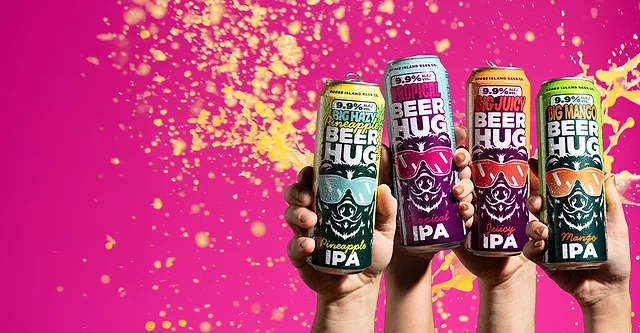
2026 Beer Market Report: Craft beer faces continued declines
March 2, 2026
Craft beer carved out a strong position within the U.S. beer market, yet recent years of declines are taking a toll on the segment as brands and even breweries have shuttered as a result.
“Craft is facing a lot of struggles and they have been for the past I would say three to four years post COVID and everything like that, especially with the introduction of ready-to-drink products,” says Kaleigh Theriault, beverage alcohol thought leader at NielsenIQ (NIQ), Chicago. “So, there’s fewer products on the shelf because retailers are swapping them out for faster moving products. That’s definitely had an impact as well as the relevancy, I think, with that craft consumer.”
For the 52 weeks ending Dec. 28, 2025, craft beer sales totaled $4.4 billion, a decrease of 4.3%, in total U.S. multi-outlets, grocery, drug, mass merchandisers, convenience, military, and select club and dollar retailers, according to Circana data. Case sales were down 5.8% during that time as well.
Citing this data, Ryan Toenies, senior director of client insights at Circana, notes that only two of the Top 10 brand families recorded dollar sales growth: Goose Island (up 10.7%) and Elysian (up 2.1%). Both craft brands are wholly owned subsidiaries within the Anheuser-Busch InBev portfolio.
Brian Sudano, CEO at S&D Insights LLC, Norwalk, Conn., expects that declines for the segment will continue this year, but does think it will fare better in 2026.
“Craft beer declined at a slightly greater rate than the total beer market in 2025 led by brewery closings,” he says. “However, there were some successes and the category appears positioned for a better performance in 2026, although likely to decline once again.”
As noted above, closings of breweries affected craft beer, with these closing expected to exceed openings.
In the Boulder, Colo.-based Brewers Associations’ (BA) The 2025 Year in Beer insights that was published in mid-December noted this, but calls attention to that this is a small percentage of the segment overall.
Looking for a reprint of this article?
From high-res PDFs to custom plaques, order your copy today!
“Barring a drastic change in the last few weeks of the year, 2025 will be the second consecutive year in which brewery closings outpace brewery openings,” the BA wrote. “Throughout the year, the BA has tracked 268 new brewery openings and 434 closings. While striking in headlines, closings still represent a relatively low percentage (4.4%) of total operating breweries, especially when compared against leisure and hospitality businesses broadly.”
Given these closures, NIQ’s Theriault says one of the questions that looms is what will happen to those consumers and where their dollar sales will now be directed.
Despite these challenges, craft brewers are showing that the creativity that helped build up the category will be valuable in turning the segment around.
Among the trends of 2025 that the BA identified as influencing craft beer, the association noted new approaches to hospitality and growth in low ABV products.
“In addition to non-alc’s continued growth streak, there has also been significant expansion in the low- to mid-strength segments (typically defined as [less than] 4% ABV),” it wrote. “Brewers are seeking to capture more occasions that call for great flavor without the buzz.”
Circana’s Toenies also highlights innovations through non-alcohol offerings from craft brewers and the influence of moderation trends impacting the segment.
“[W]e are seeing non-alcohol beers and better-for-you light beer offerings being introduced by craft brewers,” he says. “Like other segments we are seeing consumer consumption moderation be a key influence for craft beer.”
S&D Insights’ Sudano adds that beyond non-alcohol, traditional styles have played a bigger role within craft beer portfolios.
“Most of the new innovation is around traditional pilsners and lagers along with non-alcoholic beer,” he says. “Although IPAs play a major role, a lot of brewers are moving back to traditional beer styles.”
Meanwhile, NIQ’s Theriault sees value in craft brewers tapping into flavor influences as well as embracing higher-ABV innovations.
“There's a lot of talk in the industry around what’s going on with non-alcohol and opportunities there,” she says. “But I would say that the higher ABV products, so 7 to 8% and above is definitely a space that’s growing just as much or it was at one point last year to try and capture that occasion too, because sometimes people want an unwind, relax, no alcohol occasion. Then other times they’re seeking out more of a … party type occasion.
“So we do see that some brewers are going to that space, and then flavor, flavor, flavor is just what the consumer is seeking and then smaller formats too,” Theriault continues. “Those smaller cans is where I think the craft space tested them out first that like 6- to-8-ounce range. I think they’re finding some success with consumers and we’ll see other brands sort of copying that trend.”
S&D Insights’ Sudano explains that craft brewers are contending with these contrasting trends as “consumers trend toward session beers and lower ABV versus recent years trend toward taste complexity and high ABV.”
“Craft beer declined at a slightly greater rate than the total beer market in 2025 led by brewery closings. However, there were some successes and the category appears positioned for a better performance in 2026, although likely to decline once again.”
As brewers look to fulfill these varying demands, Sudano anticipates craft beer is approaching a stabilizing outlook for this year.
“After a couple years of declines, craft beer is expected to stabilize in 2026 with possibly modest growth,” he says.
Meanwhile, Circana’s Toenies is anticipating another year of modest declines.
“We expect the segment to perform in a similar fashion to the past few years, down 3% to minus 4% in dollars,” he says.
NIQ’s Theriault also is expecting declines for craft bear, but anticipates regional brands to have a positive effect on the segment.
“Overall, it'll definitely continue to face some declines,” she says. “I think that some brands will find it their success as they have been over the past couple of years despite that overall category trend.
“It’s going to be those brands that are focused really strongly on the markets that they're in, winning their consumer and their market locally is just going to bring them better success in their region and overall at the total U.S. level,” Theriault continues. “But keeping that focus and their eye on like what does your consumer want I think is really going to be key for those craft beer brands.”
Return to 2026 Beer Market Index