2026 Beer Market Report: Imported beer contends with tough comps as year wrapped
March 4, 2026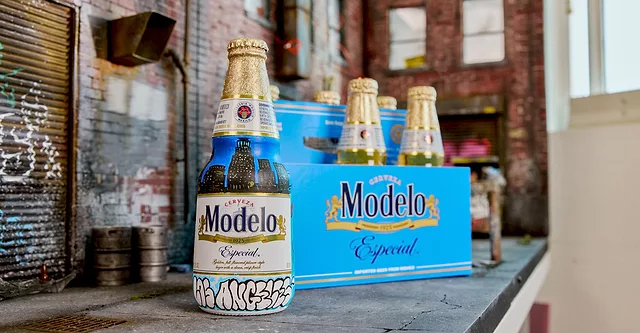
2026 Beer Market Report: Imported beer contends with tough comps as year wrapped
March 4, 2026
After approximately a decade of posting dollar sales growth, the imported beer market took a turn in the later part of 2025, resulting in a decline in dollar sales.
For the 52 weeks ending Dec. 28, 2025, imported beer sales totaled $11.1 billion, a decrease of 2.6%, in total U.S. multi-outlets, grocery, drug, mass merchandisers, convenience, military, and select club and dollar retailers, according to Circana data. Case sales were down 4.2% during that time as well.
“Imports for most of the year were doing pretty well, staying above the line, the zero line, but toward the end of the year they did start to dip off, and there were some really tough comps faced against 2024,” says Kaleigh Theriault, beverage alcohol thought leader at NielsenIQ (NIQ), Chicago.
Brian Sudano, CEO at S&D Insights LLC, Norwalk, Conn., explains that this downturn comes after years of imported outperforming the overall beer market.
“The imported beer market, led by Constellation, has outperformed the overall beer market over the past several years,” he says. “However, it actually underperformed domestic beer declining an estimated close to 6% in 2025.”
With so much coverage in 2025 in regards to tariffs, analysts note that it’s impact on imported had relatively minimal impact on the year’s performance.
“We didn’t really see any impact to sales from the tariffs or supply chain in 2025,” says Ryan Toenies, senior director of client insights at Circana.
According to Circana data, the price per case for imported beer increased 1.7%, which is just slightly above the increase per case for the overall beer market, which was 1.6%.
Looking for a reprint of this article?
From high-res PDFs to custom plaques, order your copy today!
S&D Insights’ Sudano also notes the minimal impact that tariffs had on imported beer.
“Tariffs are having an impact on importer costs, but overall pricing has been fairly consistent with modest increases,” he says.
NIQ’s Theriault notes that production, in terms of the cost of packaging such as aluminum cans and glass bottles, was more of a concern regarding tariffs.
“Depending on where things turn this year, … I think that many imported brands were holding back, in the imported beer space specifically, were holding back any price increases due to tariffs so that the consumer could continue to purchase with confidence and not see another price increase at the shelf, but those might start to trickle in a little bit more this year,” Theriault says.
Another impact on imported beer’s performance comes from Mexican beer, as it accounts for the lion’s share of the segment.
“Mexican beer has historically been the growth driver for imported beer but were down 1.7% in dollars in 2025,” Circana’s Toenies says. “Macroeconomic and Hispanic consumer headwinds are driving the slowdown. Mexican imports contributed over 84% of imported beer dollars in 2025.”
Because of this presence, Toenies cautions that imported beer will be challenged if Mexican imports continue to decline.
“With such a large amount of imported beer sales coming from Mexican imports it is difficult to offset that decline with the other imports,” he says.
In 2025, the imported beer market saw Irish imports up 3.1%, Japanese imports increase 15.5%, and Italian imports up 9.1%, Toenies says, citing Circana data.
S&D Insights’ Sudano also call attention to the declines in Mexican beers, but notes that it still outperformed the overall beer market.
“Despite the pressure on a core demographic consumer, Mexican imports have outperformed total beer albeit declining in low single digits in 2025 after a decade of strong growth,” he says.
Despite these declines, NIQ’s Theriault explains that Mexican beers in general benefit from strong brand loyalty and equity from the Hispanic population, as well as loyalty from non-Hispanic beer consumers due to its premium perception.
Theriault adds that Mexican beer’s consumer demographics tend to be more expansive with Gen X and millennials leaning toward it, as well as newer legal drinking age Gen Z consumers.
For imported beer overall, Theriault notes that premiumization is driving performance and innovation, which could benefit the segment.
“I think it's really helping,” she says. “It especially ties back to moderation too, where people are drinking better but might be drinking a little bit less, so they’re premiumizing the experiences that they are having.”
What also benefits imported beer brands is the authenticity that’s associated with these products.
“Authenticity, I think it really rings true among the consumer that enjoys these products,” Theriault says. “I do think having that brand heritage is really important for anybody drinking a Mexican lager or imported beer.”
S&D Insights’ Sudano echoes similar sentiments, while calling attention to additional trends the segment has embraced.
“An immerging trend back toward authenticity is having a positive impact on a brand such as Guinness while flavor and non-alcoholic beer offerings remain a focus around imported beer brands,” he says.
“It’s tough to say what will happen; a lot of it will depend on Mexican imports rebounding in 2026. If things can stabilize with the Hispanic consumer, we might see the segment near flat in 2026.”
For the year ahead, analysts have tempered expectations surrounding imported beer’s expected performance, due in part to unknown variables.
“It’s tough to say what will happen a lot of it will depend on Mexican imports rebounding in 2026,” Circana’s Toenies says. “If things can stabilize with the Hispanic consumer, we might see the segment near flat in 2026.”
NIQ’s Theriault is hopeful the beer segment can get to a stable position but could be challenged with pricing. However, even with this challenge, imported beer is expected to fare better than the general beer market.
“Outlook wise, I would say stabilize, but maybe not necessarily back to growth, but it will outperform just like the average beer trends,” she says.
S&D Insights’ Sudano though anticipates a positive year for imported beer.
“We expect both Mexican imported beer and total imported beer to grow in 2026 as the authenticity trend takes greater hold, immigration shock moderates, and easier comps take hold,” he concludes.
Return to 2026 Beer Market Index