US consumers have distinct view on hot, iced coffee
Research shows that U.S. coffee consumers view hot and iced coffee as separate products
In a Sept. 14, 2020, Forbes Business Council Post titled “The Optics: Perception Matters More Than Reality In Business,” David Blitz, former Forbes councils member, writes: “From the moment we wake and start making choices for the day, optics guide every decision. Why? Because whether we want to admit it or not, how others perceive us and our reputation absolutely matters, and this is most true in business.”
Similarly, in an October Innova Market Insights report titled “Gen Z and Millennial Coffee and Iced Coffee Trends in the US,” the market intelligence company notes that in the minds of U.S. consumers hot and iced coffee are perceived as two distinct products, requiring brands that incorporate both into their portfolios to approach messaging unambiguously.
“Beyond different usage occasions, generations and gender are key elements of how hot and iced coffees are perceived,” the report states. “Growing price sensitivity and the push for functional ingredients also emphasize opportunities that brands are taking to differentiate themselves in the competitive coffee space.”
Innova’s report also examines how coffee trends are influencing the global food and beverage market.
According to the report, one key factor is that iced coffee trends lag hot coffee.
“Unlike hot coffee, iced coffee consumption is not linked to a particular part of the day or occasion. Nineteen percent of U.S. consumers drink iced coffee at least once a day, and most view it as an occasional beverage or a ‘me time’ treat,” it states. “Therefore, iced coffee trends indicate the opportunity to promote more versatile applications for iced coffee. Iced coffee may also be seen as a seasonal beverage. In contrast, hot coffee consumption remains consistent across seasons, despite its status as a hot drink.”
When it comes to growing price sensitivity, the report notes that the biggest challenges for brands will be to keep up with coffee demand and keep prices reasonable as environmental changes and tariffs threaten coffee supply from various angles.
According to Innova’s research on coffee trends, consumption of hot coffee has remained consistent for 67% of U.S. consumers during the past 12 months; however, price sensitivity will be important to shaping innovation and brand strategy, it says.
Additionally, increased prices could impact future iced coffee trends and growth, according to the report. “Thus, iced coffee brands can either position themselves against bigger luxuries or consider expanding their portfolio to include other products or coffee alternatives, as diversity will be increasingly important to brand resilience,” it states.
As far as generational differences in iced coffee trends, Innova’s report notes that millennials remain devoted consumers in the United States, with 23% drinking iced coffee one or more times a day. Additionally, interest in iced coffee is on the rise with 15% of Gen Z drinking the beverage at the same frequency as their millennial counterparts, it says.
“Because iced coffee faces competition from matcha, energy drinks, and soda in the category, brands should present competitive sets that also include non-coffee products. Limited-time offerings could provide opportunities for brands to target the expanding Gen Z consumer base, as younger generations look for innovative brands or flavors,” the report suggests. “When it comes to hot coffee, espresso-based beverages are also gaining momentum with young consumers. Customization and a wide range of options also engage with the desires of younger generations that find personalization appealing.”
Another point of contention in how iced coffee and hot coffee is perceived lies in the way women versus men engage with coffee trends. Although one-third of consumers overall are increasing their iced coffee consumption, women and men view coffee differently, hence brands should consider these different perceptions when engaging with innovations, Innova’s report notes.
“Innova’s coffee trends research highlights that men are less likely than women to indulge in iced coffee as part of ‘me time,’ and over half of female consumers value taste and flavor as the top consideration that influences purchasing decisions when buying iced coffee,” it states. “Therefore, they are looking for flavor innovation from iced coffee and are open to products drawing from indulgent treats. Although iced coffee might be a treat, it is still a separate category than desserts, underscoring the importance of ensuring that products are not overly indulgent.”
The report adds that for men, coffee consumption is increasing more than women, and for them, awareness is key.
“Thirty-two percent of men have increased their consumption of iced coffee, due to greater awareness of products and brands within the category,” the report states. “Health claims are also important to men. Moreover, positioning iced coffee as beverages outside of the home could positively impact consumption for males, such as at sporting events or concerts.”
Alongside novelty and flavor innovation comes the rise of functional ingredients in U.S. coffee trends, Innova’s report notes.
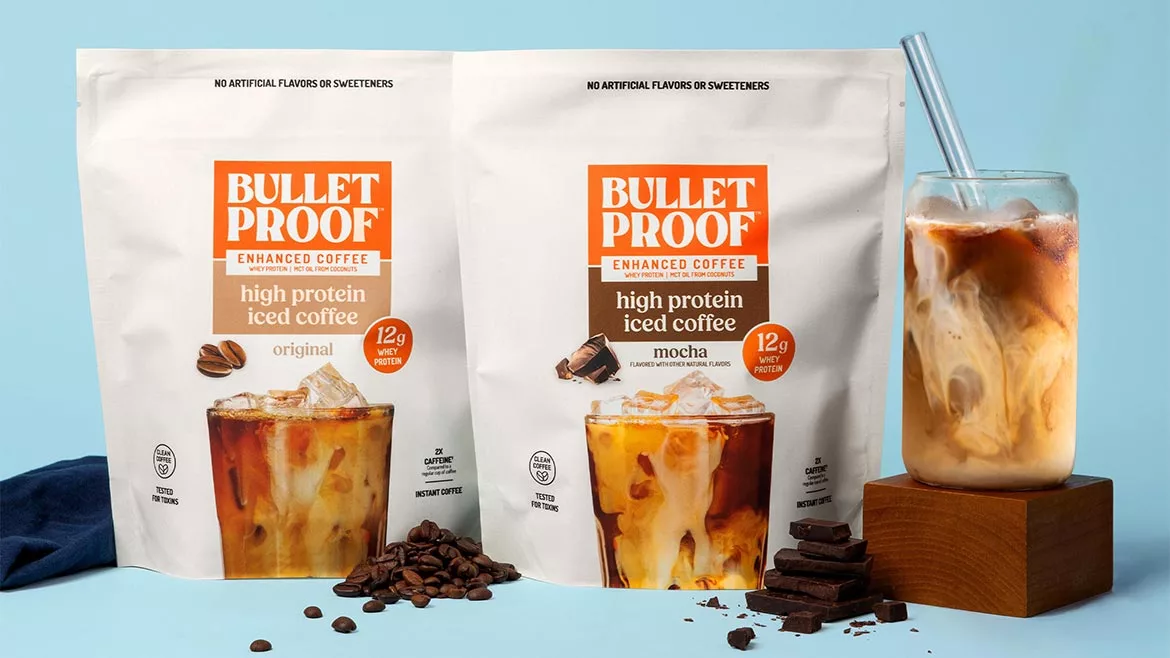
“Across various coffee formats, added protein is an opportunity to target health-conscious consumers,” it states. “In the U.S. market, 58% of consumers are actively seeking methods to incorporate protein into their diets. Therefore, beverages, such as coffee, that are consumed daily can offer an easy way to increase protein intake. Shakes, coffee sachets, and coffee pods are some formats that many U.S. brands are capitalizing on for added protein benefits.”
Further, during uncertain times, consumers say they are drawn to mood-enhancing flavors to uplift or calm them, according to the report.
“Therefore, brands can look to ingredients that support consumers’ emotional wellness,” it says. “For instance, adaptogenic mushrooms can help boost coffee’s natural associations with energy. Other brands position mushroom coffee as enhancing focus and as alternatives without the jitters associated with coffee.”
As far as what’s next for U.S. coffee and iced coffee market trends, Innova’s report points out that due to rising prices and climate change, coffee substitutes and coffee blends are growing coffee trends.
“Furthermore, new cultivation methods will emerge, due to increased temperatures. Brands can expect that collaborations will continue between unexpected brands, and barista-worthy at-home trends will influence the category, especially with aesthetically pleasing creations fit for social media sharing,” it concludes.
Looking for a reprint of this article?
From high-res PDFs to custom plaques, order your copy today!