Energy drinks incorporate more flavors into beverage market
Beverage-makers need to address natural, organic trends in energy, experts note
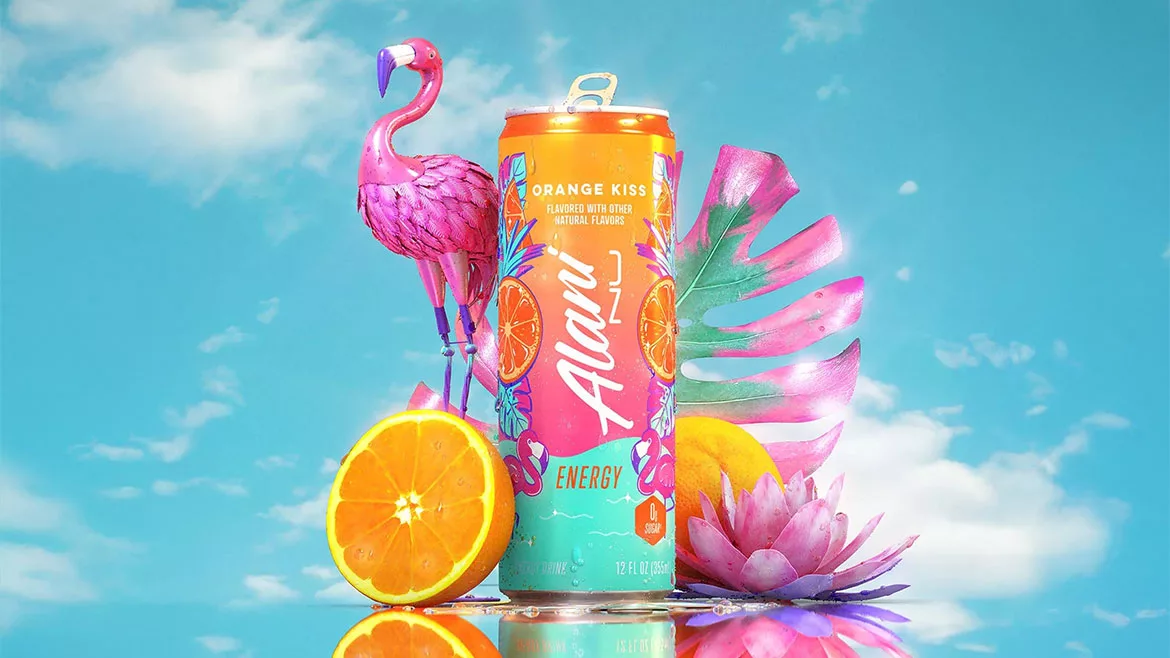
Many people will tell you that in beverage industry, taste is king. As brand owners develop new beverages, they are tasked with finding that balance between function and flavor. Within the energy drink and shot markets, more beverage producers are seeing the importance of this balance and releasing new products that fit the bill.
“As taste is one of the core drivers that consumers seek from their beverages, it is important for energy drinks to deliver on flavor,” says Lauren Masotti, client manager of U.S. Beverages for Kantar Worldpanel USA, New York.
Masotti notes that the two major players in the energy drink space — Corona, Calif.-based Monster Beverage Corp. and Santa Monica, Calif.-based Red Bull North America — are satiating this request from consumers not only through low-calorie and sugar-free options but also with tasty flavors. “Red Bull’s recent launch of low-calorie flavors is helping to attract trial consumers into the brand with the hopes of keeping them,” she says.
Earlier this year, Red Bull added new flavors to its Red Bull Editions line. The Orange Edition and The Cherry Edition are aligned with the company’s Total Zero line, which do not contain any sugar or calories. It also made its Summer Edition a permanent SKU, renaming the variety as Red Bull Yellow Edition, which features tropical fruit flavors, the company notes.
Monster Beverage also has been adding more flavor to its portfolio with the release of its Monster Rehab Peach Tea + Energy variety. The newest flavor incorporates B vitamins, electrolytes and coconut water to satisfy the consumer’s thirst and energy needs, the company says. It is the sixth flavor to the Rehab line.
Eric Penicka, research associate with Chicago-based Euromonitor International, notes that energy drinks that feature fruit juice flavors have grown in popularity.
For example, Solvi Acquisition, Twinsburg, Ohio, introduced Crunk Energy Tropical-Blast earlier this year. The new energy supplement is crafted with natural juices and fruit flavors including passion fruit juice. Bawls Acquisition, Twinsburg, Ohio, also released a fruit-inspired variety this year. Its Bawls Guarana energy drink launched Mandarin Orange, which features a blend of traditional Bawls Guarana infused with sweet and creamy citrus notes, the company says.
New York-based IBISWorld notes in its May report “Energy Drink Production in the US” that energy drink producers have introduced new flavors to help drive incremental growth. “While original flavored products accounted for the majority of the energy drink volume sold in 2012, new flavors, such as lemon and coffee, have obtained greater share of energy drink sales,” the report states. “Consequently, original flavored energy drinks’ share of the market has declined substantially over the past decade, according to Canadean.”
Euromonitor’s Penicka explains that the increase of new flavors in the market could help energy drink manufacturers appeal to more consumers.
“[M]any manufacturers in the category were much more vigorous in the introduction of new flavors in 2013 and 2014, reflecting their bid to further drive consumer interest,” he says.
‘It’s growing’
The Temptations might have been singing about a growing love between two people with its hit “It’s Growing,” but the two words also accurately describe the state of the U.S. energy market.
According to Chicago-based Information Resources Inc. (IRI), the energy drinks category saw sales increase 7.6 percent to approximately $11 billion for the 52 weeks ending June 14 in U.S. supermarkets, drug stores, mass merchandisers, gas and convenience stores, military commissaries, and select club and dollar retail chains.
However, the non-aseptic segment of the category was the only one to show growth with a sales increase of approximately 9 percent for $9.8 billion. This growth made up for losses in the energy shots segment, which was down 2.8 percent for more than $1.1 million; the energy drink mix segment, which decreased 6.4 percent for $69.6 million; and the aseptic energy drinks segment, which saw contraction of nearly 54 percent for $402,571, according to IRI data.
Despite these areas of loss, the overall category still remains strong. “Energy drinks in the U.S. continue to perform well, growing by 7.8 percent to reach 2 billion liters in 2014,” Euromonitor’s Penicka says. “The category enjoyed healthy growth as consumers continue to focus on keeping themselves energized throughout the day.”
The category also saw an expanded partnership between Monster Beverage and The Coca-Cola Co., Atlanta. The Coca-Cola Co. made a net cash payment of $2.15 billion to acquire a 16.7 percent ownership interest in Monster Beverage. The new partnership leverages the respective strengths of The Coca-Cola Co. and Monster Beverage by exchanging ownership of The Coca-Cola Co.’s worldwide energy business with Monster Beverage’s non-energy business and shares of Monster common stock, the companies says. The Coca-Cola Co.’s energy business includes its NOS, Full Throttle, Burn, Mother, Play and Power Play, and Relentless brands.
Additionally, The Coca-Cola Co. and Monster Beverage amended its distribution agreement in the United States and Canada by expanding into additional territories and entering into long-term agreements.
Agreements like this could prove fruitful for the energy drink category as it seeks to attract more consumers to its products. Kantar’s Masotti notes that the category has experienced incremental growth in terms of weekly penetration. “The energy drink market has seen directional growth in recent years — 5.1 percent weekly individual penetration in 2012 to 5.4 percent in 2015,” she says. “This is one of the smaller categories, in terms of penetration, in the market, alongside non-dairy and nutritionals. This growth is driven by single-serve, individual cans as energy shots are actually seeing a decline.”
In IBISWorld’s report, the market research firm estimates that industry revenue increased at an annualized rate of 14.3 percent to $8.1 billion during the five-year period through 2015. This includes an estimated growth of 12.5 percent in 2015. For the next five years, IBISWorld predicts more growth for the category, albeit at a slower rate than during the 2010-2015 period. “As energy drinks become more widely accepted, IBISWorld expects industry revenue to grow at an annualized 8 percent to $11.9 billion in the five years to 2020,” it says.
Euromonitor’s Penicka also notes the strong growth energy drinks have exhibited and expects more positive sales numbers in the years to come. “Off-trade volume sales of energy drinks grew at a compounded annual growth rate (CAGR) of 12 percent between 2009 and 2014,” he says. “The forecast CAGR from 2014 to 2019 is expected to be 5 percent. While still healthy, growth rates will slow as the category matures and consumers seek healthier perceived energy supplying alternatives. It is likely manufacturers will feel increased competition from natural and healthy caffeinated beverages, both within energy drinks and outside.”
Natural alternative
As Penicka mentioned, natural and organic are trends that energy drink manufacturers will need to consider going forward.
“Natural and organic trends overall have a strong possibility of hindering the energy drinks category as most consumers perceive the beverages to be inherently unnatural when compared with other naturally caffeinated products like coffee and tea,” he says. “Products like ready-to-drink cold-brew coffee have potential to tap into the energy drink category’s sales. Cold-brew coffee, currently relatively small, is in most instances, is a naturally derived caffeinated drink, which unbeknownst to many contains more caffeine ounce for ounce than energy drinks.”
IBISWorld notes in its report that the health effects of consuming artificial sweeteners and caffeine is one of the primary concerns hindering consumers from entering the energy market. Because of this, more beverage-makers are introducing all-natural and healthier energy products, it says.
“All-natural, organic and nutrient-enhanced energy drinks are expected to support the industry growth over the period,” IBISWorld states. “Moreover, as specialty producers enter the industry, the number of enterprises is forecast to grow 3.3 percent per year on average to 114 in the five years to 2020. However, this growth will be muted by merger and acquisition activity.”
For example, Sacramento, Calif.-based Root9 released its same-named vitality beverages. The gluten-free, diabetic-safe and GMO-free beverage is a healthy alternative to traditional energy drinks, the company says. Root9 derives its natural energy from Korean Red Ginseng, green tea extract and coenzyme Q10. With 42 natural minerals and 30 saponins from the Korean Red Ginseng, Root9 is designed to help regulate blood sugar levels, revitalize metabolism and promote memory, the company says.
Natural Motives LLC, Miami, also added to the category by releasing its EnerBee organic energy drink. EnerBee features natural, energy-enhancing ingredients including organic honey, bee pollen and royal jelly, the company says. It also contains green tea, yerba mate, organic ginseng and B vitamins.
Kantar’s Masotti notes that although more consumers are seeking natural and organic beverages in recent years, there still are loyal energy drink consumers who are not turned off by artificial sweeteners as they prefer the low-calorie option more. “There is a trend among consumers who prefer real sugar over artificial sweeteners, so it will be interesting to see how the energy market responds to that,” she says.
Another consumer group that the category could benefit from targeting is women, Masotti notes. “A lot of women trial the category but do not become repeat consumers,” she says. “There is an opportunity for energy drinks that appeal to women’s needs and preferences. Rather than just putting a regular energy drink in a pink can, manufacturers need to think about smaller, sleeker containers with a light flavor profile and low calories.”
Give it a shot
Although the energy drink portion of the category commands the majority of the attention, energy shots have gained steam in recent years. According to IBISWorld’s report, the energy shot segment now accounts for 20 percent of the category.
“Energy shot products differentiate themselves from the larger energy drinks segment by providing a drink that is quickly consumed and provides immediate energy,” IBISWorld reports.
The market research firm also notes that brands, including Farmington Hills, Mich.-based Living Essentials LLC’s 5-hour Energy, also have attempted to differentiate themselves from energy drinks by marketing their products as a healthier alternative by emphasizing the lack of sugar and caffeine.
“Due to concerns regarding the health consequences of industry products, industry operators in this segment have increasingly attempted to sell products by emphasizing their relatively healthier content than highly caffeinated and sugary products,” the report states.
The segment's top brand, 5-hour Energy, which accounts for nearly 92 percent of segment, also is trying to appeal to consumers through flavor reformulation. Earlier this year, it announced a flavor overhaul to its line of 5-hour Energy products. The reformulated flavors follow customer feedback programs, the company says.
IBISWorld expects the segment's share of the energy drink industry to increase in the five years through 2015 as well as the next five-year period, albeit only slightly.
Looking for a reprint of this article?
From high-res PDFs to custom plaques, order your copy today!