Convenience, customization keeps coffee market stable
Added functional benefits presents opportunity for growth for coffee category
Whether it be emotional, physical or financial, stability is important because it allows for people, bodies and systems to handle unexpected changes without falling apart.
When it comes to the stability of the U.S. coffee and RTD coffee market, experts note that the category remains stable despite a shift in consumer preferences.
“People still view coffee as a daily staple, but they’re also looking for products that better fit their lifestyles — whether that’s premium quality, convenience or functional benefits,” says Mitch Madoff, head of retail partnerships at Keychain, New York. “That puts brands under more pressure to innovate and differentiate.
“On Keychain’s platform, for example, ready-to-drink coffee has pulled back slightly over the past year, as energy drinks have gained significant traction particularly with Gen Z shoppers,” he continues. “Younger consumers looking for a convenient caffeine fix are increasingly reaching for these types of beverages, especially as they become more selective about where they get their energy from.”
Chris Costagli, vice president of food and beverage and insights lead at NielsenIQ, Chicago, notes that alongside softer purchasing levels, the U.S. coffee market is experiencing strong dollar growth.
“Sales reached $21.1 billion, up 11.3% from a year ago, while unit sales declined 1.9% and [equivalent volume] (EQ) volume decreased 2%,” Costagli says. “At the same time, average unit price increased 13.3%, from $8.55 to $9.69, making price the primary driver of market growth.
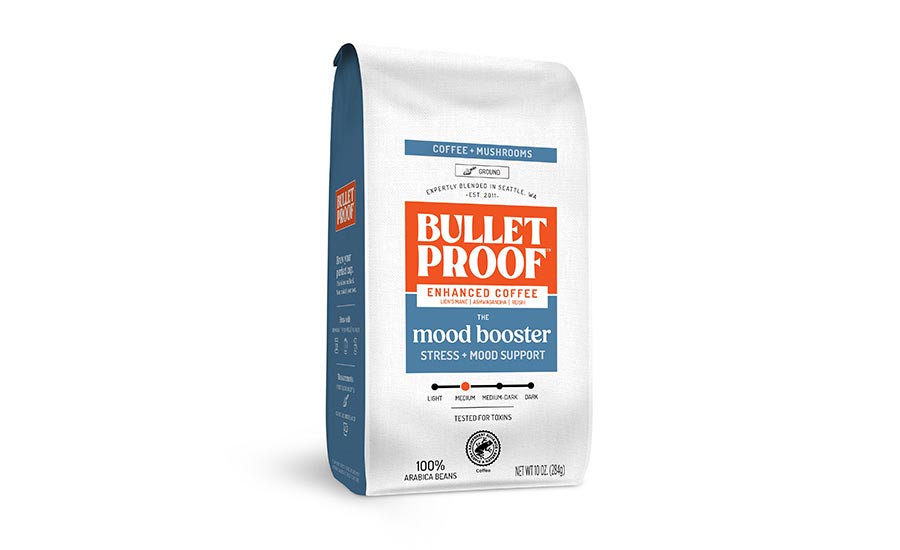 Image courtesy of Bulletproof
“This pattern is also evident over the past two years,” he continues. “Dollar sales grew 15.8% and average unit price increased 19%, while unit sales fell 2.6% and equivalent volume remained close to prior levels, down 0.4%. Overall, the market is generating more revenue, but growth is not being supported by greater unit or volume demand.”
Gary Hemphill, managing director at Beverage Marketing Corporation (BMC), Wintersville, Ohio, notes that prices have surged over the past year due to a combination of factors such as inflation, tariffs and weather issues.
“Inflation is one of several factors negatively impacting performance of the coffee category,” he says. “But others like drought and weather issues have impacted the large coffee producing nations.”
Keychain’s Madoff echoes similar sentiments regarding inflation, noting that shoppers are becoming more value-conscious rather than cutting out coffee consumption altogether.
“They’re comparing prices more closely, buying during promotions, or shifting between formats to find the best balance of quality and cost,” he explains. “Consumer demand for coffee hasn’t declined, but the softness in RTD indicates that consumers are opting for more affordable ways to get their caffeine fix, whether that’s instant packets or brewing at home.”
NielsenIQ’s Costagli explains that coffee pricing has risen faster than overall U.S. consumer packaged goods inflation, which stood at 3.5% in June 2026, he says.
“As consumers become more value conscious, promotions, accessible price points, and clear product benefits will become increasingly important for sustaining demand,” he adds.
Versatility wins the day
Aside from inflation, experts highlight the consumer trends having the greatest impact on the category.
“One of the clearest trends we’re seeing on Keychain’s platform is a consumer preference for formats that offer flexibility and customization,” Keychain’s Madoff says. “Instant coffee and coffee beans are both seeing strong year-over-year growth because both styles give consumers control over strength, temperature, brewing method and serving style. In a category where personal preference runs deep, that versatility matters.”
Among other consumer trends, Madoff points out that artisanal coffee is having a cultural moment.
“Consumers, especially younger ones, are showing off coffee runs on social media, seeking out new shops, and experimenting with fun, creative flavors like lavender or s’mores,” he says. “That enthusiasm is spilling over into retail, as shoppers look to recreate those experiences at home.
“Matcha is also emerging as a real competitor in the space, driven by the same social media dynamics that are fueling artisanal coffee culture,” Madoff continues. “As it becomes a go-to daily ritual for more people, it’s introducing a new layer of competition that coffee brands will need to take seriously.”
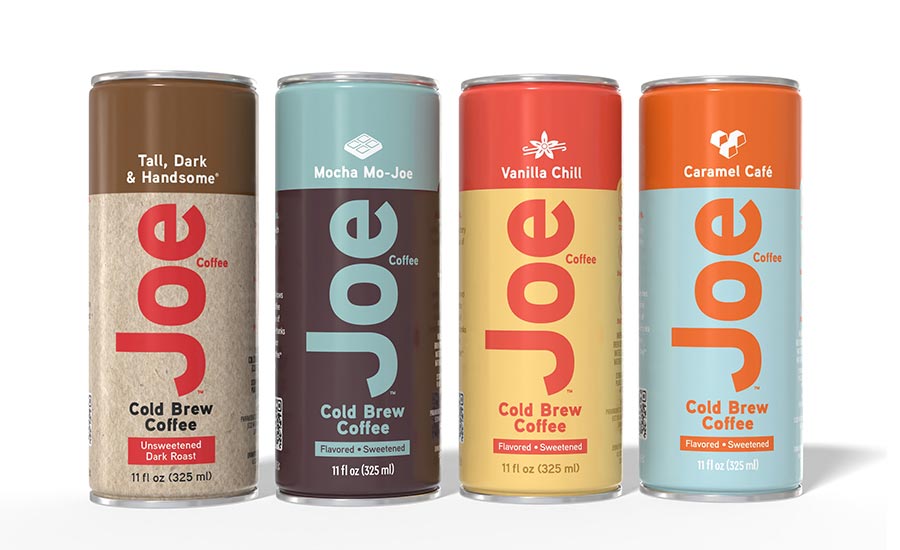 Image courtesy of Paramount Coffee
NielsenIQ’s Costagli highlights key consumer trends that are reshaping the market, noting that the following shifts create opportunities for manufacturers to compete through innovation, premiumization and clearer benefit-led positioning:
- At home specialty coffee experiences.
- Convenient and more sustainable single-serve solutions.
- Flavor exploration and café menu innovation.
Costagli further notes that rapid growth across functional attributes points to increasing consumer experimentation within the coffee category.
“Products with lion’s mane stated grew 522.5% in dollar sales and 311.3% in unit sales compared with two years ago,” he shares. “Products stating superfood ingredients increased 471.6% in dollars and 351.2% in units. Products stating the presence of vitamins grew 55.6% in dollars and 35.5% in units. Products stating reishi recorded the strongest dollar growth, increasing 1,030%, while unit sales rose 302.6%.”
These numbers highlight opportunities for innovation across functional mushrooms, vitamins, superfood ingredients and other benefit-focused formulations, Costagli says.
For beverage-makers, Costagli suggests that brand success will depend on communicating benefits clearly, supporting claims credibly, as well as delivering products that encourage both initial trial and repeat purchase.
“Given the rapid percentage growth, brands should also consider the size of each attribute segment when assessing its long-term potential,” he says.
A promising future
As for what’s on the horizon for the traditional coffee and RTD coffee market, experts weigh in on what to expect.
BMC’s Hemphill anticipates that RTD coffee is well positioned for growth despite its recent struggles.
“The format lends itself to consumers seeking convenience, particularly for on-the-go occasions,” he says. “Overall coffee is well positioned as a growth category with particular opportunity in the underdeveloped RTD segment. That said, volume performance has struggled over the last couple years mostly due to higher prices.”
NielsenIQ’s Costagli expects RTD coffee to remain challenging, noting that dollar sales declined 0.9% and unit sales fell 2.4%, but notes that equivalent volume increased 4.5%.
“Compared with two years ago, units are down 6.3%, while equivalent volume is up 3.6%,” he explains. “This suggests consumers are purchasing fewer individual items but taking home more coffee volume, potentially through larger packages or multipacks.
“Now convenience alone may no longer be enough to drive growth,” he continues. “Future opportunities will likely come from products that provide additional value through distinctive flavors, reduced sugar, energy, protein, functional ingredients or café inspired formulations. Larger formats and multipacks can address affordability, while single serve products will need stronger differentiation to regain unit growth.”
For traditional coffee, Costagli anticipates that some consumers will seek affordable and convenient options, such as instant coffee, while others will continue to invest in premium espresso, specialty coffee, and whole bean products that elevate the at home experience.
“Manufacturers will need to offer a range of price points and communicate a clear reason to pay more, whether through quality, convenience, flavor, functional benefits or preparation experience,” he says.
Keychain’s Madoff considers instant coffee and coffee beans to be well positioned to continue their momentum, driven by affordability, convenience and the growing consumer appetite for customization.
“Celebrity partnerships, brand collaborations, and limited-edition collections will likely play a bigger role in driving discovery, particularly on social platforms,” he says.
As for the RTD category, Madoff expects the segment will face more competition from energy drinks and value-oriented alternatives; however, he notes that the category still has room to grow.
“The brands that succeed will be the ones that deliver more value and differentiation, whether through better flavors, formats, or a stronger overall experience,” he says.
A closer look at performance
Among the various coffee segments, experts detail which are having the most positive impact on the category.
“The strongest positive contributions come from the core coffee, espresso and specialty segments,” says Chris Costagli, vice president of food and beverage and insights lead at NielsenIQ. “Espresso and specialty stand out because growth reflects both higher prices and increased purchasing, while core coffee growth is primarily price driven.
As for core coffee, Costagli notes that sales increased 13.2%, adding $1.85 billion compared with a year ago and accounting for approximately 86% of the coffee category’s total dollar gains.
“However, this performance is largely price driven,” he says. “Average unit price increased 16%, while unit sales declined 2.4% and equivalent volume fell 2.7%. Core coffee remains the category’s primary growth engine because of its scale, but higher prices are offsetting softer purchasing levels.”
For espresso, Costagli notes that the segment is experiencing the most significant demand driven growth.
“Dollar sales increased 28.7%, adding $295 million to the category, while unit sales grew 6.2% and equivalent volume rose 11.3%,” he shares. “Compared with two years ago, espresso sales are up 60.7%, with units growing 17.2% and equivalent volume increasing 37.4%. This sustained growth suggests rising consumer interest in premium, café inspired coffee and convenient ways to recreate these experiences at home.”
Specialty coffee also is delivering on broad based growth, according to Costagli.
“Dollar sales increased 20.3%, while unit sales grew 5.6% and equivalent volume rose 2.4%,” he says. “The segment’s performance points to increased demand for differentiated coffee experiences, including premium offerings, distinctive flavors, and greater customization at home.”
Within coffee formats, Costagli points to instant coffee as showing strong demand momentum.
“Dollar sales increased 25.7%, EQ volume grew 21.6%, and unit sales rose 3.5%,” he explains. “Compared with two years ago, dollar sales are up 45.6%, unit sales have increased 11.8%, and EQ has grown 31.8%. This indicates that performance is not solely the result of higher prices. Consumers are purchasing more instant coffee and buying greater volume.”
Alongside the popularity of instant coffee and beans, Mitch Madoff, head of retail partnerships at Keychain, considers brand and celebrity partnerships to be driving meaningful momentum.
“Chamberlain Coffee’s Fancy Mouse Espresso Blend Dark Roast Coffee is seeing great growth on Keychain’s platform, showing how a strong creator-led brand can convert social following into real purchasing behavior,” he says. “Bones Coffee Company’s Disney Tim Burton Flavored Coffee Collection is also one of the top-selling products on TikTok Shop in the coffee beans category. It’s clear consumers are craving variety and fun, and that the right collaboration can generate real excitement and trial.”
Looking for a reprint of this article?
From high-res PDFs to custom plaques, order your copy today!