Coding and marking solutions keep pace with evolving packaging trends
AI to play broader role in equipment, operational efficiency
Cosmologist, theoretical astrophysicist and author who revolutionized our understanding of black holes, the late Stephen Hawking is quoted for saying, “Intelligence is the ability to adapt to change.”
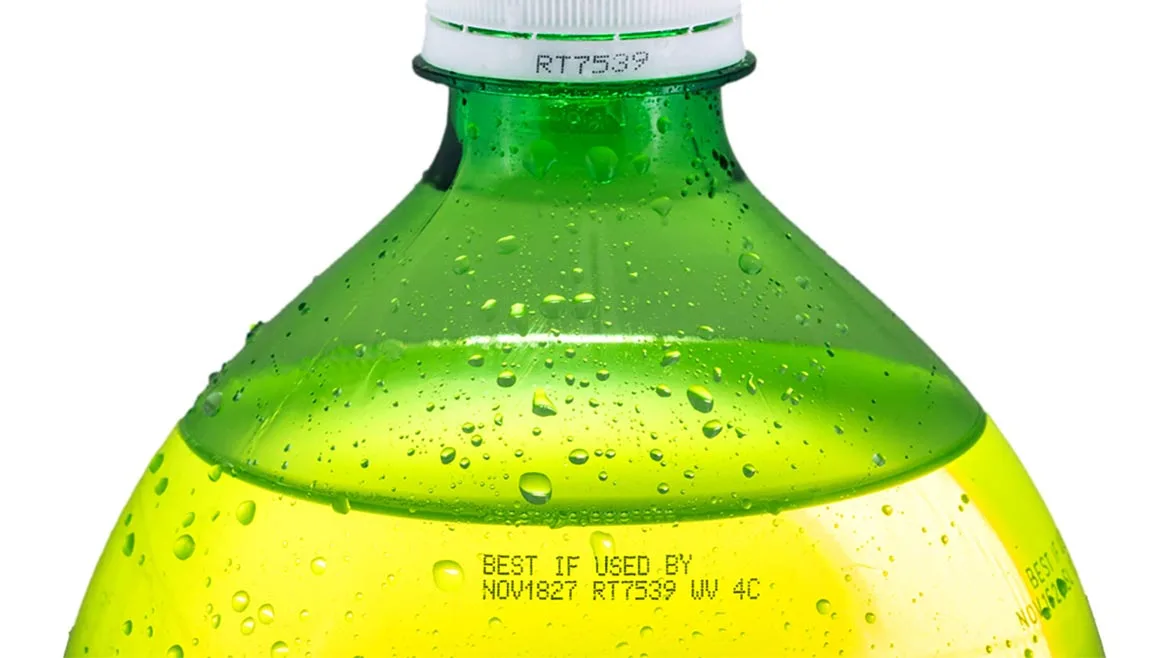
Within the beverage industry, where packaging trends are having an impact on coding equipment, experts note that coding and marking solutions are adapting to these evolving trends.
“We’re seeing beverage manufacturers continue to expand their use of new packaging materials, formats, shapes and container sizes to meet sustainability goals, support product differentiation and respond to changing consumer preferences,” says Jim Kerper, national account manager at Videojet Technologies, Wood Dale, Ill. “Recycled PET, lightweight containers, aluminum packaging and fiber-based materials are all becoming more common across the industry.”
With these evolving trends, Kerper explains that coding solutions are helping manufacturers produce clear, reliable codes on emerging packaging materials while maintaining production efficiency and supporting recyclability goals.
Further, as the use of QR codes and other two-dimensional (2D) codes continue to grow, coding solutions are adapting to support beverage manufacturers’ evolving needs, Kerper says.
“As retailers prepare to add QR code scanning capabilities as part of the GS1 Sunrise 2027 initiative, many beverage manufacturers are evaluating how future packaging and coding strategies will support greater traceability, product information and consumer engagement,” he explains. “We’re helping customers assess their production lines and implement solutions capable of applying high-quality 2D codes on bottles, cans, cartons and other beverage packaging.”
Ryan Petty, manager of strategic accounts for beverage at Gurnee, Ill.-based Domino Printing Sciences North America, similarly notes that demand for machine-readable codes is on the rise.
“GS1 Sunrise 2027 is accelerating this trend, with retailers looking to support 2D code scanning at the point of sale by the end of 2027,” he says. “In parallel with this, we are also seeing greater interest in direct-to-container coding, particularly demand for serialized, item-level coding, including unique codes applied to individual bottles. In this area, we are seeing growing interest in printing on caps and closures, as well as on bottles and cans themselves.
“There is also a sustainability link here, with direct-to-container coding enabling label removal, reducing packaging waste and facilitating recycling,” Petty continues. “Another area where we are seeing this is in the rise of high-resolution UV-curable coding directly onto wine and spirits cases.”
Additionally, adoption of lasers is increasing across the sector — this is partially driven by sustainability objectives, Petty says.
“Applications range from fiber laser coding on aluminum cans, UV laser coding on shrink sleeves, bottles, caps, and overwraps, and CO2 laser coding on PET bottles,” he explains.
Keeping pace
Aside from packaging trends, automation and speed of operations are impacting coding equipment.
“Beverage manufacturing lines are incredibly fast-paced — every second of production time directly impacts productivity and operating costs, and so manufacturers are looking for coding solutions that reduce waste and minimize downtime,” Domino’s Petty says. “Coding automation, machine vision and remote monitoring play an increasingly important role in this environment.
“At Domino, we offer integrated, automated solutions for code printing and verification, that check code quality, reject products that do not meet requirements, and trigger alerts where rejects reach a certain threshold,” he continues. “This helps reduce waste and support intervention when a line fault could be contributing to poor code quality.”
Additionally, remote monitoring solutions, such as those provided by Domino Cloud, offer real-time visibility into printer faults, runtime and production counts, helping to monitor performance and support continuous operation across multiple sites, Petty says.
“When used in combination, machine automation and remote monitoring help to support reliable 24/7 production,” he explains.
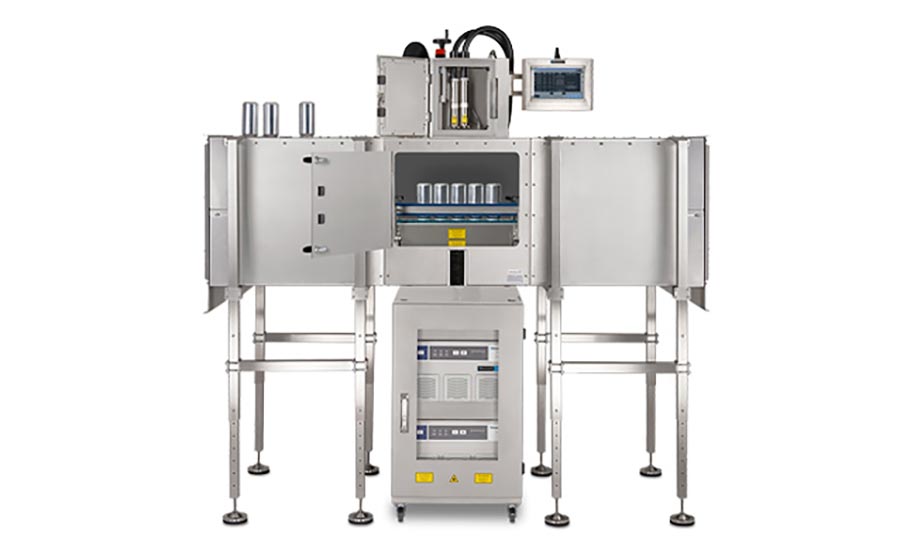 Image courtesy of Videojet
Videojet’s Kerper notes that beverage manufacturers are turning to coding equipment that can keep pace with production demands and product changeovers while delivering reliable code quality throughout the run.
“Beverage manufacturers are asking us for guidance on identifying the best location for their coding and marking process on the production line, whether pre-fill or post-fill, to help maintain throughput rates,” he says. “Determining the right location requires evaluating factors such as packaging format, line configuration, and production objectives to ensure coding is integrated effectively into increasingly automated, high-speed production environments.”
Kerper adds that for beverage canning operations, there’s also strong interest in turnkey systems such as the Videojet Lightfoot canning solution, which was designed specifically to help coding keep pace with beverage production environments.
As for the role artificial intelligence (AI) will play in the future of coding and marking equipment, Kerper notes that AI is becoming part of the broader conversation around manufacturing efficiency.
“[W]e’re starting to see opportunities for it across coding and marking operations as well,” he says. “As manufacturers manage more products, more packaging variations, and more code configurations, AI has the potential to help simplify decision-making, identify potential issues sooner, and make troubleshooting more efficient.
“From a beverage manufacturing perspective, the greatest value may come from helping teams respond to issues faster, maintain consistency across production runs, and better manage the growing amount of production and traceability information associated with today's packaging lines,” Kerper continues.
Domino’s Petty says that one of the most practical applications of AI in coding and marking is code verification.
“Domino recently introduced AI-powered optical character verification (OCV) for continuous inkjet printers with our R550 machine vision system,” he explains. “The system uses pattern-matching technology to confirm that characters are printed correctly, rather than simply verifying that a mark exists. This is particularly difficult to do with continuous inkjet printing due to natural variation in print characteristics.”
New technologies lead the way
With sustainability trends having an impact on equipment selection, experts highlight that beverage manufacturers are evaluating coding technologies.
“Laser technology continues to be of interest in this area because it allows companies to move away from the use of ink and consumables — though consumables are also being developed to be more sustainable, with options including recyclable cartridges, longer-life filters and designs that reduce ink waste,” Domino’s Petty says.
Automation also supports beverage manufacturers in their sustainability goals, Petty notes, with data integration, improved code accuracy and better inventory tracking all helping to optimize resources and minimize unnecessary product loss.
“The move toward direct-to-container marking and label removal also aligns closely with sustainability objectives by helping to reduce packaging materials and improve recyclability,” he says. “It’s early days, but new solutions, such as Domino’s solutions for printing on bottle caps and closures, are showing promising results in some markets.”
Videojet’s Kerper notes that sustainability continues to influence packaging decisions throughout the beverage industry, and those packaging changes often affect coding requirements.
“As manufacturers adopt more recyclable and recycled materials, they need coding solutions that can produce durable, legible codes on those evolving substrates without compromising production goals,” Kerper says. “Many beverage manufacturers are carefully evaluating how coding fits into their broader sustainability initiatives and [are] working closely with coding and marking partners to help ensure new packaging materials can be coded reliably while maintaining production efficiency and supporting recyclability goals.”
Kerper also notes that operations are showing strong interest in inkjet and laser technologies because beverage manufacturers operate across a wide range of package types and production environments.
“Laser adoption continues to grow, particularly for beverage cans and PET applications where manufacturers value permanent codes, minimal routine maintenance and the elimination of ink consumables,” he explains. “Many companies also view laser marking as supporting broader sustainability initiatives.
“As manufacturers manage more products, more packaging variations, and more code configurations, AI has the potential to help simplify decision-making, identify potential issues sooner, and make troubleshooting more efficient.”
– Jim Kerper, national account manager at Videojet Technologies
“At the same time, continuous inkjet remains widely used because of its versatility,” Kerper continues. “Beverage manufacturers often need to code on aluminum cans, PET bottles, glass containers, shrink sleeves, shrink wrap, cartons and flexible packaging, sometimes within the same facility.”
Domino’s Petty says that lasers currently are experiencing the strongest growth in beverage applications — a trend that has held for several years.
“Beverage production environments are typically cold, wet and high-speed, which can create challenges for ink adhesion,” he explains. “Condensation can be a particular concern with ink coding, with manufacturers needing to dry the surface before applying an ink-based code, adding complexity to the process. With lasers, there is no ink, so there is no need for drying, making it an attractive option for many beverage producers.”
Stepping into the future
Given that rapid evolution of packaging within the beverage industry, experts highlight the advancements being made in today’s coding and marking solutions
Videojet’s Kerper explains that many beverage manufacturers are placing greater emphasis on reducing complexity to ensure the right code is applied to the right product every time.
“As product portfolios grow and packaging requirements become more complex, solutions that help minimize coding errors and simplify changeovers are receiving increased attention,” he says. “Recent advancements include enhanced code verification, more intuitive user interfaces, improved remote support capabilities, and tighter integration with packaging line equipment. These improvements help manufacturers maintain code quality, improve operational efficiency, and reduce the risk of rework or product recalls.”
Kerper also notes the continued interest in software systems that support automation goals and centralized code management across the entire plant or enterprise systems are of great interest.
“These new software solutions can help minimize code date issues and minimize operator input errors resulting in increased productivity and throughput,” he explains.
Domino’s Petty says that today’s conversations increasingly are concerned with data, connectivity and integration rather than simply coding speed or print quality.
“Manufacturers want visibility of performance across operations, including the ability to monitor costs, uptime and productivity data across multiple production plants,” he says. “There is increasing interest in integrated solutions that combine code generation, printing, inspection and rejection, with many manufacturers seeking a single supplier to provide the complete solution rather than managing multiple vendors.”
“At the same time, equipment needs to be compatible with a wide variety of production environments, including legacy lines, not just new installations,” Petty continues. “Solutions should fit the customer, not the other way around, and that’s a philosophy we aim for at Domino — the ability to integrate into existing processes is just as important as the technology itself.”
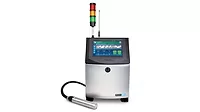
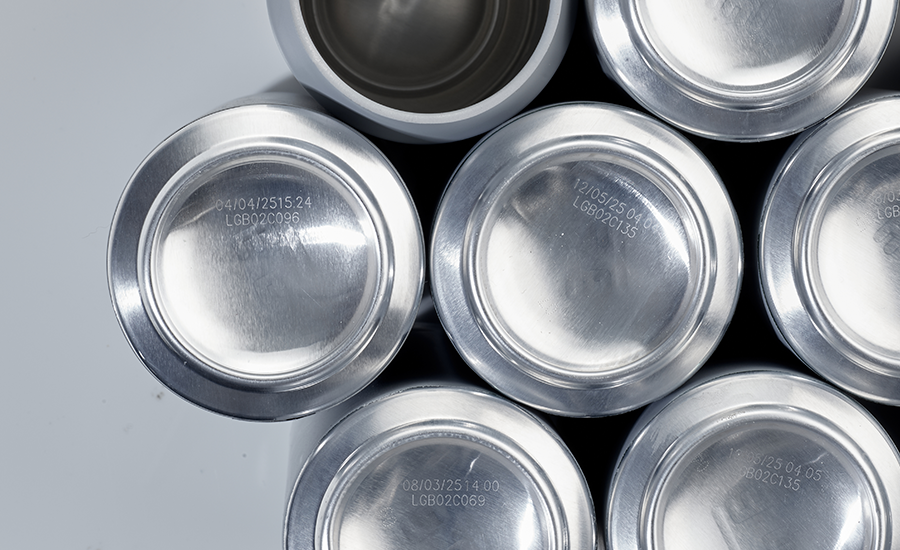 Image credit: Domino North America
Petty adds that, ultimately, reliability is the key requirement.
“The industry is apt to change, with inks, packaging materials, data requirements and sustainability demands constantly shifting, but the technology will always need to succeed in tough and demanding production environments — that’s non-negotiable,” he concludes.
Looking for a reprint of this article?
From high-res PDFs to custom plaques, order your copy today!