Functional mushroom beverages are moving beyond novelty
Mushrooms see more opportunities with new categories
Functional beverages have emerged as one of the largest and fastest growing segments within the better-for-you consumer food and drinks market. Fortune Business Insights projects the global functional beverages market to double from nearly $170 billion today to more than $372 billion by 2034, at a CAGR of 9.39%.
The growth of functional mushrooms beverage offerings within this category has been phenomenal. In 2020, there were at most a few dozen brands. Today, approximately 400 brands of mushroom-infused beverages and drink mixes are available, and the number is forecasted to continue rising dramatically.
“Currently, most beverage developers are working with a core set of mushroom extracts that pack a strong ‘one-two’ punch of consumer recognition and clear functional positioning,” says Leslie Gallo, president of Artemis International Inc., Fort Wayne, Ind. “Whether used individually or in combination, [functional mushrooms] are powerful tools in a functional beverage toolkit.
“We believe mushrooms can extend well beyond the obvious categories into sparkling beverages, hydration, energy, sports nutrition and even premium social mocktails,” Gallo continues. “Mixologists and influencers are increasingly experimenting with mushroom extracts to bring functional, nootropic benefits into cocktails.”
Unlike other beverages, functional mushroom beverages involve a complexity of parameters developers must confront.
“You have to balance functionality with flavor, stability and process compatibility so the finished drink feels intentional and enjoyable,” Gallo shares. “Extracts and tinctures should be the go-to if you’re trying to avoid the ‘shroomy,’ earthy flavor overtones. Also, mushroom extracts mixed with berry extracts can offer powerful functional and wellness benefits.”
Chris Robles, PhD, vice president of R&D at Monterey Nutra, Watsonville, Calif., notes that the use of mushrooms in beverage applications fit with consumer interest.
“We’re seeing the strongest adoption in formats where mushrooms make sense both functionally and sensorially,” he says. “Mushroom coffee, coffee alternatives, functional RTDs, wellness shots, hydration sticks, teas, cacao, chai and latte-style beverages are all strong fits. For high-vitamin D mushrooms, the best opportunities are fortified beverages such as plant-based milks, smoothies, meal replacements, protein drinks, fortified juices and drinking broths.”
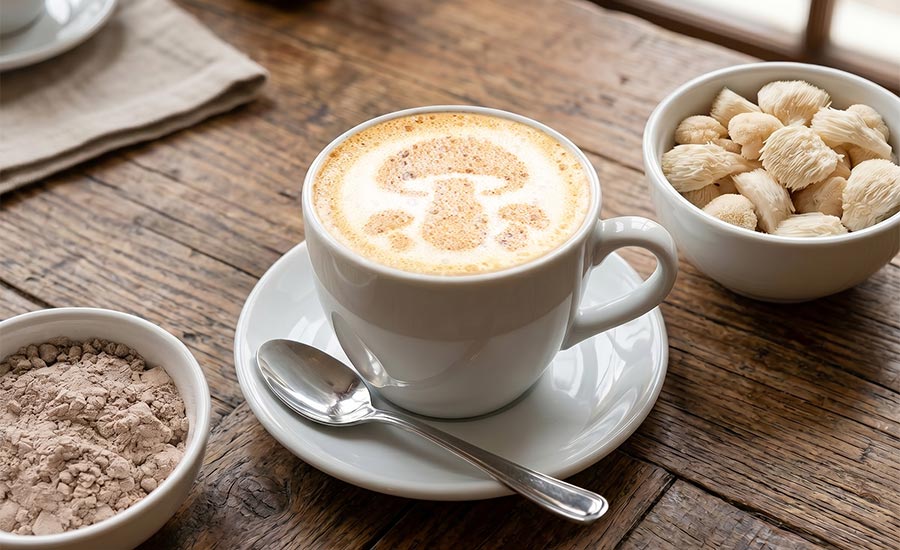 Image courtesy of Artemis International Inc.
Robles also points to strong opportunities in occasion-based beverages, specifically citing morning focus, clean energy, calm productivity, immune hydration, recovery, functional mocktails, protein beverages, greens drinks and low-sugar functional sodas.
“When the mushroom species is matched to the right benefit and flavor system, it can feel very natural in the beverage,” he expounds. “The most important thing is not to treat mushrooms as a trendy ingredient or interchangeable powder.
“Species selection, extraction method, active standardization, dosage, solubility, flavor impact, processing conditions, and shelf-life stability all matter,” Robles continues. “A strong mushroom beverage starts with the consumer benefit, then works backward into the right ingredient, dose, matrix, and claim strategy.”
Jayme Starrak, chief of staff and head of product and innovation for Everyday Dose Inc., Austin, Texas, explains that core formulations are built around lion’s mane, chaga and cordyceps.
“We use 100% fruiting body extracts rather than myceliated grain, which matters a great deal for both potency and consumer trust in this category,” Starrak says. “Each mushroom was selected for a specific functional outcome rather than a generic mushroom coffee positioning.”
Starrak further notes that cordyceps have been studied for its effects on exercise performance and immune health. Additionally, she highlights research that suggests cordyceps help the body use oxygen more efficiently and produce more cellular energy.
Brian Chau, principal owner and food scientist overseeing R&D and operations for San Francisco-based Chau Time Inc., explains that beverage-makers have a host of functional mushrooms from which to choose when developing new products.
“Other functional mushrooms that beverage-makers should be looking at include Antrodia spp, which is currently being evaluated to support liver, and Tremella spp, which is currently being evaluated for skin health and beauty from within,” he says.
Chau further points to the need to also explore less common health benefits. For example, tiger milk mushroom — Lignosus rhinoceros — which is native to Malaysia and other areas in Southeast Asia, where it has been used in traditional medicine for immune support and to treat respiratory conditions such as asthma and chronic coughs.
“We should look at bioactives that support lung health as it may be exhibited from tiger milk mushroom,” Chau adds.
Fungal challenges
Two major challenges developers and manufacturers find when designing beverages using functional mushrooms into their products are flavor and efficacy, both of which can be affected by cultivation conditions, processing of the raw products and the processing of the beverages themselves to ensure food safety and stability.
“When looking at mushroom bioactives, [we ask] how long would these bioactives withstand certain temperatures or shear forces before breaking down? What about the pH of the final product?” Chau Time’s Chau says. “We need to consider all parameters from flavor, to cost, to processing, to ingredient interaction — and the actual supply of the ingredient.”
Chau places understanding of the ingredient specs as the first good step. From there, he says he can focus on the capabilities and constraints of the manufacturing process. The third step is to determine the constraints of the parameters of the formulation, from regulatory issues, toto ingredient functionality over the life of the finished product, and, of course, food safety, Chau notes.
Everyday Dose’s Starrak says that one of the hardest parts of formulating in this category, is that functional mushroom extracts, especially fruiting body extracts, can carry earthy, bitter or astringent notes that are difficult to mask without compromising the integrity of the active compounds.
“Heat sensitivity is also a factor,” Starrak explains. “Depending on the extraction and drying method, certain bioactive compounds can degrade under high processing temperatures, so manufacturing partners and extraction methods are critical.”
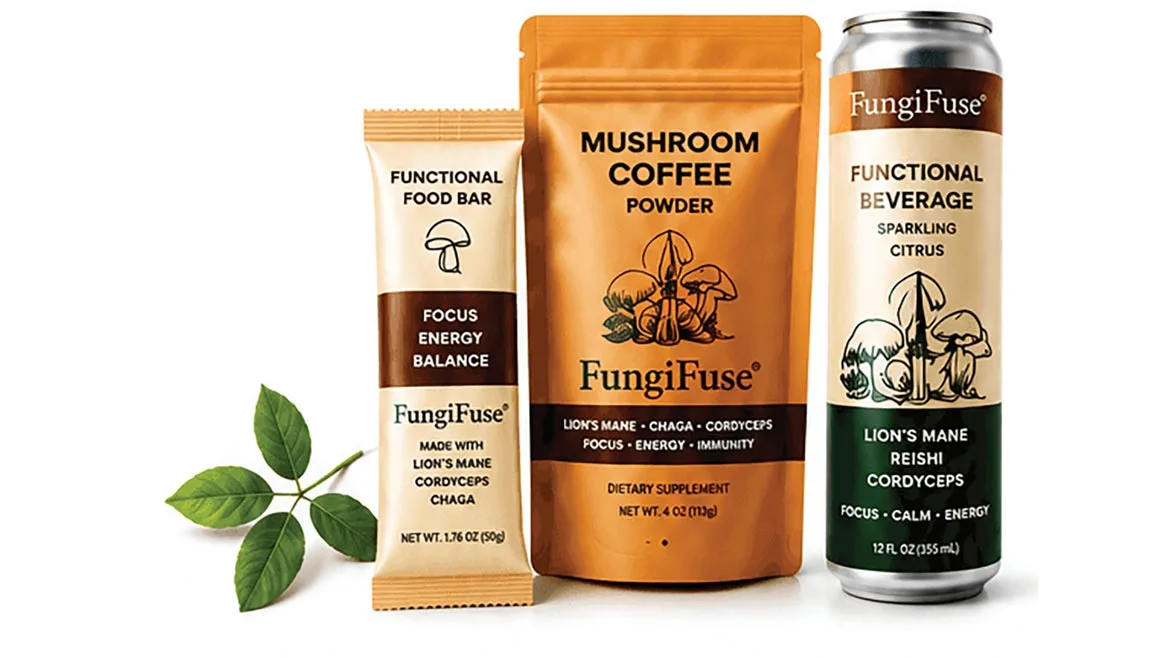
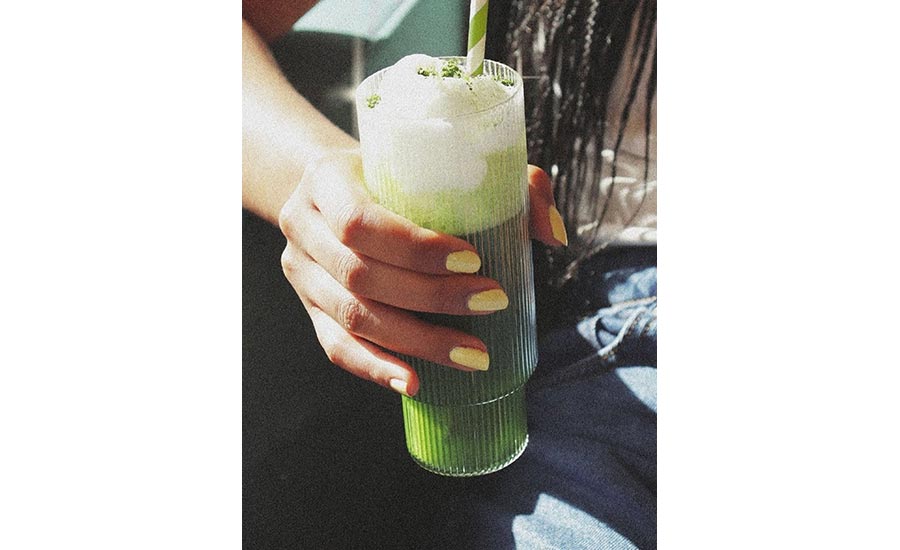 Image courtesy of Everyday Dose Inc.
 Other important issues Starrak describes concerns solubility and mixability.
“Fruiting body extracts don’t always dissolve cleanly, particularly in cold or ambient liquid, which creates real formulation challenges if you’re building a product meant to mix easily in coffee, smoothies or cold beverages,” she says. “Beverage-makers need to balance potency, flavor and functionality simultaneously. Optimizing one quality too aggressively often comes at the expense of another.
“Some functional mushrooms, particularly at efficacious doses, can introduce bitterness or an earthy profile that’s hard to fully disguise, especially in a product meant to taste like a genuinely good cup of coffee rather than a medicinal supplement,” Starrak continues.
She notes how Everyday Dose invested heavily in iterative formulation, sensory testing and blind taste panels to identify the right balance of active ingredients without compromising flavor and other organoleptics.
Sourcing consistency was yet another challenge for the Everyday Dose team, Starrak explains.
“Mushroom products can vary markedly in potency and quality, depending on growing conditions and supplier practices,” she says. “Building a reliable, vetted supply chain and lab testing program took significant investment. We also built relationships with suppliers who could provide consistent, third-party tested fruiting body extracts, and we layered in purity and quality testing at multiple stages rather than relying solely on supplier certificates of analysis.”
Functionality of another kind
The functionality provided by mushrooms includes more than health benefits.
“The fungi kingdom is one of nature’s most sophisticated biological systems — and one of food science’s most underleveraged resources,” says Ranjan Patnaik, PhD, chief technology officer for MycoTechnology Inc., Aurora, Colo.
The company utilizes fermentation and manufacturing technology to transform fungi-derived compounds into functional ingredients that work at the sensory level to solve flavor challenges without flavor or textural trade-offs, it notes. Its premier offerings include ClearIQ, a natural flavor modulator, and Zukora, a naturally derived, high-intensity sweetener sourced from the honey truffle.
“Zukora, produced through fermentation, is designed to work alongside existing sweeteners, enhancing their performance while eliminating the bitterness, linger, and thin mouthfeel that typically accompany sugar reduction,” Patnaik explains. “The result is a clean, sucrose-like sweetness profile that lets brands meaningfully reduce full-calorie sugars without sacrificing the flavor experience consumers expect.”
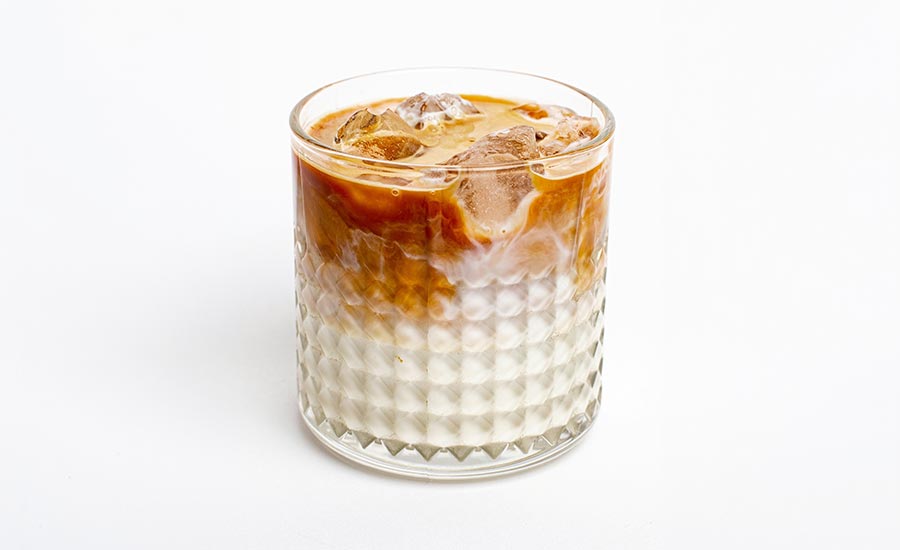 Photo by Aneta Voborilova for MycoTechnology Inc.
Although Zukora was designed to perform across formats, it is particularly well-suited for powdered beverage applications where sweetness optimization and off-note masking are critical to consumer acceptance, the company says.
ClearIQ is a flavorless modifier that blocks offnotes of bitterness, astringency and rancidity without impacting the nutrition facts panel or requiring a total reformulation, according to the company. In beverages, ClearIQ supports challenging ingredients such as plant proteins, high-intensity sweeteners, and functional bioactives that can come at a sensory cost, it says. ClearIQ also provides overall flavor profile improvement, not only reducing offnotes but enhancing flavors such as chocolate and citrus.
“In liquid applications, where offnotes are more immediately perceptible and harder to mask, ClearIQ’s mechanism of action gives it a distinct advantage,” Patnaik explains. “It has demonstrated efficacy across a comprehensive range of beverage categories, from protein-forward sports drinks and plant-based dairy alternatives to functional wellness beverages and RTD formulations, smoothing flavor profiles and improving mouthfeel without compromise.”
Chau Time’s Chau notes that compounds discovered in mushrooms also have been gaining use as antimicrobials and natural preservatives.
Chau adds that mushroom proteins continue to gain ground in the plant-based meat and poultry analog channel, while mushroom-derived sweeteners beyond honey truffle are being explored.
“Just as we’ve seen mycoproteins from honey truffle we could soon see candy cap mushrooms — Lactarius species — used for its intense maple flavor and sweetness enhancement capacity,” he says.
Future forward
These attributes have helped take functional mushrooms from niche to a more universal ingredient solution.
“Mushrooms are moving from trend to platform,” Artemis’ Gallo says. “The future is moving beyond teas and coffees toward more refined blends, more targeted benefits, and more occasions where mushroom-focused beverages feel natural rather than novel.”
Isabel Mirfakhraie, technical marketing associate at Imbibe, Niles, Ill., agrees: “We also expect mushrooms to keep moving from niche adaptogenic drinks into more every day, mainstream formats as brands look to stack functionality. Mushrooms have proven themselves in coffee and tea, but as more brands look for functional differentiation, categories that haven’t traditionally carried a wellness positioning are ripe for mushroom-forward line extensions.”
Mirfakhraie also sees opportunities in beverage categories such as juice, sparkling water, sports/hydration, RTD cocktails, mocktails, and even flavored bone broth-based beverages.
“We expect to see mushrooms increasingly being used in different formats, too, including RTMs, concentrated energy shots, and even oral pouches,” she says. “Combining mushrooms with other nootropics, like l-theanine for calm-plus-focus type benefits, is one way to expand. Additionally, we expect to see mushrooms being used in, where mushrooms can support digestive and immune-support claims, bringing with them that additional GLP-1 friendly appeal.”
Everyday Dose’s Starrak is eager to continue to build on what the company already has created.
“We’re excited about what’s next,” she says. “We’re building new formats, new functions, and new flavors designed to bring that same care and rigor into more moments of someone’s day, not just the morning cup. Everything we build starts with the same question we asked when Everyday Dose began: ‘How do we make people feel a little better, a little more like themselves, one cup at a time?’ That’s still the heartbeat of everything in our pipeline.”
Monterey Nutra’s Robles also sees mushroom-fortified beverages expanding their delivery model and attributes.
“The next wave of mushroom beverages will be more sophisticated,” Robles says. “We’ll see fewer generic mushroom blends and more targeted products built around specific use cases like calm focus, clean energy, immune hydration, evening relaxation, plant-based vitamin D nutrition, and alcohol-alternative mood support. The brands that win will be the ones that combine credible science, meaningful dosage, clean sensory execution, and a benefit story consumers can actually understand.”
The trajectory is clear. Better science, better ingredients, better formulations, and an industry that’s increasingly capable of delivering on the promise that functional mushrooms have always held.
Looking for a reprint of this article?
From high-res PDFs to custom plaques, order your copy today!