Beverage Industry logo
search
cart
facebook twitter linkedin youtube
  • Sign In
  • Create Account
  • Sign Out
  • My Account
Beverage Industry logo
  • NEWS
    • R&D News
    • Supplier News
  • PRODUCTS
    • New Products
    • Reader's Choice Poll
  • CATEGORIES
    • Alternative Drinks
    • Beer
    • Bottled Water
    • Cannabis Beverages
    • Carbonated Soft Drinks
    • Energy Drinks & Shots
    • Juice & Juice Drinks
    • Plant-Based Beverages
    • Sports Drinks
    • Tea and Coffee
    • Wine & Spirits
  • R&D
    • Beverage R&D Features
    • Ingredient Spotlight
  • PACKAGING
    • New Packages
    • Packaging Equipment
    • Packaging Material
  • OPERATIONS
    • Distribution
    • Plant Focus
  • TOP LISTS
    • Beer Market Report
    • Executive of the Year
    • State of the Beverage Industry
    • Top 100 Beverage Companies
    • Truck Report
    • Wholesaler of the Year
  • MEDIA
    • eBooks
    • Podcast
    • Polls
    • Videos
    • Webinars
  • DIRECTORY
  • MORE
    • Classifieds
    • Channel Strategies
    • Newsletters
    • Events
      • Membrane Technology Forum
    • Interactive Product Spotlights
    • Market Insights
    • Sponsor Insights
    • Store
    • White Papers
  • EMAG
    • eMagazine
    • Archived Issues
    • Advertise
  • SIGN UP!
R&D Features

Clearing the air

Transparency key in helping to define clean label
By Lauren Sabetta, Managing Editor
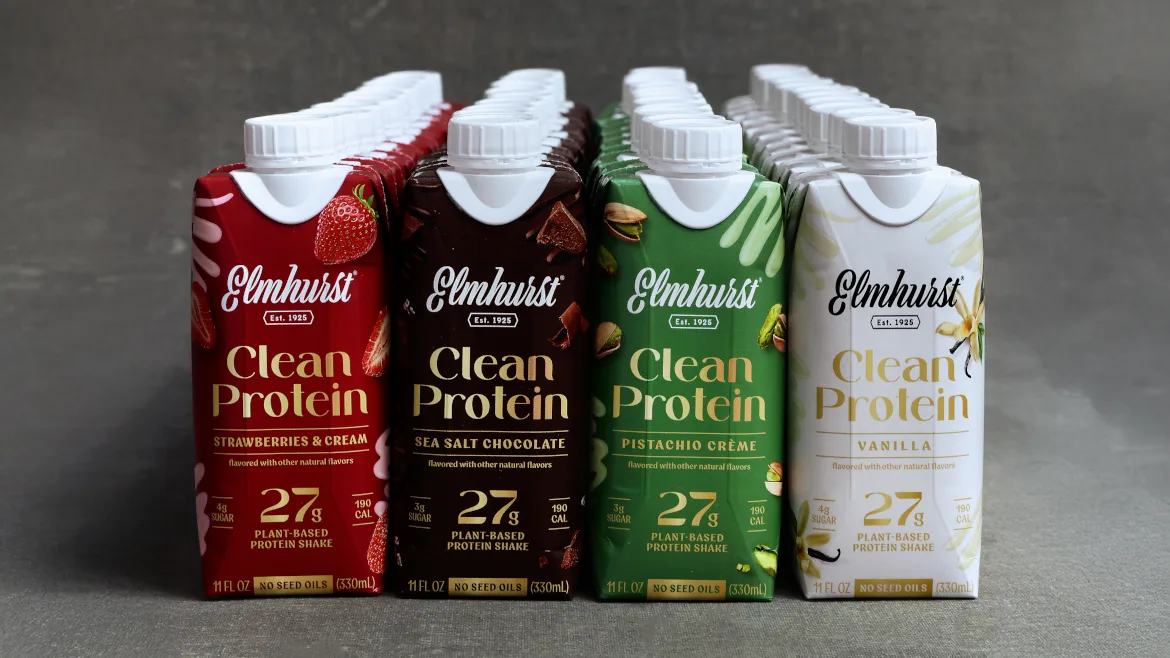
Elmhurst 1925 Clean Protein
(Image courtesy of Elmhurst 1925)
July 20, 2026

Given that “clean label” isn’t a regulated term and can mean different things to different people, ingredient suppliers address some points of confusion and discuss how it can be clarified.  

Alice Lee, technical marketing manager at GNT USA, Dallas, notes that some consumers associate clean label with natural ingredients, others with non-GMO, organic or the absence of artificial additives. 

“That variability can make it challenging for manufacturers to know exactly how to respond,” she explains. “Transparency is key. Clear, familiar ingredient naming helps, and so does sharing information about where ingredients come from and how they’re made. Thoughtful storytelling can play an important role in helping consumers understand a product and feel confident in their choices.”

Thom King, chief innovations officer at Icon Foods, Portland, Ore., echoes similar sentiments, noting that “clean label” has become a broad umbrella, which can create disconnects between consumer perception and formulation reality.

“For example, an ingredient may be highly functional, safe and scientifically validated, yet still be viewed negatively simply because its name sounds unfamiliar,” King says. “The best way to clarify clean label is through transparency and education.

“Consumers increasingly want to understand not just what is in a product, but why it is there and what function it serves,” he continues. “Beverage brands that communicate clearly about ingredient sourcing, functionality, digestive tolerance and nutritional purpose tend to build stronger trust.”

King adds that from a formulation standpoint, the industry also benefits from moving beyond simplistic “free-from” messaging and focusing more on overall product quality, sensory experience and ingredient stewardship. 

“Clean label is ultimately about consumer confidence as much as ingredient selection,” King says.

Ravi Arora, director of sales and marketing at Global Organics, Cambridge, Mass., points out that “clean label” is confusing simply because it lacks a clear definition. 

“For example, a HPP pasteurized juice blend with a label of single-strength juices could be considered very clean, but the product may still contain high levels of pesticide residues; therefore, is that really ‘clean?’” he says. “Or it may use unfair labor practices in farming and harvesting those ingredients; would that be considered ‘clean,’ if people knew about it? This is where the use of specific certifications on labels, like organic and fair-trade, can help clarify a ‘clean label.”” 

Emily Berg, marketing manager at Cargill, Minneapolis, explains that consumer expectations can vary significantly depending on the product and occasion. 

“For example, shoppers may prioritize simple, recognizable ingredients in nutritional beverages, while applying different standards to more indulgent categories like carbonated soft drinks,” she says.

“Another area of complexity involves sugar and calorie reduction,” Berg continues. “Many consumers see lower-sugar formulations as central to clean label, but their expectations aren’'t binary. While some actively seek out ‘no calorie’ options, a growing number are gravitating toward products that deliver moderate reductions without sacrificing taste. 

Berg also notes that there is ongoing consumer confusion around terms like “natural,” “processed” and even “clean.” 

“Consumers often use these terms differently, and perceptions can vary significantly depending on age, category and purchasing priorities,” she says. “That’s where Cargill adds value. Our category- and segment-specific insights help brands understand how different consumers define ‘clean,’ and how those definitions shift based on usage occasions. Clean label isn’t one-size-fits-all, and we help guide brands through those nuances to create products that resonate with their consumer target.”

Kushal Chandak, vice president of R&D at PURIS, Minneapolis, explains that a major source of confusion is that clean label often is discussed at the claim level, rather than at the formulation level. 

“Terms like non-GMO or organic are important, but they don’t necessarily tell you how complex or functional a formulation is,” he says. “We think the conversation needs to shift toward ingredient efficiency, especially in protein-forward beverages. The cleaner the protein system is to begin with, the less you need to build around it, and that’s where brands can create real clarity and credibility with consumers.”

Chloe Morris, senior product manager for beverage at McCormick Flavor Solutions, Hunt Valley, Md., says that because “clean label” isn’t clearly defined, the variability creates risk for brands if they assume a universal definition. 

“Clarity comes from specificity,” she explains. “Instead of saying ‘clean label,’ brands are more effective when they clearly articulate what that means in their context: ‘no artificial colors,’ ‘non-GMO ingredients,’ ‘made with real fruit,’ etc. Education also plays a role, too. Brands that explain why certain ingredients are included, especially functional ones, can build trust rather than skepticism. Ultimately, transparency and simplicity build credibility more effectively than broad, undefined claims.”

Michael Petrone, principal scientist for beverage at McCormick Flavor Solutions, adds that although consumers might think the familiar, natural name/source of the ingredient is healthier, many synthetic ingredients are completely safe. 

“‘Natural’ does not always mean ‘healthy,’” he says. “Ingredient names like ascorbic acid can scare consumers away, when it really is just the chemical name for vitamin C. I think more education and storytelling can be done by the beverage industry to help consumers make more informed choices.”

KEYWORDS: natural ingredients non-GMO organic

Share This Story

Looking for a reprint of this article?
From high-res PDFs to custom plaques, order your copy today!

Sabetta lauren

Lauren Sabetta, managing editor for Beverage Industry, writes for the magazine’s print and online components. She earned her Bachelor of Science in Communication, Journalism from Appalachian State University.

Recommended Content

JOIN TODAY
to unlock your recommendations.

Already have an account? Sign In

  •  a large group of people and the logo for GPC, which stands for Gillette Pepsi-Cola Companies

    2026 Bottler of the Year: Gillette Pepsi Companies

    Cozy holiday flicks and rom-com movies tend to be ripe...
    Carbonated Soft Drinks
    By: Jessica Jacobsen
  • top 100 beverage companies

    Top 100 Beverage Companies of 2024

    For the global beverage market, mergers and acquisitions...
    Beer
  • alani nu energy drink

    Energy drinks, shots market embraces innovation, functionality

    Demand for multifunctional drinks has prompted energy...
    Energy Drinks & Shots
    By: Chloe Alverson
Manage My Account
  • Newsletters
  • Online Registration
  • Subscription Customer Service
  • eMagazine Subscription
  • Manage My Preferences

More Videos

Sponsored Content

Sponsored Content is a special paid section where industry companies provide high quality, objective, non-commercial content around topics of interest to the Beverage Industry audience. All Sponsored Content is supplied by the advertising company and any opinions expressed in this article are those of the author and not necessarily reflect the views of Beverage Industry or its parent company, BNP Media. Interested in participating in our Sponsored Content section? Contact your local rep!

close
  •  a food and beverage production facility with glass bottles being filled with orange juice on a conveyor belt
    Sponsored bybioMérieux

    Why Heat-Resistant Molds Remain a Hidden Risk in Beverage Processing

  • plastic bottle factory
    Sponsored byVacuum Barrier Corporation

    Speed Meets Precision: How Servo-Controlled Liquid Nitrogen Dosing Is Shaping the Future of Beverage Packaging

  •  a specialized multidirectional conveyor system utilizing a modular roller-top belt
    Sponsored byRegal Rexnord

    Smart Conveyance Strategies for High-Performance Beverage Packaging Lines

Popular Stories

Sazerac New RTD Cocktail Brands

Sazerac unveils three new ready-to-drink cocktail brands

Sprite Living Tracklist

Sprite launches campaign reimagining hip-hop’s most impactful songs

Single-serve energy drink mix sticks in strawberry coconut, orange, and blueberry lemonade flavors, formulated with vitamins, minerals, and zero sugar.

Consumers seek more than hydration from drink mixes

beer report

Poll

Retail Coffee Segment

What retail coffee segments will fare well into the next year?
View Results Poll Archive

Products

Milk and Dairy Foods Nutrition, Processing and Healthy Aging

Milk and Dairy Foods Nutrition, Processing and Healthy Aging

See More Products
Vote for your favorite new product

Have your say in what makes it to the top this month!
Vote for your favorite new product and help us celebrate excellence.


VOTE NOW!

Related Articles

  • Lauren Sabetta- Last Drop

    Tequila to continue its ascension in popularity, growth

    See More
  • Popwell Blackberry Lime Prebiotic Soda

    Interest in digestive health prompts beverage-makers to rise to the task

    See More
  • Clean Simple Eats Frosted Lemonade Clear Protein Soda

    Consumers’ interest in clean label on the rise

    See More

Related Products

See More Products
  • bigfood.jpg

    Big Food: Critical perspectives on the global growth of the food and beverage industry

  • Cleaning-in-Place: Dairy, Food and Beverage Operations, 3rd Edition

  • Beverage Industry Microfiltration

See More Products
×

Elevate your expertise in the beverage marketplace with unparalleled insights and connections.

Join thousands of beverage professionals today. Shouldn’t you know what they know?

JOIN NOW!
  • RESOURCES
    • Advertise
    • Contact Us
    • Directories
    • Store
    • Want More
  • SIGN UP TODAY
    • Create Account
    • eMagazine
    • Newsletters
    • Customer Service
    • Manage Preferences
  • SERVICES
    • Marketing Services
    • Reprints
    • Market Research
    • List Rental
    • Survey/Respondent Access
  • STAY CONNECTED
    • LinkedIn
    • Facebook
    • YouTube
    • X (Twitter)
  • PRIVACY
    • PRIVACY POLICY
    • TERMS & CONDITIONS
    • DO NOT SELL MY PERSONAL INFORMATION
    • PRIVACY REQUEST
    • ACCESSIBILITY

Copyright ©2026. All Rights Reserved BNP Media, Inc. and BNP Media II, LLC.

Design, CMS, Hosting & Web Development :: ePublishing