2026 State of the Beverage Industry: Sports, protein drinks serving consumers throughout the day
New, legacy brands adapt to expanded need states for performance beverages
As fitness as a lifestyle proliferates, sports and protein drinks are positioned to fuel consumers embracing that mindset.
“Fitness-driven lifestyles are expanding demand beyond athletes to everyday consumers, especially Gen Z and millennials,” said Mitch Madoff, head of retail partnerships at Keychain, New York, in Beverage Industry’s May issue. “People want beverages that support workouts, recovery, and daily energy, and brands tapping into this through storytelling, influencer partnerships, and standout visuals are seeing stronger engagement.”
Madoff further noted the role that social media is playing in elevating sports and protein drinks.
“Bright, fun drinks that look good on an Instagram feed, like protein shakes or flavored electrolytes, are inspiring people to try new things and share them with friends,” he said. “It’s all about wellness as a lifestyle that feels social, expressive, and visually engaging.”
Additionally, with consumers looking to stay active, sports and protein drinks have benefited from this lifestyle focus.
“Sports drinks are popular with anyone looking to stay hydrated and energized, whether after a strenuous workout, a long walk outside, or just a busy day,” Madoff said.
Gary Hemphill, managing director of research at Beverage Marketing Corporation (BMC), Wintersville, Ohio, also noted in Beverage Industry’s May issue how the categories have resonated with fitness lifestyle consumers, with protein getting a little more of a boost in recent years.
“Both categories are well-positioned for today’s active-lifestyle consumers,” he said. “Greater consumer demand in recent years for protein has spurred growth of that category.”
This is reflected in the most recent performances. Based on Chicago-based Circana data for the 52 weeks ending April 19 in total U.S. multi-outlets, the overall sports drink category saw sales just shy of $11.8 billion, a 1.8% increase, with volume down 0.2%. Shelf stable non-aseptic sports drink accounted for the lion’s share with it’s overall segment sales at $11.7 billion, a 1.6% increase.
The weight control category, of which many protein drinks are categorized, saw even stronger growth. The overall category saw dollar sales reach $13.2 billion, an 11.3% increase, while volume sales were up 13%. The weight control nutritionals for liquid and powders accounted for the lion’s share of the category performance with dollar sales reaching $12.8 billion, an 11.3% increase, while volume sales were up 13%. The refrigerated weight control nutritionals for liquid and powders also had strong growth, albeit from a smaller base. Dollar sales totaled $284.1 million, a 29.5% increase, with volume sales up 18.2%.
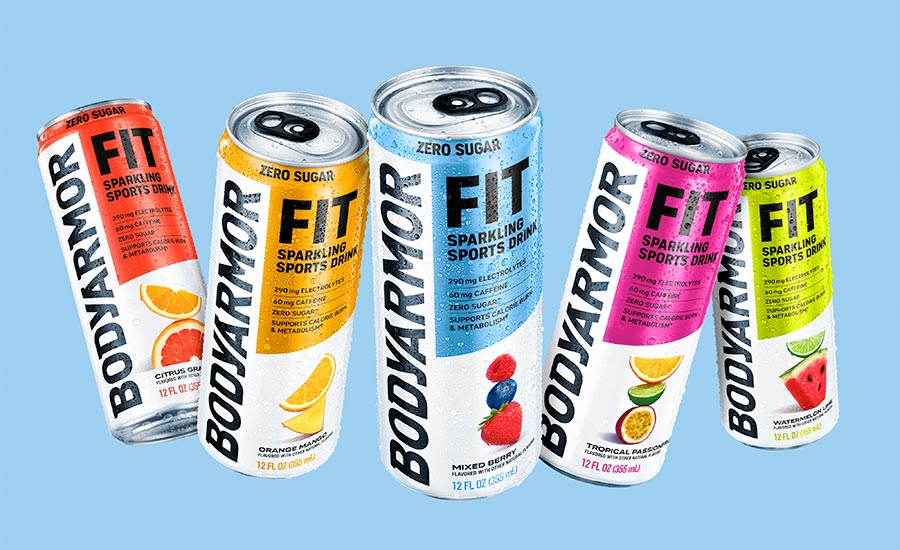 Image courtesy of BODYARMOR/The Coca-Cola Co.
Keychain’s Madoff explained that much of this synergy between the sports and protein categories and fitness as a lifestyle is consumers eagerness to get more out of their performance and workouts.
“Gen Z is drinking less soda and other traditional beverages, but they’re still reaching for options that help them stay hydrated, recover faster, and hit their protein goals,” he said in Beverage Industry’s May issue. “Drinks like protein shakes and electrolyte beverages fit seamlessly into pre- and post-workout routines, making it easier to stay consistent and support overall performance.
“We’re also seeing legacy brands adapt to this shift,” Madoff continued. “V8 Energy’s move to add electrolytes to its lineup, for example, reflects a broader push to deliver multiple benefits in one product. The brands gaining traction are those that combine function with flavor, and make it feel enjoyable, not just practical.”
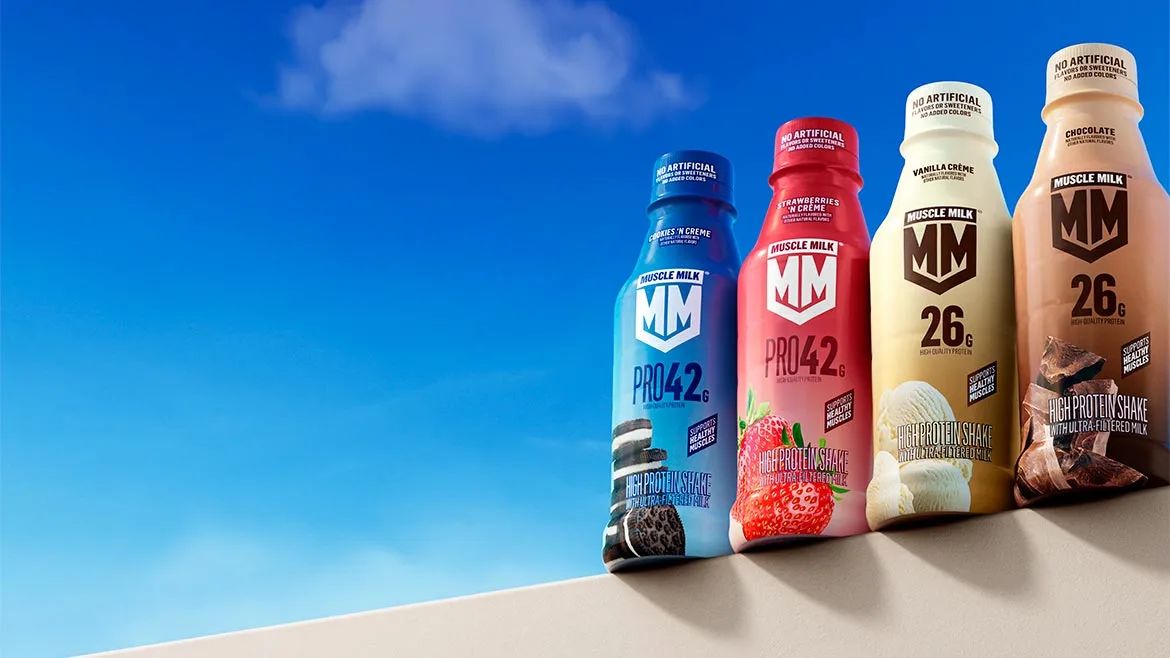
Brands also are approaching sports and protein drinks with a goal of making these beverages approachable for all consumers. In an exclusive interview with Beverage Industry in May, Marissa Pines, vice president and general manager for Gatorade Growth Platforms, Chicago, noted this in relation to Muscle Milk unveiling its reformulation change and new campaign: Protein for All.
“Muscle Milk’s next chapter is about making high-quality protein more approachable,” she said in the May interview. “On the product side, we reformulated our [ready-to-drink] (RTD) shakes with ultra-filtered milk and a simpler ingredient list. The new formula has no artificial sweeteners, no artificial flavors and no added colors. The Protein For All campaign brings that same idea to life in culture. It shows that Muscle Milk is built for the way people use protein today, whether that is after a workout or as part of a busy daily routine.”
Beyond being a natural fit within the fitness lifestyle community, sports and protein drinks are tapping into the trends and need states that consumers desire.
“We’ve seen an influx of hybrid refreshment beverages entering the marketplace in recent years,” BMC’s Hemphill said in Beverage Industry’s May issue. “Some sports drinks have added protein to aid in muscle recovery. Hybrid products can also help marketers seeking ways to differentiate their brands.”
Keychain’s Madoff further explained how functional and hybrid beverages have reshaped sports and protein drinks.
“We’re seeing protein drinks incorporate additional hydration properties or electrolytes, and today many sports drinks include protein, adaptogens, or nootropics,” he said. “Hybrid products like Protein2O’s Whey Protein 20G Isolate Hydration Drink are especially popular, appealing to consumers looking for beverages that hydrate, nourish, and enhance recovery all at once.”
Like many other beverage categories, convenience and GLP-1 usage are having an impact on sports and protein drink innovations.
“Convenience continues to drive growth, with ready-to-drink options leading the way,” Madoff said in Beverage Industry’s May issue. “At the same time, rising focus on weight management, partly driven by GLP-1 popularity, is increasing demand for low-sugar, high-protein, and higher-fiber products. Functional products are also gaining traction, with options like Vital Proteins Collagen Peptides appealing to consumers focused on recovery, mobility, and overall wellness.”
BMC’s Hemphill added that the broadening usage occasions is the core to the categories.
“We continue to see a broadening of consumption of sports drinks spanning across different day parts,” he said in Beverage Industry’s May issue. “Gone are the days that sports drinks were solely for workouts.”
BODYARMOR Sports Drink, a brand of The Coca‑Cola Co., Atlanta, exemplified this with its recent launch of BODYARMOR FIT, a new sparkling sports drink. BODYARMOR FIT builds on that foundation with a sparkling format that brings together electrolytes, caffeine, functional ingredients, and zero-sugar, the company says. Each contains 290 mg of electrolytes, 60 mg of caffeine, and functional ingredients including choline and green tea extract (EGCG).
“BODYARMOR FIT represents a natural evolution of our portfolio as we continue to meet consumers where they are,” said Sara Weaver, vice president of brand marketing at BODYARMOR, in a statement. “People are staying active in different ways throughout the day, and BODYARMOR FIT was designed to fit seamlessly into those routines with a new sparkling format that still delivers the functional hydration expected from us.”
As sports and protein drinks continue to resonate with consumers, Hemphill expects the categories to mirror 2025 performances.
“Protein drinks are likely to continue to have solid growth whereas sports drinks are projected to have soft overall performance,” he said in Beverage Industry’s May issue.
Meanwhile Keychain’s Madoff anticipated innovation will continue to permeate sports and protein drinks, driving more interest for the categories.
“We expect steady growth in the category, with a lot of that coming from continued innovation,” he said “Sports drinks will see more functional iterations, while protein drinks will continue to blur the lines, moving into hybrid formats that address multiple consumer needs like hydration, recovery, and overall wellness. Plant-based and clean-label options will also gain traction, and social media-driven trends will continue influencing younger consumers.”
Looking for a reprint of this article?
From high-res PDFs to custom plaques, order your copy today!