Making it sweet: beverage-makers aim to provide ideal levels of sweetness
As consumers increasingly prioritize functional beverages, formulators turn to natural sweetener solutions
In his song “Too Sweet,” Hozier sings about partners with different lifestyles that may impact their compatibility. Throughout the song, he compares himself and his partner in a series of metaphors. “I think I’ll take my whiskey neat / My coffee black and my bed at 3 / You’re too sweet for me / You’re too sweet for me,” he sings in the chorus.
In the beverage industry, brands often aim to provide an ideal amount of sweetness in their products. As consumer preferences have shifted, sweetness increasingly comes from natural sources like stevia, monk fruit, allulose or erythritol.
Thom King, chief innovations officer at Portland, Ore.-based Icon Foods, describes several consumer trends that are converging on the sweetener market at the same time, and together are changing it structurally, not cosmetically. These changes aren’t fads, he adds, but instead reinforcing loops.
“Consumers are no longer optimizing for ‘zero calories’ in isolation,” King says. “They’re paying attention to blood sugar, insulin response, energy crashes and satiety. That’s why you see rising interest in glycemic index, CGMs and phrases like ‘blood sugar friendly’ entering mainstream language.”
This focus has directly impacted the sweeteners market.
“Ingredients are now evaluated not just by sweetness potency or calorie contribution, but by metabolic behavior over time,” King says. “That favors rare sugars, fibers and blended systems over blunt high-intensity approaches. After decades of hyper-sweet products, many consumers are quietly burned out.”
Further, consumers read labels more than ever, but they don’t read them expertly, he notes. Consumers operate on heuristics: familiar versus unfamiliar, natural versus synthetic, short versus long, King explains.
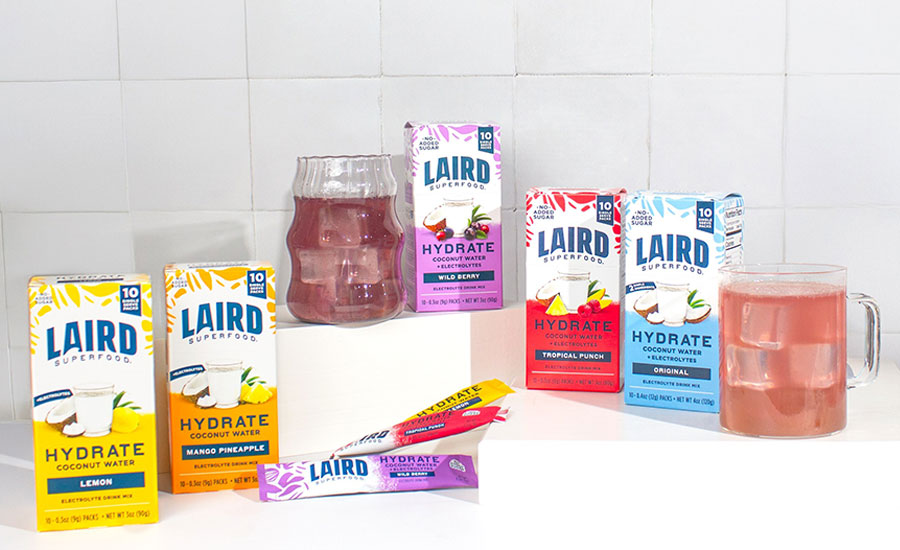 Laird Superfood expanded its Hydrate line with new flavors that are lightly sweetened with monk fruit.
Image courtesy of Laird Superfood
“That creates pressure on sweetener choice regardless of safety data,” he says.
Emily Berg, marketing manager at Cargill, Minneapolis, shares that, when it comes to sweeteners and sugar reduction, there is a clear paradox.
“While demand for sweet taste remains high, three-quarters of Americans say they’re trying to limit or avoid sugar in their diet,” she states, crediting a 2025 IFIC Food & Health Survey. “For most of these consumers, the goal is moderation, shaped by broader health and wellness goals and the growing influence of GLP-1 medications.”
This mindset is reshaping the market.
“While zero-sugar products remain relevant, the fastest growth in many beverage categories is happening in the middle ground, with reduced- and low-sugar options,. For example, while full-calorie soft drink unit sales are down slightly, reduced-calorie products are up 33.9% year-over-year (YoY),” Berg says, citing NielsenIQ data for the 52 weeks ending Dec. 6, 2025.
“In response to shifting consumer expectations, along with evolving federal guidance and state-level activity, companies are increasingly engaging in multi-year, multi-brand product renovations focused on reducing sugar and removing artificial ingredients,” Berg says. “Ultimately, consumers are seeking balance. They want fewer grams of sugar, clean labels and great taste, without relying on artificial sweeteners.”
Becca Henrickson, senior beverage category manager at Tate & Lyle, Hoffman Estates, Ill., notes that consumers are becoming more label-savvy and making decisions based on ingredients and label claims. However, consumers also are more cost-conscious,” she says.
“This means more than ever, consumers are balancing their desire of a product based on not only cost, taste and health, but also what the product can potentially do for them functionally,” Henrickson explains. “Essentially, how much ‘bang for the buck’ are they getting with each individual purchase?”
These trends are causing beverage brands to support consumer needs and wants in terms of sweetener solutions.
Icon Foods’ King says that the sweetener solutions gaining traction aren’t about replacement, but about rebalancing.
“Beverage-makers who adopt system-level thinking, where sweetness is one part of a broader sensory and physiological design, will meet consumer expectation, stay aligned with evolving guidance and still make drinks people actually want to buy again,” he explains. “Winning formulations now look like this: small amounts of sugar for structure (under 5 grams per serving), rare sugars or fibers for bulk and metabolic moderation, restrained high-intensity sweeteners for lift and sweetness/flavor modulators to shape perception when these components work together. Consumers don’t notice what’s missing. They notice that the beverage feels complete.”
Cargill’s Berg says that stevia-based solutions now rank among the most widely used sweeteners in new beverage launches, thanks to their sweet taste, zero-calorie profile and artificial-free status. That trio of benefits reflects consumer priorities, she adds.
“Cargill’s proprietary research finds that among beverage consumers, ‘naturally sweetened’ and ‘no artificial sweeteners’ claims perform equally well, with consumers indicating a willingness to pay more for beverages carrying those claims,” she shares. “External research points to a similar dynamic, with HealthFocus International finding that comparable shares of U.S. consumers prioritize products with ‘no artificial sweeteners’ (49%) and ‘lower in sugar’ (48%).”
Berg notes that Cargill’s research shows consumer acceptance across options, from stevia leaf extract to stevia sweetener produced via fermentation.
“This growing comfort with both stevia and fermentation is opening new doors for innovation in sugar reduction,” she says.
Tate & Lyle’s Henrickson says that beverage-makers are approaching product development in a similar way that consumers are approaching the retail shelf, by asking how to keep taste as the priority, while also keeping cost and label implications in check.
“This means expanding the sweetener toolbox to include more natural and next-gen sweeteners that have evolved in the market to meet these needs for formulators,” she shares. “What’s most interesting is how the formulation shift is in some cases taking a ‘step’ approach to new product development. For example, we see a rise in formulators combining artificial and natural-based sweeteners. It is not uncommon to see a sucralose and stevia combination on a beverage label now.”
This eliminates the “all or nothing” approach to natural and artificial labels, Henrickson notes, and allows manufacturers to optimize taste and get consumers comfortable with newer ingredients on pack.
Utilizing natural sweeteners
Beverage-makers are gravitating toward certain natural, zero-calorie sweeteners in new formulations.
Icon Foods’ King states that beverage-makers are narrowing their focus to a smaller, more disciplined set of natural, zero-calorie sweeteners — not because choice vanished, but because performance under restraint now matters more than raw sweetness power.
“Reb M stevia is the new baseline, not a novelty, but has become the workhorse because it finally behaves like a grown-up sweetener,” King says. “Formulators aren’t using Reb M to chase sucrose equivalence anymore. They’re using it to provide lift and clarity in systems where total sweetness is intentionally lower.”
Highlighting Icon’s RM95D (a Reb M and Reb D blend), King says high-purity glycosides are being chosen less for how sweet they are and more for how predictable they are.
“Tight specs, cleaner onset and better integration with acids and flavors make them easier to dose precisely,” King says. “Monk fruit still matters, even at today’s prices.”
Despite monk fruit’s high price point, King shares that formulators should “keep it in the toolbox” because it “does something stevia still struggles with” and delivers early sweetness perception that reads as natural and familiar.
“Used at low levels, it can soften stevia edges, round the front of the sweetness curve and improve first-sip acceptance,” he explains. “What’s changed is how it’s used. Monk fruit is no longer the star. It’s a supporting actor, deployed surgically because the sensory return per ppm is still compelling, even when the invoice hurts.”
Leanna Pinsonneault, senior food scientist at Cargill, notes that stevia continues to be “the big winner” in new formulations, whether brands opt for leaf-based solutions like Truvia and ViaTech stevia leaf extracts or fermentation-derived Reb M stevia sweeteners, like Cargill’s EverSweet.
“Through fermentation, we can produce the most desirable stevia compound — the ones that deliver exceptional sweetness quality and more closely match the temporal profile of sugar — in a way that’s both scalable and resource-efficient,” Pinsonneault says. “It’s a smarter path to great taste, minimizing the need for flavor modifiers and enabling deeper sugar reductions than legacy stevia sweeteners. Plus, as a fermentation-derived stevia sweetener, it is less susceptible to price volatility and supply challenges than traditional commodities.”
Erythritol, allulose and monk fruit also are showing up in new beverage formulations, she adds, and pair well with stevia. When used in combination, these sweeteners give formulators options to deliver the best sweetness for certain beverages in development, Pinsonneault says.
Hybrid solutions
When working with natural sweeteners, experts highlight the potential benefits when combined with other sweeteners.
“Single molecules are giving way to intentional glycoside blends coupled with lower intensity sweeteners like allulose and erythritol and even some fiber,” Icon Foods’ King states. “Blending allows formulators to shape onset, peak and decay in a way no single sweetener can manage alone. Done well, blends reduce sharp sweetness spikes, shorten linger, smooth transitions across the palate, reduce the need for higher overall sweetness by enhancing the perception of sweetness through the receptors on the palate. Not louder — smarter.”
For higher levels of sugar reduction, Cargill’s Pinsonneault says that hybrid sweetening systems can be necessary.
“These systems pair high-intensity sweeteners like stevia with other complementary sweeteners,” she shares. “Erythritol and allulose are popular choices, as they can boost stevia’s up-front sweetness, round out its sweetness profile and help build back mouthfeel.”
The increasing popularity of functional beverages is driving formulators toward hybrid sweetening systems as well, Pinsonneault adds.
“Ingredients like vitamins, minerals, proteins and botanicals often introduce complex flavor challenges,” she explains. “By combining different sweeteners, formulators can effectively balance those off-notes, achieving a more appealing sweetness profile with the right intensity.”
Erica Campbell, technical solutions manager at ADM, Chicago, notes that beverage-makers must align their choice for sweeteners with the specific drink format and nutritional objectives.
“While high-intensity ingredients like stevia deliver an impactful sweetness, they are often paired with bulking agents like allulose and flavor modulation solutions to replicate the ‘mouthfeel’ of traditional sugar,” Campbell explains. “By utilizing a multi-ingredient sweetening system, manufacturers can balance the complex trade-offs between a premium sensory profile, cost-effectiveness and the ‘clean label’ transparency that modern consumers demand.”
Formulation considerations
When working with natural, zero-calorie sweeteners, experts note that several formulation factors should be taken into account.
Icon Foods’ King shares that beverage-makers must think beyond sweetness and intensity and incorporate time and behavior.
“Decay rate is often the hidden failure point,” he says. “Many high-intensity sweeteners linger far longer that sucrose, which amplifies off-notes, flattens flavor and creates palate fatigue. Shortening the sweetness tail through lower dosing, glycoside blends, and added body with lower intensity sweeteners is usually more effective than chasing more sweetness.”
King further notes that the sweetness curve matters more than the peak. Neutrality is equally critical and highly matrix-dependent, he says.
“Natural zero-calorie sweeteners are rarely flavorless; they can bring bitterness, metallic notes, herbal character or throat garb that become more obvious in acidic, mineral-rich, tea- or coffee-based systems,” he explains. “Low intensity sweeteners and glycoside blending, restrained use, flavor-forward design and sweetness modulators help reduce these signatures, so sweetness integrates rather than argues with the beverage. The goal isn’t invisibility, it’s harmony.”
King adds that thermal processing adds another layer to this as well.
“Steviol glycosides and monk fruit are generally heat-stable, but pasteurization and UHT change the surrounding matrix, often revealing a sweetener’s fingerprint more clearly post-process and over shelf life,” he says. “Heat can dull top notes, sharpen acidity and magnify lingering sweetness, especially with monk fruit if used aggressively.
“Allulose and erythritol bring different considerations: allulose is heat-stable but participates in Maillard browning and flavor development under high heat, which can be an asset or a liability depending on the beverage, while erythritol is thermally stable but can thin perception and sharpen cooling or bitter edges as flavor volatiles fade,” he continues.
King also notes that fibers add another dimension, as most soluble fibers tolerate pasteurization well, but thermal processing can change viscosity, sweetness perception and acid balance over time. Sometimes this increases perceived sweetness as aroma declines or creates late-stage thickness that alters the finish, he says.
“Successful formulations are validated not just for chemical stability, but for sensory stability, ensuring sweetness decay, mouthfeel and flavor integration still hold together after processing and at the end of shelf life,” he explains.
Cargill’s Pinsonneault shares a handful of considerations, noting that sugar reduction doesn’t have to mean compromise.
“There’s no one-size-fits-all solution,” she says. “It may take some experimentation to find the right balance, but leveraging our collective expertise helps brands innovate faster.”
Pinsonneault urges beverage-makers to understand their consumer and define product development goals from there.
“Label considerations, sugar-reduction and/or calorie-reduction goals and cost-in-use requirements are among the factors we consider with every project,” she says. “Remember that sugar reduction doesn’t have to be an all-or-nothing proposition. The emerging ‘low sugar’ middle ground is resonating with consumers, and keeping a small amount of sugar in the formula can offer taste and mouthfeel advantages.”
Similarly, formulators don’t always have to reach the ultimate sugar reduction goal in one effort, Pinsonneault adds.
“There’s a lot to be said for slow reduction over time,” she says. “Gradual, stair-step changes are often better accepted by consumers, especially in established products.”
Pinsonneault notes that finding the optimum sweet-sour balance is another common pain point, as is managing off flavors and mouthfeel.
ADM’s Campbell recommends that beverage-makers take a holistic approach with formulation, and echoes similar sentiments regarding sensory hurdles.
“Considering the solubility and stability of these ingredients is also essential to ensure consistent sweetness throughout the beverage’s shelf life,” she concludes. “For reduced-sugar beverages, it’s critical to pay close attention to mouthfeel and make adjustments. In addition to functional performance and sensorial attributes, product developers may also have specific cost and clean label goals in mind, further impacting formulation and which sweetening solution to use.”
Looking for a reprint of this article?
From high-res PDFs to custom plaques, order your copy today!