Beverage-makers tap into prebiotic, probiotic craze
Gut health awareness prompts innovation across categories
Born into poverty in Kentucky, Abraham Lincoln, the 16th president of the United States, is quoted for saying, “The best way to predict your future is to create it.”
Similarly, with consumer interest in prebiotics and probiotics on the rise, beverage brands across categories are creating their own future by launching a plethora of drinks to meet consumer demand.
Jack Doggett, food and drink consumer insights analyst at Mintel, Chicago, notes that with the growing consumer awareness of gut health, prebiotic and probiotic interest surged in 2025.
“Categories that are naturally probiotic have seen a jump because of this — U.S. sales of yogurt drinks, for example, saw an estimated rise of over 17% in 2025,” Doggett says. “Additionally, prebiotics and probiotics have broken into several beverage categories, like soda, juice and water, demonstrating their ability to blur traditional beverage definitions.
“In 2025, prebiotic claims appeared in 2.9% of all new U.S. beverage launches, while probiotic claims were found in 2.6% — both all-time highs,” he continues. “Prebiotic claims in new beverage launches, driven by their rapid popularization in soda, have increased by over 400% since 2021, whereas probiotic claims are up nearly 60% in the same period.”
Gary Hemphill, managing director of research at Beverage Marketing Corporation (BMC), Wintersville, Ohio, describes the pre- and probiotic drinks market as healthy.
“It’s been driven by the emergence of better-for-you sodas that tout these benefits,” he says. “The category is experiencing double-digit growth.”
Like Mintel’s Doggett, Hemphill notes that consumer interest in gut health has been the primary driver of pre- and probiotic drinks.
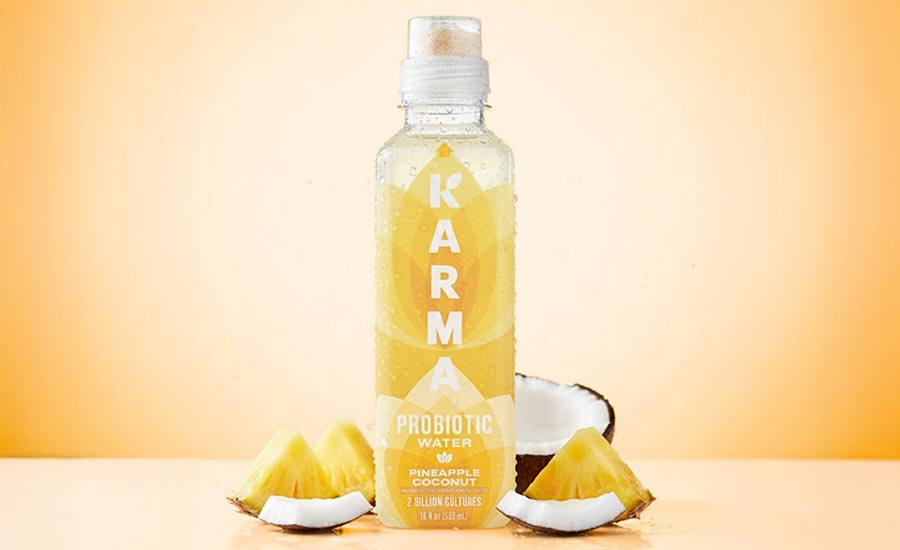 Karma Water recently announced it’s bringing back its Pineapple Coconut flavor with upgraded functional gut health benefits.
 Image courtesy of Karma Water
Ben Goodwin, co-founder, formulator and CEO of OLIPOP, Oakland, Calif., says the market for these drinks has experienced explosive growth, with functional soda leading the charge.
“As the creator of the functional soda category, OLIPOP has experienced this rapid and steady growing interest firsthand. The market momentum reflects a fundamental shift in consumer behavior,” Goodwin says. “When I started formulating OLIPOP nearly a decade ago, the idea of functional soda was unheard of. Now, the category is booming, with new brands entering the space regularly.
“Consumers are genuinely seeking beverages that support their goals and lifestyles,” he continues. “It’s about more than a trend. The fact that throughout our growth, OLIPOP has previously surpassed Coke and Pepsi in single can sales is a testament to real staying power.”
Further, noting that his personal journey with OLIPOP began with an epiphany during his teens about the gut-brain axis, Goodwin says he realized the cognitive clarity he gained from changing his diet was likely connected to his gut microbiome.
“I spent years researching prebiotics and how they can support digestive health,” he says. “Today, that scientific understanding and curiosity has gone mainstream. The gut microbiome conversation has evolved from niche wellness circles to household awareness, and people now understand that what they drink can directly support their digestive health.”
Mintel’s Doggett points out that gut health has seen a spike in both social interest and product launches.
“In 2020, only 1% of new beverage releases had gut health claims. In 2025, this increased to 5%, the highest it’s ever been,” he says. “According to Black Swan Data, online gut health conversations have grown 15%, with consumers aiming to look, feel and perform better through making thoughtful and experimental choices concerning food.
“Chatter about gut health is all over social media, contributing to younger consumers gaining increased exposure and holding it in high importance,” Doggett continues. “Strategic marketing has also cemented the association between gut health and pre/probiotics, and this increased awareness has driven strong demand for beverages that deliver on these benefits.”
Functional benefits lead the way
Aside from the rising interest in gut health, experts note that an overall shift toward products that do more for consumers’ health is benefiting the pre- and probiotic drinks market.
“Consumers have generally moved to healthier refreshment beverages — products that promote general wellness or offer specific functional benefits,” BMC’s Hemphill notes.
Mintel’s Doggett says that self-care remains a major priority for consumers, and pre- and probiotics are seen as an easy addition to enhance one’s health.
“Consumers are also increasingly interested in personalized wellness solutions,” he explains.
“Prebiotics and probiotics offer versatile benefits that align with various health goals, including improved gut health, skin health, mental well-being, and support for specific conditions. This flexibility makes them appealing to a wide range of consumers.”
OLIPOP’s Goodwin points to several converging trends that are fueling market growth including sugar reduction, the fiber gap and nostalgia meets comfort.
“In terms of sugar reduction, Americans consume an average of 70 grams of sugar daily,” he says. “With growing awareness of sugar’s health impacts, consumers want alternative options that don’t sacrifice taste. OLIPOP offers a lower sugar option (compared to traditional soda) that delivers on taste, which has continued to be a big draw for consumers.
“Regarding the fiber gap, the FDA recommends 28 grams of fiber daily, yet most Americans fall short of this,” Goodwin continues. “OLIPOP contains 6-9 grams of fiber in each can, meeting the FDA’s ‘Excellent Source of Fiber’ standard. Consumers are recognizing fiber as essential for metabolic and digestive health. Lastly, OLIPOP celebrates people’s love of soda, but delivers on the healthier alternative that allows them to still enjoy the emotional and social connections that soda fosters.”
Further, Goodwin notes that consumers’ increased interest in functional benefits has created massive opportunities for brands in this space.
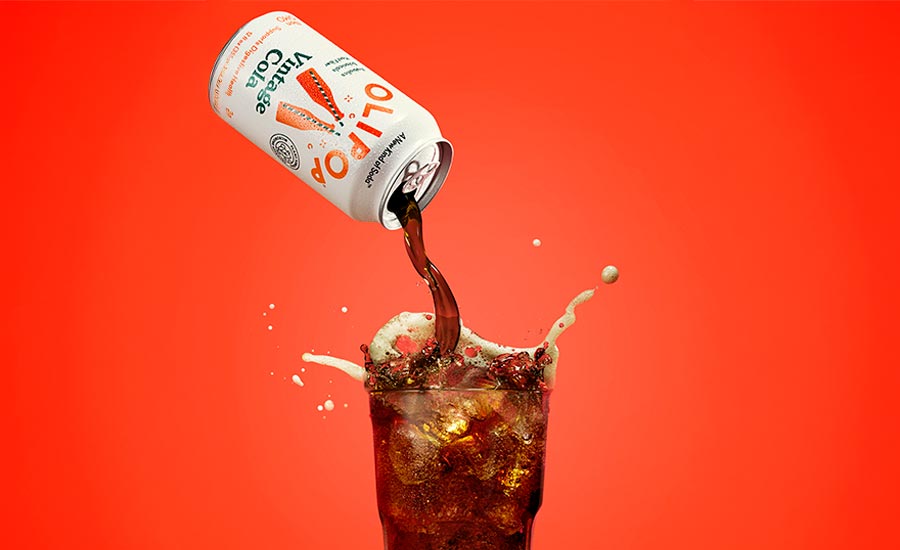 OLIPOP’s Ben Goodwin notes that the growing demand for beverages that blend nostalgic comfort with health-conscious benefits reflects broader consumer trends.
 Image courtesy of OLIPOP
“What’s incredibly important to me as the co-founder and formulator of OLIPOP is that we continue to drive forward conversations around product efficacy and research as the segment grows.” he says. “In 2025, we conducted an at-home human clinical pilot study looking at how swapping traditional soda with OLIPOP Vintage Cola may contribute to better blood sugar outcomes. The results showed that participants consuming OLIPOP Vintage Cola resulted in a better-for-you blood sugar response compared to leading traditional cola.
“As both OLIPOP and the category continue to grow, we’re excited to drive forward conversations around research in tandem with delivering on delicious taste,” Goodwin continues.
Measuring demand
Given the rising interest in pre- and probiotics, experts highlight which consumer demographics are most likely to consume these beverages.
“Younger consumers are more likely to show interest in additions of prebiotics and probiotics in categories where these benefits weren’t present in before, like carbonated soft drinks,” Mintel’s Doggett says. “This stems from younger generations being more interested in nutritional health hacks and biohacking, ways for them to make a concerted effort to seek out products and strategies to improve their health.
“Social media also plays a large role in fueling health-focused experimentation, helping young consumers discover strategies that offer tangible health differences for them,” he continues. “Older consumers still have an interest in gut health, but respond better to products that naturally offer them, like yogurt drinks.”
OLIPOP’s Goodwin notes that given soda’s 97% household penetration — as a functional soda with prebiotics — the brand’s consumer base spans a wide range of demographics.
“It’s truly meant for everyone,” he says. “We’ve found that the product is beloved by people of all ages, from Gen Z to older adults. That said, we’ve seen particularly strong resonance with Gen Z consumers who are health-conscious but refuse to compromise on taste or experience.
“We also connect deeply with parents who grew up loving soda and want to share that nostalgic experience with their children, but in a healthier way,” Goodwin continues. “By meeting people where they already are, in spaces traditionally dominated by legacy soda, we’re reaching mainstream customers who simply want a better option without feeling like they’re making a sacrifice.”
As far as which beverage formats are utilizing pre- and postbiotics in their formulations, Goodwin notes that the functional beverage landscape has expanded dramatically across categories in areas such as dairy drinks, juices, teas and more.
“Kombucha was among the earliest adopters,” Goodwin says. “In fact, my beverage journey began when I linked up with a friend starting a kombucha company, where I learned the ins and outs of the industry and began my formulation work.
“However, I recognized that kombucha and similar esoteric functional drinks, while valuable, weren’t accessible to the masses,” he continues. “That’s why I chose soda as the format for prebiotic delivery. Soda has 97% household penetration and a $40 billion market share. It’s nearly ubiquitous in American culture. I knew that to positively impact consumers’ health at scale, we needed to meet people where they already were, with a beverage they already loved.”
BMC’s Hemphill also notes that pre- and postbiotics beverages have been introduced across the spectrum of beverage categories.
“That said, the biggest brands that have developed are sodas,” he says.
Mintel’s Doggett echoes similar sentiments, noting that carbonated soft drinks have emerged as a standout category for added pre- and probiotics.
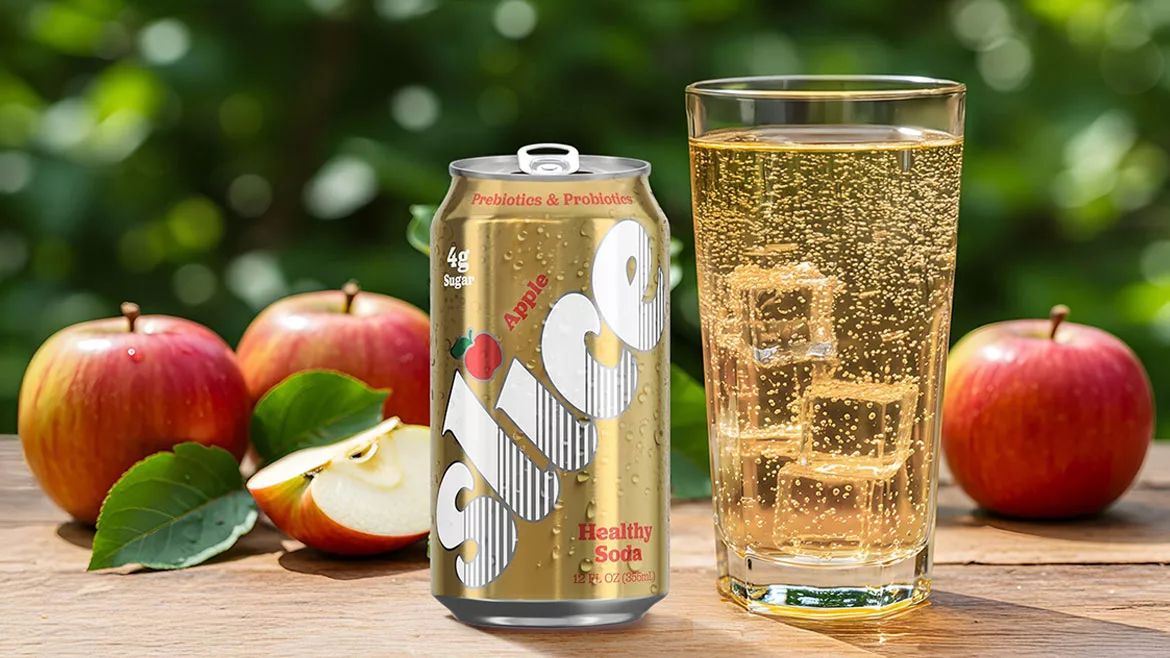
“Brands like Poppi and Olipop have each experienced rapid growth on the back of their prebiotic offerings, and established brands like Pepsi are beginning to offer their own prebiotic twists on their traditional soda,” he says. “Pepsi has gone even further to diversify their prebiotic offerings, acquiring Poppi earlier in 2025, whereas Coca-Cola broke into the prebiotic space by introducing Simply Pop as a prebiotic extension to their Simply line.
“Other categories like nutrition drinks, tea and water are aiming to replicate the success of carbonated soft drinks,” Doggett continues. “Nearly all non-alcoholic beverage categories have explored integrating probiotics and prebiotics in their products, and naturally pre/probiotic drinks like kombucha and kefir are seeing increased interest.”
Market expectations
With the rise of prebiotic sodas, experts anticipate that the potential for such beverages in the U.S market is expansive.
Speaking to prebiotic drinks specifically, OLIPOP’s Goodwin says that the market potential is “enormous.”
“The traditional soda market is $40 billion,” he says. “We’ve surpassed $400 million in revenue, yet we’re still in the early innings of market penetration. The growing demand for beverages that blend nostalgic comfort with health-conscious benefits mirrors broader societal trends, and we’re positioned to lead that transformation.”
Looking ahead, Mintel’s Doggett anticipates that the U.S market for prebiotic and postbiotic beverages could evolve over time.
“Pre- and probiotic launches don’t show signs of slowing down, cementing their place in the total beverage market,” he says. “While some categories like water and juice are nascent in their adoption of prebiotics and probiotics, the broad success of these benefits in carbonated soft drinks will continue to promote a positive ‘gut health halo’ for these benefits in newer categories.
“However, as more health claims (i.e., protein) gain traction in the beverage market, pre- and probiotic claims may evolve into complementary features rather than primary selling points,” Doggett continues. “For now, with gut health in the spotlight, prebiotics and probiotics are thriving, though they may be nearing their peak.”
Looking for a reprint of this article?
From high-res PDFs to custom plaques, order your copy today!