What will happen to the THC beverage market?
Delta Beverages CEO calls for regulation, not outright ban
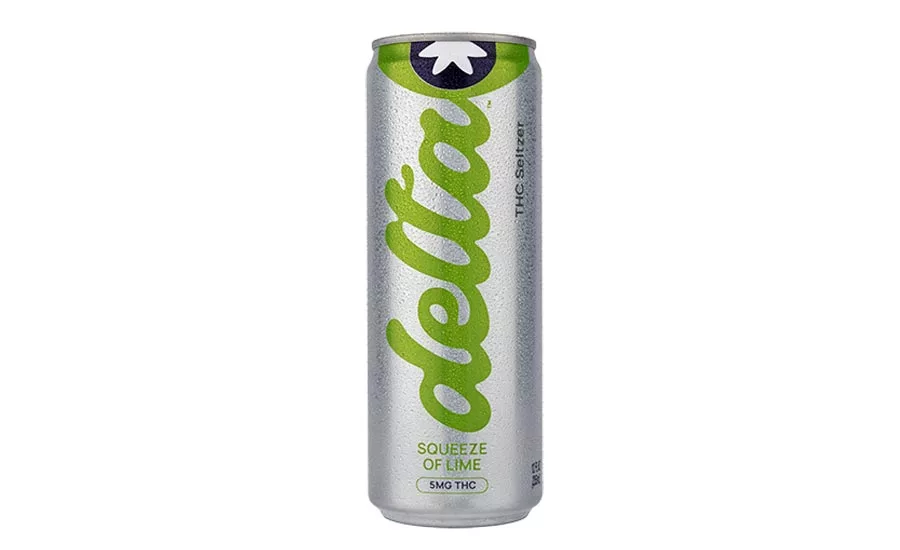
The New Year can usher in new adventures, challenges and goals. In the beverage market, a notable change is the definition of “hemp” and what that means for this emerging beverage market.
On Nov. 12, 2025, as part of the “Continuing Appropriations, Agriculture, Legislative Branch, Military Construction and Veterans Affairs, and Extensions Act, 2026,” section 781 creates this new definition following the definition created in the 2018 Farm Bill, which legalized hemp and its derivatives and removed Cannabis sativa L. containing no more than 0.3% Delta-9 THC on a dry-weight basis from the Controlled Substance Act. However, in section 781, a “total THC” concentration limit of 0.4 mg for each container for THC as well as other cannabinoids with similar effects, including THCA, has been enacted. This new definition effectively will ban most commercial hemp products following a 1-year transition period, which take effect Nov. 13, 2026, 365 days following the Act’s enactment.
What does this mean for the cannabis beverage market? As Jack Sherrie, founder and CEO of Delta Beverages, explains “it’s going to kill it.”
“A 0.4 mg cap per container, just flat out bans all products,” Sherrie says. “Even CBD products, most have trace amounts of THC that would put them over 0.4 mg per container.”
This all comes as the cannabis-infused beverage market is on the rise. CoBank’s Knowledge Exchange reported in late 2025 that U.S. sales of cannabis beverages were projected to reach $2.8 billion by 2028. Through 2028, cannabis beverages are projected to register a compound annual growth rate of 16.9%.
Noting that some discussions are taking place on amending the window to 16 months, Sherrie explains that for distributors, 365 days is not fully reflective of the route to market process.
“We’ve already talked to a lot of our distributors,” Sherrie says. “A lot of them are continuing to stay by our side and work through this, but they have to be realistic too, right? They have products on retail store shelves, and they’re going to have to, at some point, pull the product off shelves and will need a timely way of doing that.
“So realistically while the ruling does say 365 days, for our distributors, it’s six months. I’m hoping that Congress can get together and realize while 365 days seems like a lot of time, it really isn’t to deal with this issue. Congress is getting hit from so many different angles and with many opinions, I think they’re going to see that they’re going to need a lot more time for this,” he continues.
However, Sherrie likes to look for the positive, and the 365-day transition schedule suggests that Congress is acknowledging that THC does not pose an imminent threat to health and human safety.
Sherrie notes that when he first was speaking with those in Washington, education was needed on hemp, CBD, etc. Although education has improved, he says more is needed to under the impact of section 781. Most recently, Sherrie met with Sen. Thom Tillis (R-N.C.), which Sherries says Tillis was asking all the right questions.
“There is an educational component that still needs to be understood with the differences between product type,” Sherrie explains. “We have THC beverages, gummies, THCA flower etc. You have all these different types of THC products, but we're trying to treat them all as if they're the same. That’s where I think the problem is with trying to govern THC products. They should be treated differently. There isn’t one solution that can effectively regulate all hemp THC products, it is far too complicated.
“THC beverages don't work in dispensary type models,” he continues. “They’ve been attempted in California, and it just doesn't work. The logistical costs of moving heavy beverages is high. In order to be successful in beverage, you also have to have economies of scale. You have to be able to produce in large quantities to get the cost-saving efficiencies. Not to mention, your average ‘soccer mom’ isn’t going into a dispensary.”
Sherrie notes another reason that THC beverages don’t translate in dispensary models: tolerance. Consumers that are more likely to go into dispensaries to purchase THC products are more likely to have a higher tolerance than those consuming THC beverages, he explains.
“That’s the main thing I was trying to get across to Senator Tillis,” he says. “Look, there does need to be separation in product types. THC beverages do need to be treated differently because of the cost implications.”
Sherrie, however, isn’t opposed to regulating a definition of milligrams for each container but explains that what’s currently on the table equates to an outright ban. Instead, he calls attention to the successful three-tier system that has shaped the beverage alcohol industry.
“I think we've proven that there can be sensible regulation for THC products,” Sherrie says. “It can be done responsibly. I think what we’re going to learn is that there is a way that we can sell low-dose THC products in the regular retail market. It just needs to be done under the three-tier system. And that's what it was designed for.
“The biggest takeaway is, and I think what legislators are going to eventually come to the conclusion of will be, ‘OK, we need to appease a lot of these marijuana operators that have been building out dispensary models,’ he continues. “We can’t forget about them. Maybe we need to have a talk about low cost licensing fees and removing vertical integration requirements so that all small businesses can get involved. There is a market where we can keep these high-dose products still within dispensaries. But then, there’s this whole different demographic that we can still serve and operate in the three-tier system for low-dose products.”
Although much of Sherrie’s knowledge stems from his involvement in the industry, he also calls attention to the consumer groups that have highlighted the benefits of hemp-derived cannabinoids, particularly the Veterans of Foreign Wars of the United States (VFW), which recently sent a letter to Speaker of the House Mike Johnson, House Minority Leader Hakeem Jeffries, Senate Majority Leader John Thune and Senate Minority Leader Chuck Schumer. In the letter the VFW and its Auxiliary of nearly 1.4 million veterans and their families are asking for continued support of solid scientific research into hemp-derived cannabinoids as potential alternatives to the prescription drugs that are given to many veterans for diagnoses such as PTSD, anxiety, pain, and sleep problems.
The letter highlights three studies showing the impacts of hemp-derived products in terms of symptoms or prescription reduction, adding that this is not proof of a “miracle cure,” but just shows the importance of continuing to study through regulated opportunities.
“We’re not pushing for wild, unregulated products or recreational use. We’re asking for smart policy: protect the public, but don’t kill the research. Let science do its job, regulate what’s proven safe, and give veterans every legitimate tool available to get their lives back,” the letter signed by VFW Commander-in-Chief Carol Whitmore and Adjutant General Dan West states.
With so much at stake, beverage manufacturers, distributors ,and associations must continue to reach out to policy-makers to address the impacts of section 781 before Nov. 13, 2026, hits.
Looking for a reprint of this article?
From high-res PDFs to custom plaques, order your copy today!