Performance beverage market proves wide-ranging reach
Ingredients play crucial role in meeting consumer demand
Joshua Rosenthal, founder and director of the New York City-based Institute for Integrative Nutrition, is quoted as saying, “Bio-individuality means there is no one-size-fits-all diet, each person is a unique individual with highly individualized nutritional requirements.” For the performance beverage market, there is a through line to this concept, as consumers aren’t looking for one-size-fits-all solutions, experts note.
“[Consumers] want beverages formulated to deliver specific, measurable benefits that help them meet their individual fitness goals,” says Maria Stanieich, senior marketing manager at Kyowa Hakko USA, New York. “This is especially clear with the rise of pre-workouts, where the most common desired outcomes are increased energy and focus, improved muscular endurance and enhanced blood flow or ‘pump.’
“Ultimately, performance beverages aren’t just about supporting internal bodily processes, they’re about how those processes make people feel,” Stanieich continues. “Consumers want to leave the gym feeling strong, energized, and like they’ve actually achieved something. The market is responding by moving toward more targeted, efficacious formulations designed to help consumers achieve those ‘great workout’ experiences more consistently.”
Micah Greenhill, senior marketing director of beverages at ADM, Chicago, echoes similar sentiments, noting a significant broadening of the performance beverage market, as active lifestyles become more mainstream across demographics.
“Performance is no longer defined by elite athletes alone — casual exercisers, fitness enthusiasts, gamers and even consumers managing their weight through anti-obesity medications (AOMs) are now part of the core audience,” he says. “Additionally, the lines between beverage categories are being blurred. Sports drinks are borrowing from energy drinks, and energy beverages are moving toward functional lifestyle concepts, reflecting demand for ‘all-in-one’ solutions.
“Consumers want more than single-function products — they want hydration plus energy, muscle recovery plus focus, or immune health support alongside rehydration,” Greenhill continues. “At the same time, new consumer needs are shaping opportunities for formulators to innovate, particularly for consumers taking AOMs. As such, there is a new opportunity for beverage brands to specifically tailor hydration offerings to AOM users.”

Bret Barhoover, marketing manager for specialized nutrition at Cargill, Minneapolis, also notes that the performance beverage market has become much more diverse, given consumers’ wide range of fitness routines, health goals and lifestyles.
“Cargill’s recent ActiveIntel study sheds light on these dynamics, surveying more than 1,500 adult users of sports and active nutrition products,” he says. “This research revealed five unique consumer segments, each with distinct attitudes, fitness routines, body images and perspectives on health. Among them, ‘Perfection Pursuers’ stood out as heavy users of active nutrition beverages. Driven by disciplined diets and high-intensity workouts, they rely on performance beverages to help optimize their training.”
Barhoover adds that, as part of the study, Cargill took a closer look at beverage formats, exploring what consumers value today and where gaps exist.
“This analysis highlighted opportunity spaces like women’s health, where current offerings remain underdeveloped,” he explains.
Jordan Miller, vice president of marketing for Nutrition21, Saddle Brook, N.J., notes that although performance beverage formats continue to be popular, consumers are taking a greater interest in specific ingredients for health.
“More consumers are conducting in-depth research into ingredient efficacy, seeking out specific benefits from the products they consume, and using functional beverages interchangeably with supplements as a convenient way to obtain the nutrients and health benefits they want,” Miller explains.
Ingredients’ vital role
As consumers continue to seek performance drinks to support varying needs states, experts highlight the ingredients that support physical activities, endurance, as well as recovery.
“For beverage-makers, two standout ingredients address both the physical and cognitive needs of active consumers,” Kyowa Hakko’s Stanieich says. “Setria glutathione plays a role in supporting nitric oxide (NO) function, which plays a key role in blood flow and endurance.
When combined with l-citrulline, Setria helps sustain NO levels for longer-lasting effects,” she continues. “This aids in vasodilation, fueling muscles and supporting lean body mass, making it especially well-suited for pre-workout powders and ready-to-mix beverages.”
On the cognitive side, Stanieich points to Cognizin citicoline that has been clinically shown to support mental energy, focus, attention and accuracy.
“That’s valuable not only for consumers preparing for a workout, but also for those looking to stay sharp and productive throughout the day,” she explains. “From a formulation standpoint, Cognizin is neutral in taste, stable and highly water-soluble, which makes it easy to incorporate into both ready-to-drink and ready-to-mix beverages.”
Nutrition21’s Miller, meanwhile, explains that Nitrosigine also is clinically demonstrated to boost nitric oxide in the body, which is relevant for performance nutrition and healthy aging as nitric oxide offers support for whole body optimization.
“As a non-stimulant pre-workout ingredient, Nitrosigine supports blood flow for better muscle function and pump,” he says. “As a healthy aging ingredient, Nitrosigine improves blood flow, supporting cardiovascular health, cognitive function and physical performance.”
For memory, Miller pinpoints nooLVL, a patented complex of bonded arginine silicate and inositol for optimal brain performance.
“This nootropic ingredient can help users feel more energized and improve focus, concentration and memory — in as little as 15 minutes without any negative impact on heart rate or blood pressure,” Miller says. “Whether a consumer needs to power through a mid-day meeting or an evening workout, nooLVL is a caffeine-free nootropic ingredient for focus and optimized energy levels.”
For hydration, Max Maxwell, market intelligence manager at Chicago-based Glanbia Nutritionals, notes how electrolytes aid in rehydration by helping the body retain fluids and restore the balance of water and essential minerals lost during physical activity.
“They also support performance recovery by ensuring proper muscle function, preventing cramps and facilitating the repair of muscle tissues,” he explains.
Tristan Lipkie, technical business development manager at Cargill, also notes that electrolytes are foundational for performance.
“Sodium and potassium support hydration and fluid balance,” he explains. “Cargill offers brands a wide range of solutions — from potassium salt and sodium chloride (salt) to sodium and potassium citrates, to label-friendly options like sea salts and pink Himalayan salt.”
Lipkie also points out that carbohydrates — primarily glucose — are essential for fueling endurance exercise.
“Research suggests 60-90 grams of glucose per hour is optimal,” he says. “That’s a tough target to hit with food alone, making beverages a practical delivery system.”
For sustained energy, Lipkie adds that slowly digestible carbohydrates are a good choice.
“Here, Cargill’s Xtend sucromalt provides a gradual release of energy with a lower glycemic index (53 vs. 100 for glucose), helping reduce energy spikes and crashes,” he says. “Its unique composition includes glucose and fructose — the same basic sugars found in table sugar and fruit. But it also contains leucrose, a slower digesting sugar, and glucose oligosaccharides, which are harder for the body to break down. Together, these components support more stable blood sugar levels and extended energy.”
Kyle Krause, regional product manager for functional fibers and carbohydrates for North America at BENEO, Parsippany, N.J., points to Palatinose (isomaltulose) as being widely used in performance beverages.
“Naturally derived from sugar beet and also found in honey, it offers a mild, clean sweetness with no aftertaste. Trials show it also enhances a drink’s overall flavor profile,” Krause says. “As the only fully digestible, low-glycemic carbohydrate, Palatinose provides glucose — the body and brain’s primary fuel — in a balanced, sustained way. Its slow release delivers longer-lasting energy while triggering a lower insulin response. This supports higher fat burning, helping athletes spare glycogen and improve endurance.
“With these benefits, Palatinose is a smart alternative to sucrose, fructose and especially other high glycemic carbs, and yet can also be blended with them to deliver both immediate and sustained energy for athletes and active consumers,” he continues.
Krause further notes that for digestive health, prebiotic chicory root fibers (also known as inulin) is widely used in performance-enhancing beverages.
“As well as supporting digestive health, they are easily incorporated into a variety of beverages, such as those for weight management,” he says. “They are also a valuable addition to protein-rich drinks, ensuring sufficient fiber supply when consumers are watching their weight or perhaps taking GLP-1 medication. Other beverage applications are refreshments, including juices, smoothies and sodas, as well as in powder mixes.”
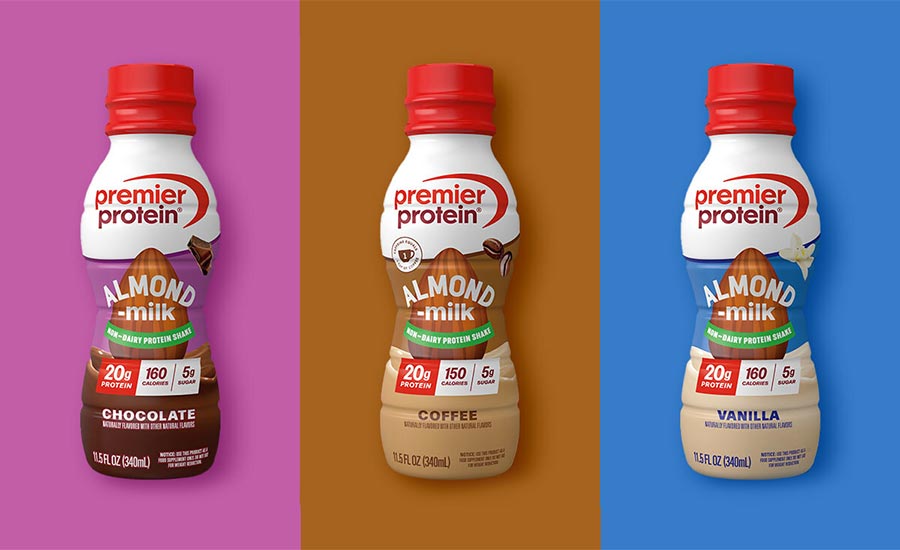
When it comes to ingredients for recovery, Cargill’s Lipkie says protein remains the hero, supporting muscle repair and growth.
“For consumers who prefer plant-based formulations, Cargill and joint-venture partner PURIS offer pea protein ingredients developed specifically for beverage applications,” he says. “They feature enhanced solubility and a neutral flavor profile, enabling brands to deliver 10, 20 or even 30 or more grams of protein per serving and still create great-tasting, creamy and indulgent products. “
Dr. Nora Khaldi, founder and CEO of Nuritas, Stamford, Conn., explains how protein-fortified beverages continue to saturate the market.
“Protein is on everyone’s minds, whether they’re elite athletes or someone trying to get their 10,000 steps a day,” she says. “As we continue to see higher protein levels, there is an opportunity in the market to use novel ingredients. For example, Nuritas’ PeptiStrong is a peptide complex that helps protein do more by promoting muscle protein synthesis, reducing muscle breakdown, and lowering exercise-induced inflammation, all while increasing energy.”
Nutrition21’s Miller, meanwhile, notes that for muscle growth, performance and strength, Velositol is designed to increase muscle protein synthesis — a key factor in promoting muscle health.
“As a patented complex of two forms of chromium and amylopectin, it promotes a normal insulin response, enhancing the uptake of amino acids, the key building blocks of proteins, into muscle cells,” he explains. “Velositol is an ideal ingredient as it delivers clinically supported benefits in muscle protein synthesis, strength, and endurance.”
Boundless potential
As the performance beverage category continues to broaden, experts note the potential for this ingredient market in the years to come seems more than fruitful.
“This space is booming, delivering some of the highest growth across the beverage category,” Cargill’s Barhoover says. “Performance beverages represent a key opportunity for brands but only when they align consumer insights with ingredients and formulation.
“Protein shows no sign of stopping, and ingredient innovation will only make this hero ingredient more versatile than ever,” he continues. “Advances in clear protein, for example, are expanding high-protein options into lighter, more refreshing formats beyond the traditional shake. At the same time, indulgence remains a powerful driver. While classics like chocolate still lead, dessert-inspired flavors are increasingly breaking through, as shoppers look for performance beverages that deliver enjoyable sensory experiences.”
Ultimately, Barhoover says, “front-of-pack claims may encourage trial, but repeat purchase comes down to taste.”
Kyowa Hakko’s Stanieich notes that performance beverages have always been a proving ground for functional ingredients; still, she says that history shows that once consumers experience the benefits in performance settings, adoption quickly goes beyond the gym.
“We’ve seen that cycle with protein, which moved from niche products into everyday foods and beverages, and more recently we’ve seen that with creatine,” Stanieich explains.
ADM’s Greenhill considers the ingredient market for performance beverages to hold considerable long-term potential, as hydration and functional benefits continue to converge within this beverage category.
“Looking forward, products that deliver targeted support will stand out, whether through rapid rehydration for athletes, via the gut-muscle axis, or with specialized solutions for groups like AOM users,” Greenhill says. “Consumers are also seeking multifunctionality, with beverages that combine benefits like hydration, energy, recovery, gut and immune health support becoming increasingly attractive.”
Looking for a reprint of this article?
From high-res PDFs to custom plaques, order your copy today!