Functional Demands Exceed Soft Drinks' Standard Form

Functional Demands Exceed Soft Drinks’ Standard Form
By JENNIFER ZEGLER
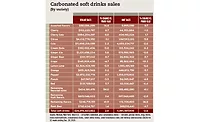
Consumers are requiring more of their beverages. These days, cola’s caffeine content doesn’t provide enough boost. And despite diet beverages’ no-calorie advantage, they do not boast added health benefits – well, yet anyway. This year the demand for beverages with better-for-you appeal led to a single-digit decrease for the category, which continued the slide in sales reported in 2005. Last year saw $24 billion in retail sales, excluding Wal-Mart, with a 3.8 percent decrease since the previous year, according to combined data from Information Resources Inc., Chicago, and ACNielsen, Schaumburg, Ill.
Out of the vast lineups from Coca-Cola, PepsiCo and
Cadbury Schweppes, only 14 brands showed positive gains in 2006. The CSD
category saw few new product introductions since most companies focused on
expanding their portfolios in energy drinks, juice, water and tea. Instead,
some brands hedged bets on reformulation (Diet Mountain Dew and 7 UP),
while others tried repackaging (Cherry Coke and Pepsi) to bring in more
consumers.
‘Zero’ Coke’s hero?
The Coca-Cola Co. convinced more of the world to buy a
Coke, but still fought with its home country on the merits of CSDs. The
company reported small gains on a worldwide scale after the fourth quarter
of 2006, but North American unit case volume declined 2 percent from the
prior year. The decrease had Coca-Cola breaking even on unit case volume
for all of 2006.
Last year’s increases for three major brands
continued with global 3 percent gains by trademark Coca-Cola, Sprite and
Fanta. In the United States, the greatest gains were had by the
company’s CSD/energy drink hybrid Vault, which had a 781 percent
increase; Fresca, with a 21 percent increase; and Fanta, with a smaller 6.1
percent gain. The successful Vault line has announced a new extension to
launch this spring, a berry flavor named Red Blitz. Sales increases
continued for the no-calorie Fresca line that relaunched in 2005 with new
packaging and new flavors.
Fresca was part of the company’s partnership
with the Culinary Institute of America, which yielded two specialty flavors
for foodservice last spring. Designed to pair well with certain meals,
culinary experts created Fresca Pomegranate and Coca-Cola Hot Tamale.
Taking advantage of several Coca-Cola brands, the flavor uses Fresca as a
base and adds Odwalla PomaGrand juice and Seagram’s Club Soda. Also
created was Coca-Cola Hot Tamale, which combines Coke with Worchestershire
sauce, hot sauce, fresh lime and black pepper. The unique flavors, as
reported by Mintel’s Global New Products Database in May 2006,
initially were marketed to restaurants, but company representatives did not
rule out retail expansion.
Formerly the company’s trendy products, its
citrus-inspired flavors took a tumble in 2006. Coca-Cola with Lemon fell
nearly 98 percent, while the lime-flavored franchise had a combined 42.5
percent decrease. Minute Maid flavors also showed a dismal 98.5 percent
decrease in sales from a year ago.
Overall, the company’s success story was
Coca-Cola Zero. Introduced in June 2005, the line had 82.3 percent increase
in sales in 2006. At the start of 2007, the company initiated a
multi-million dollar marketing push behind the brand, which features a
blend of aspartame and acesulfame potassium sweetners. Initially, Coke Zero
was positioned as a masculine alternative to Diet Coke, which tends to skew
to female consumers. With ads planned during the NCAA college basketball
tournament as well as the ABC medical drama “Grey’s
Anatomy” the company now emphasizes Zero’s traditional
Coca-Cola Classic taste without calories and appeals to both males and
females.
Cherry Coke Zero joined the ranks last month. The
no-calorie formulation, as well as regular Cherry Coke, received new
packaging designs courtesy of hip-hop artist Jay Z’s clothing line,
Rocawear. The new packaging debuted at Fashion Week in New York City in
early February. The urban-inspired designs for Cherry Coke represent the
first packaging update for the brand in five years.
Coca-Cola’s Neville Isdell, chief executive
officer, announced at February’s Consumer Analyst Group of New York
annual conference that the company will extend the Zero line with Sprite.
The ‘Zero’ formulation and brand also appears on its Fanta,
Pibb and Vault flavors. The company also announced it will debut Diet Coke
Plus this spring. The extension of the No. 1 diet CSD will be fortified
with vitamins and minerals.
Diet Coke, which had a decrease of 2.2 percent in
sales in 2006, launched a marketing campaign this year to encourage morning
consumption of the product. The simple ad featured a can of Diet Coke
wrapped in coffee house sleeve with the message “Good Morning”
and appeared in national magazines, including Entertainment
Weekly. It was designed to compete with
on-the-go coffee sippers who have strayed from CSDs in morning hours,
instead opting for coffee house orders.
For those who could not stray far from coffee, the
company introduced Coca-Cola Blak, a soft drink/coffee fusion beverage, in
April. Arriving in a sleek contoured bottle similar to the
trademark’s signature package, Coca-Cola Blak is a mid-calorie
beverage combining natural flavors and coffee essence. The java-inspired
drink was positioned as a pick-me-up for any time during the day.
As for the obesity epidemic, Isdell said Coca-Cola is
looking to “get the target off our backs,” according to reports
from the February analyst meeting. He announced the Coca-Cola Co. will fund
nutritional studies as well as awareness campaigns on diet and exercise.
The company hopes to remove focus from soft drinks and onto healthier
lifestyles in which full-calorie soft drinks are acceptable based on
activity level.
This year will also see the company continue its
leading role in a more recent debate regarding caffeine content in CSDs.
Coca-Cola already includes caffeine content information on its Full
Throttle energy drink and the new sparkling green tea beverage Enviga, and
will begin to include the information on all its brands. Trademark
Coca-Cola Classic will bear the caffeine content label in May, the company
said in a February statement.
In a year in which Coca-Cola introduced
metabolism-boosting Enviga and purchased Fuze beverages, the company also
has promised a fresh worldwide marketing campaign behind its flagship
brand. The company debuted two new ads during ratings powerhouses the Super
Bowl and Fox’s “American Idol.” Instead of marketing its
diet formulations, the spots prominently featured regular Coca-Cola
Classic.
The company also introduced new terminology for its
products. During the meeting and its fourth quarter reports, Coca-Cola
began to use the term “sparkling beverages” instead of
carbonated soft drinks. The company says “sparkling beverages”
sheds the negative connotation CSD has taken on in recent years. The new
all-encompassing term is used in company materials and includes its Dasani
line of carbonated waters as well as Enviga.
Pepsi counts on ‘Jazz’
At Pepsi, non-carbonated beverages led to its
full-year 9 percent growth for its beverage division, which includes CSDs
as well as Aquafina and Tropicana brands. In soft drinks, small
single-digit declines in Pepsi and Mountain Dew were offset by higher
single-digit increases in Sierra Mist. While regular CSDs saw a drop, diet
CSDs experienced slight increases in the fourth quarter of 2006.
The company’s offerings saw a few incremental
increases such as Diet Wild Cherry Pepsi, which was up 7.4 percent; Mug
root beer, up 1.9 percent; and Tropicana Twister, up 3.8 percent. The
two-year old Twister brand that contains 1 percent juice posted small gains
overall in its four flavors. Pepsi’s citrus-inspired flavors dropped,
but not as drastically as Coca-Cola’s. Pepsi Twist reported a
combined 57.9 percent decrease for its regular and diet varieties. Diet
Pepsi Lime fared better with only a 16 percent decrease. While Coca-Cola
pulled its vanilla varieties, Pepsi’s vanilla soft drinks kept a 0.2
volume share in the category.
In March 2006, Pepsi launched a massive sampling
effort to re-introduce Diet Mountain Dew. Newly reformulated with a blend
of sweeteners including aspartame, sucralose and acesulfame potassium, 3
million cans of Diet Mountain Dew were handed out in cities nationwide. In
New York City, the brand that encouraged extreme sports athletes to
“Do the Dew,” built a 100-foot snowboarding jam rail and
featured championship snowboarders showing off in Times Square. The
reformulation earned the brand a 6 percent increase in sales over 2005
numbers.
A few months later, PepsiCo hinted at upcoming
launches, including Sierra Mist Cranberry Splash and Jazz among other new
beverages. The lemon-lime brand added the holiday favorite –
cranberry – to its original formulation. Sierra Mist Cranberry Splash
launched in November and was only available for eight weeks during the
holiday season.
Pepsi Jazz launched in July of last year. The
no-calorie cola tapped into sweet cravings with its initial flavors of
Black Cherry French Vanilla and Strawberries & Cream. The company
shared the results of a study it commissioned called the National
Indulgences Survey. It found that 140 million Americans consider a sweet
treat an indulgence and 101 million find it difficult to indulge their
sweet tooth. It says Pepsi Jazz was designed to allow for that sweet
indulgence without the calories. A new Caramel Cream flavor was added to
the lineup this month. As part of the launch, it offered sampling in retail
outlets including Target stores.
Pepsi kicked off 2007 with a new marketing initiative
to attract teens and young adults to regular Pepsi-Cola. The company will
redesign the graphics on Pepsi-Cola cans, bottles and cups every few weeks
with images of sports, music, fashion and cars to attract a younger
demographic. PepsiCo says it has changed the brand’s look only 10
times in its 109-year history, but the packaging designs will be revamped
more than 35 times in this year alone.
“On the surface, this might look like a
packaging update, but it’s much more than that,” said Cie
Nicholson, senior vice president and chief marketing officer of Pepsi-Cola
North America, in a statement. “We’re changing the way we
interact with consumers – and now we’re doing it on their
terms. When people pick up a Pepsi, they’ll be getting much more than
a great-tasting cola. They’ll be getting a passport to the things
they enjoy most.”
To further attract the “millennial
generation,” as Pepsi dubs it, the changing cans also feature access
to exclusive online content, games, contests and sweepstakes. The premier
can, which was named “Your Pepsi,” includes a link to an online
contest to design a Pepsi billboard to appear in New York City’s
Times Square this spring. Later this year, consumers also will have the
chance to design a special paint scheme for NASCAR driver Jeff Gordon’s car.
In addition to the reformulated Diet Mountain Dew,
MDX, the soft drink-energy drink combination launched last year, reported
large gains. With 271 percent increases in its regular version and 195
percent in its Sugar-Free variety, MDX extends on the Mountain Dew brand
with an added boost. These and other Pepsi products also will include
information on its caffeine content. In addition to including caffeine per
serving data on its packaging, the company offers caffeine content charts
on its Web site.
Pepsi will continue to boost its products as it
recently announced plans for a new caffeine-enhanced version of its 5.7
market share Diet Pepsi brand. The company says Diet Pepsi Max will
have one-third more caffeine than Diet Mountain Dew as well as added
ginseng. The boosted Diet Pepsi variety is set to launch in June.
Also upcoming from PepsiCo is a sparkling fortified
drink called Tava. Mixing the product attributes of the company’s
recently purchased Izze brands and Coca-Cola’s Enviga, Tava is billed
as a fortified fruit drink containing vitamins
and chromium, which claims to boost metabolism and weight loss. The product
will be available this fall in Carribbean-inspired flavors.
Cadbury Schweppes revamps
The No. 3 soft drink company in the United States,
Cadbury Schweppes Americas boasted the smallest decrease in sales of its competitors, at 0.9 percent compared with
2005. With 18.2 market share for its brands, which include Dr Pepper, 7 UP
and A&W, the company fared well here after its 2005 sale of the
European beverage business. Instead of extending its lines, which it
previously did with the Dr Pepper Soda Fountain Classics line, last year
Cadbury Schweppes repackaged regular Dr Pepper and reformulated 7 UP to
attract consumers.
The company’s Sunkist and A&W flavors posted
the largest gains in the company with 9.4 percent and 7 percent,
respectively. The diet formulations of Sunkist, A&W, Canada Dry and 7
UP also received a packaging facelift. Cadbury Schweppes unified the Diet
versions of the popular flavors using similar bubble-inspired motifs for
each flavor. The word “Diet” appears on the same place on each
mainly white can, which also includes the brand’s logo and icon
representing the flavor. The designs were applied on the cans, multipacks
and 2-liter packaging.
Looking for a reprint of this article?
From high-res PDFs to custom plaques, order your copy today!