The future of color concepts in beverages
Color expected to play a greater role in the sensory, nutritional experience
In her song “Expectations,” Olivia Rodrigo tells listeners about her newly heightened standards about dating and romance. “Past mistakes are just new information / These days I’ve got expectations,” she sings.
In a similar way, consumer expectations are changing, especially around food and beverages. Consumers are increasingly prioritizing health and wellness. Beverage brands have observed these preferences and altered formulations when necessary. Coloring has been especially impacted by these changing expectations.
Kelly Newsome, global director of product marketing for colors at ADM, Chicago, shares that, as manufacturers explore naturally derived alternatives to FD&C color additives, the next phase of color innovation will depend on advances in pigment performance, stabilization technology, supply capabilities and formulation expertise.
“These capabilities will help colors derived from natural sources perform across a wider range of beverage applications,” she says. “We continue to expand our Colors from Nature capabilities, with a robust R&D pipeline focused on solving key color challenges associated with replacing artificial colors.”
Brittany Jones, director of marketing at Sensient, St. Louis, says synthetic color use has started falling in food and beverages as brands launch new products with natural colors and renovate existing formulas to clean label ingredients.
“While it’s unlikely that synthetic colors will never truly disappear from the beverage market, consumer expectations have already shifted to natural ingredients,” she states.
Ashlee Martin, senior application scientist at Oterra, Mount Pleasant, Wis., believes that some brands will continue using synthetic colors unless regulation requires change.
“Whether those brands remain profitable, or whether consumers increasingly switch to more natural alternatives, is uncertain,” she says. “The future of synthetic colors therefore remains difficult to predict.”
A bright future
Looking ahead, ADM’s Newsome suggests that color will play a greater role in the broader sensory and nutritional experience.
“Functional beverages, RTD protein drinks, energy beverages and better-for-you CSDs all create opportunities to design color alongside flavor, sweetness, texture and nutritional ingredients form the earliest stages of development,” she says. “This holistic approach can help manufacturers create differentiated products that deliver nutrition, transparency and sensory appeal without compromising the enjoyment consumers expect.”
Alice Lee, technical marketing manager for GNT USA, Dallas, N.C., says the possibilities with plant-based coloring solutions are vast, and there is scope for beverage brands and foodservice operators to get “very creative” with color.
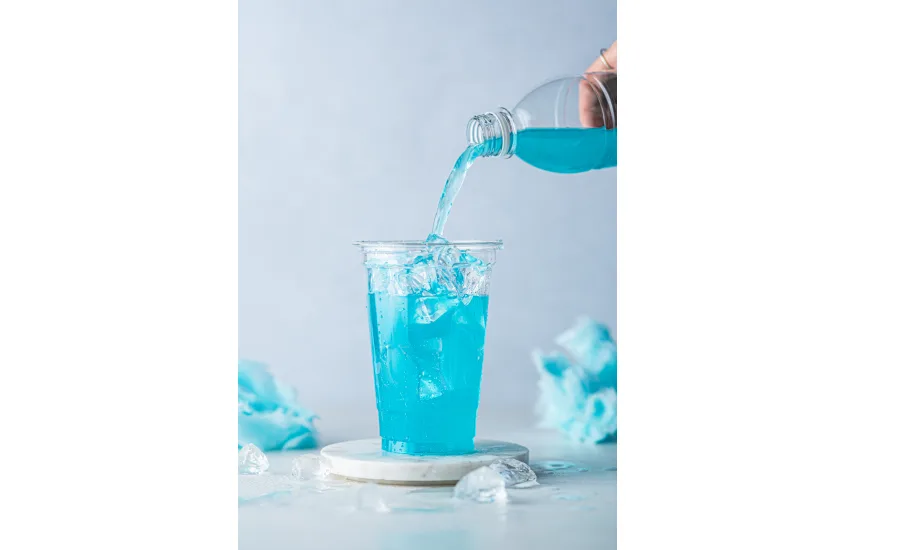
“The rise of natural blues, greens and violets has been an important breakthrough, and it’s also possible to use colorful syrups and boba pearls to create fun and highly shareable experiences,” she notes. “As consumers increasingly discover products through digital channels, color will continue to play an important role in driving trial and creating memorable beverage experiences.”
Sensient’s Jones shares that, looking ahead to 2027 and beyond, she has observed an exciting push for vibrant colors that highlight themes and flavor profiles.
“Retail products are taking a page from highly successful QSR beverages that have brought back the ‘joy of color,’ with color playing more than a visual role,” she describes. “These products involve a multisensory flavor and color approach, often combining a colored beverage with colored foam, colored inclusions like popping boba balls or spooky ‘eyeballs.’ Color shapes how consumers anticipate flavor, select new products to try and perceive product quality.”
Brands are leveraging color to draw attention, emphasize new and exciting flavors and differentiate on a crowded shelf, she states.
Stephen Lauro, president at Anaheim, Calif.-based colorMaker Inc., says that supply chain, technical, nutritional, label declaration and availability challenges continue to place hurdles in the path of beverage formulators and developers.
“While we have more natural colors to choose from than ever before, we also face more technical limitations, international prohibitions and use restrictions than ever before,” he notes. “Consequently, natural color additives and their uses are becoming a specialization not found on the staff of a beverage company. Certainly not on the staff of a start-up beverage company.”
Flavor houses and color companies try to meet this need, Lauro adds.
Meanwhile, Oterra’s Martin expects beverage concepts to become more adventurous, including unexpected combinations where the color or flavors deliberately do not match.
“I think the crazier the beverage can be is maybe where we’re headed, like even pickle is big for beverage … I think it’s those crazy concepts that make the juxtaposition of flavor and color, and making your eyes and your taste buds happy,” Martin says.
Martin adds that the beverage space is more interesting than it was five years ago and remains very active.
“Many startups are launching beverages, although supermarket shelves may be becoming crowded with smaller, less familiar brands,” she notes. “Sales still appear strong, but consumers may be reducing their consumption of highly sugary beverages and shifting toward functional products or beverages positioned as an occasional treat.”
As beverage trends shift, it is apparent that color still is a staple priority in development.
Looking for a reprint of this article?
From high-res PDFs to custom plaques, order your copy today!