High-pressure processing expands beyond juice
HPP helps beverage-makers deliver on clean label, shelf stable expectations
As consumer preferences shift, beverage-makers must consider how these trends will impact operations.
Errol Raghubeer, vice president of food science and microbiology at Chicago-based JBT Marel, says that growing consumer demand for clean-label, minimally processed beverages is accelerating the adoption of high-pressure processing (HPP) across the industry.
“Consumers are seeking and willing to pay a premium for functional beverages like cold-pressed juices, wellness shots and probiotic drinks with recognizable ingredients and no preservatives,” he shares. “HPP enables manufacturers to meet those expectations in freshness, nutrient retention and quality while also prioritizing rigorous food safety standards to meet the USFDA Juice HACCP Rule (2004).”
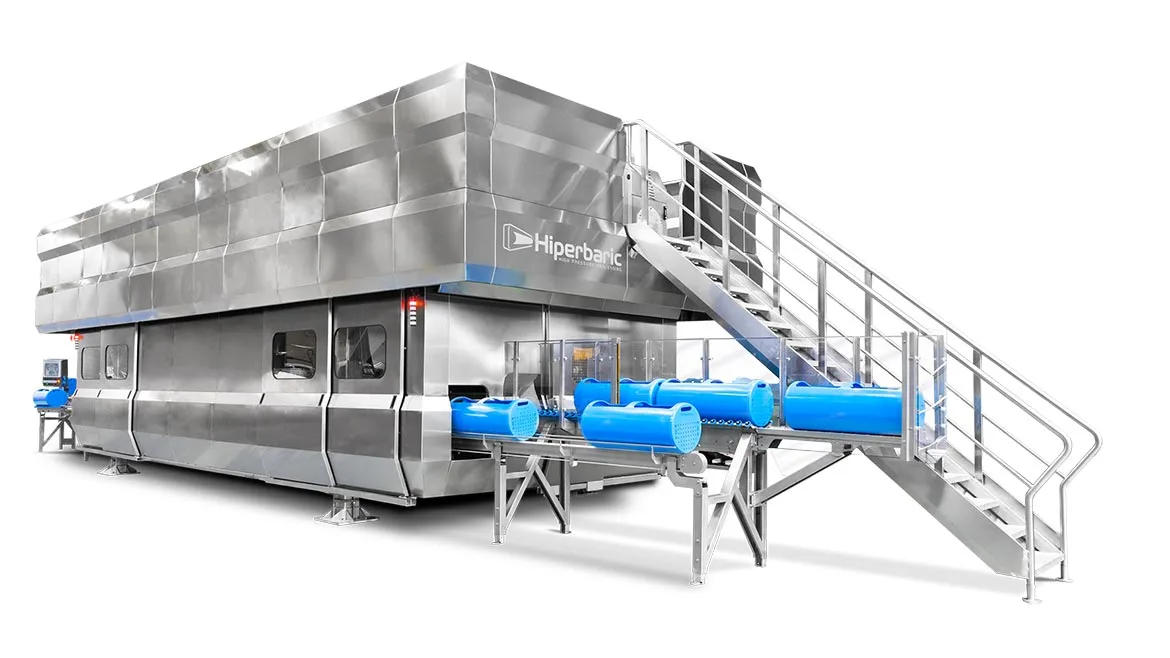
Roberto Peregrina, executive director at Hiperbaric High Pressure Technologies, Miami, has observed a strong demand for beverages that are fresh-tasting, functional and free from preservatives that do not sacrifice safety or shelf life.
“Cold-pressed juices remain the category most closely associated with HPP, but the fastest growth is happening in functional drinks fortified with probiotics, adaptogens, plant proteins and other heat-sensitive ingredients,” he says. “Consumers are also gravitating toward low-sugar, clean label options, which align perfectly with HPP’s ability to deliver minimal processing while maintaining nutrient integrity.”
In parallel, Peregrina notes that sustainability trends are fueling interest in upcycled beverages made from surplus produce.
“HPP makes these products safe while preserving their fresh flavor and color,” he adds.
JBT Marel’s Raghubeer notes that manufacturers in the cold-pressed fruit and vegetable/fruit juice segment are among the best suited for HPP because consumers expect such products to taste extremely fresh, have a vibrant color and possess maximum nutritional value.
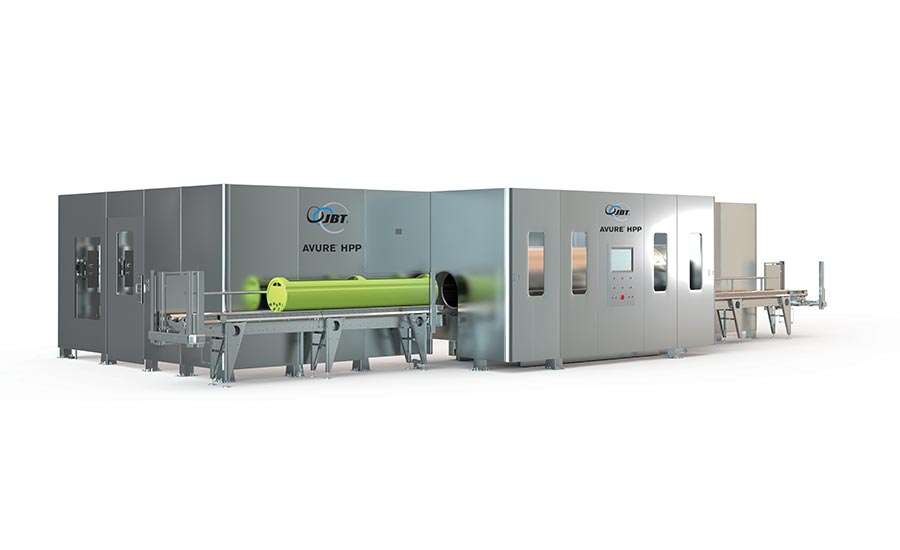 Image courtesy of JBT Marel
Research from JBT Marel’s Avure Technologies showed that the antioxidant and anti-inflammatory bioactive compounds in juices processed by HPP were unaffected by the treatment.
“There was no significant flavor difference between three-month-old HPP-processed apple and orange juices compared to one-week-old fresh juice, resulting in a 99% confidence level,” Raghubeer shares.
Beyond juices, he says that HPP is gaining traction across ready-to-drink (RTD) coffees, kombucha, wellness drinks and plant-based dairy alternatives.
“These products typically contain sensitive ingredients like enzymes, pre/probiotics, vitamins and active botanicals that can be diminished by traditional thermal processing,” Raghubeer notes. “HPP applies pressure instead of extreme heat to maintain the integrity of these functional ingredients while preserving flavor, texture and product quality.”
Hiperbaric’s Peregrina says that the application of HPP technology has brought about “significant transformation” in the beverage manufacturing industry. He points to categories like cold-pressed juices and shots, smoothies, fruit-based waters, functional sport and energy drinks, non-dairy milks and cold brew coffees and teas.
“As the market trends toward functional beverages for their added supplements, vitamins and probiotics, this category is specially positioned to benefit from HPP as it extends shelf life while maintaining the flavor, color and heat-sensitive nutrients such as vitamins and enzymes,” he shares.
Boasting the benefits
The experts note the positives of working with HPP technology.
JBT Marel’s Raghubeer lists strengthened product safety, longer refrigerated shelf life and support for expanded product innovation — particularly for refrigerated beverages where freshness and product quality are key differentiators.
“Compared to traditional thermal sterilization, the technology allows for fresher taste in shorter cycle times and higher throughput thanks to increased container size and basket capacity per cycle,” he says. “HPP is also compatible with recyclable packaging formats, satisfying another key purchasing consideration for customers.”
The company recently worked with Daily Dose Juice’s UK facility to install Avure HPP, Raghubeer shares. The brand went from producing 100,000 bottles to more than 400,00 bottles a week, expanding its volume by more than 100%.
“The manufacturer was also able to move from an eight-hour production shift to a 24-hour continuous production supply,” he adds.
Hiperbaric’s Peregrina says that HPP allows beverage brands to meet consumer demand for fresh, natural products with clean labels, while also delivering the extended shelf-life retailers require.
“Because it’s a post-packaging, non-thermal process, HPP inactivates harmful pathogens (salmonella, E. coli, listeria, vibrio, norovirus, etc.) without heat, preserving flavor, color and delicate nutrients,” he explains. “This translates into a longer selling window, fewer returns and reduced food waste. For brands, it’s also a way to enter new retail channels and export markets that demand both food safety and extended shelf life without relying on preservatives or compromising quality.”
HPP is a competitive advantage, Peregrina adds.
As for the advancements that have been added to HPP technology, Peregrina says a major one is automation.
“Hiperbaric systems can be integrated with robotic loading/unloading and pre-feeder stations, improving throughput while reducing labor costs,” he shares. “We’ve also partnered with packaging innovators to expand dispensing options such as recyclable PET kegs that allow cold-pressed juice to be served on tap in retail or foodservice settings. On the sustainability front, HPP is fully compatible with rPET bottles, enabling beverage brands to align with circular economy goals.”
For processors looking ahead, Peregrina notes that Hiperbaric’s systems are Industry 4.0-ready, with remote monitoring, predictive maintenance and data-driven cycle optimization.
JBT Marel’s Raghubeer states that Avure’s AV-M HPP series features finessed vessel pressurization and decompression, advanced cylinder design for longer life and enhanced automation for loading, unloading and product monitoring.
“Digital monitor and data collection in the HPP process have also been advanced, improving process validation and predictive maintenance,” Raghubeer says. “The equipment has also become more sustainable with energy- and water-saving features, which also lower operating costs.”
For example, he notes that the Avure AV-X Gen 2 machine cuts electricity costs by as much as 50%. Eighty-five percent of the water pumped through the system is reused for the next cycle.
“The solution also offers modular scalability, allowing pump skids to be integrated as production needs grow to increase throughput while maximizing the use of existing equipment,” Raghubeer adds.
Looking ahead, he expects consumer demand for fresh, functional beverages to grow, underscoring the importance of manufacturers’ flexibility and adoption in emerging beverage categories.
“To meet this need, manufacturers will increasingly pair with HPP with innovative formulas, such as probiotics and plant-based ingredients,” Raghubeer says. “To support customer R&D innovation, JBT Marel’s laboratory works with manufacturers to validate product safety and HPP processing parameters across different beverage formulations. Ongoing HPP equipment advancements will continue improving automation, sustainable operations and throughput to help manufacturers operate more efficiently and scale production through faster cycle times.”
“Hiperbaric systems can be integrated with robotic loading/unloading and pre-feeder stations, improving throughput while reducing labor costs.”
– Roberto Peregrina, executive director at Hiperbaric High Pressure Technologies
Similarly, Hiperbaric’s Peregrina expects growth in three main areas: new categories, sustainability integration and expanded accessibility.
“Beyond juices, HPP will make inroads into low-alcohol and non-alcoholic craft beverages, plant-based protein drinks and shelf-stable premium products through hybrid technologies like high pressure thermal process (HPTP),” he says.
HPP “combines the microbial lethality of heat with the speed of high pressure” into one system that has the potential to make low-acid, shelf-stable food safer and tastier, Hiperbaric says.
In terms of sustainability, Peregrina states that incorporating rPET into a beverage-makers product mix can reduce the brand’s carbon footprint, decrease fossil fuel consumption and contribute to the advancement of a circular economy, where all plastic is collected, reprocessed and reused.
“The circular economy is the ultimate vision for long-term sustainability, and with rPET, we can help make this a reality while preserving recyclability and adding value to recycled PET,” he notes.
As for expanded accessibility, Peregrina concludes that more HPP tolling centers and co-packing facilities will make it easier for emerging beverage brands to launch without heavy capital investment, accelerating innovation across the sector.
Looking for a reprint of this article?
From high-res PDFs to custom plaques, order your copy today!