Foodservice combats challenges with innovative offerings
Flavor options, limited-time creations drive consumer interest in competitive market
Considered to be one of the greatest basketball players of all time, Michael Jordan is quoted as saying: “I want to be perceived as a guy who played his best in all facets, not just scoring. A guy who loved challenges.”
On a similar note, the foodservice channel performed admirably in the past year when measured against inflation and sociopolitical factors, experts note.
Ryan Tuttle, senior consultant at Euromonitor International, Chicago, says that overall consumer foodservice sales in the United States grew 4% in value terms in 2025.
“Inflation grew 2.7% in 2025, nearly a point over the U.S. Federal Reserve’s 2% target benchmark,” he explains. “Even more so, consumers continue to balk at high foodservice prices, even if many continue to frequent their favorite establishments. Inflation is certainly affecting the space, with major chains such as McDonald’s making tweaks to their menus to include more value options in order to entice consumers back and combat complaints that they are no longer a good deal.”
Tuttle adds that the prior decade of very low inflation has led many consumers to become accustomed to particular price thresholds that “they now look back on with outrage.”
“[S]ticky price memories mean that Americans do not tolerate higher prices well, with some essentially calling for deflation with little regard to its potentially disastrous impacts,” he says.
“Foodservice operators also had to walk essentially a weekly tightrope as they dealt with this backdrop of inflation while also navigating ever-shifting tariff news and significant pressures on immigrant populations that many rely on both for customers as well as labor,” Tuttle continues. “With all these challenges, it is a testament to innovations and the lack of desire that most Americans have to cook on a nightly basis that foodservice performed as well as it did.”
Varchasvi Singh, senior foodservice analyst at Mintel, Chicago, also notes that the foodservice channel saw positive sales growth over the past year, but says “traffic remained under pressure.”
“The market grew 5.4% in 2025, driven primarily by higher spending per visit rather than an increase in demand,” she says.
Singh adds that restaurants still are feeling the effects of inflation across both commodities and labor.
“Hiring and retaining staff continues to be a challenge, and higher beef prices are driving more menu innovation toward chicken across many segments. At the same time, consumers are also feeling the strain,” Singh says. “They’re paying closer attention to what they get for their money, with 37% saying that dining out no longer feels worth the cost.
“This is creating additional pressure on restaurants to clearly demonstrate their value not just through discounts and promotions, but also through consistent taste, quality, and overall reliability,” she continues. “There’s a growing need for operators to communicate that value more effectively, making a clear case for why dining out is worth it compared to cooking at home.”
Michael Gunther, senior vice president of research and market intelligence at New York-based Consumer Edge, explains that restaurant spending has held up relatively well in the face of several macroeconomic challenges. However, he notes that some limited-service players have leaned into value promotions and meal deals to sustain traffic.
“Hamburger QSR gained share within limited-service in Q4, lifted by a wave of limited-time offers. McDonald’s Grinch Meal drove over a three-point acceleration in trailing four-week year-over-year sales growth in early December,” Gunther says. “Burger King’s SpongeBob Menu added more than six points over the same window. Wendy’s Krabby Patty Kollab showed similar lifts.
“McDonald’s December promotion skewed toward lower-income customers, accelerating two points among those earning under $35,000 and more than two points in the $35-55,000 cohort, while the highest income quintile was flat,” he continues. “But the share gains faded once the promotions rolled off. The Q4 outperformance was real, but it didn’t carry into a structural shift.”
Finding ways to stand out
Alongside inflation, consumer behavior has shifted to where dining out has become more intentional, experts note.
“Consumers are making fewer, more selective visits, putting greater thought into where, when and why they choose to spend,” Mintel’s Singh says. “As a result, expectations for each occasion are higher: they’re looking for experiences that truly feel worthwhile.
“We’re also seeing signs of ‘deal fatigue,’” Singh continues. “While promotions remain important, 52% of consumers say it’s difficult to tell which restaurants actually offer the best value for the price. This is making it harder for deals alone to stand out and reinforcing the need for restaurants to differentiate through clear value, quality, and overall experience.”
“Consumers are dining out more intentionally, paying closer attention to price, value, and overall experience, and choosing occasions that clearly feel worth the dining spend.”
– Varchasvi Singh, senior foodservice analyst at Mintel
Euromonitor’s Tuttle notes that foodservice players are taking advantage of IP partnerships, new and exciting flavor options, and limited time creations to help drive consumers to store and differentiate themselves in a highly competitive market.
“As delivery and online ordering has put a vast range of options at the hands of consumers, finding ways to stand out has become important as a way to avoid fading into the never-ending scrolling that dominates a growing share of consumers’ lives,” he explains. “Consumers look to new offerings and collaborations with nostalgic or popular brands as a way to break from the monotony and treat themselves in a world where many luxuries feel out of reach.”
As for the role beverages play in the channel, Tuttle says that drinks play a critical role in U.S. foodservice performance.
“While historically alcohol has been a big margin padder, non-alcoholic drinks have become a particular boom in recent years as younger generations continue to eschew the drinking habits of their predecessors,” he says. “Dirty sodas, refreshers and Asian influenced beverages are all enjoying significant hype and growth across the space, helped on by a pop cultural obsession with reality TV Latter Day Saints influencers that have brought dirty sodas into the national agenda in the first half of the decade.
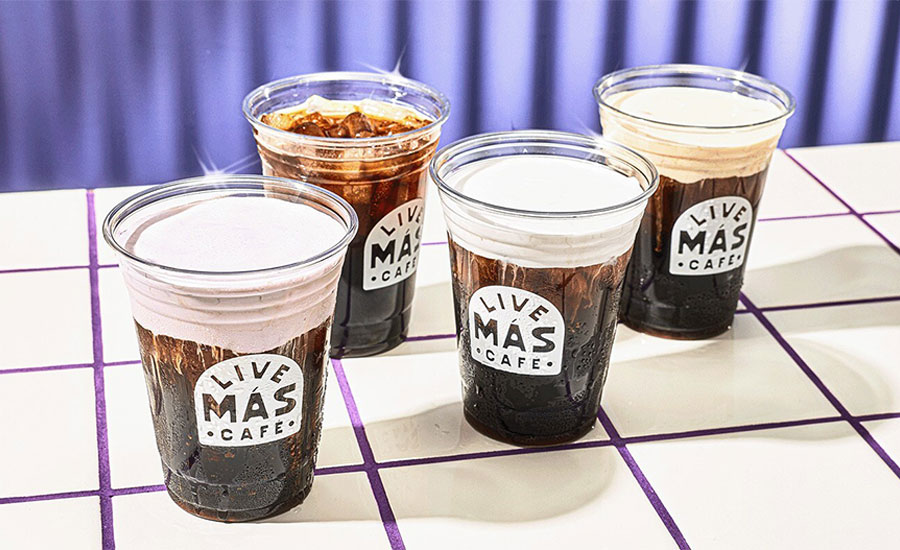 Image courtesy of Taco Bell Corp.
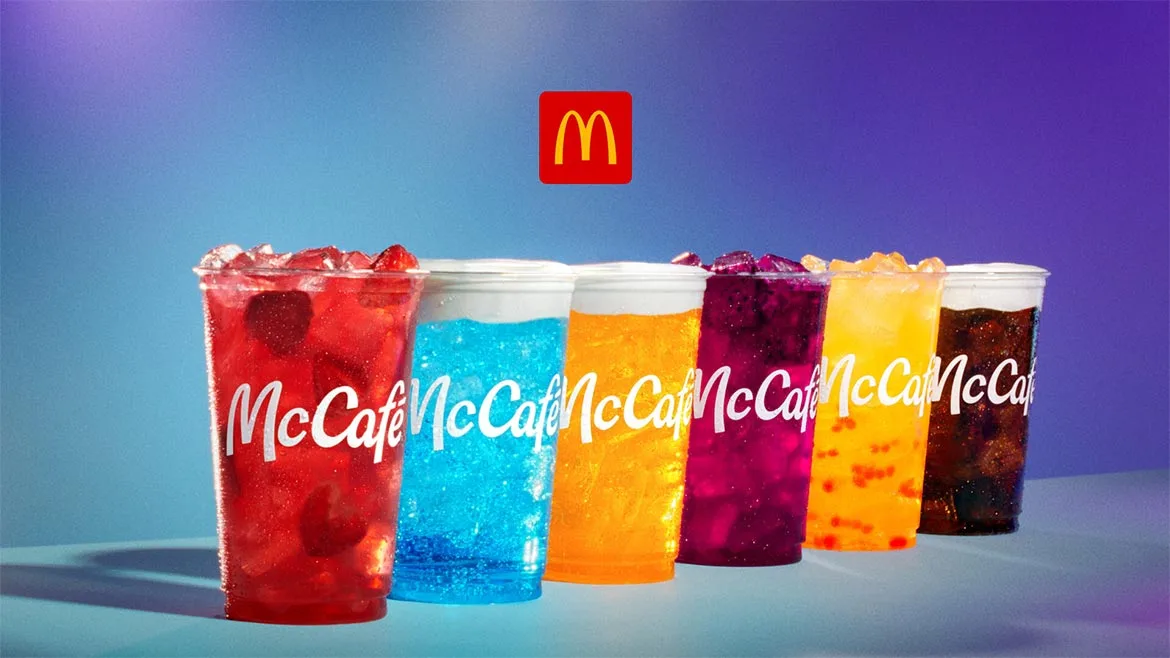
“2026 is a major year for these beverages as McDonald’s joins other early adopters such as Taco Bell and Burger King with new additions to its McCafé line that channel everything from popping boba to cold foam,” Tuttle continues. “While McDonald’s experimented with these in the past with its CosMc’s concept, the company is pushing a nationwide rollout that is looking to grow the potential of the category significantly.”
Consumer Edge’s Gunther considers beverages to be “the next front” when it comes to the channel’s performance.
“McDonald's is rolling out refreshers and crafted sodas nationwide, priced below Starbucks, Dutch Bros., and Sonic,” he notes. “McDonald’s already has 58% customer overlap with Starbucks and 55% with Taco Bell. By income, Dutch Bros., Taco Bell and Sonic align most closely with McDonald's; Starbucks and Dunkin’ skew higher. By age, 7 Brew and Dutch Bros. skew notably younger. The beverage push is aimed directly at the players McDonald’s already shares customers with.”
Euromonitor’s Tuttle notes that the ongoing growth of refreshers, dirty sodas, and mix-ins are helping not only to shift an increasing amount of sales to beverages but also are being used to increase overall foot-traffic to consumer foodservice outlets.
“Taco Bell, for example, has found a winning formula with its beverage offerings and revealed that more than 40% of their specialty beverage sales have come in the form of standalone orders — whether this is consumers taking part in their happier hour offerings, or simply trying new or favorite offerings,” he says. “With food prices rising, consumers looking for a special treat can turn toward beverages, providing outlets with a new tool for foot-traffic.”
Mintel Singh points to the dual role beverages play in foodservice.
“On one hand, they can feel more optional, something consumers are willing to cut back on when budgets are tight. Thirty-one percent of consumers say they would reduce or eliminate beverage purchases if faced with lower income or higher menu prices,” Singh says. “At the same time, beverages are increasingly becoming a standalone reason to visit a restaurant. They’re portable, often quick to purchase, and can range from highly indulgent to more functional options, making them an easy, on-the-go way for consumers to treat themselves or get a quick pick-me-up during the day.”
Singh adds that there’s also strong interest in bundled offerings, with 66% of consumers saying they’re interested in meal deals that pair snacks and beverages.
“This creates an opportunity for operators to drive traffic, especially during off-peak hours, through beverage-led occasions,” she explains.
“Finally, beverages offer a flexible platform for innovation,” Singh continues. “They allow restaurants to introduce new flavors and limited-time offerings with minimal operational disruption, while keeping core menu items consistent, making them a low-risk way to add excitement and variety.”
As for how the channel is expected to perform in the coming year, Singh notes that Mintel forecasts growth of 3.1% for the foodservice channel in 2026. However, she explains that while the outlook is positive, consumers remain price sensitive and increasingly fatigued by rising menu prices.
“Traffic is holding up for some operators, but consumers are being more selective and favoring brands that clearly communicate the value and experience they offer with each visit,” Singh says. “Value menus, bundles, and snack combos will continue to play an important role in maintaining relevance.”
Euromonitor’s Tuttle notes that current forecasts call for U.S. consumer foodservice to grow 4.7% in current value terms in 2026, however; he says the year is likely to be particularly challenging.
“Energy price shocks have been a major story of the first half of 2026, with fuel costs rising considerably,” he explains. “This will impact both bottom lines — as operators must absorb a number of higher input prices — and also consumer demand. Consumers are paying significantly higher prices at the pump, and this is likely to dig into their food budgets significantly, particularly for lower income consumers.
“While a variety of new offerings and releases alongside efforts to keep national prices on value menus low at chained foodservice are likely to alleviate some of this pressure, the economy is an enormous story in a major political year that will continue to put pressure on the market,” Tuttle concludes.
Looking for a reprint of this article?
From high-res PDFs to custom plaques, order your copy today!