Storytelling through glass packaging
Beverage brands opt for glass packaging due to sustainability, premium appearance
With smartphones, tablets and other technologies allowing for easy access to information and education, consumers are becoming increasingly aware of the products they spend their money on and the impact they have. The beverage industry is no exception to this occurrence.
Jose Diego-Arozamena, founder and CEO of Arglass, Valdosta, Ga., describes the demand for glass packaging within the beverage market as strengthening as consumers become more aware of health considerations associated with plastics and aluminum can liners.
“Glass is increasingly viewed as a safe, inert packaging option that preserves product integrity,” he says. “At the same time, premiumization across beverage categories continues to support growth in glass. At Arglass, we’re seeing this demand translate into a need for more agile, responsive manufacturing, which our highly flexible platform is designed to deliver.”
Scott DeFife, president of Glass Packaging Institute (GPI), Arlington, Va., shares that demand for glass bottles and jars has continued to be steady in 2026.
“Across numerous beverage categories, domestically produced bottle shipments and imports of empty glass bottles destined for North American markets have demonstrated a continued brand and consumer demand,” he says.
Scott Cioe, glass program director at TricorBraun, St. Louis, notes that glass packaging is experiencing steady, sustainability-driven growth worldwide, driven by shifting consumer preferences, regulatory support and ongoing technological innovation.
“Premium craft spirits, ready-to-drink (RTD) cocktails, functional tonics and non-alcoholic beverage continue to drive demand, as brands prioritize packaging formats that reinforce high-quality positioning and shelf presence,” he says. “At the same time, many consumers are seeking more eco-friendly packaging and will pay a premium for glass, especially in categories where quality and environmental impact matter most.”
Advances in lightweight bottle design, greater use of recycled content and improvements in production efficiency also are helping glass remain competitive in cost and logistics, Cioe states.
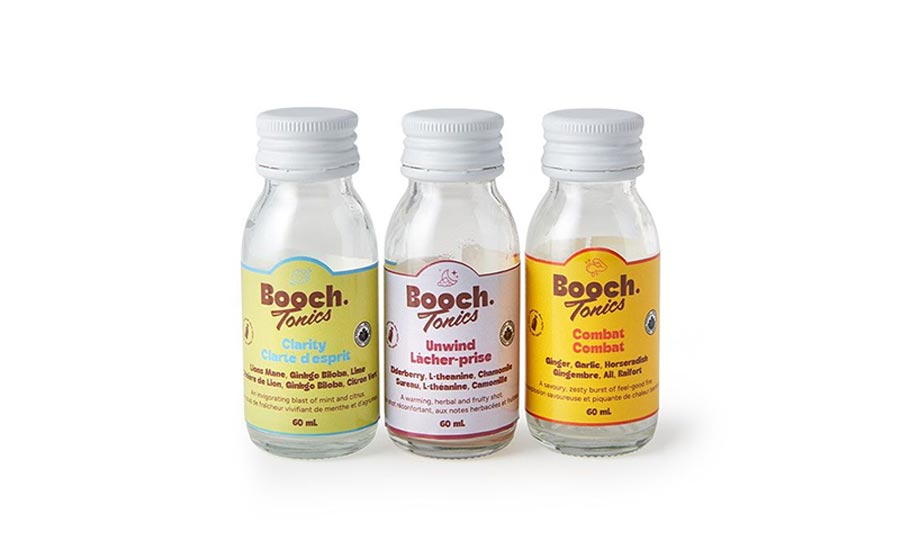 TricorBraun recently partnered with Booch Tonics to introduce a refreshed look in ROPP-finish glass bottles.
Image courtesy of TricorBraun/Booch Tonics
Experts note that sustainability is impacting the demand for glass packaging.
“Sustainability is a key driver of demand,” Arglass’ Diego-Arozamena says. “Glass is infinitely recyclable and aligns well with both consumer expectations and brand sustainability goals. At Arglass, we’re advancing this further through increased recycled content and our proprietary Arglass Biogenic batch formula, which incorporates a carbon-negative component of biogenic origin.”
Combined with the company’s energy-efficient operations and ability to run smaller, more efficient production cycles, Diego-Arozamena states that this helps reduce overall environmental impact while maintaining scalability.
GPI’s DeFife notes that consumers trust glass for its sustainable attributes, as many view sustainability through a lens that relates to their own environmental impact.
“Consumers trust that glass is recyclable, inert and non-toxic and the packaging does not have added chemicals,” he says. “Most state packaging and sustainability laws create incentives that brands could take advantage of by converting to glass.”
DeFife adds that sustainability efforts within state legislatures across the country have picked up over the past several years.
“Specific to packaging, the association remains focused on extended producer responsibility (EPR) programs, which will require brands selling into the seven states with these laws on the books to make annual payments to support municipal recycling programs and infrastructure,” DeFife explains. “GPI is working to ensure these programs are effective in recovering glass and ensuring that they are fair in fee structure for brands packaging their beverages in glass bottles.”
TricorBraun’s Cioe states that sustainability has become a non-negotiable factor in packaging decisions, and companies are focusing on recyclability and circular economy goals.
“Glass plays a key role in these efforts because of its ability to be recycled multiple times without loss of quality, supporting long-term packaging commitments and aligning with evolving regulatory and retailer expectations,” he says. “Advances in lightweight manufacturing and increased use of recycled materials help lower emissions from a production and transportation standpoint.”
“The weight, cool touch and physical presence of glass makes a beverage feel intentional and premium, helping it stand out in crowded shelves without relying on bold graphics or labels.”
– Samantha Juna, insights and enablement director at TricorBraun
Working with glass
Glass packaging is associated with different benefits and challenges.
Arglass’ Diego-Arozamena points to “clear benefits” in terms of product safety, sustainability and premium shelf appeal.
“Historically, however, it required large production volumes and significant upfront investment,” he notes. “Arglass is changing that dynamic. Our next-generation manufacturing model enables smaller product runs, faster time-to-market and lower tooling and inventory requirements — making glass a more accessible and flexible option for beverage brands.”
GPI’s DeFife feels that many benefits of glass packaging are driven by consumer attitudes surrounding glass.
“Consumers continue to express a desire for products that are sustainable, recyclable and friendly to the environment,” he says.
To this point, DeFife shares that respondents in a 2024 survey conducted by EcoFocus reported the following glass preference points:
- 92% of consumers said they like companies that offer glass packaging because of its lower environmental impact
- 90% of consumers choose to buy wine in glass bottles
- 73% of consumers view glass food and beverage packaging as good for the environment — this is a 20-point difference over flexible pouch (bag-in-box)
- About 3 in 4 consumers wish more companies offered their food and beverage products in glass packaging
TricorBraun’s Cioe says that glass is infinitely recyclable without losing purity or quality, and using recycled glass reduces energy consumption during production, because it melts at a lower temperature than raw materials, which helps to lower carbon emissions.
“Glass containers are safe for reuse, free of harmful chemicals and non-porous, which preserves the flavor and integrity of the beverage,” he notes. “Additionally, the premium weight of glass conveys the value to consumers, helping products stand out on crowded shelves. However, compared with plastic, glass has a more limited manufacturing base, especially in North America.”
Certain bottle types might need to be sourced overseas, Cioe shares, which can lead to longer supply chain timelines and potential disruptions, requiring careful planning and logistics management.
“Despite these challenges, many brands find that the sustainability and premium positioning of glass outweigh these considerations,” he says.
Pass me a glass
As beverage-makers realize the benefits that glass can deliver for a brand, experts note that various beverage categories are embracing glass packaging.
“We’re seeing strong adoption across soft drinks, functional beverages, natural and organic juices, dairy and plant-based products, teas, kombucha and other emerging beverage segments,” Arglass’ Diego-Arozamena shares. “These categories tend to prioritize health, sustainability and differentiation — areas where glass performs particularly well.”
GPI’s DeFife says that segments within both the alcohol and non-alcohol beverage categories have shown a continued interest in glass bottles for their brands.
“Within the spirits sector, 2025 saw an increase of 4.8% in domestic shipments of bottles, equivalent to just over 58 million additional bottles,” he states. “In the non-alcoholic beverage category, 1.4 billion bottles were shipped to domestic customer markets in 2025. There shipments were supported by the broader glass container import market, which saw an increase of 9.4 additional 12-ounce size bottles in support of these beverage customers.”
DeFife adds that bottles support a range of functional and organic-focused beverages, including kombuchas, teas and natural sodas.
TricorBraun’s Juna notes that craft spirits, RTD cocktails, functional tonics and elevated non-alcoholic beverages are all embracing glass packaging.
“These products often come at a premium price point, and glass helps make that feel justified,” she says. “Its weight, clarity and customizable shapes give it a sense of high quality that plastic or cans can’t match.”
For example, she notes that Booch Tonics has become a standout in the functional beverage space. The brand recently introduced a refreshed look with a high-quality ROPP-finish glass bottle, which Juna says strengthened the brand’s shelf presence by aligning its packaging with the premium quality of its ingredients.
Looking ahead, Arglass’ Diego-Arozamena says the future of glass packaging is centered on flexibility and accessibility.
“Faster production cycles, lower minimum order quantities and reduced capital requirements are removing traditional barriers,” he notes. “At Arglass, we’re focused on enabling brands of all sizes to bring differentiated products to market in custom glass packaging — quickly, efficiently and sustainably.”
GPI’s DeFife shares that U.S. glass container manufacturing companies continue to prioritize manufacturing efficiencies at the plant level.
“This is allowing for quicker bottle turnaround for brands, as they continue to distinguish their package and design from the competition,” he says. “As brands seek out sustainable packaging options across their offerings, glass companies also continue their work to increase post-consumer recycled glass content levels, right-size bottle weight for more efficient transportation, [and] continue expansion into the non-alcoholic beverage markets.”
Companies are making continuous investments in recycling infrastructure, TricorBraun’s Cioe states, not just to meet sustainability goals, but to create a truly circular system that aligns with consumer expectations.
“At the same time, energy-efficient furnace technologies are transforming production, reducing emissions and operating costs and making glass more competitive than ever,” he says. “Innovative design will also continue to take center stage, with premium, lightweight shapes and textures that will enhance brand differentiation with consumer appeal.”
Recently, TricorBraun’s VETROelite partnered with Poetica Distillery to create a Renaissance-inspired glass bottle designed like a book, complete with a spine label and wax seal.
“The bottle earned the 2026 Bernard M. Seid ‘Best of Show’ Award from the National Association of Container Distributors (NACD), underscoring how storytelling through glass can elevate a brand,” Cioe concludes.
Although beverage trends might come and go, glass continues to be a top choice for brands prioritizing sustainable, stand-out packaging.
Looking for a reprint of this article?
From high-res PDFs to custom plaques, order your copy today!