Tequila, mezcal segments remain hot among consumers
Market endures premiumization trends, among other obstacles
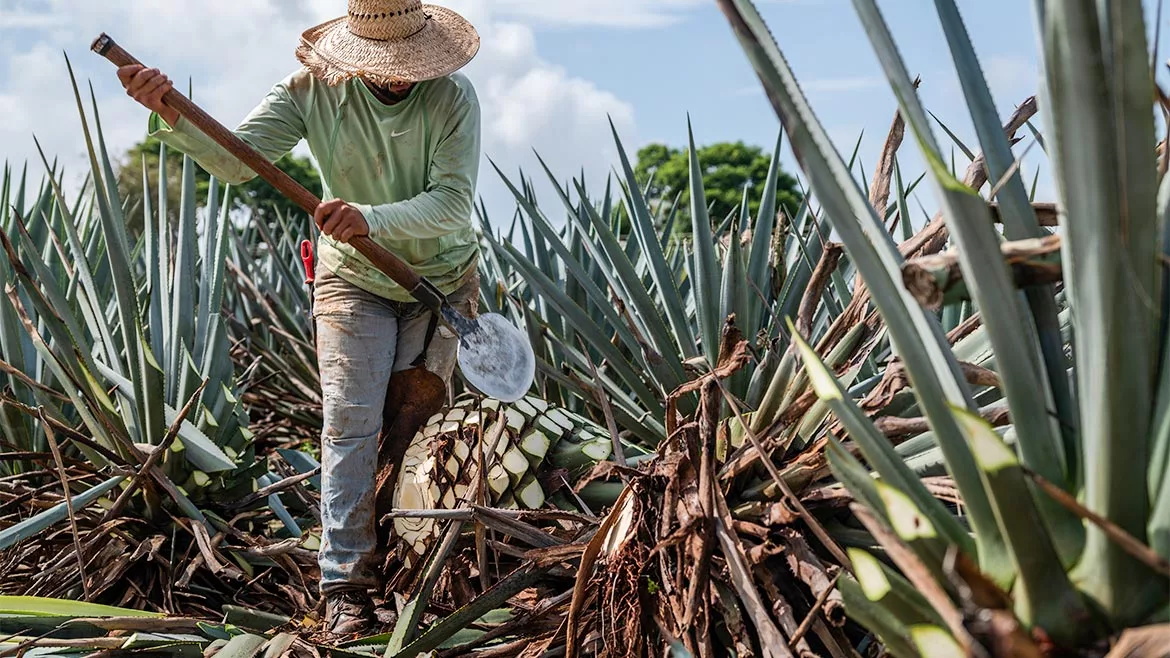
In the song “Tequila,” country duo Dan + Shay sing about how drinking tequila brings back memories of a past love. “But when I taste tequila / Baby, I still see ya / Cuttin’ up the floor in a sorority T-shirt,” they sing in the chorus. While tequila might hold certain memories for consumers, experts share how the overall tequila and mezcal markets are being shaped by premiumization trends in the United States.
Shawn Miller, co-founder of PKGD Group, Holland, Mich., says the company defines premium as world-class.
“Each product must be a true representation of what that spirit is meant to be,” Miller shares. “Premiumization is maturing and splitting. Consumers still trade up, but they are far more selective.”
Consumers expect value, transparency and accountability, he notes.
“Increasingly, the ultimate test is who owns the brand,” Miller says. “As the category matures, producer-owned brands with real production integrity are outperforming brands built primarily on marketing narratives.”
Piercarlo Bianciardi, co-founder of Mezcal Trascendente, Mexico City, shares that premiumization is “very real,” but it’s not all about price.
“People are paying more attention to what they’re drinking,” he notes. “They care about how and where it’s made, if it’s additive-free, if it’s actually artisanal or just marketed that way. In tequila especially, you see people moving toward the few cleaner, better-made brands in order to be safe and stay away from non-guaranteed brands.”
For mezcal, Bianciardi says it is already mostly “artisanal,” but from what he has noticed, consumers and buyers are asking deeper questions compared with tequila, such as about agave and process in detail.
“When I speak to people in the U.S., I am usually pretty impressed by the amount of time they spent studying the mezcal and tequila world … the overall knowledge is a lot higher than here in Mexico,” he shares.
Jeffery Stockton, Southeast market manager at SPIRIBAM, an importer of Mezcal Trascendente, feels that premiumization trends have done both good and bad to the market.
“Premiumization in tequila brought more interest and money into the category and helped smaller brands gain notoriety that could not compete on price than some larger names and their less-than-savory production methods,” he says. “However, it has also caused a ‘gold rush’ mentality to the category, creating a boon of heavily marketed and celebrity-endorsed brands with a high price point. Mezcal continues to be the nerdy cousin, and understanding the category requires more exploring and learning, therefore, it is slower to grow.”
The increase in multi-cultural consumers is impacting beverage segments like tequila and mezcal as well.
PKGD’s Miller states that agave spirits are no longer confined to any cultural lane.
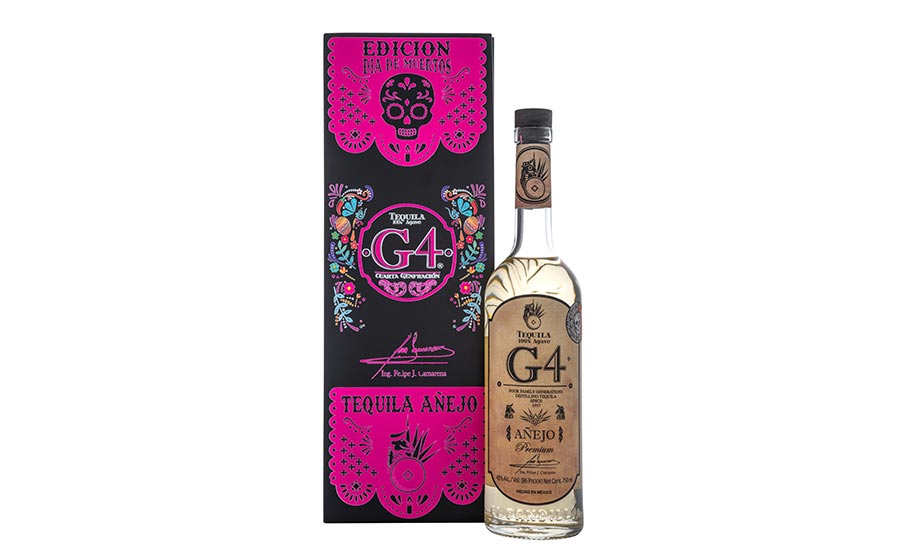
El Pandillo Distillery’s G4 Tequila is made with a combination of agave and a blend of rainwater and spring water, fermented with ancestral yeast.
Image courtesy of PKGD Group“You will find premium tequila paired with steak or sushi and sipped neat in fine dining programs nationwide,” he says. “The audience reflects the city where it is sold.”
Markets such as California are farther down the path of authentic and additive-free agave spirits, Miller notes, while others are earlier but catching up.
“Mezcal remains in discovery,” he says. “It is still split between smoky cocktail ingredients and high-end sipping spirit, with little middle ground.”
Mezcal Trascendente’s Bianciardi states that agave has gone global — it’s not just about the traditional agave drinkers anymore.
“That means more demand worldwide, but also more diverse consumer profiles,” he notes. “Brands can’t just think about the ‘old school agave drinkers.’ You have to consider new audiences, new occasions and different ways people will be introduced to your products.”
SPIRIBAM’s Stockton explains that the growth of multi-cultural consumers brings more transparency and also interest into the “why” of brands instead of just the shiny package.
“Deeper questions and a skepticism of marketing tactics has helped grow brands more organically and spread their voice via social media,” he notes.
Performance review
As tequila and mezcal segments mature, experts note that it’s reflected in their performance in the past year.
“Tequila maturity is driving a hype cycle correction,” PKGD’s Miller says. “Authentic brands are gaining share from heavily marketed and celebrity-backed brands. G4 Reposado grew 252% year-over-year (YoY), and G4 Rose to No. 12 as a tequila brand in Nielsen rankings.”
Meanwhile, he shares that Palomo Mezcal grew 140% in what has otherwise been a down retail scan environment.
“Mezcal softness at retail is real,” Miller says. “Cocktail culture sustains visibility, but the category must move beyond smoke to unlock broader growth.”
Mezcal Trascendente’s Bianciardi notes that the tequila segment is still strong, especially in the craft and premium side.
“Growth isn’t as strong as it was, but all the premium/craft brands seemed to have performed very well in 2025,” he says. “Mezcal is growing, too, but in a different way. It’s pushing more into the bar menus and becoming a must-have for every cocktail bar or restaurant.”
That said, Bianciardi adds that a lot of brands rushed into the category without real differentiation ― but the market is crowded now.
“The ones without substance or strong finance are going to struggle,” he states.
SPIRIBAM’s Stockton says quality and utilitarian buys seem to be consistent drivers in retail and on-premise.
Certain trends have contributed to the performance of tequila and mezcal.
PKGD’s Miller states that value sensitivity is real.
“Consumers want quality, but they question what they are paying for,” he says. “What began as an additive-free conversation has evolved into scrutiny of authenticity, environmental impact, social responsibility and ownership integrity.”
In tequila, many hobbyist-contract brands entered the market in recent years, Miller notes.
“A label and a marketing budget are not a durable strategy,” he shares. “Brands without real production roots or sustained consumer demand are feeling pressure.”
The market is rewarding transparency and penalizing superficiality, Miller adds.
Mezcal Trascendente’s Bianciardi points to the following trends: bartenders using agave heavily, consumers looking for more holistic drinking options and consumers wanting less additives and more transparency.
SPIRIBAM’s Stockton says that brands with purpose and transparency, as well as packaging and quality that commensurate with the dollar value, are contributing to the category’s performance.
The experts note whether tequila and mezcal are popping up in more beverage and cocktail menus for on-premise channels.
“Tequila remains a backbone of cocktail programs and is increasingly sipped neat,” PKGD’s Miller says. “Mezcal represents roughly 2% of tequila’s sales volume. It overachieves in cocktails but still leans heavily on smoke espadín from Oaxaca.”
For long-term growth, he notes that it must broaden both flavor perception and occasion.
“Bartenders are leading the authenticity movement,” Miller states. “High-end programs are using quality agave spirits in creative ways daily. It is one of the most dynamic areas in premium cocktails.”
“As the category matures, producer-owned brands with real production integrity are outperforming brands built primarily on marketing narratives.”
– Shawn Miller, co-founder at PKGD Group
However, he says that, sometimes, a good shot of tequila with a Mexican beer still wins.
Mezcal Trascendente’s Bianciardi says that tequila and mezcal are “definitely” popping up in more beverage and cocktail menus.
“Tequila is already an important part of the menu,” he notes. “Mezcal is no longer seen as the smoky cousin of tequila, but it’s seen as a spirit that bartenders can have fun with and experiment on a large variety of cocktails. Bartenders care about what’s inside the bottle.”
Echoing similar sentiments, SPIRIBAM’s Stockton says tequila remains to be the best-selling category of drinks on a cocktail menu.
“Put tequila as the first word and it’ll sell,” he states. “Mezcal can be close in popularity, but the drink needs to be widely approachable and not challenging to the average person. Mezcal still has a stigma to many drinkers (even tequila drinkers), and this creates challenges with menus.”
Some look for mezcal to achieve a very specific flavor profile, while the diversity of the category causes confusion among staff, Stockton explains.
Predicting future performance
Looking ahead, the future of the U.S. tequila and mezcal markets is dependent on several factors, including tariffs.
“Tariffs would increase prices and harm sales,” PKGD’s Miller states. “Alcohol is discretionary. If pricing rises materially, consumers have many domestic alternatives.”
Once a consumer exits the category due to price, there is no guarantee that they return, he notes.
“Uncertainty alone slows planning and investment, particularly for smaller producer-owned brands,” Miller adds.
SPIRIBAM’s Stockton states that tariffs will just hurt smaller and more heritage brands, while big pocket portfolios can scoop up the business and leverage it with their programming support and distributor support.
PKGD’s Miller anticipates the tequila category will remain steady, but more selective.
“Smaller, authentic brands will continue taking share from larger brands reliant on additives or pure marketing scale,” he says. “Weak or overpriced brands without strong pull-through demand will fail in meaningful numbers. The hobbyist phase of craft tequila will not hold up under tighter economic scrutiny.”
Mezcal must expand into more everyday occasions, Miller states, because the current bifurcation is “not sustainable.”
“From the PKGD portfolio perspective, we are strategically bullish,” he says. “Consumers who began with additive-free awareness are now seeking deeper transparency. That ultimately leads to understanding who owns the brand and how it is truly made.”
Producer-owned brands built on real process and long-term stewardship are positioned to win, Miller expresses.
Meanwhile, Mezcal Trascendente’s Bianciardi feels that the tequila and mezcal markets will perform well, but it won’t be as easy to grow as before. He suspects that strong craft brands will continue to win.
“Bigger commercial brands might feel more pressure from the consumer shift,” he says. “Some brands will fall off because they can’t keep investing. Others will come in with strong differentiation and get the attention of consumers or buyers.”
Although the market is saturated, SPIRIBAM’s Stockton believes that tequila and mezcal will still perform well.
“Be in the $20-50 [price range] for best performance and have a purpose,” he suggests.
Although the market has endured its share of ups and downs, the tequila and mezcal segments remain strong contenders for top spots in the mind of consumers.
Looking for a reprint of this article?
From high-res PDFs to custom plaques, order your copy today!