The pros of processing automation
Automation aids beverage-makers in meeting market trends
The phrase “trust the process” often is used to remind someone to be patient for results that are not yet met or visible. In the beverage industry, many beverage-makers are trusting their operating and formulating processes to automation.
Santino Zingales, director of sales at Admix Inc., Londonderry, N.H., says that automation has improved beverage process efficiency by minimizing formulation, filling and labeling errors that would have resulted in costly downtime in the past and increasing production speed.
Guido Sorgenfrei, senior director of automation liquid technologies at GEA, Columbia, Md., shares that automation has long been essential in beverage processing, but that its impact today is even more visible because producers run more SKUs, smaller batches and tighter quality windows.
“Modern process automation enables consistent recipe execution, repeatable quality and safer operation while improving transparency through integration, connectivity and real-time data,” Sorgenfrei says. “In practice, it supports faster changeovers, better traceability and tighter control of utilities like energy and water across the process.”
Fortification trends also are impacting mixing and blending equipment, experts note.
“Mixing equipment has had to evolve and develop greater levels of shear and intensity to mix in difficult powders like protein and vitamins without changing mouthfeel or quality of the product,” Admix’s Zingales says.
Morten Hansen, director of mixing and membrane filtration technologies at GEA, states that fortified and functional beverages push mixing and blending toward higher versatility and higher process precision.
“Equipment increasingly needs to handle complex formulations (e.g., higher solids, proteins, sensitive ingredients), achieve consistent dispersion and homogeneity and still allow quick and hygienic product changes,” Hansen explains. “The underlying driver is flexibility: the same assets must reliably run both standard beverages and more complex functional formulations without compromising quality or throughput.”
Alternative sweetener trends have been affecting processing automation as well.
“The rapid shift from sucrose to stevia/monk fruit blends, allulose and sugar alcohols is forcing plants to upgrade dosing, inline analytics, recipe/MES control and even line mechanics,” Admix’s Zingales explains. “Different sweeteners behave very differently under heat, shear and storage — and automation is how manufacturers keep quality and throughput stable while they reformulate at speed.”
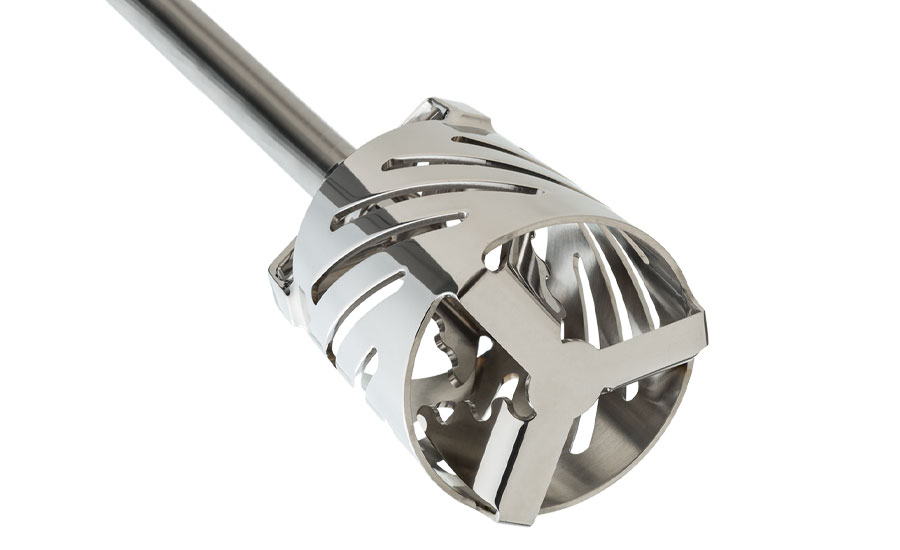
Admix highlights that its Vacuum Mixing System and Rotosolver mixers are useful in adding colorants to formulations.
Image courtesy of Admix Inc.GEA’s Sorgenfrei notes that alternative sweeteners do not typically require a new automation “philosophy,” because modern control platforms can manage any recipe.
“The real impact is on process complexity: more recipe variants, tighter dosing accuracy, different dissolution/dispersion behavior and potentially more frequent changeovers and segregation requirements,” Sorgenfrei says. “That raises the bar for recipe governance, traceability and robust, repeatable cleaning and changeover automation — so producers can respond to low/no-sugar innovation while protecting taste consistency and food safety.”
Beyond the above trends, other beverage trends are influencing processing equipment.
“New regulations on the use of organic colorants have caused challenges for beverages manufacturers,” Admix’s Zingales says. “Admix developed several new approaches to these challenges, including utilizing our Vacuum Mixing System (VMS) and patented Rotosolver mixers to induct and shear in difficult pigments.”
Meanwhile, Madadline Besse, director of strategy and business development nutrition, plant engineering division at GEA, shares that two macro demands dominate: flexibility and resource efficiency.
“Producers want adaptable lines that support smaller batches, faster changeovers and greater product variety — including hybrid concepts that allow them to respond quickly to shifting demand,” she states. “At the same time, energy, water and CO2 considerations increasingly shape technology choices, which is why monitoring, analytics and optimization of process KPIs are becoming more relevant in day-to-day operations.”
Prior to investing in mixing and blending equipment, there are certain factors beverage-makers must take into account.
GEA’s Hansen urges producers to start with a product roadmap and determine if the system can handle both current core products and future formulations with minimal rework.
Further, Hansen says to evaluate the following: flexibility and changeover time, hygienic design and cleanability, dosing accuracy and repeatability, integration into upstream/downstream process steps and the control concept, and the total cost of ownership (energy, water, product losses and required operator effort).
“A scalable automation approach can also protect long-term maintainability and upgrades,” Hansen adds.
Admix’s Zingales suggests that beverage-makers make sure their supplier is fully equipped to handle the challenges of testing for proof of concept, product development and performance guarantees.
“Look for companies positioning themselves to be partners and provide support in the future,” he says.
The experts share their thoughts on the future of processing automation.
“Admix has introduced a fully Automated Fastfeed powder induction system as well as a fully automated vacuum powder induction system with the VMS, and we will continue to develop mixing technology to support more efficient production in the beverage market,” Admix’s Zingales states.
GEA’s Sorgenfrei says the direction is clear: from automated equipment to more intelligent, connected outcome-focused operations.
“Higher connectivity and computing power enables better integration into SCADA and line controls, faster data collection and analysis and a foundation for AI-supported (artificial intelligence) optimization,” Sorgenfrei notes. “In parallel, standardization and modularity — such as manufacturer-independent communication and ‘plug and produce’ concepts — help plants adapt faster to changing market requirements.”
Long-term trajectory is toward more self-learning systems and more performance-assured services built on reliable data and secure connectivity, Sorgenfrei concludes.
Beverage-makers also are exploring the benefits of high-pressure processing solutions.
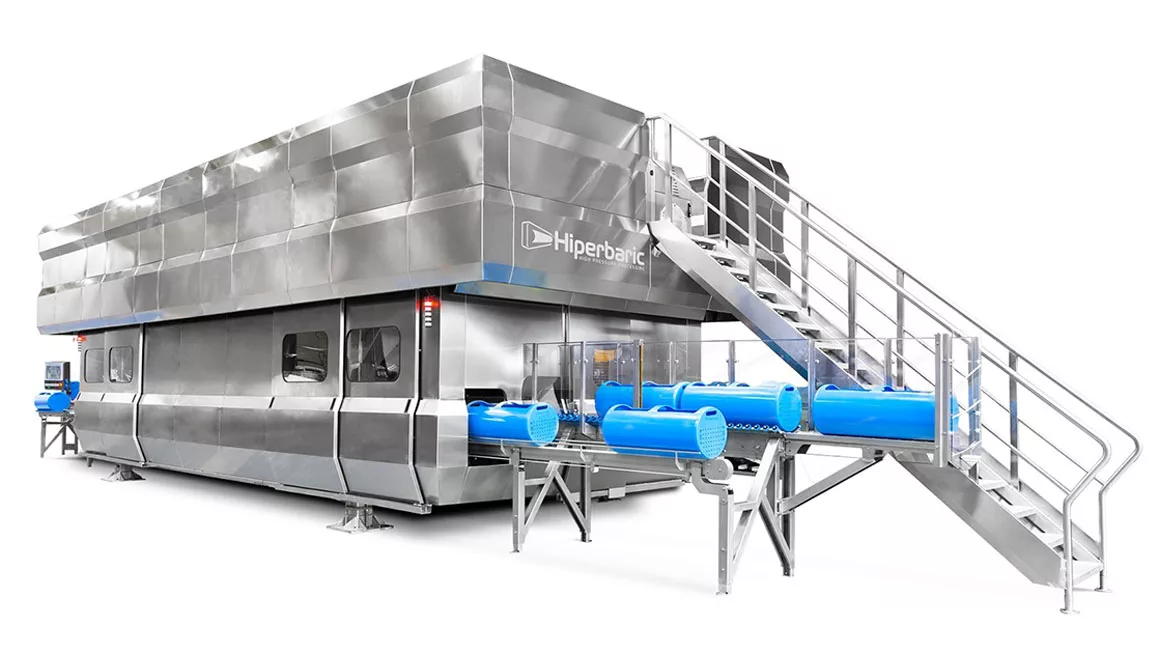
Last year, HPP equipment provider Hiperbaric announced record growth with 30 HPP machine installations planned for 2025. The milestone year included new tolling partnerships, which expanded HPP’s accessibility.
At PACK EXPO Las Vegas 2025, Hiperbaric partnered with Bay Center Foods, a subsidiary of Chick-fil-A, for the presentation “Automation Solutions for HPP: Success Story by Bay Center Foods.” The presentation showcased how HPP automation increased throughput, improves traceability and enhances overall equipment effectiveness at the world’s most automated citrus facility, Hiperbaric says.
“We value our partnership with Hiperbaric and this relationship has enabled us to create the world’s most automated HPP lemon processing facility,” said Kurt Cahill, executive director of manufacturing innovation and Chick-fil-A, in a statement. “The integration of HPP technology with an advanced automation systems platform has transformed our operations, allowing us to significantly reduce unplanned downtown while improving food safety, product quality and operational efficiency. This collaboration demonstrates how HPP technology helped us scale to meet the demands of our Chick-fil-A restaurants.”
Because HPP technology inactivates foodborne pathogens and spoilage microorganisms without heat, it helps to maintain fresh taste, texture and nutritional quality while also ensuring food safety and extending shelf life, the company says.
As consumers seek beverages that deliver on a host of nutrition needs, processing equipment suppliers are helping beverage manufacturers ensure that quality.
Looking for a reprint of this article?
From high-res PDFs to custom plaques, order your copy today!