THC beverage brands navigate unknown waters
Brands look to work with lawmakers to create clear regulations
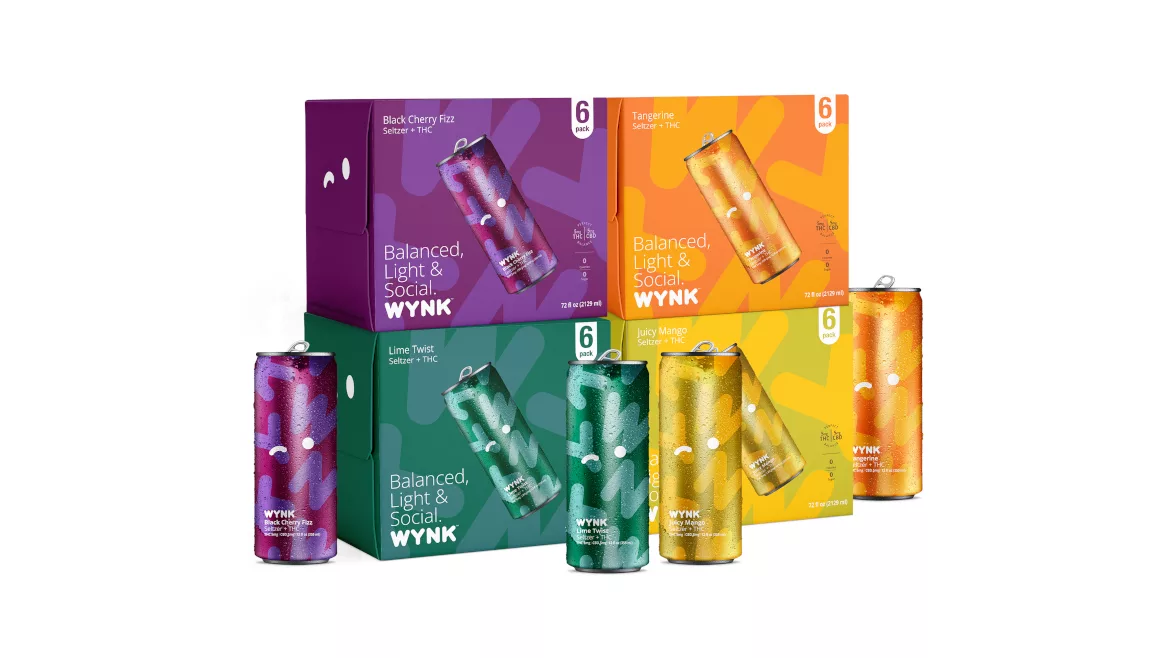
(Image courtesy of Wynk)
Although the THC beverage market is growing, the category is not without its challenges, especially in the area of regulation, experts note.
“Much of the hemp-derived marketplace is unregulated, which leaves consumers vulnerable to potentially unsafe products that contain unreasonable dosage levels, and are not tested for pesticides and other harmful chemicals,” says Boris Jordan, chairman and CEO of Curaleaf, Stamford, Conn.
“Consumer feedback has shown that there is a valid business growth opportunity, and clearly safer, more reliable and quality products are needed. We stand out in a noisy marketplace by instilling industry-leading safety protocols as well as strict manufacturing and testing standards,” Jordan continues. “We also have the experience and resources to build wide distribution networks and make it discreet and convenient for adults to access our products online and in brick-and-mortar retail.”
Will Spartin, chief operating officer at Miami-based Triple High Seltzer, says that, at a state and federal level, ever-changing legislation and regulations pose significant challenges to the market.
“Consistently and regularly, we work with lawmakers to create clear regulations so that people can safely enjoy our products. Unlike most industries, in the hemp beverage space, at both a state and federal level, we are strongly asking for regulation,” he explains. “Consider that we are one of the very few industries that are coming to legislators and ‘begging’ for regulation. We have no interest in a wild-west approach and want to help guarantee responsible and transparent business practices for 21+ consumers.”
Angus Rittenburg, co-founder and CEO of Wynk, Pennsburg, Penn., also notes how the regulatory landscape is posing major challenges in the U.S. market.
“It’s a complex patchwork of state-by-state laws that often vary significantly, making national expansion and product standardization a real challenge,” he says. “At Wynk, we’ve adapted by staying nimble, building our packaging, formulations, production, and distribution to be flexible across regulatory environments. We’re also deeply involved in advocacy and industry efforts to help shape responsible, common-sense policies that support innovation and consumer safety.”
Darnell Smith, founder and CEO of MXXN, Mill Valley, Calif., explains that states are beginning to roll out restrictions on hemp products, which are primarily meant to tackle the potential dangers of hemp-THC products — those that are untested and often very high-dose.
“However, the brands that adhere to the highest standards of safety and testing are getting caught in the crosshairs,” he says.
“Many of us are working with trusted infusion technology partners and retailers to provide consumers with safe alternatives,” Smith continues. “Instead of blanket bans that restrict all hemp-THC products, we should work with regulators to define the sector and create opportunities for brands that follow the rules.”
Looking for a reprint of this article?
From high-res PDFs to custom plaques, order your copy today!