Beverage Industry logo
search
cart
facebook twitter linkedin youtube
  • Sign In
  • Create Account
  • Sign Out
  • My Account
Beverage Industry logo
  • NEWS
    • R&D News
    • Supplier News
  • PRODUCTS
    • New Products
    • Reader's Choice Poll
  • CATEGORIES
    • Alternative Drinks
    • Beer
    • Bottled Water
    • Cannabis Beverages
    • Carbonated Soft Drinks
    • Energy Drinks & Shots
    • Juice & Juice Drinks
    • Plant-Based Beverages
    • Sports Drinks
    • Tea and Coffee
    • Wine & Spirits
  • R&D
    • Beverage R&D Features
    • Ingredient Spotlight
  • PACKAGING
    • New Packages
    • Packaging Equipment
    • Packaging Material
  • OPERATIONS
    • Distribution
    • Plant Focus
  • TOP LISTS
    • Beer Market Report
    • Executive of the Year
    • State of the Beverage Industry
    • Top 100 Beverage Companies
    • Truck Report
    • Wholesaler of the Year
  • MEDIA
    • eBooks
    • Podcast
    • Polls
    • Videos
    • Webinars
  • DIRECTORIES
    • Annual Manual
    • Contract Packaging Guide
    • Take a Tour
  • MORE
    • Classifieds
    • Channel Strategies
    • Newsletters
    • Events
      • Membrane Technology Forum
    • Interactive Product Spotlights
    • Market Insights
    • Sponsor Insights
    • Store
    • White Papers
  • EMAG
    • eMagazine
    • Archived Issues
    • Advertise
  • SIGN UP!
CommentaryDistribution

Propane-powered trucks benefit beverage fleets

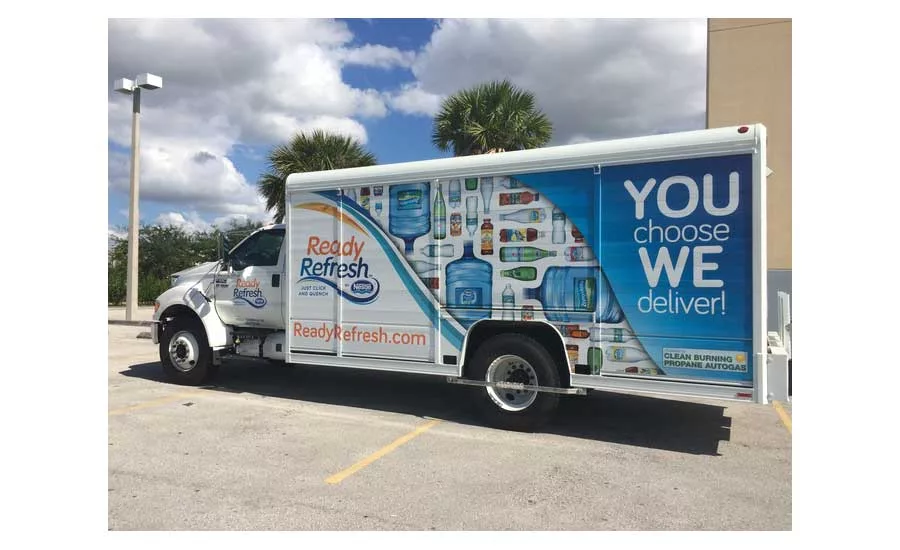
Nestlé Waters North America adds 155 medium-duty propane trucks
By Tom Kelley
Nestle Waters F650

Nestlé Waters North America recently added 155 medium-duty propane-powered trucks to its fleet. (Image courtesy of Nestlé Waters North America)

ROUSH CleanTech Ford F-750
Roush works closely with Ford so that it can revert the previously gasoline-powered trucks to Roush CleanTech-powered trucks. (Image courtesy of Roush)
Nestle Waters F650
ROUSH CleanTech Ford F-750
June 15, 2016

There’s gas as in gasoline, and then there’s gas as in propane, often referred to as “autogas” by fuel industry insiders. In many applications, propane can deliver measurable cost savings compared with conventional gasoline and diesel powertrains.

Although older systems caused a reputation issue for propane, today’s conversion has greatly improved.

With very few propane-powered trucks currently operating in the beverage industry, Nestlé Waters North America (NWNA), Stamford, Conn., recently opted to “test the waters” with an acquisition of more than 150 Roush CleanTech propane-powered trucks.

The beauty of propane is that it can be used in virtually any application that a conventional gasoline-powered drivetrain can be used. Compared with gasoline, propane vehicles produce significantly lower emissions. Nearly 90 percent of the U.S. propane supply is domestically produced as a byproduct of natural gas and petroleum processing, with another 7 percent coming from Canada, making it a very secure source of energy.

When comparing similar fuel tank capacities, the added weight of the propane system is negligible, so, typically, no reduction in cargo capacity and/or body mounting space takes place.

The one downside to propane is a potential reduction in the range between fill-ups for similar fuel capacities. Because propane is slightly less energy-efficient than gasoline,  a published range penalty of about 10-15 percent is administered, but anecdotal reports from fleet users indicate little or no loss in range.

With many fleets using propane for forklifts, it’s fairly common to already have the fuel on-site. It’s just a matter of upgrading to more powerful compressor pumps. Even without existing on-site infrastructure, many propane distributors will install the fueling equipment at little or no cost. For those using on-site fueling, propane typically qualifies for a federal tax credit for alternative fuel dispensing.

Considering the added cost of a propane engine option weighed against the lower cost of fuel, a typical fleet can reach breakeven in as little as 12-18 months, when compared with gasoline.

As much as the NWNA deployment is about reducing emissions and improving its bottom line, the move also represents a huge vote of confidence in today’s propane technology.

A strong focus on environmental stewardship is one of the key reasons that the company added 155 medium-duty propane-powered beverage delivery trucks. During the vehicles’ lifetime, the Ford F-650 trucks will reduce carbon dioxide emissions by more than 24.6 million pounds.

“Becoming a better steward of our environment is a priority for Nestlé Waters,” National Fleet Manager Bill Ardis says. “We’ve been running propane autogas vehicles since 2014. Because of the proven emissions reductions and cost savings, we knew it was the right choice to expand our fleet with this domestically produced alternative fuel.”

The new medium-duty delivery trucks, added to the company’s existing fleet of 30 propane-powered Ford trucks, also will help the company save on maintenance and fuel costs. “Autogas allows us to operate without compromising standard delivery methods, and reduces operational costs,” Ardis says.

Propane costs the company an average of $1 a gallon vs. $2 a gallon for diesel. “Customers have already noticed that our trucks operating on autogas are quieter and cleaner,” Ardis says.

Todd Mouw, vice president of sales and marketing for Roush CleanTech, says: “Fueling beverage delivery trucks with propane autogas offers the best total cost of ownership. By choosing this safe, abundant and American-made fuel, fleets around the nation have reduced operating costs and lowered their carbon footprint.”

NWNA’s propane-powered trucks initially will deploy in several markets across the country, including Los Angeles; San Francisco; Washington, D.C.; Milwaukee; and Fort Lauderdale, Fla. Deployments later in 2016 will include New York City, Boston, Dallas, Houston, Chicago, Philadelphia and Baltimore. Each of the Ford F-650 trucks is equipped with a 45-usable-gallon fuel tank and up-fitted with a Mickey side-load beverage body.

Unlike the early, carbureted propane conversion kits, the Roush propane conversions are not aftermarket add-ons installed at a local garage. Roush has a 40-year “hand-in-glove” partnership with Ford, working on new-model engineering, performance parts development, professional racing teams and custom vehicle integration projects, such as the Roush CleanTech powered F-Series trucks.

The Roush propane conversion begins with a fully assembled, gasoline-powered F-Series truck that is factory-spec’ed for use as a propane- or natural-gas truck. The key change is that its engine valves, valve guides and valve seats are built to stand up to the lower lubricity of the gaseous fuels.

Once the cab and chassis arrives at Roush, the complete gasoline fuel system is removed and then replaced with an entire fuel system purpose-built for propane and engineered to match the needs of the truck model being converted. Because of its close relationship with Ford, Roush is authorized to upload the propane-specific software codes to the truck’s factory-installed engine control module, ensuring the tightest possible integration between the Roush fuel system and the Ford chassis. 

KEYWORDS: beverage fleet fleet efficiency fuel efficiency Nestlé Waters North America (NWNA) sustainability

Share This Story

Looking for a reprint of this article?
From high-res PDFs to custom plaques, order your copy today!

Recommended Content

JOIN TODAY
to unlock your recommendations.

Already have an account? Sign In

  • top 100 beverage companies

    Top 100 Beverage Companies of 2024

    For the global beverage market, mergers and acquisitions...
    Beverage News
  • Chocolate, Strawberry, Vanilla shakes

    Classic flavors provide reliable, consistent results for beverage-makers

    Classic flavors of chocolate, vanilla and strawberry...
    Ingredient Spotlight
    By: Chloe Alverson
  • Free Spirits Instant Bar Bundle

    Lifestyle trends drive growth for non-alcohol category

    As lifestyle trends continue to drive growth for the...
    Alternative Drinks
    By: Lauren Sabetta
Manage My Account
  • Newsletters
  • Online Registration
  • Subscription Customer Service
  • eMagazine Subscription
  • Manage My Preferences

More Videos

Sponsored Content

Sponsored Content is a special paid section where industry companies provide high quality, objective, non-commercial content around topics of interest to the Beverage Industry audience. All Sponsored Content is supplied by the advertising company and any opinions expressed in this article are those of the author and not necessarily reflect the views of Beverage Industry or its parent company, BNP Media. Interested in participating in our Sponsored Content section? Contact your local rep!

close
  • Woman in Coat
    Sponsored byApplied Food Sciences

    Opportunity for Hormone Support in Functional Beverages

Popular Stories

Pepsi Prebiotic Cola

Pepsi offers limited online release of Prebiotic Cola

Airheads Soda

AIRHEADS enter beverage market

Buffalo Trace Distillery

Buffalo Trace Distillery pays homage to its region’s heritage and history

making connections webinar

Events

April 16, 2025

2025 State of the Industry Series: Alcoholic Beverages

On Demand In Beverage Industry’s annual State of the Industry: The Alcohol Beverage Market, analysts at S&D Insights LLC delve into these trends and how they’re shaping the industry.

View All Submit An Event

Poll

Retail Coffee Segment

What retail coffee segments will fare well into the next year?
View Results Poll Archive

Products

Milk and Dairy Foods Nutrition, Processing and Healthy Aging

Milk and Dairy Foods Nutrition, Processing and Healthy Aging

See More Products

Related Articles

  • Ryder Lease program

    Leasing can benefit smaller beverage fleets

    See More
  • Silver Eagle Distributors Truck - Beverage Industry

    Beverage fleets increasingly employ vans, non-CDL trucks

    See More
  • Beverage fleets future gets electrified

    See More

Events

View AllSubmit An Event
  • September 9, 2009

    Food Plant of the Future: Building Realistic Sustainability into Food and Beverage Plants

    AVAILABLE ON DEMAND   Using cost-effective design solutions, food and beverage processing facilities can meet the rigorous performance demands required in a processing and production environment and, at the same time, focus on sustainability. 
View AllSubmit An Event

Related Directories

  • Magline Inc.

    Magline, Inc. is the world’s leading manufacturer of Magliner route distribution solutions and much more. We are a committed partner in helping to grow your business. By listening to your challenges first, our team can work with you to develop the right solutions that fit your unique distribution needs.
  • ORTEC

    For more than 40 years ORTEC has supported beverage manufacturers and distributors worldwide. Our Beverage Suite of Loading and Routing solutions allow our customers to continuously improve their business results by enabling them to predict, prepare, plan, execute, monitor, and improve their operation.
×

Elevate your expertise in the beverage marketplace with unparalleled insights and connections.

Join thousands of beverage professionals today. Shouldn’t you know what they know?

JOIN NOW!
  • RESOURCES
    • Advertise
    • Contact Us
    • Directories
    • Store
    • Want More
  • SIGN UP TODAY
    • Create Account
    • eMagazine
    • Newsletters
    • Customer Service
    • Manage Preferences
  • SERVICES
    • Marketing Services
    • Reprints
    • Market Research
    • List Rental
    • Survey/Respondent Access
  • STAY CONNECTED
    • LinkedIn
    • Facebook
    • YouTube
    • X (Twitter)
  • PRIVACY
    • PRIVACY POLICY
    • TERMS & CONDITIONS
    • DO NOT SELL MY PERSONAL INFORMATION
    • PRIVACY REQUEST
    • ACCESSIBILITY

Copyright ©2025. All Rights Reserved BNP Media.

Design, CMS, Hosting & Web Development :: ePublishing