Beverage Industry logo
search
cart
facebook twitter linkedin youtube
  • Sign In
  • Create Account
  • Sign Out
  • My Account
Beverage Industry logo
  • NEWS
    • R&D News
    • Supplier News
  • PRODUCTS
    • New Products
    • Reader's Choice Poll
  • CATEGORIES
    • Alternative Drinks
    • Beer
    • Bottled Water
    • Cannabis Beverages
    • Carbonated Soft Drinks
    • Energy Drinks & Shots
    • Juice & Juice Drinks
    • Plant-Based Beverages
    • Sports Drinks
    • Tea and Coffee
    • Wine & Spirits
  • R&D
    • Beverage R&D Features
    • Ingredient Spotlight
  • PACKAGING
    • New Packages
    • Packaging Equipment
    • Packaging Material
  • OPERATIONS
    • Distribution
    • Plant Focus
  • TOP LISTS
    • Beer Market Report
    • Executive of the Year
    • State of the Beverage Industry
    • Top 100 Beverage Companies
    • Truck Report
    • Wholesaler of the Year
  • MEDIA
    • eBooks
    • Podcast
    • Polls
    • Videos
    • Webinars
  • DIRECTORIES
    • Annual Manual
    • Contract Packaging Guide
    • Take a Tour
  • MORE
    • Classifieds
    • Channel Strategies
    • Newsletters
    • Events
      • Membrane Technology Forum
    • Interactive Product Spotlights
    • Market Insights
    • Sponsor Insights
    • Store
    • White Papers
  • EMAG
    • eMagazine
    • Archived Issues
    • Advertise
  • SIGN UP!
Plant Focus

Dry lubricant options help curb water use in beverage operations

Operators seek versatile lubricants to reduce needed inventories

By Jennifer Storelli
December 16, 2014

As portions of the United States deal with challenging weather patterns, water conservation continues to become a more prominent issue. As early as January of this year, the governor of California declared a state of emergency and directed state officials to prepare for a drought year, according to the governor’s website. This included asking all Californians to reduce water use by 20 percent, as noted on the Association of California Water Agencies’ website.

But these drought conditions are not just impacting California; as of Nov. 4, approximately 30 percent of the continental United States was in a state of moderate drought, The New York Times reported in a Nov. 8 story. To help conserve water and other environmental resources, some operators are turning to dry and biodegradable lubricants.

“Dry lubricants are lubricants that are designed with the intention of saving water,” explains Chad Thompson, senior program leader for research and development at Ecolab, St. Paul, Minn. “Dry lubricants can be sprayed neat without dilution water.”

Because lubricants contribute a large portion of the water use in conveyor lubrication, Ecolab has documented that dry lubrication can save up to 97 percent of water use for conveyor lubrication, Thompson says. As such, dry lubricants are gaining in popularity because of their ease of use and the “never-ending desire or need to conserve water,” he says.

Lubricant suppliers offer dry, biodegradable options
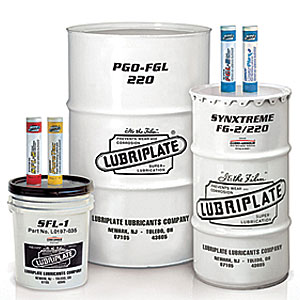
One-hundred percent NSF H-1 registered lubricant use means that facilities can reduce, consolidate and simplify their lubricant inventories and reduce the chance for lubricant misapplication, Lubriplate’s Ellen Girard says. (Image courtesy of Lubriplate Lubricants Co.) 

Although Ecolab introduced its first dry lubricant in 2006, some of its customers still have not switched to dry lubricants, Thompson notes. To offer a product that is the best of both worlds, Ecolab recently launched DryExx Pro. “This new product offering will allow a plant the versatility of using one product as both a wet lubricant and as a dry lubricant,” Thompson explains. DryExx Pro can be applied neat or diluted with water to make it a wet lubricant, he says. In this way, a warehouse can stock one lubricant for multiple uses, he adds.

Another eco-friendly lubricant option can be synthetic lubricants, says Ellen Girard, original equipment manufacturer (OEM) marketing analyst for Lubriplate Lubricants Co., Newark, N.J. “OEMs are more frequently recommending synthetic lubricants because of the many advantages they offer,” she says. “Some synthetic lubricants are biodegradable, resulting in an eco-friendly workplace.”

Lubriplate recently launched Syncool-FG, an NSF H-1 registered, 100 percent synthetic polyglycolester air compressor fluid. As a synthetic lubricant, it is readily biodegradable, making it an eco-friendly product, Girard says. This lubricant is recommended for use in high-performance rotary screw and rotary vane air compressors where high operating temperatures are present, she adds. 

Food safety first

Beyond eco-friendliness, beverage operators increasingly need to consider whether the lubricants they are using are food safe. “The Food Safety Modernization Act (FSMA) impacts the entire supply chain, which includes lubricants,” Lubriplate’s Girard explains. “We’ve seen that many beverage facilities are using NSF H-1 registered products only where completely necessary, [such as when] the lubricant could have incidental contact with the food, and then using NSF H-2, NSF H-3 or just traditional industrial lubricants in other applications where incidental contact will not happen. However, [because of] the advent of FSMA and much higher safety standards coupled with confidence in the quality, high-performance NSF H-1 registered products, more and more beverage facilities will switch to 100 percent NSF H-1 registered lubrication programs. Facilities would rather be safe than sorry if the [U.S. Food and Drug Administration] pays them a visit.”

Lubriplate’s Girard also notes that the use of 100 percent NSF H-1 registered lubricants eliminates the need to consider the lubricants as a potential chemical hazard critical control point in Hazard Analysis and Critical Control Point programs. In addition, if a facility uses only NSF H-1 registered lubricants, it also can reduce, consolidate and simplify its lubricant inventory, because NSF H-1 registered lubricants can be used on bottle-filling machines, can seamers, hydraulic systems, air compressors and more and also reduce the chance for lubricant misapplication, she notes.  

Handling the heat

Along with these considerations, operators also need to choose lubricants that can get the job done in their beverage facilities. Sometimes this can include finding a lubricant that can withstand a beverage facility’s operating environment.

For example Klüber Lubrication North America L.P., Londonderry, N.H., launched at Pack Expo International 2014 last month lubricants suitable for operating in high-humidity, acidic and high-temperature environments. Its Klüberfood NH1 C 8-80 semi-synthetic chain oil has good chemical stability in acidic processes and high-humidity environments, the company says. Similarly, its Klüberfood NH1 CH 2-220 fully synthetic ester-based lubricant can operate at extreme temperatures, like in can manufacturing processes, for long periods of time without residue buildup, it says.

 Choosing the right type of lubricant can ensure safe, smooth, efficient product handling as well as protection to moving parts, thus protecting company investments in both assets, experts note.  

KEYWORDS: lubricants sustainability water management

Share This Story

Looking for a reprint of this article?
From high-res PDFs to custom plaques, order your copy today!

Jennifer Storelli freelances for Beverage Industry, writing for the magazine’s print and online components. She earned a Bachelor of Science in Journalism from Northwestern University.

Recommended Content

JOIN TODAY
to unlock your recommendations.

Already have an account? Sign In

  • top 100 beverage companies

    Top 100 Beverage Companies of 2024

    For the global beverage market, mergers and acquisitions...
    Beer
  • Chocolate, Strawberry, Vanilla shakes

    Classic flavors provide reliable, consistent results for beverage-makers

    Classic flavors of chocolate, vanilla and strawberry...
    Ingredient Spotlight
    By: Chloe Alverson
  • Free Spirits Instant Bar Bundle

    Lifestyle trends drive growth for non-alcohol category

    As lifestyle trends continue to drive growth for the...
    Alternative Drinks
    By: Lauren Sabetta
Manage My Account
  • Newsletters
  • Online Registration
  • Subscription Customer Service
  • eMagazine Subscription
  • Manage My Preferences

More Videos

Sponsored Content

Sponsored Content is a special paid section where industry companies provide high quality, objective, non-commercial content around topics of interest to the Beverage Industry audience. All Sponsored Content is supplied by the advertising company and any opinions expressed in this article are those of the author and not necessarily reflect the views of Beverage Industry or its parent company, BNP Media. Interested in participating in our Sponsored Content section? Contact your local rep!

close
  • Woman in Coat
    Sponsored byApplied Food Sciences

    Opportunity for Hormone Support in Functional Beverages

Popular Stories

Airheads Soda

AIRHEADS enter beverage market

Pepsi Prebiotic Cola

Pepsi offers limited online release of Prebiotic Cola

Buffalo Trace Distillery

Buffalo Trace Distillery pays homage to its region’s heritage and history

making connections webinar

Events

April 16, 2025

2025 State of the Industry Series: Alcoholic Beverages

On Demand In Beverage Industry’s annual State of the Industry: The Alcohol Beverage Market, analysts at S&D Insights LLC delve into these trends and how they’re shaping the industry.

View All Submit An Event

Poll

Retail Coffee Segment

What retail coffee segments will fare well into the next year?
View Results Poll Archive

Products

Milk and Dairy Foods Nutrition, Processing and Healthy Aging

Milk and Dairy Foods Nutrition, Processing and Healthy Aging

See More Products

Related Articles

  • Voice picking technology

    Voice-picking solutions help beverage operations in wake of labor challenges

    See More
  • an industrial conveyor belt system

    Legislation, automation drive lubricant usage in beverage manufacturing

    See More
  • PepsiCo.jpg

    PepsiCo reaches 2025 goal on water-use efficiency in high water-risk areas

    See More

Related Products

See More Products
  • Cleaning-in-Place: Dairy, Food and Beverage Operations, 3rd Edition

  • nanoinbev.jpg

    Nanoengineering in the Beverage Industry 1st Edition

  • quality control.jpg

    Quality Control in the Beverage Industry 1st Edition

See More Products
×

Elevate your expertise in the beverage marketplace with unparalleled insights and connections.

Join thousands of beverage professionals today. Shouldn’t you know what they know?

JOIN NOW!
  • RESOURCES
    • Advertise
    • Contact Us
    • Directories
    • Store
    • Want More
  • SIGN UP TODAY
    • Create Account
    • eMagazine
    • Newsletters
    • Customer Service
    • Manage Preferences
  • SERVICES
    • Marketing Services
    • Reprints
    • Market Research
    • List Rental
    • Survey/Respondent Access
  • STAY CONNECTED
    • LinkedIn
    • Facebook
    • YouTube
    • X (Twitter)
  • PRIVACY
    • PRIVACY POLICY
    • TERMS & CONDITIONS
    • DO NOT SELL MY PERSONAL INFORMATION
    • PRIVACY REQUEST
    • ACCESSIBILITY

Copyright ©2025. All Rights Reserved BNP Media.

Design, CMS, Hosting & Web Development :: ePublishing