After many years of double-digit gains in volume and dollar sales in the United States, the craft beer market could be approaching a status of maturation, according to market analysts.
Home improvement shows have put a spotlight on the benefits of customized closet organizing systems. Yet, when it comes to warehouse operations, it’s going to take more than a visit from “The Property Brothers” to accommodate the expansive needs of a beverage manufacturers and distributors.
Every segment in the beverage industry experiences constant change syndrome (CCS) at various times during product processing, packaging production, warehousing, pre-distribution and distribution as the supply chain unfolds each operating day.
As the saying goes, “the sky’s the limit.” When it comes to the beverage market and introducing new products, that saying certainly holds true. However, beverage-makers aren’t just expanding their year-round portfolios to capitalize on their limitless potential, but also are taking a much more “limited” approach.
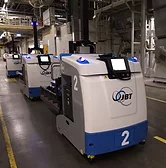
As speed and efficiency become increasingly important in warehouse operations, the use of automated guided vehicles (AGVs) and other autonomous vehicles continue to proliferate.
Whether planning an expansion or a new facility, the ever-evolving beverage industry necessitates that those involved evolve with it. With trends like SKU proliferation and sustainability impacting the overall beverage industry, a slew of decisions need to be made when planning construction.
A plethora of market trends continue to impact the global supply chain including automation. In PwC’s “Global Supply Chain Survey 2013,” the market research firm found that 54 percent of companies surveyed in the retail and consumer goods industries listed automation as high importance with an additional 5 percent listing it as high importance by 2015.
Like the steady drops of rain drumming on a windowpane, the filling of beverages also dictates a steady pace to keep the production line running smoothly. However, it is imperative that the correct filler is used.
The infamous supply chain moniker, with all the definitions, variations, interpretations and applications, has for all intents and purposes replaced the relatively simplistic, old-fashioned production planning and scheduling approach.