AI keeps the ball rolling for beverage-makers
Industry experts anticipate AI will continue to be useful to beverage brands
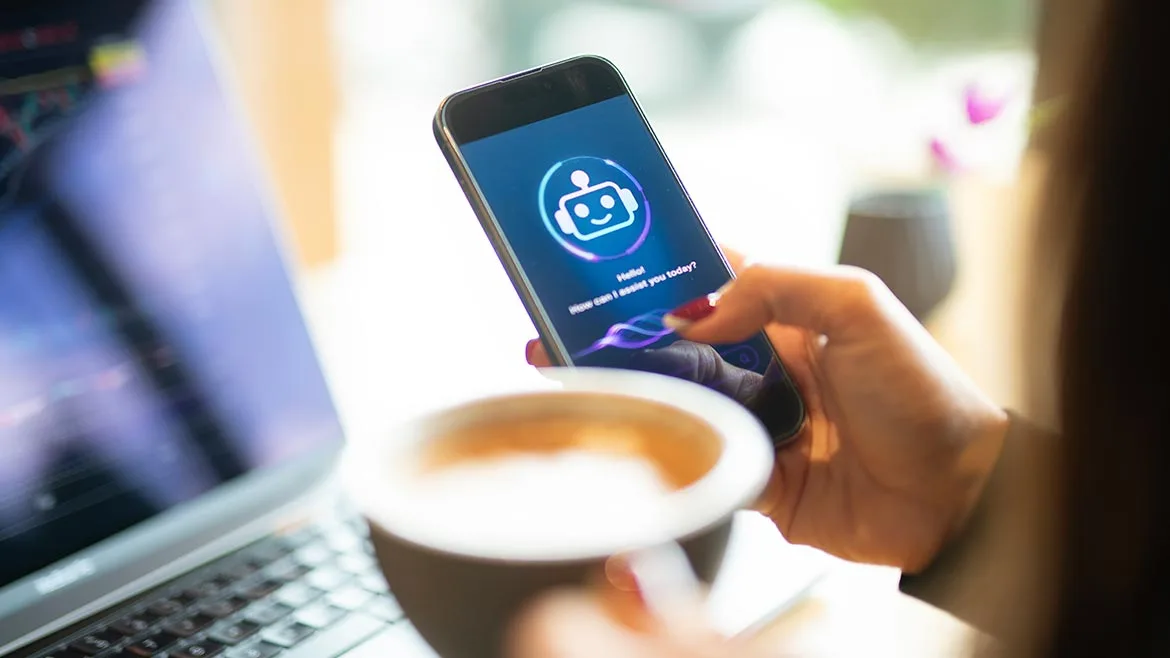
Artificial intelligence (AI) has proven itself to be a valuable tool for beverage brands. Experts share what the future holds for the use of AI and beverage manufacturing.
Kaleigh Theriault, director of BevAl thought leadership at NielsenIQ (NIQ), Chicago, considers agentic commerce to be the future.
“AI systems will act on behalf of consumers to make purchases — anticipating needs, comparing options and executing transactions with limited human interaction or oversight,” she predicts. “But the human side is not going away, which is why we call this a dual reality. On-premise is still where curiosity turns into trial: 41% of consumers tried a new drink in a bar or restaurant in the past month, rising to 67% of Generation Z adults 21 and over.”
Sixty-two percent say they would repurchase a drink at retail if they enjoyed it on-premise first, Theriault shares.
“Bars and restaurants feed everything downstream, including whatever an agent eventually reorders,” she says. “That means brands must build for the bartender and the bot at the same time. Design around occasions now, structure the data next, then set guardrails for age-gating, regulation and brand safety as autonomy increases.”
Consumer behavior is going to shift quickly, which is why brands need to begin preparing now, Theriault urges.
Nathan Knutson, director of R&D for beverages at Wayzata, Minn.-based Cargill, states that although AI won’t replace human expertise, it can accelerate exploration by helping researchers screen possibilities more efficiently or uncover patterns in large collections of data.
“The greatest gains will come when we generate AI workflows across the development process, potentially compressing formulation timelines from months to days,” he says. “But those gains will depend on high-quality data paired with human creativity and validation.”
Data security, intellectual property and regulatory compliance will remain central considerations, Knutson notes.
“That’s one reason companies are developing specialized internal AI tools that keep proprietary information within the organization,” he adds. “AI can help guide the innovation journey, but it’s people who will bring the creativity and real-world understanding needed to turn AI-generated analysis into successful products.”
Sally Lyons Wyatt, global advisory for consumer goods and foodservice at Circana, Chicago, feels that the future of AI and beverage manufacturing will be increasingly personalized.
“We expect AI to accelerate flavor discovery, improve demand forecasting, enable smarter supply chains and drive more customized beverage experiences,” she shares. “Future opportunities include recommendations linked to personal wellness goals, wearable technology, smart packaging, automated replenishment and more tailored product suggestions.”
For non-alcohol beverages, Lyons Wyatt says AI might help consumers discover products that better match taste preferences, occasions and moderation goals while maintaining compliance with legal drinking age requirements and responsible consumption standards.
“Ultimately, consumers may move from shopping beverage categories to shopping personal outcomes,” she notes. “Rather than simply choosing a soda, coffee, beer or cocktail, consumers may increasingly look for beverages that fit a specific occasion, mood, health goal or societal experience, with AI helping guide those choices along the way.”
The biggest AI opportunity in beverages isn’t just helping manufacturers work faster, Lyons Wyatt states. It is helping them understand consumers better.
“Whether it’s a functional beverage tailored to wellness goals or a low-alcohol option designed for a specific social occasion, AI is helping bring consumers and brands closer together,” she says. “The winners will be those who use AI to create more relevant, personalized and responsible experiences across both alcoholic and non-alcoholic beverages.”
Working through concerns
When using AI during beverage formulation, potential issues might arise.
NIQ’s Theriault points to data readiness as a challenge.
“AI agents do not browse products or content the way a person would,” she says. “Instead, they extract structured data to make parameter-based decisions. That means discoverability is crucial, so product data must be clean and structured across flavor, ABV (alcohol-by-volume), occasion, serve, availability, price tier, pack, claims and responsibility cues.”
Another challenge Theriault notes is that guardrails must be set for age-gating, regulation, moderation, brand safety and local market rules. Additionally, she says consumer comfort with AI is not universal.
“In the Kearney research, 11% of consumers do not feel comfortable sharing their brand preferences with AI, and only 6% would tell their AI to recommend their favorite brand if it were a higher price,” Theriault shares. “At the same time, 31% of AI shoppers will shop directly with a retailer or brand because of an emotional connection, so brand equity still carries weight.”
Another potential issue is measurement, according to Theriault.
“Success metrics such as velocity, placement risk, trial-to-repurchase, menu conversion and AI discoverability still need defining,” she says. “So does that ability to measure AI-driven influence across on-premise, off-premise and online discoverability.”
Circana’s Lyons Wyatt states that the biggest challenge is remembering that AI is a tool, not a replacement for human judgment.
“Beverages remain highly sensory products,” she notes. “AI can identify patterns and predict opportunities, but it cannot fully replicate the human experience of taste, aroma, texture or emotional connection. Successful innovation still requires consumer testing and human expertise.”
Furthermore, Lyons Wyatt says that companies must manage data quality, privacy consideration and regulatory requirements.
“Beverage alcohol companies must also ensure AI-supported marketing and recommendations are directed only toward legal drinking age consumers,” she shares. “Consumers want personalization, but they also expect transparency and responsible use of their information. Trust will become increasingly important as AI-powered experiences become more common.”
Similarly, Cargill’s Knutson expresses that AI-generated beverage formulations still require “significant refinement and validation.”
“There’s still so much we don’t know about things like human sensory perceptions, ingredient interactions and long-term shelf life,” he says. “AI may offer a perspective, but only human expertise and real-world testing can validate its analysis.”
Embracing AI
Certain beverage categories might be more active in using AI than others.
NIQ’s Theriault says that, looking at where innovation activity is concentrated, RTDs are the clear leader.
“They generate 38% of innovation dollars from 22% of innovation items, indexing 389 against the category average,” she shares. “Spirits account for 31% of innovation dollars from 27% of items; beer and cider 21% from 25%; and wine 10% of dollars from 26% of items. Wine produces innovation items without proportionate dollar return.”
That pattern matters because the categories moving fastest on innovation have the most to gain from AI-assisted development, where concepts can be screened and iterated in minutes rather than months, Theriault explains.
“RTDs are where we see that applied most, because the format is newer, the flavor and occasion cycles turn over quicker, and encouraging consumer trial is especially important,” she adds.
Circana’s Lyons Wyatt shares that functional and wellness-oriented beverage categories have been among the most active because AI is “particularly effective” at identifying emerging health needs, ingredient opportunities and changing consumer behaviors.
“Energy drinks, hydration products, enhanced waters, functional beverages and RTD coffee are natural fits,” she says. “Beverage alcohol has also been actively exploring AI, particularly among larger brewers and spirits companies. Many are using AI to support innovation, optimize marketing, forecast demand and improve consumer engagement.”
Low- and no-alcohol products are another area where AI can help identify evolving social occasions and moderation preferences, Lyons Wyatt adds.
“Consumers increasingly want products tailored to specific occasions and outcomes, whether that’s energy in the morning, hydration after exercise, a premium cocktail experience or a sophisticated alcohol-free option,” she notes. “AI helps brands respond more precisely to those needs.”
Meanwhile, Cargill’s Knutson says that, rather than varying by beverage category, AI adoption is likely more tied to a company’s available resources.
“A startup without in-house nutritionists, legal experts, regulatory specialists or marketers may rely more heavily on AI than a more mature company,” he explains. “Clearly, companies of all sizes are using AI — but the level of reliance on the technology may vary based on the resources and expertise available to them.”
AI can aid beverage-makers in ways beyond consumer insights.
Knutson considers manufacturing efficiency to be a huge opportunity space.
“AI is being used to analyze information from inline sensors to identify critical control points, helping teams detect opportunities to improve process consistency and efficiency over time,” he says. “It can also support inventory management and production planning. Many of these capabilities already exist as standalone tools, but AI can connect them in new ways, helping teams optimize costs and make faster, more informed decisions.
“Whether its ideation, formulation or manufacturing, AI can help us to think and act differently,” Knutson continues.
AI can help optimize virtually every stage of the beverage value chain, Circana’s Lyons Wyatt states.
“For manufacturers, this means producing the right products in the right quantities at the right time,” she says. “For retailers, it means carrying assortments that better reflect local demand. For beverage alcohol companies, AI can also support responsible marketing practices and age-appropriate targeting.”
The result can be fewer out-of-stocks, better product availability, more relevant assortments and potentially improved value by reducing operational inefficiencies throughout the supply chain, Lyons Wyott notes.
NIQ’s Theriault says that making sales and distributor management more predictive is likely the biggest near-term impact.
“Where suppliers once relied on rep relationships, depletion trends, historical shipment data and local instinct, AI can predict which accounts are most likely to grow, where placements are at risk, which SKUs are likely to succeed by channel and what promotions drive velocity,” she describes.
Another area is menu engineering and on-premise optimization.
“AI can analyze weather, local events, sports schedules, historical sales and POS data to predict demand patterns,” Theriault explains. “A sports bar may learn that old fashioneds spike during colder weather, that ranch waters outperform on Fridays or that premium bourbon converts better when placed near steak specials. Restaurants and bars are already optimizing pricing, menus, inventory, staffing and promotions this way.”
AI-generated marketing also is exploding, and this might already be the most visible change to consumers, she adds.
“It is being used for creative content generation, social captions, localized campaigns, product imagery, retailer sell sheets, consumer segmentation and influencer matching,” Theriault says. “Instead of one national campaign, brands can generate hundreds of localized ads, messaging tailored by market, demographic-specific creative and account-specific promotional materials.”
Moreover, she notes that consumer trends are growing and shifting faster now due to social platforms like TikTok, Instagram and Reddit.
“Nationwide demand can be created almost overnight, and AI is how brands keep pace with that,” Theriault concludes.
As consumer preferences continue to shift, it is evident that AI will remain an advantageous tool for beverage brands going forward.Looking for a reprint of this article?
From high-res PDFs to custom plaques, order your copy today!