Brand licensing moves well beyond one-off products
Collaborations create strong marketing opportunity
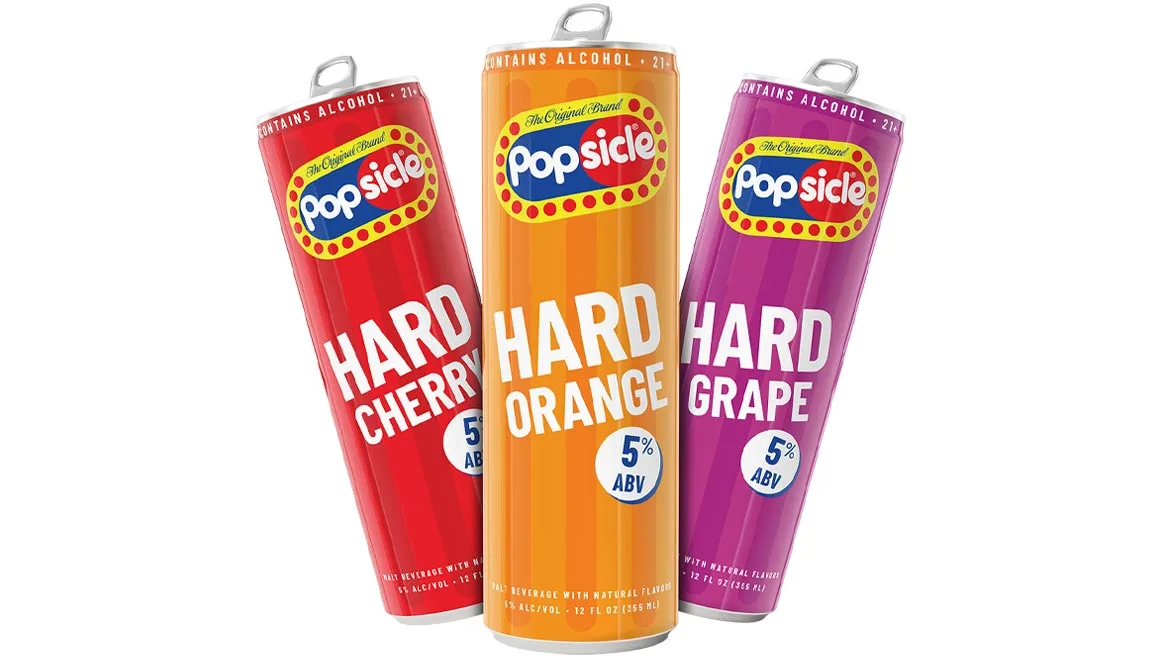
Brand licensing can boost a product’s visibility, help brands expand into new geographic regions or demographic groups, as well as work as a market multiplier where partners can extend advertising reach.
Given such opportunities, the beverage market has seen more non-alcohol brands embark on licensing partnerships with food and candy brands. Meanwhile, brand licenses also cross lines with non-alcohol products venturing into alcohol.
Brian Sudano, CEO at S&D Insights LLC, Norwalk, Conn., says that crossovers between non-alcohol and alcohol brands have been driven more by trade benefits than brand equity.
“Brands that are extended have immediate brand recognition and gain trial,” Sudano says. “This leads to retailers more willing to provide listing authorizations. To this point, over time, the vast majority of these extensions have peaked quickly and then declined, never challenging category/segment leaders.”
Kaleigh Theriault, director of beverage alcohol thought leadership at NielsenIQ (NIQ), Chicago, explains that familiar brands can lower the barrier to trial by bringing established flavor expectations, trust and nostalgia into a beverage alcohol occasion.
“NIQ data shows crossover alcohol brands disproportionately attract legal-drinking-age Gen Z, particularly ages 21-24, as well as millennials and Hispanic consumers, suggesting that novelty and brand recognition are important recruitment drivers,” she says.
Mitch Madoff, head of retail partnerships at Keychain, New York, points to familiarity and novelty as trends lending themselves to the crossover movement, noting that younger consumers especially want products that feel fun, flavorful and new.
“That’s where brand licensing can be really effective,” he says. “Familiar brands and flavors give consumers an immediate connection to a product, while the new format creates a sense of discovery. Products like Topo Chico’s Hard Seltzer and Simply Spiked’s Lemonade tap into that dynamic, taking a flavor consumers already love and bringing it into a different category.
Yet, with non-alcohol names entering the alcohol space, Madoff notes that there are legitimate concerns.
“[B]ut I think it comes down to execution rather than the crossover itself,” Madoff says. “The biggest issue is when an alcoholic product looks too similar to a non-alcohol one that’s popular with younger consumers, which can create confusion around who the product is intended for.
“That said, non-alcohol brands can enter the alcohol space responsibly when the product is clearly identified and marketed to legal-drinking-age consumers,” he continues. “The key is making that distinction clear from the start.”
S&D Insights’ Sudano echoes similar sentiments.
“There is always the concern that underage consumers may pick up the brands not realizing they have alcohol in them,” Sudano says. “Marketers have done a good job in packaging graphics to communicate adult/alcohol cues to distinguish between the non and alcoholic offerings. Concerns are real but to this point there has not been an overwhelming number of young consumers drinking alcoholic versions due to brand/product confusion.”
Collabs bring strong market opportunity
With familiarity and novelty being key to driving consumer interest in beverages, food and candy partnerships give beverage companies recognizable flavors with existing consumer followings, experts note.
“These partnerships give beverage brands a way to bring something familiar to the shelf while still creating something exciting,” Keychain’s Madoff says. “Instead of asking consumers to try an entirely unfamiliar product, brands can tap into tastes they already know and love.
“There’s also a strong marketing opportunity,” he continues. “These collaborations naturally create novelty, nostalgia and social conversation, which help generate buzz. For brands, it’s a great way to test flavors and see whether a partnership has the potential to become a longer-term part of the portfolio.”
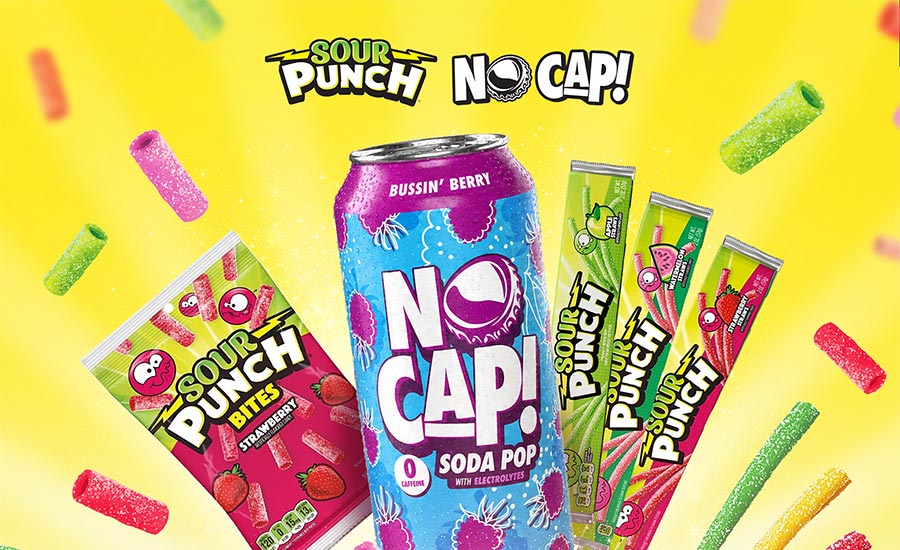 Image courtesy of NO CAP! Soda Pop
Earlier this summer, NO CAP! Soda Pop, a growing better-for-you soda brand, announced a new licensing partnership with Sour Punch, a sour candy brand from American Licorice Company.
The agreement advances NO CAP!’s strategy of bringing beloved confectionery brands into the better-for-you soda category, the company says. The partnership comes as consumers seek nostalgic flavors while embracing better-for-you beverages, it notes.
“This partnership represents exactly where the future of beverages is headed,” said Vinny Wilson, co-founder of NO CAP! Soda Pop, in a statement at the time of launch. “Consumers don’t just want another soda, they want brands that create excitement, nostalgia, and authentic cultural connections. Sour Punch has defined bold flavor for generations, and together we’re creating something completely new into the beverage aisle.”
S&D Insights’ Sudano, meanwhile, notes that most of these licensing agreements are meant to either convey flavors unique to certain candy brands or leverage food brand awareness to generate trial — essentially leveraging some of the food /candy brand equities or product attributes.
NIQ’s Theriault notes that food and candy partnerships also can help generate attention and encourage trial without building an entirely new flavor identity.
“We’ve also seen this overlap of food brands in the beverage alcohol space, which tends to drive shorter-term limited edition style offerings,” she says.
Jumping on the bandwagon
Given brand licensing opportunities, experts highlight which non-alcohol categories are the most active in this space.
NIQ’s Theriault points to energy drinks, sports nutrition and other functional beverages to be among the most active non-alcohol categories, with licensed flavors extending across drinks, hydration, pre-workout and protein products.
“Carbonated soft drinks are participating as well, while ready-to-drink alcohol remains the leading destination for non-alcohol beverage brands entering alcohol,” she says.
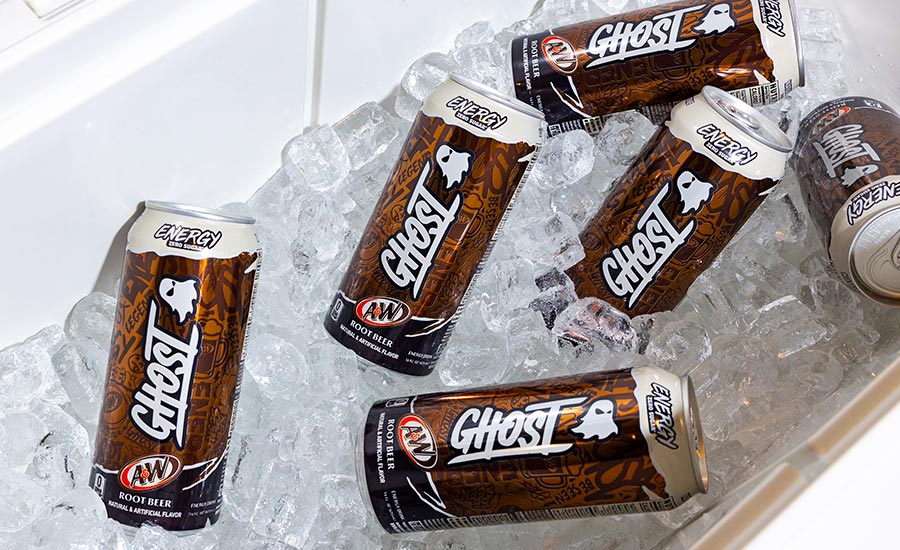 Image courtesy of GHOST
Recently, lifestyle sports nutrition brand GHOST announced its collaboration with A&W Root Beer with the launch of GHOST Energy x A&W. The new release introduces a modern way to enjoy the signature taste of A&W in an energy drink format designed to fuel whatever comes next, the company says.
“Coming off the incredible response to GHOST Energy x 7UP, we knew we wanted to keep building on that momentum with Keurig Dr Pepper while staying authentic to the brands we’re working with,” said Dan Lourenco, founder and CEO of GHOST, in a statement. “A&W has such a strong legacy. It’s instantly recognizable and gives us the chance to do something completely unexpected in energy. We’re proud of how this one came together, and we have a feeling there’s still plenty of room to surprise people.”
Justin Whitmore, president of energy, juice, sauce and drink mix brands at Keurig Dr Pepper, added: “Keurig Dr Pepper’s portfolio is built on iconic brands that consumers know and love, and we continue to extend those brands into new occasions and consumer experiences. GHOST Energy x A&W gives fans a fresh way to enjoy a familiar favorite, combining the timeless appeal of A&W with the performance benefits energy drink consumers expect.”
Keychain’s Madoff explains that energy drinks and functional beverages are doing a great job at capturing consumer attention through their partnerships.
“GHOST and C4 have built extensive portfolios around famous candy, soda and snack flavors, including Warheads, Sour Patch Kids and Jolly Ranchers,” he says. “Carbonated soft drinks and sparkling beverages are also leaning into the trend, with products like Sparkling Ice’s Zero Sugar LIFE SAVERS flavors seeing strong interest.”
Further, Madoff points out that coffee and creamers have used licensing strategies for years.
“International Delight carries Hershey’s Chocolate Caramel, Reese’s, and Cinnabon creamers, all of which are posting strong demand on the platform,” he says.
As for coffee and food collaborations, Java Factory recently announced that Klondike, Good Humor and Popsicle are entering the coffee category through limited-edition officially licensed collaborations as part of Java Factory’s Flavor52 program.
The collection includes coffees inspired by Creamsicle, Klondike, Popsicle Firecracker, Good Humor Chocolate Éclair and Good Humor Toasted Almond, alongside additional frozen-treat-inspired flavors and original Java Factory creations. All are made with specialty-grade 100% Arabica Brazilian coffee, the company notes.
“The idea that you can wake up and drink a coffee inspired by a Klondike bar, a Good Humor Chocolate Éclair or a Popsicle Firecracker is exactly what Flavor52 is about,” said Sam Blaney, executive vice president of Java Factory, in a statement. “We’re taking flavors and brands people already have an emotional connection to and putting them somewhere they never expected to find them: their coffee cup.”
Plenty of room for growth
As brand licensing can help generate product recognition and trial, experts weigh in on which categories could benefit from exploring these partnerships.
“Juice, iced tea and hydration are all categories that haven’t tapped into licensing partnerships a ton yet,” Keychain’s Madoff says. “They’re increasingly crowded spaces, so bringing in a recognizable flavor or brand might give consumers another reason to choose one product over another.
“We’ve seen this work particularly well when brands take a familiar flavor and put it into a format consumers wouldn’t necessarily expect, like the Sparkling Ice LIFE SAVERS beverages,” he continues. “There’s still plenty of room for that kind of experimentation in categories that haven’t leaned as heavily into licensing yet.”
“These collaborations naturally create novelty, nostalgia and social conversation, which help generate buzz. For brands, it’s a great way to test flavors and see whether a partnership has the potential to become a longer-term part of the portfolio.”
– Mitch Madoff, head of retail partnerships at Keychain
NIQ’s Theriault considers the possibilities to be endless with a strong brand, strong consumer loyalty, and interest from consumers.
“Hydration, ready-to-drink coffee, protein beverages and dairy or plant-based drinks could benefit because flavor and trial are central to their growth,” she says. “Non-alcohol adult beverages may also offer an opportunity, particularly when a partnership brings recognizable taste and occasion cues while still fitting the product’s core function.”
As for what to expect in category/brand licensing in the years to come, Theriault anticipates that partnerships likely will continue as they drive consumer engagement; however, she notes that data suggests consumers will become more selective about which concepts have staying power.
“Brands that have successfully achieved trial metrics, may not always see repeat purchasing, therefore, the flavor, taste and value proposition must align for longer term success,” she explains. “Recognizable branding can secure trial, but repeat purchase and product quality ultimately determine longevity.”
Keychain’s Madoff expects that the licensing trend will continue, especially as brands look for new ways to stand out in increasingly crowded categories.
“Food and beverage licensing has already moved well beyond one-off products, with more brands using collaborations to bring familiar flavors into new categories. On the other hand, I also think brands could become more selective about the partnerships they pursue,” Madoff says.
“The strongest collaborations will be the ones that make sense for both brands and give consumers a real reason to try the product, rather than simply putting two recognizable names on a package,” he continues. “Over time, we’ll likely see even more crossover between categories as brands look for new ways to create buzz and appeal to consumers’ changing preferences.”
Looking for a reprint of this article?
From high-res PDFs to custom plaques, order your copy today!