Forklifts and lift truck technologies cater to specific needs of beverage warehouses
Safety, automation among factors impacting the forklift market within the beverage industry
Trends within beverage warehouses are impacting lift truck operations.
Michael Bloom, director of connected solutions at Logisnext, Houston, explains that warehouses are under increasing pressure to move more product through the same footprint while managing a growing number of SKUs and higher customer service expectations. Beverage companies have started to apply the same data-driven mindset to their material handling fleets that they have used for on-road fleets, he notes.
“Today’s telematics solutions help companies better understand fleet utilization, identify productivity opportunities and make more informed operational decisions that improve throughput,” Bloom says. “At the same time, operator assist technologies are helping address another significant challenge: the shortage of experienced lift truck operators.”
Mike Bratcher, vice president of operational transformation at Southern Glazer’s Wine & Spirits, Miami, echoes similar sentiments in terms of SKU proliferation and warehouse capacity.
“Suppliers continue to introduce new flavors, package formats, ready-to-drink (RTD) products and seasonal offerings, creating more complex inventory profiles within the warehouse,” he says. “At Southern Glazer’s, this often translates into more mixed-SKU pallets, increased putaway activity and additional touches throughout the fulfillment process.”
Greater pressure on warehouse capacity and storage density are additional factors, Bratcher notes.
“As facilities look to maximize cubic utilization, many are moving toward narrower aisles, higher rack positions and more selective strategies,” he adds. “These changes require more specialized equipment and place a premium on operator training and precision.”
Labor challenges also have significantly affected the use of forklifts in warehouses, experts share.
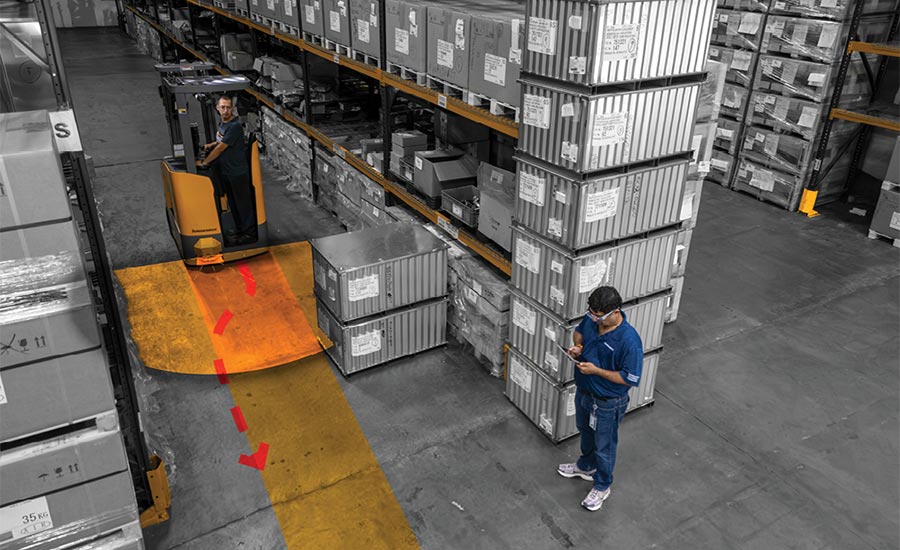 Image courtesy of Logisnext
Within the beverage industry, Logisnext’s Bloom notes that companies need new operators to become productive quickly while maintaining operational performance and safety standards. The result is growing interest in lift truck technologies that support operators on the job, he says.
“Operator assist systems can help reinforce best practices and provide an added level of support for less experienced operators, helping narrow the gap created by the shortage of skilled labor,” he explains. “At the same time, ergonomic improvements that reduce fatigue and increase operator comfort can contribute to productivity and support employee retention in physically demanding warehouse environments.”
Christopher Grote, general manager of product management at Crown Equipment Corp., New Bremen, Ohio, states that workforce challenges make it difficult to find, onboard and retain operators.
“Many operations are looking at technologies that help to streamline the onboarding process and improve the operator experience,” he says. “Technologies that enable operators to save time and automate certain tasks can increase accuracy and productivity while making the experience more engaging for operators.”
These improvements can lead to increased productivity and job satisfaction, Grote adds.
Software and other technological advancements are popping up in new lift trucks, experts note.
Logisnext’s Bloom says these advancements are transforming lift trucks from standalone pieces of equipment into connected assets that generate valuable operational intelligence.
“Today’s telematics platforms provide real-time visibility into fleet utilization, equipment health, operator activity and overall operational performance, allowing companies to make more informed, data-driven decisions,” he states. “The biggest impact is that warehouse managers no longer have to rely on assumptions when evaluating productivity, utilization or maintenance needs. Connected fleet technologies provide actionable insights that help identify underutilized equipment, improve fleet optimization and support more proactive maintenance practices.”
Software is enhancing the effectiveness of operator assist technologies by providing greater insight into operator behavior, equipment events and workflow trends, Bloom notes.
“The combination of connectivity, analytics and operator assist systems is helping organizations improve productivity, support safety initiatives and make better operational decisions across their material handling fleets,” he adds.
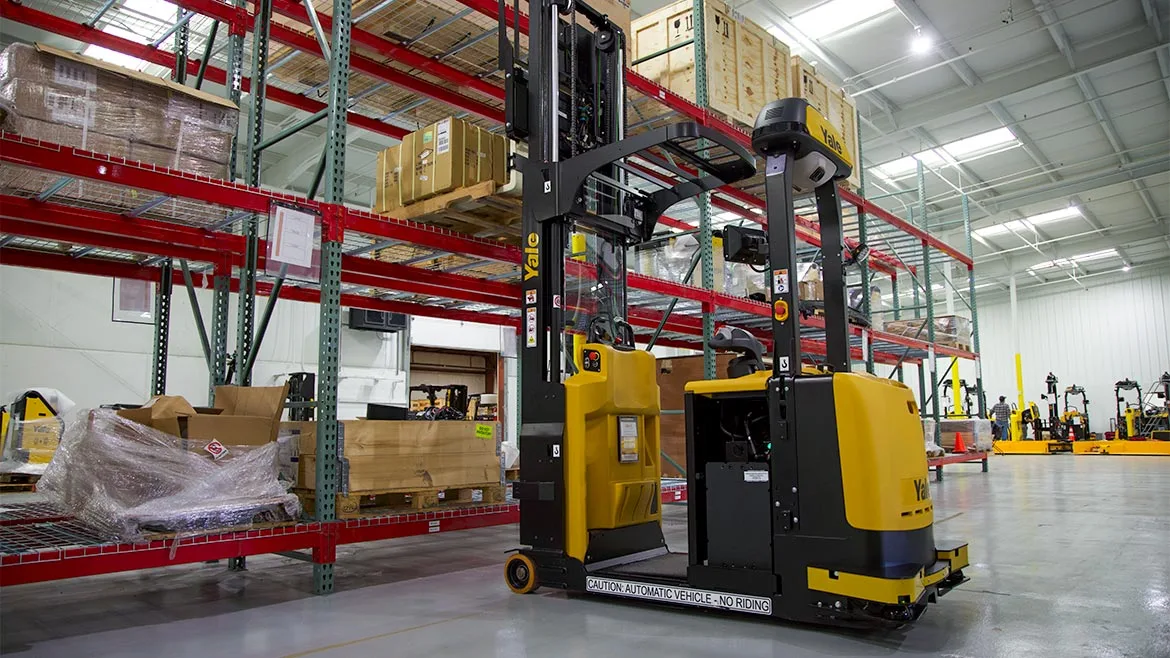
Kevin McWilliams, director of major accounts at Greenville, N.C.-based Yale Lift Truck Technologies, considers technology to be a critical piece of the puzzle for efficiently picking and fulfilling orders amid growing order volumes. McWilliams points to the company’s Yale Reliant operator assistance solutions, which automatically intervenes when unsafe conditions are detected, while also keeping the operator in ultimate control of the lift truck.
“The larger solution uses real-time data to monitor the combined center of gravity on the lift truck and load to help maintain stability and also uses detection technologies to monitor the environment for obstacles and pedestrians,” he explains. “When those obstacles are detected, the system proactively and carefully adjusts truck performance in a controlled manner.”
The Yale Relay portal is having a major effect on automation and operations’ ability to redeploy their workers to more value-added tasks that improve productivity and satisfaction on the job, McWilliams adds.
“It’s making it significantly easier to deploy these trucks within warehouses, as no coding or software engineering is required,” he says. “Once waypoints are created via manually operating the truck through the facility, anybody can simply drag and drop waypoints to adjust a route or place pickup and drop-off locations for pallets. This innovation simplifies the automation process and lays out a path for operations to more easily manage labor and productivity challenges with technology.”
Crown’s Grote says that software that enhances user interface (UI) for operators is becoming increasingly important. The company’s latest turret trucks and order pickers utilize the Gena operating system, which introduces a familiar touchscreen interface to operators, he shares.
“The operating system is available in a wide variety of languages, so it is adaptable to today’s diverse workforce,” Grote notes. “This system can also be personalized for the operator using on-screen widgets to display the operator’s preferred information.”
Given today’s workforce challenges, he says many operations are looking to sensor-based technologies like object detection to help reinforce trained behaviors and improve warehouse safety.
“Crown’s PriximityAssist System helps detect objects in the anticipated path of the lift truck, slowing the vehicle so the operator can take appropriate action,” Grote explains. “This can help avoid impacts that result in damage to equipment, product and facilities.”
Trucks equipped with Crown’s InfoLink 7-inch Touch Display or the Gena operating system’s 7-inch touchscreen also provide both visual and audible alerts when an object is detected in addition to the haptic feedback provided by the slowing of the lift truck, Grote adds.
Operator comfort is a critical factor in lift truck design, Logisnext’s Bloom says because it has a direct impact on productivity, confidence and overall job satisfaction. Especially with increased labor challenges, companies are more focused on creating work environments to help operators stay comfortable, engaged and productive throughout their shifts, he notes.
“Today’s ergonomic considerations extend well beyond the traditional operator compartment,” Bloom explains. “Manufacturers are focused on excellent visibility, intuitive controls, adjustable seating and operator positions, reduced vibration and features that help minimize repetitive movement and fatigue. In fast-paced beverage operations, these features help operators remain focused and efficient, particularly during long shifts.”
Not all warehouse environments are the same, he adds.
“Beverage operations often include cold-storage and freezer applications, where operator comfort can become even more critical,” Bloom shares. “Features such as enclosed compartments, heated cabins and other environment-specific solutions can help improve operator comfort and support productivity in challenging conditions.”
Similarly, Southern Glazer’s Bratcher says ergonomics is becoming a much larger part of the equipment selection process.
“Operators spend many hours on equipment, so comfort directly impacts both safety and productivity,” he notes.
The following are features the company looks at when replacing equipment, according to Bratcher:
- Improved seat suspension and adjustability
- Reduced vibration and noise
- Improved visibility
- Easier entry and exit
“From an employer perspective, ergonomic improvements support retention by making equipment safer and more comfortable to operate and help reduce physical strain on employees,” he says.
Crown’s Grote states an ergonomically designed lift truck should support how operators work rather than forcing operators to adapt their work habits to the vehicle’s design. Lift trucks that require the operator to compensate for inadequate design can cause fatigue, which can cause issues for both the operator and overall warehouse productivity, he explains.
“As an example, Crown’s electric sit-down counterbalance lift trucks feature large operator compartments that are designed to avoid excessive reach or lean,” Grote says. “Operators can easily pivot between foot controls without strain. Options like Crown’s D4 Armrest allow the operator to make one-handed adjustment to the armrest to a comfortable position.”
Greater visibility is important as well, he notes, which gives the operator confidence with their moves and helps them to stay productive in a fast-paced environment.
“Low-level order picking in beverage applications can also be a strenuous job for warehouse personnel,” Grote adds. “A pallet truck with mast and adjustable fork height, like Crown’s MPC Series, enables operators to position the pallet at an optimal height to reduce bending and stretching as the pallet is built.”
Yale’s McWilliams shares how the company uses operator feedback “at every stage of the lift truck design process.” Yale will even update previously released trucks to include new ergonomic features based on feedback, he says.
“For example, earlier this year, we launched an updated version of our three-wheel standup lift truck, in which we added a footrest that provides additional space for operators to position their feet,” McWilliams notes. “This works in concert with our operator sensing system to allow operators to do their job and operate the lift truck without constantly pressing on a floor pedal, enabling them to assume more comfortable operating positions and helping to reduce fatigue.”
Southern Glazer’s Bratcher says that the company is seeing the most significant advancement in telematics and connected fleet technologies.
“Forklifts are becoming data-generating assets rather than just material handling equipment,” he states. “At Southern Glazer’s, we’ve been evaluating several next-generation telematics platforms that provide visibility into operator behavior, impacts, equipment utilization and fleet performance. The evolutions of Real-Time Location Services (RTLS) technology is allowing companies to better protect operators and pedestrians through enhanced location awareness while also providing valuable insights into traffic patterns and overall warehouse efficiency.”
Prioritizing safety
Experts share which safety measures are being implemented into today’s forklift technology.
Logisnext’s Bloom says that one of the most significant developments is the evolution of operator assist technologies across a broad automation continuum. There is no single technology solution that fits every operation.
“Forklifts are becoming data-generating assets rather than just material handling equipment.”
– Mike Bratcher, vice president of operational transformation at Southern Glazer’s Wine & Spirits
“OEMs such as Logisnext are developing solutions that address the full automation continuum, allowing customers to adopt technologies that align with their specific safety, productivity and workforce objects,” he notes. “At the same time, connected fleet technologies are changing how companies think about lift truck fleets. The value is no longer found in individual product operating independently, but in integrated platforms that bring together telematics, operator assist technologies, ergonomics and fleet intelligence into a cohesive solution.”
Telematics plays an important role in that connected ecosystem by providing visibility into equipment usage, impacts and safety-related events, Bloom says, helping managers identify trends, support targeted training efforts and take a more proactive approach to risk management. Combined with operator assist technologies and automation solutions, this data can help organizations make more informed decisions about safety, productivity and fleet performance, he shares.
“Ultimately, technology is most effective when it complements strong operator training, well-designed processes and a culture of safety,” Bloom states.
Yale’s McWilliams expresses that safety isn’t an outcome, but a culture — safety is everyone’s job and must extend across operations and the supply chain.
“We offer a series of videos as part of the Yale Operator Training Program, which fulfills most truck-related topics in the formal instruction component of OSHA lift truck certification requirements,” he says.
Like the other experts, McWilliams feels that technology can be leveraged to support safety.
“Telemetry systems make critical maintenance data accessible while also providing alerts and fault codes related to hazardous driving behaviors, such as excessive speed or impacts,” he concludes. “Access to this kind of data grants operations the ability to remediate problem areas and reinforce best practices.”
Looking for a reprint of this article?
From high-res PDFs to custom plaques, order your copy today!